

By Global Education Desk
Published: October 2026
Main Facts
In the complex ecosystem of Colombian education, where academic outcomes are heavily scrutinized yet rarely unified under a single government-sanctioned ranking, consistency is a rare commodity. While the Colombian Institute for the Evaluation of Education (ICFES) refrains from publishing an official league table of secondary institutions—leaving media outlets and specialized consultancies to aggregate and structure public average scores—one institution has quietly established a masterclass in educational endurance.
The Colegio Bilingüe Diana Oese, located in the vibrant southern city of Cali, has cemented its status as the most consistently elite academic institution in Colombia over the past half-decade. According to data compiled across consecutive rankings from 2021 through 2025, the Diana Oese is the only school in the country to maintain an unbroken presence within the top five national rankings year after year.
Its trajectory culminated in the 2025 ICFES Saber 11 evaluations, where the school achieved an extraordinary average score of 394.6 points out of a maximum 500, securing the second position nationwide. This performance placed them agonizingly close—less than two points—behind the top spot held by Armenia’s Gimnasio Contemporáneo, which led the country with 396.5 points.
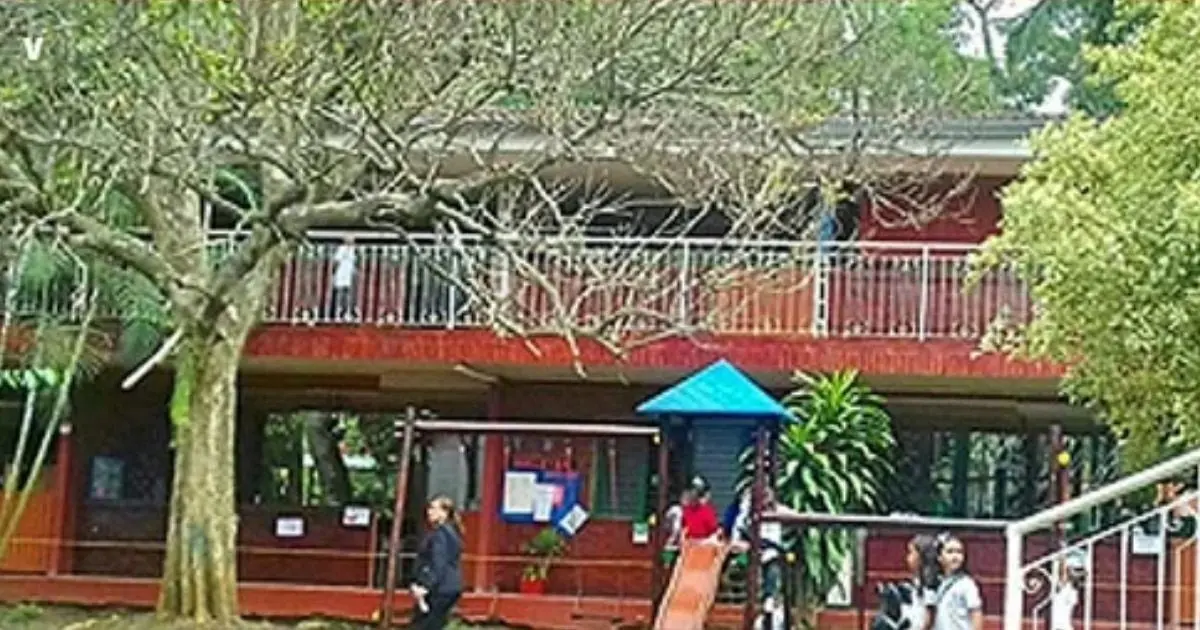
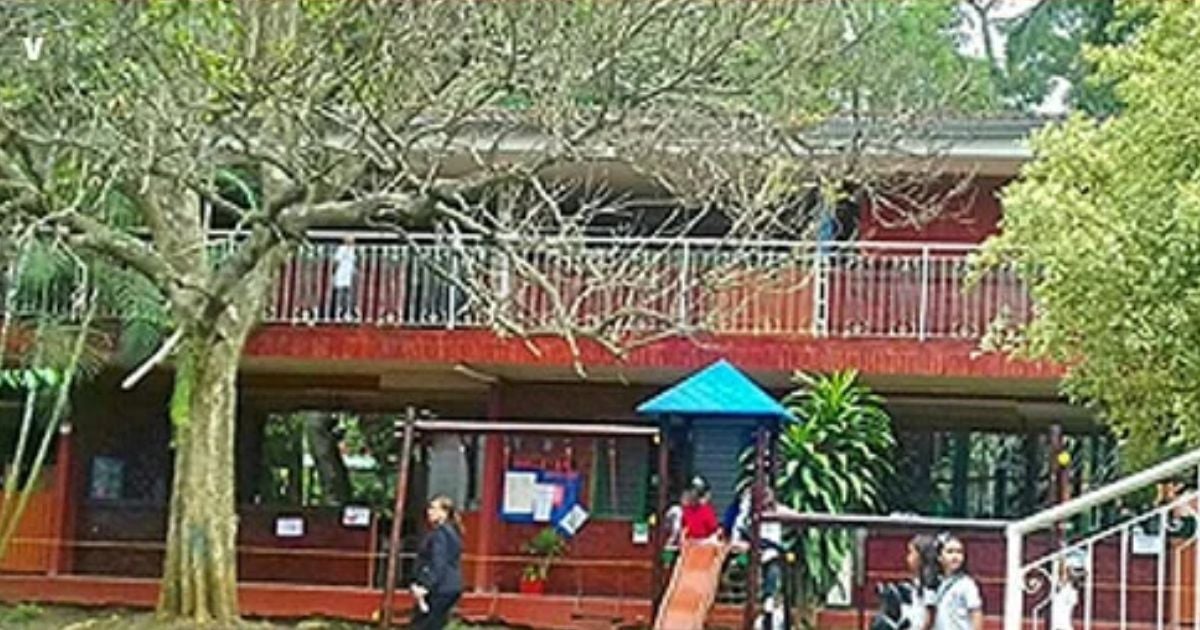
Founded humbly in 1983 in a residential house in the Nueva Tequendama neighborhood by educator Esperanza Rivas Montes, the school has evolved from a boutique kindergarten into a sprawling 30,000-square-meter campus situated along the scenic La Buitrera road, just minutes from Cali’s Unicentro commercial hub. Operating as a private, mixed-gender institution running on Calendar B (the academic year spanning from August to June), it currently accommodates approximately 900 students. Rivas Montes remains at the helm, having institutionalized a proprietary pedagogical framework known as "sensory bilingualism"—a method leveraging specialized didactic materials from the earliest childhood grades to forge an unshakeable cognitive foundation for advanced high school coursework.
As the educational community awaits the impending publication of the 2026 ICFES institutional rankings—slated for release in November—all eyes are once again turning toward Cali. The burning questions are twofold: Will the Diana Oese secure an unprecedented sixth consecutive year in the national top five, and can it finally break through to capture the elusive number-one crown?
Chronology: The Road to Consistent Excellence
To understand the magnitude of Colegio Bilingüe Diana Oese’s current run, one must examine the timeline of its evolution, both in terms of physical expansion and its steady ascent up the national scoring ladder.
1983–1993: The Genesis in Nueva Tequendama
The institution’s origins are deeply rooted in grassroots pedagogical vision. In 1983, Esperanza Rivas Montes, a specialist in bilingual education, rented a house in Cali’s Nueva Tequendama neighborhood. What began as a modest preschool designed to introduce children to dual-language immersion at an early age steadily grew in demand. Over its first decade, the project expanded its curriculum grade by grade, transforming from an early childhood center into a fully fledged primary and secondary school.
The Shift to a Campustyle Model
As enrollment surged, the original urban facilities could no longer support the school’s holistic vision. The institution relocated to its current campus on the way to La Buitrera. Spanning 30,000 square meters of verdant, open-air grounds, the campus was purposely designed to integrate nature into the learning environment—a physical manifestation of Rivas Montes’s belief that spatial freedom enhances cognitive development.
2013 and 2016: Early Peaks
Long before its current streak, the Diana Oese had already signaled its academic might. School records indicate that the institution claimed the absolute number-one spot nationwide in the ICFES Saber 11 examinations in both 2013 and 2016, proving that its early successes were not historical anomalies but the result of a replicable academic model.
2021–2025: The Unbroken Five-Year Streak
The modern era of the school’s dominance is defined by unprecedented consistency in the Saber 11 evaluations (which test critical reading, mathematics, social studies, natural sciences, and English).
- 2021: The school opened the decade’s tracked cycle with 376 points, securing the fifth position nationally. The list that year was led by Chía’s Instituto Studium, which posted 406 points.
- 2022: The Diana Oese climbed one spot to fourth place, improving its average to 377.7 points. Boston Internacional led the pack with 381.8 points.
- 2023: A significant leap propelled the school to 388.4 points, earning it the second-place ranking nationwide, trailing only Bucaramanga’s Bilingüe Divino Niño (393.7 points).
- 2024: Maintaining its high standards, the institution registered 387.6 points, finishing third behind Bogotá’s Liceo Campo David (398.2 points) and Cristiano Monte Hebrón (392.9 points).
- 2025: Marking its peak performance of the period, the school hit 394.6 points, returning to the second national position, narrowly edged out by Armenia’s Gimnasio Contemporáneo (396.5 points).
Across this five-year window, the Diana Oese accumulated a total upward shift of 18.6 points, navigating a landscape where the national leader changed every single year.
Supporting Data: The Widening Educational Chasm in Colombia
While the achievements of elite institutions like the Diana Oese highlight the pinnacle of Colombian scholastic capability, comparative data underscores a stark, systemic divide within the nation’s educational framework.
The Macro Picture
- National Average: In the 2024 Saber 11 evaluations, the overall national average hovered at a meager 259 points out of 500. This baseline reveals that elite schools scoring near or above 390 points are operating in an entirely different stratosphere compared to the median Colombian student.
- Regional Inequality: The geographic disparities in educational outcomes remain profound. According to an analysis of the 2025 ICFES scores, out of the 100 lowest-performing institutions in the entire country, an alarming 47 schools were located in the department of Chocó.
Score Volatility at the Top
Media outlets and consultancies compile these national rankings using weighted averages derived from the five core tested competencies:

- Critical Reading (Lectura Crítica)
- Mathematics (Matemáticas)
- Social Studies and Citizenship (Sociales y Ciudadanas)
- Natural Sciences (Ciencias Naturales)
- English (Inglés)
Because different publications apply slightly different weighting formulas to these five pillars, decimal variations often emerge when comparing lists published by outlets like La República versus independent educational consultancies. Nevertheless, the underlying trend remains indisputable: while the top spot in Colombia is volatile—rotating annually among institutions in Bogotá, Chía, Bucaramanga, Armenia, and Cali—the Diana Oese remains the single constant anchor at the summit.
Official Responses and Pedagogical Philosophy
In the wake of La República‘s widespread coverage of the 2025–2026 rankings, founder and director Esperanza Rivas Montes stepped forward to demystify the formula behind her school’s enduring success. Rather than attributing their high marks to grueling, high-pressure test-prep bootcamps, Rivas Montes emphasizes a holistic, student-centric philosophy.
"We study the individual needs of each student and actively cultivate a genuine love for learning," Rivas Montes explained in interviews with national media.
According to the veteran educator, systemic improvements in Colombian education will not be achieved through standardized pressure, but through structural support within the classroom. She highlights three fundamental pillars necessary to elevate the broader educational landscape:
- Abundant Didactic Materials: Ensuring classrooms are rich with tactile, sensory learning tools from early childhood onward.
- Teacher Retention and Dedication: Cultivating stable, well-supported faculty environments where teacher absenteeism is minimized.
- Intentional Pedagogical Planning: Moving away from rote memorization in favor of structured, progressive lesson mapping tailored to developmental milestones.
This philosophy manifests daily through their "sensory bilingualism" model, which integrates English and Spanish not merely as subjects to be studied, but as immersive environments for cognitive processing from the nursery level upward. By the time students reach the rigorous demands of the Saber 11 exam, bilingualism and critical thinking are second nature.
Implications: The 2026 Outlook and Future Questions
As Colombia transitions into the final quarter of 2026, the implications of the Diana Oese’s sustained brilliance resonate on multiple levels.
The Immediate Horizon (Late 2026)
Students who sat for the Saber 11 examinations earlier this year have already accessed their individual scores through the ICFES portal. However, the institutional aggregations—the coveted lists that rank schools from best to worst—remain under wraps. ICFES officials have confirmed that the official institutional data release is scheduled for November.

Until then, the status of the Diana Oese for the 2026 academic cycle remains an open question. Educational analysts are divided on two main fronts:
- The Streak: Can the institution successfully secure its sixth consecutive year inside the national top five, further cementing a record unlikely to be broken anytime soon?
- The Crown: Will they finally bridge that microscopic gap in the decimals to claim the absolute number-one spot in the country—a feat they last accomplished a decade ago in 2016?
The Broader Societal Impact
Beyond the prestige of league tables, the success of the Colegio Bilingüe Diana Oese serves as both an inspiration and a challenge. It proves that private, regional institutions outside the traditional political and economic epicenters of Bogotá can build sustainable models of world-class academic rigor.
However, it also casts a sharp light on Colombia’s persistent educational inequality. As long as top-tier schools average nearly 400 points while the national average languishes near 259—and departments like Chocó struggle with systemic neglect—the gap between educational utopias like La Buitrera and the reality of rural or marginalized public schools will remain one of the nation’s most formidable structural hurdles.
For now, all eyes are locked on Cali. When November brings the new ICFES data, the academic community will discover whether the Diana Oese has written yet another golden chapter in its four-decade history.


Leave a Reply