

By Global Environmental Desk
Updated for the 2026–2027 Monitoring Cycle
Main Facts
As the meteorological phenomenon known as El Niño tightens its grip across Colombia, scientists and environmental authorities warn of a critical disconnect: while the term has become a permanent fixture in daily headlines, deep systemic comprehension of its mechanics and the implementation of enduring everyday conservation habits remain dangerously lagging.
According to the latest projections from the Institute of Hydrology, Meteorology and Environmental Studies (IDEAM), an extraordinary probability exceeding 90% indicates that El Niño will intensify into a severe episode during the final quarter of 2026 and persist well into early 2027. This climatological shift poses immediate and profound threats to national water availability, agricultural production, hydroelectric energy generation, and macroeconomic stability.
Despite repeated warnings, many citizens continue high-consumption routines—such as taking prolonged showers, leaving faucets running while washing dishes, and maintaining inefficient energy use—unaware of how micro-habits compound macro-level crises.
Core Highlights:
- High Probability of Intensity: IDEAM and the World Meteorological Organization (WMO) place the likelihood of a strong-to-severe El Niño event persisting through February 2027 at near 100%.
- Geographic Variability: El Niño is not a uniform drought; its manifestation varies dramatically by region, causing acute water scarcity in some areas while leaving others unaffected or even prone to increased rainfall.
- Urban Vulnerabilities: Major urban centers like Bogotá and Medellín have already faced unprecedented water rationing and scheduled service interruptions due to depleted reservoirs and stressed municipal supply systems.
- The Human Factor: Experts emphasize that true resilience requires moving past superficial conservation mandates toward comprehensive environmental education that connects individual domestic actions to national resource security.
Chronology
To understand the current emergency, it is vital to trace the evolution of El Niño cycles and their escalating impact on Colombian infrastructure over recent years:
- Pre-2023 (Early Warning Phase): Global meteorological agencies begin tracking anomalous warming in the equatorial Pacific, signaling the return of El Niño after a prolonged La Niña phase. IDEAM issues early advisories regarding potential rainfall deficits in Andean and Caribbean regions.
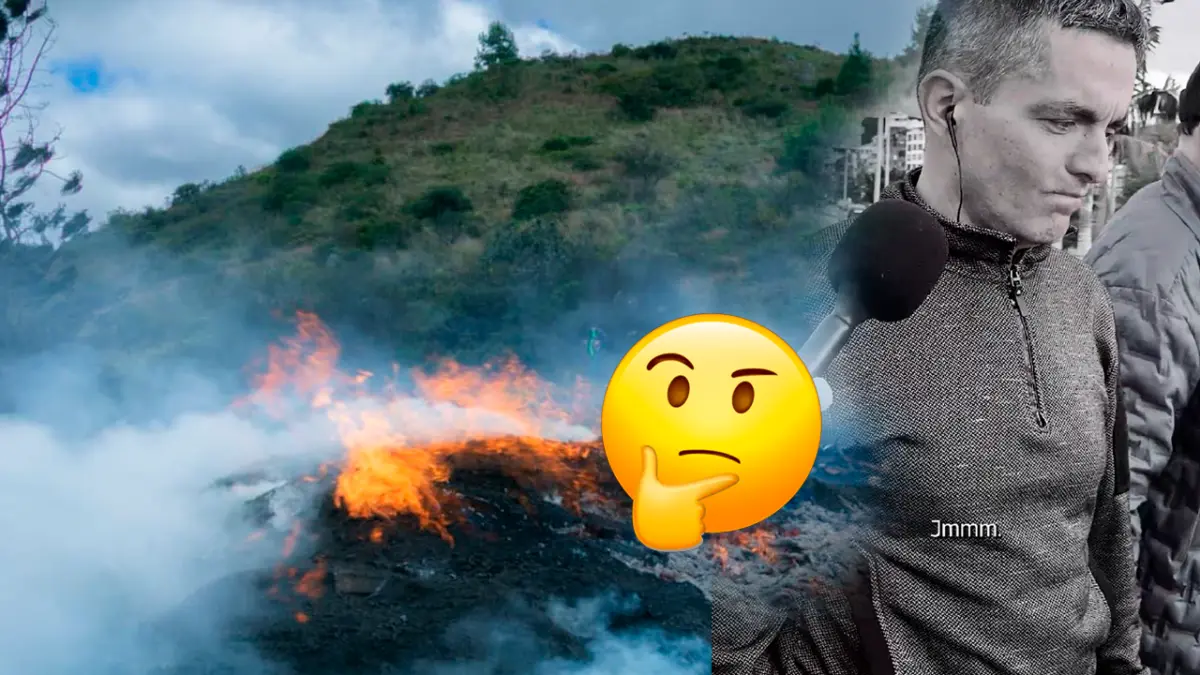
- Late 2023 – Early 2024 (Initial Crisis): Temperatures spike across Colombia. Forest fires ravage thousands of hectares of native vegetation, particularly in the Eastern Hills surrounding Bogotá and departments across the Andean region. Reservoirs supplying major cities begin dropping at alarming rates.
- April 2024 (The Turning Point for Bogotá): Due to critically low water levels in the Chingaza reservoir system—the primary water source for the capital—the Mayor’s Office of Bogotá officially implements strict, rotating water rationing protocols. This marks a profound psychological shift for citizens, bringing abstract climate discussions into the reality of daily urban life.
- 2025 (Transient Relief and False Security): As transitional weather patterns offer temporary respite, public vigilance wanes. Authorities warn that inter-annual variability does not mean the long-term threat has passed, urging structural water management reforms.
- Late 2026 – Early 2027 (Current Intensification Phase): IDEAM and international bodies report that trade winds have destabilized significantly. Warm surface waters stagnate in the eastern Pacific, driving the current cycle toward peak intensity. Cities like Medellín introduce scheduled service interruptions as local water sources face unprecedented demand pressures.
Supporting Data and Meteorological Mechanics
To grasp why El Niño demands such urgent preparation, one must examine the atmospheric and oceanic engines driving the phenomenon.
The Science Behind El Niño
Laura Natalia Ruíz, an environmental manager at Konrad Lorenz University, breaks down the core scientific drivers of the cycle:
"The trade winds lose stability and weaken. As a consequence, warmer surface currents remain stagnant in the Pacific Ocean, and wind currents can even change direction and displace toward the South American continent."
This disruption prevents cold, nutrient-rich deep ocean waters from upwelling off the coast of South America (the Humboldt Current effect), drastically altering atmospheric pressure systems, cloud formation, and precipitation pathways.
Regional Disparities
A common misconception is that El Niño turns the entire country into an arid wasteland. In reality, IDEAM emphasizes that the phenomenon does not affect every region of Colombia in the same way:
- The Andean and Caribbean Regions: Typically suffer the most severe droughts, high temperatures, and heightened risks of forest fires.
- The Pacific and Parts of the Amazon: May experience distinct hydrological behaviors, sometimes seeing normal or even above-average rainfall, complicating national disaster response strategies.
Projections and Statistics
- Duration: The World Meteorological Organization (WMO) estimates a near 100% probability that the current episode will endure through February 2027.
- Energy Vulnerability: Because Colombia relies heavily on hydroelectric power, prolonged dry spells directly threaten the stability of the National Interconnected System (SIN), raising the specter of energy rationing if water levels in major reservoirs drop below critical thresholds.
Official Responses and Institutional Strategies
National and local governments, alongside scientific institutions, have ramped up monitoring and regulatory frameworks, yet institutional responses increasingly emphasize that policy alone cannot solve the crisis.
The Role of IDEAM and National Agencies
IDEAM continues round-the-clock monitoring of sea surface temperatures, atmospheric pressure anomalies, and river flow rates. These real-time datasets allow government bodies to issue early warnings to agricultural sectors, energy operators, and municipal water utilities. However, authorities note that municipal infrastructure in many regions suffers from high leakage rates—sometimes losing up to 40% of treated water through aging distribution pipes—making structural infrastructure upgrades an urgent public priority.
Moving Beyond Mandates to Environmental Education
Experts argue that traditional government campaigns—often limited to brief public service announcements telling people to "save water"—fail to create lasting behavioral change.
According to Laura Natalia Ruíz, the solution lies in integrated environmental education:
"It is important to consider environmental education: informing citizens not only to save natural resources, but connecting the community by explaining that lower rainfall means greater pressure exerted on those resources, and facilitating these habits."
Rather than viewing conservation as a punitive restriction, educational frameworks must reframe resource management as a collective civic duty directly tied to public health, food security, and economic survival.
Implications: Economic, Social, and Environmental
The cascading effects of a severe El Niño extend far beyond dry lawns and yellowing hillsides, threatening the foundational pillars of Colombian society.
1. Food Security and Agricultural Pressures
Agriculture is heavily dependent on predictable rainfall cycles. Prolonged droughts delay planting seasons, stunt crop growth, and reduce livestock productivity. When agricultural yields drop, food prices in urban supermarkets inevitably rise, placing an immense burden on low-income households and exacerbating food insecurity across vulnerable communities.
2. Energy Reliability and Economic Productivity
Colombia’s heavy reliance on hydroelectric generation makes its industrial and commercial sectors acutely vulnerable to energy crunches. A drop in reservoir levels forces thermal power plants to ramp up production—relying on imported fossil fuels, which drives up electricity tariffs and strains national economic competitiveness.
3. Public Health and Urban Habitability
Water scarcity directly compromises sanitation and hygiene standards, raising risks of waterborne illnesses. Furthermore, the dry conditions that fuel intense forest fires release massive quantities of particulate matter into the atmosphere, causing spikes in respiratory and cardiovascular hospitalizations in major metropolitan areas.
4. The Individual and Collective Call to Action
While citizens cannot alter oceanic temperatures or restore disrupted trade winds, individual actions dictate whether urban water systems survive or collapse. Environmental experts recommend a series of actionable, everyday protocols:
- Water Conservation: Turn off faucets while brushing teeth or shaving; immediately report and repair plumbing leaks; collect rainwater for domestic cleaning or gardening; and significantly shorten shower times.
- Energy Efficiency: Maximize natural lighting during daylight hours; unplug phantom-load electronics when not in use; and optimize the use of heavy appliances during off-peak hours.
- Fire Prevention: Strictly avoid burning garbage, discarding glass bottles in dry brush, or lighting campfires in rural and suburban zones prone to forest fires.
- Consumption Auditing: Regularly review utility bills to track usage patterns and identify specific areas where household waste can be eliminated.
As El Niño marches toward its projected peak in late 2026 and early 2027, Colombia stands at a crossroads. Navigating this climate stress test will require unprecedented synergy between advanced scientific forecasting, aggressive governmental infrastructure investment, and a deeply ingrained cultural commitment to environmental stewardship.



Leave a Reply