

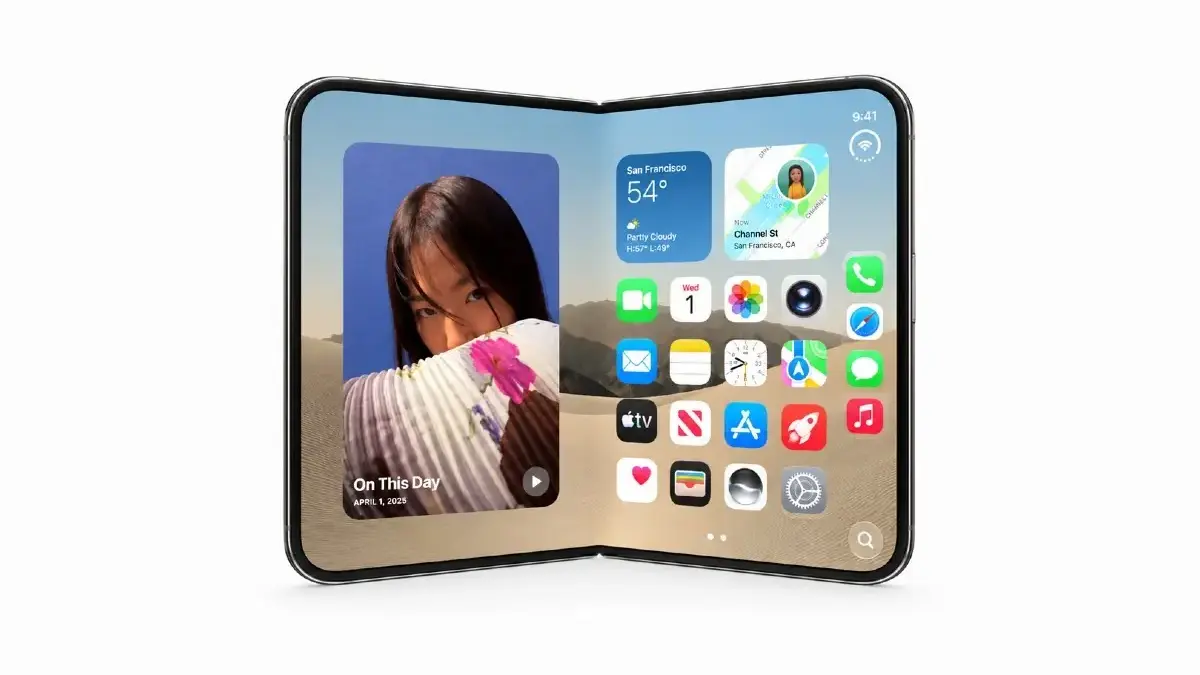
CUPURTINO, CALIFORNIA — Apple’s recent, highly anticipated entry into the foldable smartphone market with the debut of the groundbreaking iPhone Duo has fundamentally altered the mobile landscape. But if recent supply chain whispers and industry reports are any indication, Cupertino’s foldables journey is only just beginning.
According to renowned Bloomberg journalist and Apple insider Mark Gurman, the tech giant is already laying the groundwork for a broader ecosystem of foldable devices. Chief among these rumored expansions is the iPhone Duo Max—a supersized iteration designed to push the boundaries of portable screen real estate. Yet, the ambitions do not stop there; industry analysts suggest that adopting the "Duo" moniker opens the floodgates for an entire family of foldable form factors, potentially including "Mini" and "SE" variations in the years to come.
1. Main Facts: The Blueprint of Apple’s Foldable Ambitions
To understand where Apple might be heading, it is vital to examine where the company currently stands with its inaugural foldable device. Released earlier this month, the original iPhone Duo staked its claim in the market with a carefully calibrated set of specifications:
- The Inner Display: A sprawling 7.6-inch Super Retina XDR folding panel that unfolds into a tablet-like canvas.
- The Outer Cover Screen: A compact, highly usable 5.4-inch display that maintains standard iOS app proportions.
- Aspect Ratio Consistency: Apple engineered both screens to preserve uniform aspect ratios, ensuring a seamless visual transition when users switch between closed and open states.
- Productivity Integration: Unlike many competitors, the initial iPhone Duo features native support for the Apple Pencil USB-C, transforming the inner canvas into a digital notebook and sketching pad.
Enter the iPhone Duo Max
The primary catalyst for the current wave of speculation is the development of the iPhone Duo Max. According to Gurman’s sources, this device would serve as a larger, more expansive alternative to the standard iPhone Duo. The defining characteristic of the "Max" variant would be a significantly larger internal folding panel.
However, exact dimensions remain shrouded in secrecy. While early speculation might naturally gravitate toward figures hovering around 8.0 to 8.5 inches to rival ultra-large Android foldables, industry analysts caution that any specific measurements at this stage remain purely speculative. Furthermore, the reports are currently silent on whether scaling up the internal display will trigger a proportional enlargement of the outer cover screen, or how engineers plan to manage potential weight and thickness penalties.
2. Chronology: From Internal Codename "Ultra" to the "Duo" Era
The path to the iPhone Duo—and the subsequent planning of its successor models—was neither swift nor straightforward. Apple’s journey into foldables represents years of secretive research, prototype iteration, and internal rebranding.
Phase 1: The R&D Years (2020–2024)
Long before public murmurs confirmed Apple’s interest in bendable glass, Cupertino’s engineering teams were quietly filing patents for durable hinges, ultra-thin glass (UTG), and crease-minimization technology. During this multi-year development cycle, hardware and software teams grappled with how iOS would adapt to dual-screen and flexible-screen paradigms.
Phase 2: The "Ultra" Moniker (Late 2024–Early 2025)
According to internal disclosures highlighted by Bloomberg, Apple employees working on the project initially referred to the device under the working title "iPhone Ultra." Within Apple’s internal hierarchy, "Ultra" denotes the absolute pinnacle of technology, power, and price—a branding philosophy successfully executed with the Apple Watch Ultra and M-series processor tiers.
Phase 3: The Pivot to "Duo" (Mid 2025–Launch)
As the device moved closer to commercialization, leadership decided that "Ultra" did not accurately capture the essence of a foldable form factor. Apple ultimately settled on "Duo," a succinct three-letter suffix that aligns neatly with existing branding architectures like "Air" and "Pro." More importantly, marketing executives realized that "Duo" establishes a foundational family name, making it significantly easier to introduce diverse structural variations down the line.
Phase 4: The Horizon—Max, Mini, and SE (2026 and Beyond)
Following the successful commercial launch of the base iPhone Duo, the product roadmap has shifted toward diversification. Reports indicate that Apple is actively evaluating how to scale the technology up and down, mapping out a multi-tiered portfolio designed to capture different consumer demographics and price points.
3. Supporting Data: The Strategic Logic Behind "Max," "Mini," and "SE"
Apple’s potential rollout of a tripartite family—Max, Mini, and SE—is a calculated play borrowed from its immensely successful traditional iPhone playbook. By diversifying the foldable lineup, Apple can address distinct consumer pain points and use cases.
+-----------------------------------------------------------------+
                 PROPOSED APPLE FOLDABLE ECOSYSTEM
+-------------------+---------------------+-----------------------+
| Model Variant     | Form Factor Style   | Target Use Case       |
+-------------------+---------------------+-----------------------+
| iPhone Duo (Base) | Book-style (7.6")   | General productivity  |
| iPhone Duo Max    | Enlarged Book-style | Power users, Canvas   |
| iPhone Duo Mini   | Vertical Clamshell  | Pocketability, Styling|
| iPhone Duo SE     | Simplified Book     | Entry-level adoption  |
+-------------------+---------------------+-----------------------+
The Power User Appeal: iPhone Duo Max
The standard 7.6-inch panel on the current iPhone Duo already offers a substantial workspace compared to traditional slabs. However, power users, multi-taskers, and professionals frequently demand maximum screen estate.
- Multitasking Utility: A larger canvas on the Duo Max would allow for truly comfortable side-by-side app utilization, heavy spreadsheet management, and immersive media consumption.
- Apple Pencil Synergy: With the inclusion of USB-C Apple Pencil support already established in the ecosystem, a larger screen makes the Duo Max an even more compelling digital sketchbook or PDF annotation tool.
The Pocket-Friendly Alternative: iPhone Duo Mini
While book-style foldables cater to productivity enthusiasts, vertical "clamshell" foldables have captured a massive share of the consumer market by prioritizing style and pocketability.
- The Flip Concept: A rumored Duo Mini would likely adopt a vertical folding mechanism (akin to the Galaxy Z Flip or Motorola Razr series).
- Compact Footprint: When closed, it occupies half the pocket space of a standard smartphone while still providing a full-sized experience upon opening. This design historically appeals to users who prioritize fashion, portability, and one-handed convenience.
Democratizing the Tech: iPhone Duo SE
Foldable smartphones remain notoriously expensive, often serving as ultra-premium luxury items. To drive mass-market adoption, Apple is reportedly contemplating a Duo SE variant.
- Cost Reductions: While component specifics remain unknown, an SE foldable would likely feature simplified internal configurations—potentially scaling back camera systems, utilizing previous-generation processors, or employing slightly more cost-effective hinge materials.
- Accelerating Adoption: By lowering the barrier to entry, Apple could successfully convert mainstream consumers who are hesitant to spend upwards of $1,800 on an experimental form factor.
4. Official Responses and Industry Reactions
As expected, Apple has maintained its trademark corporate silence regarding unannounced products, declining to comment on Mark Gurman’s reports concerning the iPhone Duo Max or future lineup extensions.
However, reactions from industry analysts and competitors have been swift and vocal:
- The Analyst Perspective: Wall Street tech analysts view the rumored expansion as a logical necessity. "Apple rarely enters a new product category with just a single device for long," notes a prominent tech market researcher. "Once the supply chain matures and manufacturing yields stabilize, diversification is the fastest way to maximize market share."
- The Competitor Landscape: Android manufacturers—led by Samsung, Google, and various Chinese OEMs—have spent years iterating through multiple generations of foldables, offering both book-style and flip-style devices. Apple’s entry into the market with the Duo, followed by potential Max and Mini variants, validates the foldable category once and for all, raising consumer awareness and driving component innovation across the entire industry.
5. Implications: What This Means for the Future of Mobile Computing
The potential evolution of Apple’s foldable family carries profound implications for software developers, hardware designers, and consumers alike.
Software Optimization at Scale
Apple’s historic strength lies in its tight hardware-software integration. Introducing varied screen sizes within a single "Duo" portfolio means that iPadOS and iOS will need to become increasingly fluid. Developers will be incentivized to build adaptive applications that scale seamlessly—not just from a small screen to a large tablet, but across diverse folding aspect ratios.
Pricing and Market Positioning
The introduction of Max, Mini, and SE variants would fundamentally shift how consumers purchase premium technology.
- If Apple positions the Duo Mini as an accessible entry point to the foldable lifestyle, it could cannibalize sales of traditional high-end candy-bar iPhones.
- Conversely, a Duo Max could establish an entirely new ultra-premium tier, pushing average selling prices (ASPs) even higher for enterprise-level buyers and mobile power users.
The Road Ahead
For now, the iPhone Duo Max, along with its theoretical Mini and SE siblings, remains a vision of tomorrow rather than a product on shelves today. The foundational success of Apple’s first-generation foldable will ultimately dictate the speed and scope of these future releases.
As Cupertino tests the waters with its 7.6-inch pioneer, one thing is abundantly clear: the era of the flexible screen is here to stay, and Apple is systematically preparing to conquer every corner of it.




Leave a Reply