

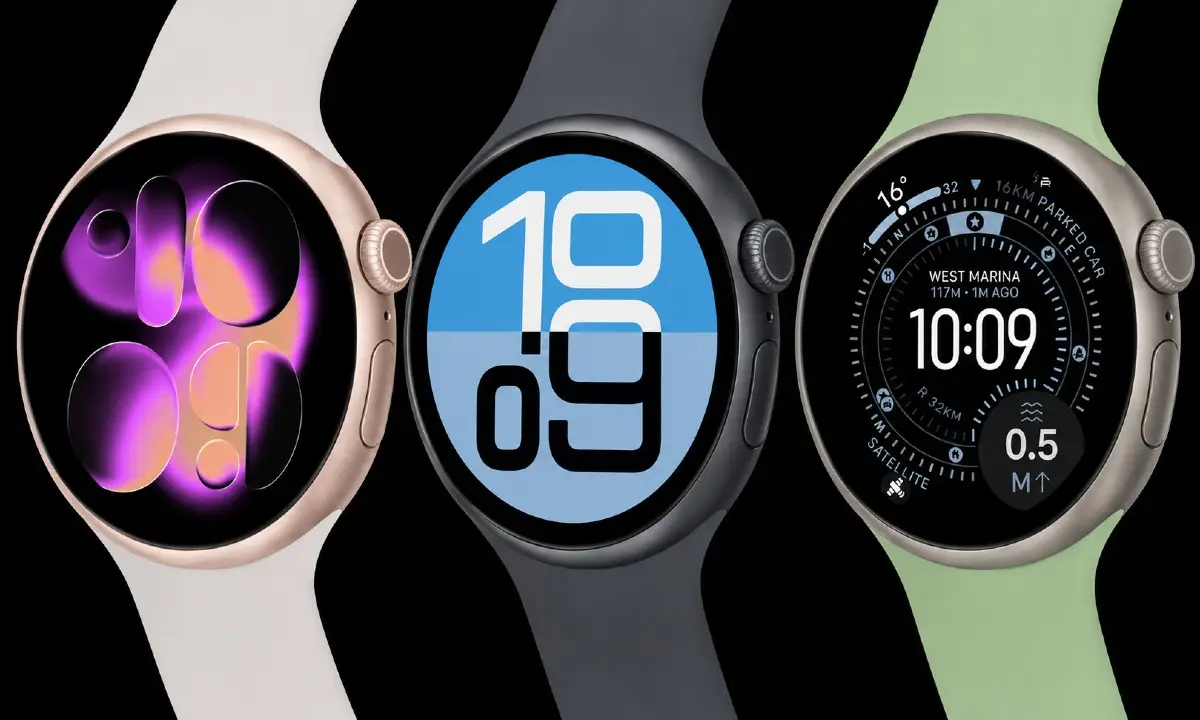
Cupertino, California — Apple is quietly weighing the most profound philosophical and structural evolution in the history of its wrist-worn devices since the debut of the original Apple Watch in 2015. According to an extensive investigative report by Bloomberg’s seasoned tech journalist Mark Gurman, the Silicon Valley giant is actively exploring a paradigm-shifting roadmap that includes a circular Apple Watch design, an expanded array of hardware form factors, and screenless fitness-tracking accessories.
If brought to commercial fruition, these concepts would represent a definitive break from a design language that has remained remarkably consistent for over ten years. As consumer demands shift toward more discreet, continuous health monitoring, Apple’s internal laboratories are evidently testing whether the future of personal technology requires a glowing display strapped to the wrist at all times—or if true innovation lies in stepping away from it.
Main Facts: A Paradigm Shift in Cupertino
The core revelations of the recent reports point to a multifaceted recalibration of Apple’s wearable strategy. For a decade, the standard-issue rectangular Apple Watch has reigned supreme as the undisputed king of the smartwatch market, serving as an extension of the iPhone, a notification hub, and a competent fitness tracker. Now, Apple is exploring alternative frontiers:
- The Circular Apple Watch: For the first time, Apple is seriously investigating a round-dial form factor. This would break the mold of the classic rectangular interface that has defined watchOS since its inception.
- Screenless Fitness Wearables: In a move that mirrors the minimalist philosophy of the Oura Ring, Apple is studying lightweight, screenless accessories dedicated entirely to biometric tracking, sleep analysis, and physical activity logging without the distraction of interactive visual interfaces.
- Diversified Hardware Tiers: By experimenting with both entry-level and high-end alternatives, Apple aims to cater to fragmented consumer preferences, challenging the notion that a single shape fits all lifestyles.
- AI-Powered Health Analytics: Beyond the physical hardware, Apple is doubling down on software, supercharging its Health ecosystem with advanced artificial intelligence to transform raw sensor data into hyper-personalized, actionable health insights.
Chronology: From the Original Watch to the Future of Wearables
To understand the magnitude of Apple’s current internal explorations, it is necessary to trace the historical timeline of the company’s wearable ecosystem and the evolving market forces that have shaped its trajectory.
2014–2015: The Birth of the Smartwatch Standard
- September 2014: Apple formally announces the Apple Watch, introducing the world to a square-faced, digital crown-equipped companion device meant to bridge fashion and technology.
- April 2015: The original Apple Watch hits shelves. Despite skepticism regarding battery life and utility, it quickly establishes the benchmark for the modern smartwatch industry, setting a strict design blueprint centered on interactive touchscreens and deep smartphone integration.
2016–2022: Iterative Dominance and Specialization
- 2016–2020: Apple refines the formula across successive generations (Series 1 through Series 6), adding GPS, cellular connectivity, electrocardiogram (ECG) sensors, and blood oxygen monitoring. The rectangular chassis remains structurally sacred.
- 2022: Apple diversifies the lineup by introducing the rugged, larger-format Apple Watch Ultra, aimed at endurance athletes, alongside the value-focused Apple Watch SE. However, the core visual and functional identity remains anchored to the rectangle.
2023–2025: The Rise of the Dispersed Wearable Market
- 2023–2024: Competitors like Oura, Samsung (with the Galaxy Ring), and various fitness-band manufacturers capitalize on a growing consumer fatigue regarding notification overload. Wearables without screens—focused purely on sleep tracking, recovery, and biometric longevity—surge in popularity.
- Late 2025: Industry leaks indicate that Apple’s internal R&D teams are heavily debating structural changes to future product pipelines, shifting focus from mere incremental hardware upgrades to fundamental design overhauls.
2026 and Beyond: The Threshold of Reinvention
- August 2026: Mark Gurman’s comprehensive Bloomberg investigation reveals that Apple is deeply immersed in exploring circular watches and screenless fitness bands.
- September 2026 (Expected): Ahead of Apple’s traditional autumn iPhone and hardware event, industry consensus suggests that near-term releases (such as the anticipated Watch Series 12 and Watch Ultra 4) will stick to proven designs, proving that these radical circular and screenless concepts are long-term plays still winding their way through the prototyping phase.
Supporting Data and Market Dynamics
Apple’s sudden willingness to look beyond its rectangular orthodoxy is not happening in a vacuum. It is a calculated reaction to shifting consumer habits and aggressive market diversification.
The Rise of the Screenless Competitor
For years, the smartwatch value proposition rested on interactivity: reading texts, taking phone calls, and viewing vibrant complications at a glance. However, market research indicates a growing demographic of consumers who experience "notification fatigue."
Discreet health trackers—most notably smart rings and minimalist bands—have captured significant market share. These devices offer distinct advantages:
- Extended Battery Life: Without power-hungry OLED touchscreens running complex operating systems, screenless wearables frequently boast battery runtimes lasting up to a week or more.
- Ergonomic Comfort: Devices stripped of heavy screens and glass fronts are vastly superior for uninterrupted overnight sleep tracking.
- Reduced Digital Distraction: Users are increasingly valuing health insights that work quietly in the background without demanding constant cognitive engagement.
The Role of Artificial Intelligence in Health
Hardware is only half of Apple’s equation. According to insider reports, the company is developing major updates to its proprietary Health application, supercharged by advanced artificial intelligence models.
Instead of simply presenting raw biometric numbers—such as heart rate variability (HRV), skin temperature, and sleep stages—Apple’s AI initiatives aim to synthesize this data into intuitive, preventative health coaching. Whether data is gathered from a traditional Apple Watch, a hypothetical circular watch, or a screenless health band, the intelligence layer will serve as the glue holding Apple’s expanding wearable ecosystem together.
Official Responses and Corporate Stance
As is standard operating procedure for Cupertino, Apple has not officially confirmed or denied any reports regarding a circular Apple Watch or a screenless fitness accessory.
The company maintains a strict policy of silence concerning unannounced products, research and development pipelines, and internal design deliberations. Industry analysts note that Apple frequently prototypes dozens of experimental form factors that never see the light of day. A design exploration does not guarantee a commercial launch; rather, it indicates that Apple’s engineering teams are aggressively stress-testing the boundaries of their product categories to anticipate where the market might head in the late 2020s and early 2030s.
Implications: What a Circular or Screenless Future Means for Users
The implications of Apple’s exploratory pivot extend far beyond aesthetics. They touch upon interface design, software architecture, and consumer identity.
1. The UX Challenge of a Circular watchOS
Transitioning from a rectangle to a circle is far more than swapping out a watch chassis. Decades of graphical user interface (GUI) design have proven that rectangular displays are mathematically superior for handling text, lists, and application grids.
If Apple introduces a circular smartwatch, watchOS will require a profound structural rewrite. App layouts, notification cards, complications, and gesture navigations must be reimagined to fit harmoniously within a round boundary. Furthermore, a circular watch would inherently invite comparisons to traditional Swiss mechanical timepieces, potentially opening up a new luxury demographic that currently rejects smartwatches for looking too "tech-centric."
2. Cannibalization vs. Expansion
Launching a screenless fitness wearable would force Apple to walk a strategic tightrope. Historically, the Apple Watch succeeded because it was a powerful, multi-purpose communications device tethered to the iPhone.
A screenless tracker occupies a fundamentally different category—one where performance is judged by subtlety, battery endurance, and passive data collection. If Apple introduces such a device, it risks pulling users away from its traditional smartwatches, but it simultaneously captures a lucrative segment of consumers who refuse to wear a bulky screen on their wrist yet want Apple’s gold-standard health analytics.
3. Short-Term Reality vs. Long-Term Ambition
While the tech world buzzes with speculation over round dials and screenless bands, everyday consumers should temper their immediate expectations. Current leaks and supply chain tracking indicate that upcoming iterations—such as the forthcoming Apple Watch Series 12 and Apple Watch Ultra 4—will remain firmly rooted in the familiar design language established years ago. These near-term models will focus on evolutionary internal upgrades: faster processors, color palette expansions, and incremental fitness tracking refinements.
Conclusion
Apple stands at a fascinating crossroads. For ten years, the company dictated the terms of the smartwatch revolution with a single, highly successful formula: a rectangular screen packed with communication and health tools.
Now, driven by the quiet rise of screenless biometric trackers and shifting consumer demands for minimalist wellness management, Apple is examining its own reflection. Whether the future brings a sleek, classic circular watch, a discreet screenless health accessory, or both, one thing is certain: Apple is preparing to redefine what it means to wear technology on the body.
For now, these transformative concepts remain locked inside the exploratory labs of Cupertino—leaving users, competitors, and analysts to wonder when, not if, the biggest shake-up in smartwatch history will finally arrive.




Leave a Reply