

By Global Tech Desk
Published: November 2024
Main Facts
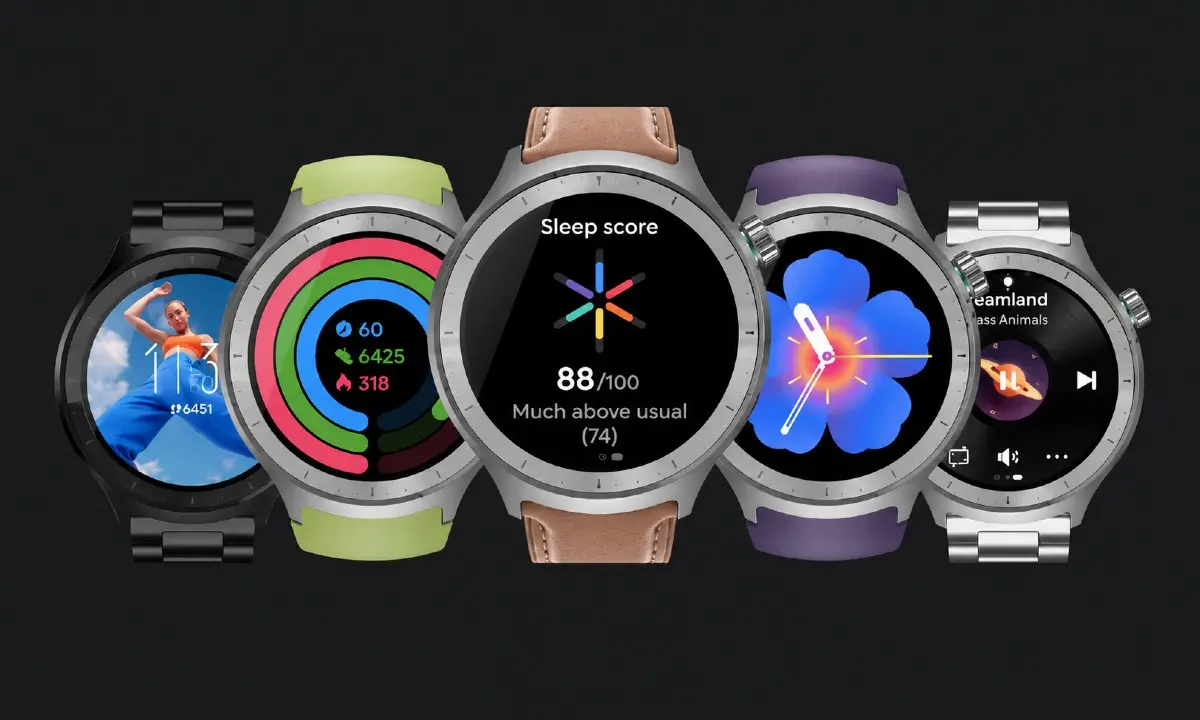
The landscape of the premium smartwatch market could be on the verge of a significant philosophical shift. According to a series of leaked images and industry reports originating from Mac Observer and subsequently analyzed by Android Headlines, Motorola is preparing to launch a high-end wearable provisionally dubbed the Motorola Watch Ultra.
However, the most compelling takeaway from these leaks is not the device’s rugged aesthetic or its refined titanium-style finish; rather, it is Motorola’s reported strategic decision to entirely bypass Google’s Wear OS.
Instead of opting for a resource-heavy, feature-dense operating system that typically demands daily or bi-daily recharges, Motorola is expected to lean into a proprietary Real-Time Operating System (RTOS). This architectural choice places a radical emphasis on battery longevity—a metric that has long been the Achilles’ heel of high-end smartwatches. While Motorola has yet to issue an official confirmation or press release regarding the device, the leak has reignited industry-wide debates about the true priorities of modern wearable consumers: infinite app ecosystems versus unmatched autonomy.
Key highlights from the leaked data include:
- The OS Dilemma: Abandoning Wear OS in favor of a lightweight RTOS to maximize energy efficiency.
- Battery Performance Expectations: Up to 13 days of battery life with the "Always-On Display" (AOD) disabled, or roughly 7 days with it active.
- Design Language: A robust 46mm circular chassis, aluminum framing, a rotating crown positioned at the 2 o’clock mark, and a secondary hardware button at the 4 o’clock position.
- Health Tracking Hardware: An enlarged optical sensor array on the rear casing designed for enhanced biometrics and heart-rate monitoring accuracy.
- Projected Launch Window: Industry insiders speculate a potential unveiling as early as 2027, possibly coinciding with the Consumer Electronics Show (CES) or the rollout of Motorola’s next-generation Razr foldable devices.
Chronology: How the Leak Unfolded
To understand the weight of the Motorola Watch Ultra rumors, one must trace the timeline of how this information surfaced within the tech journalism sphere and the subsequent reactions from the digital community.
Phase 1: The Initial Breach by Mac Observer
The story broke when Mac Observer, a publication typically known for its deep focus on the Apple ecosystem rather than Android-centric hardware leaks, published a series of exclusive images detailing a previously unseen Motorola smartwatch. The post immediately caught the attention of hardware enthusiasts due to the device’s distinct "Ultra" nomenclature and its aggressive, premium design language. Because Mac Observer rarely covers deep Android ecosystem pipelines, the initial publication sparked immediate skepticism among tech analysts regarding the provenance and authenticity of the CAD renders and promotional mockups.
Phase 2: Amplification and Deep Dive by Android Headlines
Shortly after the initial drop, Android Headlines—a media outlet with a long and established track record of tracking unreleased Android and Wear OS devices—retombed the images. Their hardware analysts conducted a granular breakdown of the physical buttons, the strap mechanisms, and the rear sensor cluster. While Android Headlines added contextual weight and credibility to the structural design analysis, they explicitly echoed the sentiment that Motorola had not authorized the material. Consequently, the tech community was left staring at a high-resolution ghost: a device that looks remarkably complete on paper, yet remains entirely unverified by its manufacturer.
Phase 3: The Broader Industry Reflection
As the images circulated across Reddit, X (formerly Twitter), and specialized tech forums, the narrative quickly shifted away from the lack of official confirmation and toward the underlying software strategy. Observers began connecting the dots with Motorola’s existing portfolio—specifically the current Moto Watch Ultra—recognizing that the choice of an RTOS platform was a deliberate, calculated move rather than a technical limitation.
Supporting Data: The Battle of Autonomy vs. Ecosystem
To contextualize Motorola’s rumored gamble, one must examine the current state of the premium smartwatch market, dominated by giants like Apple, Samsung, and Google.
| Feature / Metric | Wear OS Competitors (e.g., Galaxy Watch Ultra) | Leaked Motorola Watch Ultra (RTOS Target) |
|---|---|---|
| Operating System | Google Wear OS (App-heavy, complex) | Proprietary RTOS (Lightweight, efficient) |
| Average Battery Life | 1 to 3 days maximum | 7 to 13 days (depending on AOD settings) |
| App Ecosystem | Vast (Google Play Store support) | Curated / Closed (Optimized core features) |
| Target Audience | Urban professionals, deep smartphone integrators | Endurance athletes, frequent travelers, minimalists |
| Chassis Size | Typically 47mm+ bulky designs | 46mm circular aluminum casing |
The High Cost of Wear OS
Smartwatches powered by Google’s Wear OS—such as Samsung’s Galaxy Watch Ultra series—offer an unparalleled degree of ecosystem integration. Users can reply to complex messages via full keyboards, run third-party navigation apps, stream music independently via LTE, and download an endless array of utilities from the Google Play Store.
However, this computing power comes at a steep price: energy consumption. Processors running full-fledged operating systems must constantly manage background tasks, rendering engines, and continuous data syncing. As a result, users of these luxury wearables are conditioned to a strict ritual: removing their watches every 24 to 48 hours to place them on a charging puck. For many, this friction discourages continuous health tracking, particularly sleep monitoring, which requires wearing the device overnight.
The RTOS Advantage
Motorola’s alternative approach utilizes a Real-Time Operating System. An RTOS strips away the heavy framework of a consumer-facing application store, focusing instead on deterministic task execution, raw sensor polling, and absolute power efficiency.
By looking at Motorola’s current commercial offerings that utilize this system (such as the standard Moto Watch models), the performance metrics are stark. Disabling the power-hungry "Always-On Display" can yield up to 13 days of continuous operation, while keeping it active still permits roughly a full week away from the wall charger. For athletes training multiple times a week or individuals who travel frequently for business, eliminating the weekly charger-hunting routine fundamentally alters the utility of the gadget. It transforms the smartwatch from a high-maintenance companion into a true set-it-and-forget-it wearable.
Official Responses and Industry Context
As of this writing, Motorola has maintained strict silence. Representatives from the company have declined to comment on the leaks, adhering to standard corporate policy regarding unreleased hardware roadmaps.
This corporate silence leaves industry analysts to read between the lines. Motorola—now operating under the umbrella of Lenovo—has successfully carved out a profitable, design-forward niche, particularly through the global revival of its Razr flip phone lineup. Applying the "Ultra" moniker to a wearable suggests a desire to establish a halo product that can sit comfortably alongside premium smartphones without necessarily fighting Apple and Samsung on their own turf.
By bypassing Wear OS, Motorola avoids a direct, head-on collision with Google’s Pixel Watch ecosystem and Samsung’s deeply entrenched Galaxy ecosystem. Instead, they are carving out a parallel lane. They are targeting the user base that looks at a $700 smartwatch and asks: "Why do I need to charge an accessory more often than my smartphone?"
Furthermore, the design choices visible in the leaks point toward a maturation of Motorola’s hardware ambitions. The physical dimensions—a 46mm circular casing crafted from aluminum—place it squarely in the oversized, rugged aesthetic popularized by extreme sports watches. The inclusion of a rotating crown at the 2 o’clock position and a secondary utility pusher at 4 o’clock indicates a concerted effort to improve tactile navigation, ensuring that runners and cyclists can interact with the device while wearing gloves or dealing with sweat and rain.
On the health-tracking front, the enlarged optical sensor array visible on the rear shell suggests that Motorola is not cutting corners on biometrics. Even without a complex app store, a modern "Ultra" tier device must deliver hyper-accurate heart rate variability (HRV), blood oxygen saturation (SpO2), and sleep stage analysis to compete in the modern fitness tracking arena. The inclusion of magnetic charging pins rather than reliance solely on universal Qi pads also points toward faster, more reliable dock connectivity.
Implications: What This Means for the Future of Wearables
If the leaked details surrounding the Motorola Watch Ultra materialize into a commercial product by 2027, the ripples across the consumer technology market could be profound.
1. Re-evaluating "Smart" vs. "Connected"
The industry may witness a bifurcated definition of what makes a watch "smart." For years, the market assumed that more features automatically equaled a better product. However, consumer fatigue regarding battery anxiety is real. If Motorola proves that a high-end, premium-looking device with a 13-day battery life can capture the market’s imagination, competitors may start rethinking their own dependence on heavy operating systems for their rugged or endurance-focused tiers.
2. The Niche of the "No-Friction" Device
For a distinct segment of consumers, notifications and tiny apps on a wrist screen are more of a distraction than a benefit. These users want step tracking, accurate heart rate data, GPS mapping for runs, and uninterrupted sleep tracking. By catering specifically to this demographic with a chassis that screams luxury—aluminum framing, refined physical crowns, and synthetic leather-textured sweat-resistant bands—Motorola could successfully capture the executive-athlete crossover market.
3. The Risk of Isolation
Of course, abandoning Wear OS is not without its perils. A proprietary RTOS means users will not be able to download third-party applications, reply to WhatsApp messages with full QWERTY keyboards, or integrate deeply with niche Android utilities. If Motorola misjudges consumer demand for these ecosystem luxuries, the Watch Ultra risks being labeled as an "oversized fitness band" rather than a true smartwatch, regardless of how premium its exterior housing appears.
Final Thoughts
Until Motorola steps forward to confirm or deny these reports, the Motorola Watch Ultra remains an exercise in speculative design and strategic intent. Yet, the conversation it has sparked is invaluable. It forces both manufacturers and consumers to look past the blinding light of OLED screens and app marketplaces to confront a fundamental engineering truth: the best technology is often the one you forget you have to power. Whether Motorola can successfully translate this philosophy into a market-ready flagship in the years to come remains one of the most anticipated storylines in mobile hardware.



Leave a Reply