




Beyond the "Use-and-Throw" Era: How Robotic Mechanics Are Revolutionizing Orbital Sustainability
CAPE CANAVERAL, FL — Imagine having to abandon your family car on the side of the highway simply because it ran out of gas, despite the engine, transmission, and electronics being in pristine, working condition. To the average driver, this sounds economically absurd and ecologically irresponsible. Yet, for more than half a century, this has been the standard operating procedure for the global space industry. Hundreds of multi-million-dollar satellites—marvels of modern engineering equipped with cutting-edge sensors, state-of-the-art cameras, and sophisticated circuit boards—have been decommissioned and left to drift as expensive space junk purely because their propellant tanks ran dry.
Today, however, humanity stands on the precipice of a paradigm shift. A pioneering robotic mission developed by aerospace giant Northrop Grumman is set to rewrite the rules of orbital mechanics. By introducing robotic servicing and in-space refueling, this initiative could inaugurate an era where recycling, repairing, and upgrading hardware in the vacuum of space becomes as routine as taking a vehicle to your local mechanic.
Main Facts: The Anatomy of Orbital Obsolescence
At approximately 36,000 kilometers (roughly 22,300 miles) above the Earth’s surface lies an invisible, highly congested technological highway known as the geostationary orbit (GEO). In this distant realm, satellites travel at a precise velocity that matches the rotational speed of our planet. Consequently, from an observer’s perspective on the ground, these spacecraft appear perfectly stationary, hovering over the exact same spot on the map 24 hours a day.
This unique positioning makes GEO satellites invaluable. They serve as the backbone for global television broadcasts, high-speed internet data relays, and continuous meteorological tracking and climate alerts. However, maintaining a fixed position in this high-altitude orbit is a constant battle against physics. The gravitational pulls of the Sun and the Moon exert relentless tidal forces, subtly tugging spacecraft out of alignment. To counteract these perturbations and remain locked over their assigned geographic footprints, satellites must periodically fire onboard thrusters.
The fundamental crisis of the satellite industry is not electronic failure; it is propellant exhaustion. While solar panels continue to harvest energy and internal processors remain fully functional, a depleted fuel tank means a satellite can no longer maintain stationkeeping. Historically, telecommunications companies had no alternative but to accept the loss, writing off assets worth hundreds of millions of dollars and initiating plans for costly replacement launches.
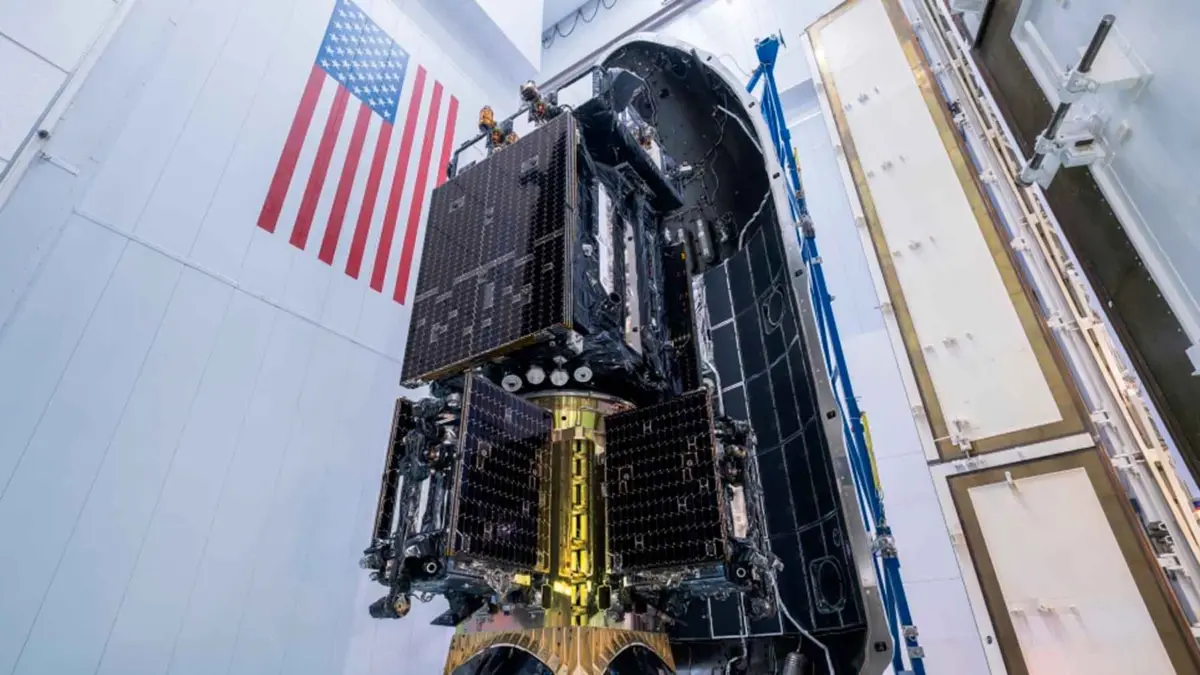
Enter the Mission Robotic Vehicle (MRV), developed by Northrop Grumman’s subsidiary, SpaceLogistics. The MRV is a van-sized robotic spacecraft outfitted with two three-meter-long mechanical arms. Launched alongside three standalone "propulsion jetpacks"—compact units roughly the size of household washing machines—the MRV represents a monumental leap forward in orbital logistics. Rather than letting perfectly good hardware go to waste, this robotic mechanic is designed to rendezvous with aging satellites, dock with them, and attach fresh propulsion modules, effectively granting them a new lease on life.
Chronology: A Multi-Year Journey to the Edge of Space
The path to commercial robotic space servicing has been decades in the making, marked by incremental technological milestones and daring engineering feats.
- 1960s–2010s (The "Use and Throw" Era): Throughout the formative decades of the space age, orbital assets were treated as single-use consumables. Once a satellite exhausted its stationkeeping fuel or attitude-control gas, it was pushed into a "graveyard orbit" slightly above GEO, or left to slowly degrade.
- February 2020 (The First Breakthrough): SpaceLogistics achieved a historic milestone with the launch of the Mission Extension Vehicle-1 (MEV-1). Unlike the MRV, MEV-1 was a simpler docking vehicle that latched onto an aging Intelsat satellite, using its own fuel reserves to act as a jetpack for the client spacecraft. MEV-2 followed successfully in 2021.
- Recent Years (The Evolution Toward Robotics): While MEV units proved that life-extension services were commercially viable, they were limited to a single docking mechanism. Industry demand quickly shifted toward a more versatile, multi-purpose solution: a robotic vehicle capable of servicing multiple clients, installing modular jetpacks, and eventually performing complex mechanical repairs.
- The Current Mission Timeline: Following its successful launch, the MRV has embarked on a painstakingly slow, highly calculated journey. Because the robotic craft relies on highly efficient, low-thrust electric ion propulsion to conserve energy, it will take a full year to navigate the treacherous expanse from its initial launch orbit to the designated geostationary service zone.
- Mid-2027 (The Operational Window): If current trajectories and system checks hold true, the MRV will begin its core mission phase in mid-2027. Approaching its first target with millimeter precision, the robot will have a singular, high-stakes opportunity to utilize its multi-jointed mechanical arms to grapple the target satellite, secure a fresh propulsion pack, and initiate a multi-year mission extension before detaching to find its next client.
Supporting Data: The Economics and Logistics of Orbital Servicing
The financial and operational metrics underpinning the MRV mission underscore why the aerospace sector is so heavily invested in this technology.
- Altitude and Coverage: Operating at 36,000 kilometers, GEO satellites provide continuous coverage over vast swaths of the Earth, making them critical infrastructure for both commercial and government communications.
- Financial Stakes: Constructing, testing, insuring, and launching a single geostationary communications satellite routinely costs between $200 million and $400 million.
- The Extension Yield: Each "jetpack" (officially designated as a Mission Extension Pod, or MEP) delivered by the MRV is engineered to provide six to eight additional years of operational life.
- Initial Manifest: The MRV’s inaugural mission sequence is already slated to service three major commercial satellites belonging to prominent global operators, including Optus and Intelsat.
- Refueling Capabilities: Beyond delivering jetpacks, the MRV is equipped with a standardized mechanical interface and fluid transfer ports, laying the groundwork for direct in-orbit refueling missions later this decade. This transforms the robot from a one-off delivery truck into a permanent, reloadable service station.
Official Responses and Industry Perspectives
The aerospace community has greeted the advent of robotic orbital servicing with a mixture of awe and strategic validation. Executives and engineers at the forefront of the movement view this as the inflection point where space transitions from an industrial frontier into a sustainable economic ecosystem.
"For too long, the space economy has operated under an unsustainable linear model," noted a senior program manager during Northrop Grumman’s mission briefing. "We launch massive amounts of capital into orbit, utilize them until their consumables run out, and abandon them. The Mission Robotic Vehicle changes the fundamental equation. We are moving from a disposal mindset to a circular space economy where assets are preserved, upgraded, and maintained."
Commercial clients have been equally vocal. Telecommunications operators face mounting pressure from shareholders to optimize capital expenditures while minimizing the risk of service interruptions during satellite transitions.
"When you have a revenue-generating asset performing flawlessly in orbit, the last thing you want to do is terminate its mission simply because it burned through its last kilogram of hydrazine," stated a representative from a major international satellite operator. "Robotic servicing mitigates the immense financial risk of replacement launches. It allows us to stabilize our operational expenditures and focus our capital on expanding network capabilities rather than replacing baseline infrastructure."
Regulatory bodies, including the Federal Communications Commission (FCC) and the European Space Agency (ESA), have also offered cautious praise. As orbital congestion intensifies, international bodies are facing mounting pressure to enforce stricter orbital debris mitigation guidelines. Technologies that actively manage, repair, and de-orbit aging spacecraft are increasingly viewed as regulatory necessities rather than luxury innovations.
Implications: A New Frontier for Space Sustainability
The successful deployment and execution of the MRV mission carry profound implications for the future of humanity’s presence in space.
1. The Mitigation of Space Debris
The Kessler Syndrome—a theoretical scenario where the density of objects in low Earth or geostationary orbit is high enough that collisions cascade, rendering space exploration and satellite utilization unviable—is no longer science fiction. By enabling robotic vehicles to physically grapple, repair, and eventually de-orbit defunct hardware, the aerospace industry gains a powerful tool for cleaning up orbital lanes. Instead of becoming dangerous shrapnel, old satellites can be safely guided into atmospheric incineration or moved to permanent parking orbits.
2. Democratization and Cost Reduction of Access to Space
As robotic maintenance becomes standardized, the barrier to entry for smaller nations and emerging commercial enterprises will drop significantly. If a startup or developing nation can lease a life-extension package or purchase repair services from an orbital mechanic rather than funding an entirely new spacecraft, the economic barriers to maintaining space-based infrastructure plummet.
3. The Evolution of In-Space Manufacturing and Assembly
The MRV is merely the vanguard of a broader technological revolution. Once autonomous robotics prove reliable in the harsh, high-radiation environment of geostationary orbit, the doors open to more ambitious endeavors: in-space assembly of massive telescopes, large-scale modular space stations, and deep-space habitation units built from components manufactured directly in microgravity.
Summary
The launch of Northrop Grumman’s Mission Robotic Vehicle marks the death knell of the "use-and-throw" space age. By proving that spacecraft can be met, caught, fueled, and repaired millions of meters above the Earth, the aerospace industry is taking its first tentative steps toward a truly sustainable cosmic future. If these robotic maneuvers succeed in the coming years, humanity will have permanently normalized the concept of the orbital mechanic—turning the final frontier into a well-tended, circular economy.