

By Cultural Desk
Published: July 2026
Main Facts: The Centenary of an Unsung Legend
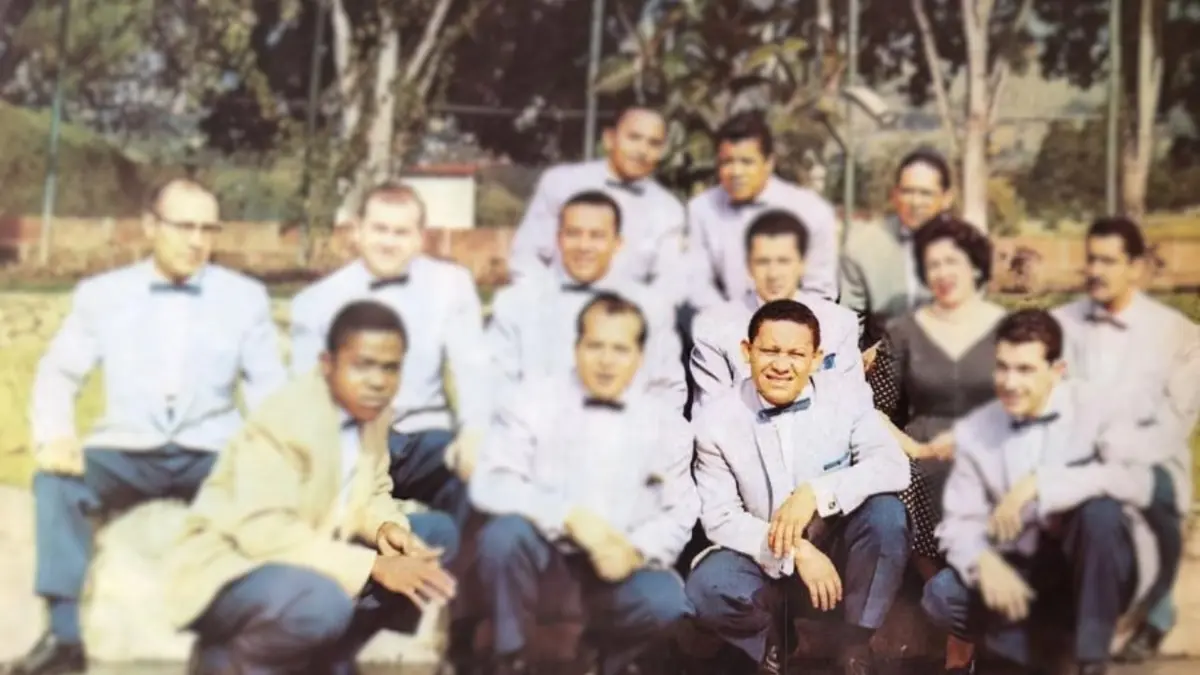
As the rhythm of the Caribbean echoes through the collective memory of Colombia’s musical history, few names evoke the golden era of tropical orchestras quite like Rafael Enrique Ruiz Romero—universally celebrated as Bobby Ruiz. Born in Cartagena on July 6, 1926, Ruiz carved out an immortal legacy as one of the defining vocal pillars of the legendary Lucho Bermúdez Orchestra.
While iconic songstress Matilde Díaz remains etched in the public consciousness as the primary female face and voice of Bermúdez’s ensemble, musical historians and aficionados alike agree that the sonic architecture of the orchestra was fundamentally dependent on the dynamic interplay between Díaz and Ruiz. Together, they formed a vocal partnership that defined an entire epoch of cumbias, porros, and fandangos.
As we approach the centenary of his birth, the cultural landscape pauses to honor a man who was not merely a singer, but a consummate showman. Blessed with a natural vocal agility, an magnetic stage presence, and an irrepressible sense of humor, Bobby Ruiz transformed every performance into an unforgettable spectacle. His journey from the clandestine nightlife of 1940s Cartagena to the grand stages of international acclaim is a testament to the enduring power of Colombian tropical music.
Chronology: From Cartagena’s Underage Stages to International Stardom
1. The Early Years and Musical Awakening (1926–1944)
Born in the historic, vibrant port city of Cartagena on July 6, 1926, Bobby Ruiz discovered his passion for music during a tumultuous adolescence. By 1944, driven by an undeniable urge to perform, the young Ruiz began sneaking into local nightclubs and bars to sing. His undeniable talent, however, frequently clashed with local ordinances; his underage status meant that his early musical escapades were regularly interrupted by the police, who would dutifully escort the budding star out of the venues.
2. Hitting the Regional Circuit: Barranquilla and Medellin (Late 1940s–Early 1950s)
After building a solid local reputation in Cartagena, Ruiz expanded his horizons. He relocated to Barranquilla, where he made his formal debut as an orchestra singer alongside Rumbavana, a Cuban ensemble whose director, Armando Cartaya, had recently arrived in Cartagena to helm the Orquesta Emisoras Fuentes. It was during this period that Ruiz recorded his first commercial tracks, lending his voice to numbers such as "El clarinete de Simón," "El currimbá," and "La mano descompuesta."
His restless artistic spirit soon led him to Medellín, the burgeoning industrial and cultural hub of Colombia. There, he integrated himself into some of the most prestigious musical outfits of the era. He joined Edmundo Arias’s Sonora, collaborated with the iconic orchestra of Pacho Galán, and eventually crossed paths with the maestro himself, Lucho Bermúdez.
3. The Golden Era with Lucho Bermúdez (Mid-1950s–1970)
By the mid-1950s, Ruiz had officially joined the Lucho Bermúdez Orchestra, initiating a partnership that would yield some of the most treasured recordings in Latin American music history.
Biographer José Portaccio Fontalvo, in his definitive text Lucho Bermúdez. Cumbias, porros y viajes, underscores the critical nature of this collaboration:
"The duo of Bobby Ruiz and Matilde Díaz was fundamental to the success of the orchestra. Their voices intertwined and brought luster to the songs."
The pinnacle of this collaboration was captured on the landmark long-play record Lucho en el Tequendama. Tracks such as "Lina," "Baila negra," "Tumbasón en Bogotá," and "Mono Fabio" showcased a seamless vocal symbiosis between Ruiz and Díaz (who was married to Bermúdez).
Beyond his vocal harmony, Ruiz brought a theatrical flair to the stage. Matilde Díaz famously recalled of her colleague:
"He was the grace of the orchestra. He would move, he would invent words, he would sing in French, he would sing in Italian, even though he wasn’t saying anything. And everybody loved him too."
During his tenure with Bermúdez, Ruiz recorded dozens of beloved solo and duet tracks, including "Los primos Sánchez," "La buchaca," "El marañón," "Diana María," "Manizaleña," and "El helado de leche," alongside work with other elite groups like the Sonora Dinamita ("Marañón," "Pedazo de cariño") and Pedro Laza y sus Pelayeros ("El pescador").
4. Migration to the United States and Later Years (1970s–2017)
As the 1970s dawned, the musical landscape began to shift. Deciding to open a new chapter in his life, Ruiz left the Bermúdez orchestra and relocated to the United States with his wife, Dioselina.
Settling in Los Angeles, California, Ruiz refused to let his musical fire extinguish. He founded Los Internacionales, an orchestra dedicated to performing salsa and traditional Colombian tropical music for the diaspora and American audiences alike. Though based abroad, he maintained deep ties to his homeland, frequently returning to Cartagena for vacations, family reunions, and medical check-ups.
Bobby Ruiz passed away in Atlanta, Georgia, at the remarkable age of 91, leaving behind a rich archive of recorded history and an unblemished reputation as a gentleman of song.
Supporting Data: Discography and Archival Footprint
To fully appreciate Bobby Ruiz’s contribution to Latin music, one must examine the sheer volume and diversity of his recorded output across Colombia’s most legendary record labels—Tropical, Philips, and Sonolux.
Key Recordings with Lucho Bermúdez
- Duets with Matilde Díaz: "Diana María," "Manizaleña," "El helado de leche," "Hasta luego Medellín," "Arepa de pilón," and "Julián el solterón."
- Solo and Ensemble Vocals: "Lina," "Baila negra," "Tumbasón en Bogotá," "Mono Fabio," "Los primos Sánchez," "La buchaca," "El marañón," "La gaita de las flores," "Carnaval," "El gallito," "Molongo," "El pájaro macuá," "El pitirre," "María tumbasón," and "La boquillera."
Collaborations with Other Iconic Ensembles
- With Sonora Cabeceno (Edmundo Arias): "Qué ladrón," "La flaca," "Que le den," "Juan Torero," and "Qué campanera."
- With Italian Jazz: "Chachita bonita."
- With Edmundo Arias (Solo): "Solo estoy," "Qué dichoso es," and "Cumbia candelosa."
- With Sonora Dinamita: "Marañón" and "Pedazo de cariño."
- With Pedro Laza y sus Pelayeros: "El pescador."
- Early Recordings (Emisoras Fuentes): "El clarinete de Simón," "El currimbá," and "La mano descompuesta."
Official Responses and Testimonials
Cultural historians, biographers, and contemporaries have consistently lauded Ruiz not merely as a sideman, but as a crucial architect of the Colombian sound.
José Portaccio Fontalvo, whose exhaustive biographical research preserved much of Ruiz’s personal testimony in books such as Carmen tierra mía – Lucho Bermúdez, notes that Ruiz’s artistic instincts were entirely organic. Unlike many of his contemporaries who relied heavily on formal academic training, Ruiz possessed an innate, street-smart musicality that allowed him to bridge the gap between high-society ballroom orchestrations and the earthy, folkloric roots of Caribbean coastal rhythms.
Furthermore, cultural institutions across Colombia have begun preparations for official commemorative events leading up to his centennial on July 6. Academics specializing in Caribbean anthropology view Ruiz’s life as a textbook example of the mid-century golden migration of coastal artists who brought the porro and cumbia from the Magdalena River basin to the interior of the country and, eventually, to the global stage.
Implications: Preserving the Tropical Memory for Future Generations
The centennial of Bobby Ruiz’s birth arrives at a critical juncture for Colombian musical heritage. In an era dominated by hyper-compressed digital singles and transient viral hits, looking back at figures like Ruiz offers a profound lesson in artistic longevity, discipline, and showmanship.
1. Cultural Identity and the Diaspora
Ruiz’s trajectory—from Cartagena to Medellín, and finally to Los Angeles—mirrors the broader narrative of the Colombian diaspora. By founding Los Internacionales in California, Ruiz proved that tropical music is not bound by geography. His ability to sustain a career abroad highlights the universal appeal of cumbia and salsa, serving as a cultural bridge for expatriates yearning for the sounds of home.
2. Archival Preservation
The upcoming centennial serves as a stark reminder of the urgent need to digitize, remaster, and properly archive the vast catalogs sitting in the vaults of labels like Sonolux, Tropical, and Philips. Without concerted institutional efforts, the foundational recordings of artists like Ruiz risk degradation, threatening to sever the link between contemporary generations and the architects of national identity.
3. Redefining "Stardom"
In contemporary music discourse, the spotlight often focuses exclusively on frontmen and bandleaders, leaving sidemen and vocal partners in the shadows. Recognizing Bobby Ruiz as the "Artist of the Week" and celebrating his centennial corrects this historical imbalance. It reminds us that orchestras like Lucho Bermúdez’s were collaborative ecosystems where the genius of the director was magnified by the charisma, timing, and vocal brilliance of performers like Bobby Ruiz.
As July 6 approaches, the nation does not merely mourn a loss or mark a date on a calendar; it celebrates a century of rhythm, grace, and an uncontainable joie de vivre that continues to resonate every time a needle drops on a vintage Colombian long-play record.




Leave a Reply