

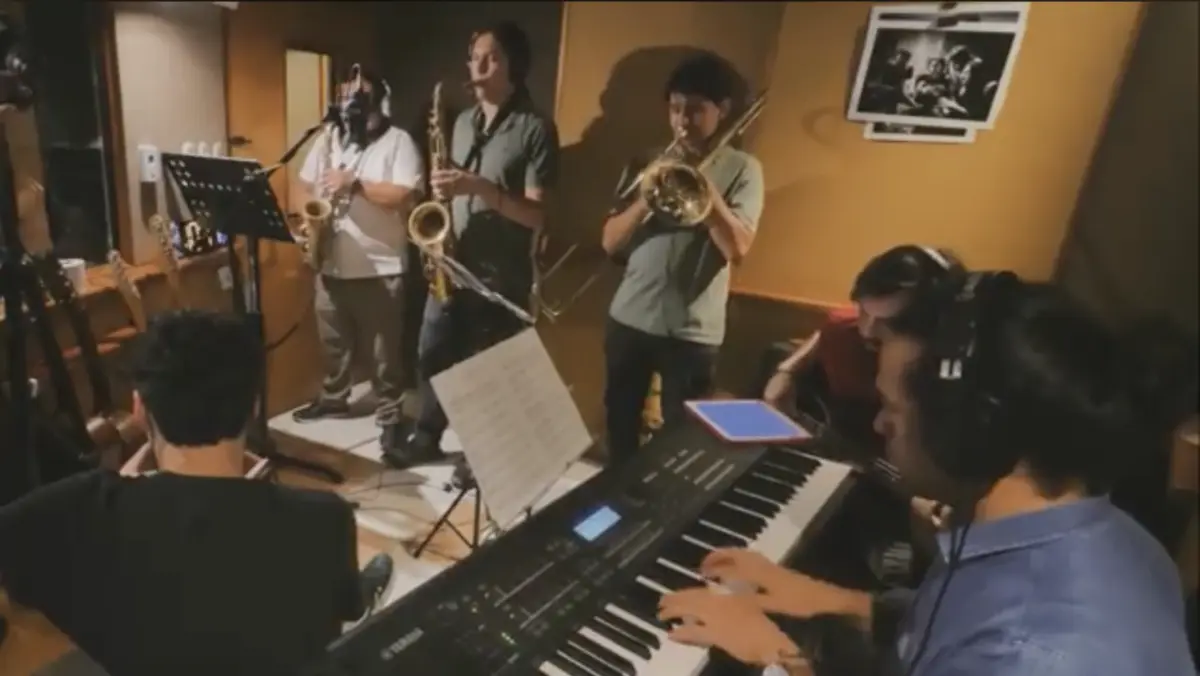
BOGOTÁ, Colombia — In the ever-evolving landscape of contemporary Latin American music, few movements are as dynamic as the fusion of traditional Caribbean folkloric rhythms with the sophisticated, improvisational language of modern jazz. At the forefront of this sonic renaissance is Diego Barrios, an accomplished saxophonist and composer originally from Bucaramanga, whose career spans the vibrant cultural corridors of both Colombia and Mexico.
Barrios and his formidable ensemble are turning heads with their latest release, "Una vez más" ("Once Again"), a striking bullerengue that serves as a masterclass in cross-genre orchestration. The track, premiered nationally via Radio Nacional de Colombia’s emerging artist showcase Demo Estéreo, encapsulates a broader movement within the Colombian arts scene: the deliberate, respectful, and innovative modernization of ancestral sounds.
Main Facts
The release of "Una vez más" marks a significant milestone for the Diego Barrios Sextet, a project that has rapidly gained institutional and critical acclaim since its formal inception in early 2025.
- The Track: "Una vez más" is an original bullerengue composed by Diego Barrios. It acts as a bridge between contemporary urban and modern jazz sensibilities and the rich, percussion-driven expressions of the Colombian Caribbean.
- The Artist: Diego Barrios is a seasoned saxophonist and composer. Having honed his craft across international borders between Colombia and Mexico, he brings a cosmopolitan perspective to deeply rooted regional genres.
- The Ensemble: The sextet features a powerhouse lineup of instrumentalists:
- Diego Barrios: Saxophone and composition
- Daniel Poveda: Trombone
- Camilo Torres: Saxophone
- Santiago Esguerra: Electric bass
- Leo Parra: Drums
- Jorge Ortiz: Keyboards
- Broadcast Milestone: The track received its premier exposure on Demo Estéreo, Radio Nacional de Colombia’s premier digital platform dedicated to platforming emerging musical talent, before making waves across festival circuits, including the prestigious Voces del Jazz festival in Cartagena.
Chronology: The Evolution of the Diego Barrios Project
To understand the weight of "Una vez más," one must examine the trajectory of its creator and the systematic development of the sextet that brings it to life.
The Formative Years: Bucaramanga to International Stages
Diego Barrios’ musical journey began in Bucaramanga, the capital of Colombia’s Santander department. Known traditionally for genres like the bambuco and pasillo, Santander nonetheless fostered an inquisitive generation of musicians influenced by global media and academic jazz education. Barrios distinguished himself early through his technical mastery of the saxophone and an insatiable appetite for composition.
Seeking to broaden his artistic horizons, Barrios relocated to Mexico, immersing himself in the country’s rich, eclectic music scene. This transnational period proved critical; it allowed him to view Colombian folkloric traditions from an external vantage point, recognizing the inherent structural similarities between the complex polyrhythms of the Caribbean coast and the syncopated swings of modern jazz.
Returning Home and Formation of the Sextet (2025)
By early 2025, Barrios returned his primary operational base to Colombia, consolidating relationships with some of the country’s most promising young instrumentalists. Recognizing the limitations of solo performance or small-group trios for the complex harmonic textures he envisioned, Barrios established his signature sextet format.
This lineup was meticulously curated. By pairing a dual-saxophone front line (Barrios and Camilo Torres) with the robust mid-range harmonization of Daniel Poveda’s trombone, the ensemble achieved a brass-heavy melodic voice capable of cutting through dense rhythmic layers. Backed by the rock-solid rhythmic foundation of Santiago Esguerra (electric bass) and Leo Parra (drums), alongside the harmonic flexibility of Jorge Ortiz on keyboards, the sextet quickly transformed from a conceptual project into a live performance powerhouse.
Festival Circuit Breakthrough and Radio Success
The newly minted sextet wasted no time making its presence felt. Their intricate arrangements—which seamlessly shift from complex modal jazz improvisations to driving folkloric percussion grooves—earned them slots at high-profile events, most notably the Voces del Jazz festival in Cartagena.
The momentum culminated with the selection of "Una vez más" as a featured track on Demo Estéreo. This milestone not only validated the artistic merit of Barrios’ compositions but also introduced his sophisticated brand of Afro-Colombian jazz fusion to a nationwide audience, cementing his status as a composer to watch.
Supporting Data: Anatomy of the Sound
The artistic success of "Una vez más" lies in its meticulous construction. Musicologists and critics analyzing the track point to a deliberate intersection of harmonic complexity and rhythmic authenticity.
The Bullerengue Tradition Meets Modern Harmony
Bullerengue is a traditional Afro-Colombian genre rooted in the Caribbean departments of Bolívar, Córdoba, and Antioquia. Traditionally performed a capella with handclaps and heavy percussion (specifically the tambor alegre and llamador), it is a music of deep emotional resonance, historically sung by women (cantadoras) to celebrate life, spirituality, and resistance.
In "Una vez más," Barrios preserves the hypnotic, swaying 6/8 rhythmic framework inherent to the bullerengue, but reimagines its harmonic canvas. Rather than relying on simple diatonic progressions, the sextet introduces extended jazz chords, chromatic passing tones, and sophisticated modal shifts.
Instrumentation and Arrangement Breakdown
The brilliance of the track’s arrangement can be broken down through the specific roles of the sextet’s members:
| Musician | Instrument | Role in "Una vez más" |
|---|---|---|
| Diego Barrios | Saxophone / Composition | Provides primary thematic statements, lyrical melodic phrasing, and jazz-infused soloing. |
| Camilo Torres | Saxophone | Harmonizes with Barrios in the horn section, adding rich counter-melodies and tonal depth. |
| Daniel Poveda | Trombone | Anchors the brass section with warm, resonant lower-mid frequencies, bridging the gap between horns and rhythm. |
| Jorge Ortiz | Keyboards | Supplies harmonic padding, electric piano voicings, and modern textural elements that bridge acoustic jazz with urban soundscapes. |
| Santiago Esguerra | Electric Bass | Maintains a funky, propulsive low-end groove that locks the jazz harmonies into a danceable Caribbean pulse. |
| Leo Parra | Drums | Translates traditional Caribbean percussion patterns (like the tambor alegre and allegro beats) onto a modern drum kit with dynamic sensitivity. |
This fusion creates a layered auditory experience where a listener can simultaneously pick out the sophisticated improvisation of a New York jazz club and the humid, coastal pulse of a Caribbean street festival.
Official Responses and Critical Reception
The arrival of "Una vez más" has elicited enthusiastic responses from cultural commentators, festival organizers, and platforms dedicated to Colombian arts.
Radio Nacional de Colombia and Demo Estéreo
Radio Nacional de Colombia has long championed the democratization of national airwaves, using digital spaces like Demo Estéreo to elevate independent artists who operate outside major label machinery. Curators at the station highlighted Barrios’ ability to respect historical roots while pushing boundaries:
"‘Una vez más’ represents the very best of what contemporary Colombian music can achieve," noted a representative from Radio Nacional’s music desk. "It refuses to treat tradition as a museum piece. Instead, Diego Barrios and his ensemble treat our folkloric rhythms as a living, breathing language capable of conversing with global jazz idioms."
Festival Circuit Acclaim
Following their performances at events such as the Voces del Jazz in Cartagena, peer musicians and festival directors have praised the technical discipline of the sextet. Jazz critics have noted that while many crossover projects suffer from a dilution of both genres—sounding neither fully like authentic folklore nor compelling jazz—the Diego Barrios Sextet succeeds through rigorous arrangement and deep familiarity with both musical vocabularies.
Implications for the Future of Colombian Jazz and Folk Fusion
The resonance of "Una vez más" extends far beyond a single track release; it speaks to larger cultural, economic, and artistic shifts occurring within the Colombian music ecosystem.
1. Decentralization of Cultural Production
Historically, major musical movements in Colombia were heavily concentrated in Bogotá, Medellín, or the immediate Caribbean coastal hubs. Diego Barrios—hailing from Bucaramanga, developing his craft in Mexico, and premiering his work nationally—exemplifies the increasingly decentralized, transnational reality of modern Latin American artists. Geography is no longer a barrier to creating globally competitive, culturally grounded art.
2. The Revitalization of Folklore Through Modern Ears
For younger generations of listeners exposed to global pop and electronic music, traditional folkloric genres can sometimes feel distant. Artists like Barrios play a vital bridging role. By dressing ancestral rhythms in the sophisticated clothes of modern jazz, they create accessible entry points for youth to reconnect with their musical heritage without compromising artistic integrity.
3. Economic and Platform Viability for Independent Artists
The success of "Una vez más" via Demo Estéreo underscores the critical importance of public broadcasting and digital incubation platforms for independent musicians. Without massive corporate backing, artists relying on complex, niche genres like jazz fusion depend heavily on state-supported cultural infrastructure and targeted digital showcases to find their audience. The positive reception of the track proves that there is a hungry, discerning audience for sophisticated, non-commercial music in Colombia.
Conclusion
As "Una vez más" continues to circulate across digital platforms, festival stages, and radio airwaves, it cements Diego Barrios and his sextet as essential voices in contemporary Latin American music. By refusing to choose between the intellectual rigor of jazz and the visceral, earth-bound energy of the Caribbean bullerengue, Barrios has crafted a sonic space where both traditions thrive.
In doing so, the Diego Barrios Sextet has not only delivered one of the most compelling releases of the year, but has also offered a blueprint for how traditional Colombian music can look toward the future without ever forgetting where it came from.




Leave a Reply