

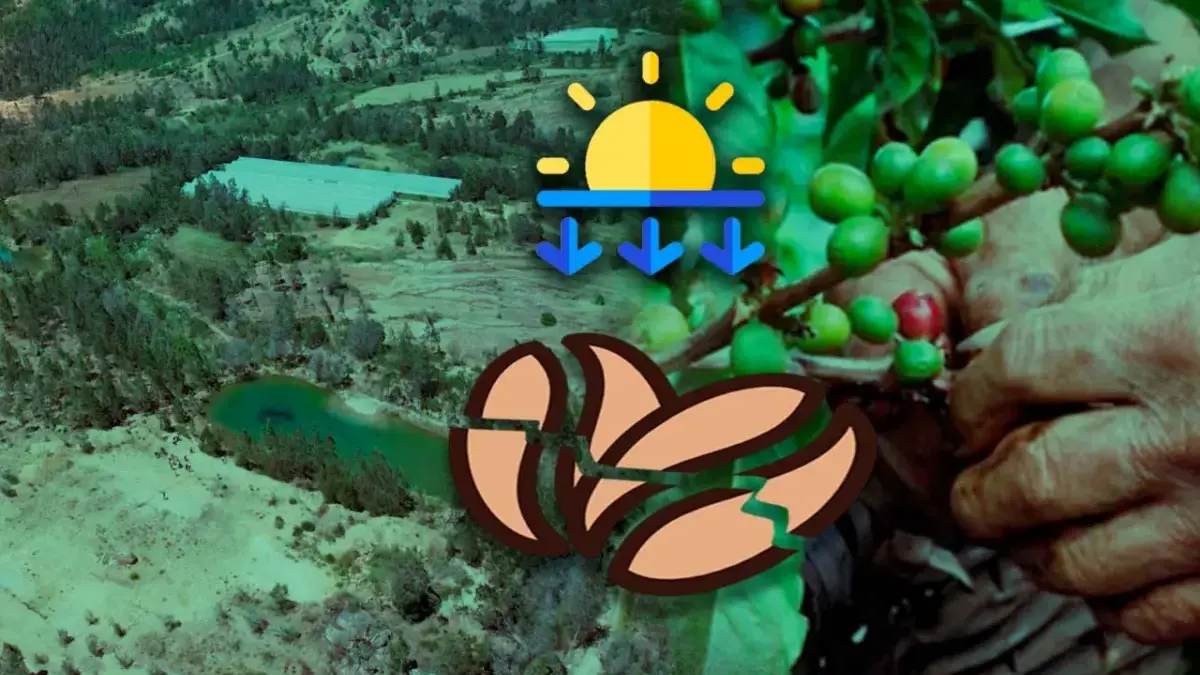
BOGOTÁ — As Colombia embarks on a fresh coffee-producing year, the nation’s agricultural backbone is bracing for severe disruptions. The resurgence of the El Niño phenomenon has brought an alarming convergence of acute water deficits, soaring temperatures, and escalating pest pressures. For an industry that recently celebrated historic production milestones, the current climatic outlook introduces a high-stakes variable capable of undermining both grain quality and the livelihoods of hundreds of thousands of farming families.
The new coffee year—standardized internationally by the International Coffee Organization (ICO) and locally by the Colombian Coffee Growers Federation (FNC)—officially spans from October 1 to September 30. This cycle begins under the shadow of meteorological forecasts predicting an exceptionally intense El Niño event, threatening to rattle the nation’s premier agricultural export sector through the winter and well into early 2027.
1. Main Facts: The Anatomy of the Crisis
The intersection of El Niño and the newly minted 2026–2027 coffee cycle has placed primary producing regions on high alert. The core issues driving concern across Colombia’s agricultural landscape include:
- Climatic Pressures: Unprecedented high temperatures—ranging from 2°C to 4°C above historical averages in key departments—coupled with severe dry spells, are triggering acute water stress in coffee plants.
- Vulnerability in Critical Phases: The lack of soil moisture directly interferes with critical biological stages such as flowering and fruit filling. This deficiency stunts bean density, yielding lighter, partially formed grains, and directly compromises physical quality and overall harvest yields.
- Pest Proliferation: Elevated temperatures act as a catalyst for agricultural plagues, most notably the coffee berry borer (broca). The insect thrives in hot, dry conditions, rapidly increasing infestation rates and degrading the commercial value of the crop.
- Economic Adjustments: In response to projected quality defects—specifically an anticipated rise in lower-grade grains—the FNC has intervened in the domestic market, lifting the purchasing price for pasilla (low-grade coffee) from $10,000 to $12,000 per kilogram to safeguard producer incomes.
The geographic concentration of this threat is immense. Departments like Huila, Antioquia, Tolima, Cauca, and Caldas generate the lion’s share of Colombia’s coffee wealth, making regional weather anomalies a matter of national macroeconomic concern.
2. Chronology of Events and Forecasts
Understanding the gravity of the current crisis requires mapping out the trajectory of climate warnings and production cycles that have led Colombia to this juncture.
- August 10, 2025: A devastating earthquake strikes the coffee-growing heartland of Risaralda, heavily damaging the housing and processing infrastructure (beneficiaderos) of numerous farming families just ahead of a major harvest window.
- September 2025: During the Precongreso Cafetero, the FNC reveals stellar figures for the 2024–2025 coffee year: Colombia produced 14.87 million bags—a 17% growth and the highest output recorded in 33 years. However, this triumphant backdrop is immediately shadowed by early environmental warnings.
- Late September 2025: The Institute of Hydrology, Meteorology and Environmental Studies (IDEAM) issues a stark warning. It reports that El Niño is actively strengthening, carrying a 75% probability of reaching exceptional intensity during the final quarter of 2026—levels not seen since records began in 1950.
- October 1, 2025: The 2025–2026 coffee year officially commences, already operating under tightening weather constraints.
- Late 2025 to Early 2026: The World Meteorological Organization (WMO) estimates a near 100% probability that the El Niño episode will persist continuously through February 2027. This timeline completely overlaps with the initial, vulnerable months of the subsequent 2026–2027 coffee cycle.
- Current Operations (2026–2027 Transition): Regional committees in Huila, Antioquia, and the Coffee Triangle report sustained temperature anomalies. Authorities scramble to implement mitigation strategies as drought conditions deepen across the Andes.
3. Supporting Data and Regional Impacts
While Colombia enjoys year-round coffee harvesting due to its complex topography and microclimates, national output is heavily anchored in a handful of powerhouse departments. Data from the 2025 Precongreso Cafetero maps the distribution of national production: Huila led with 19.65%, followed by Antioquia (14.20%), Tolima (12.46%), Cauca (10.43%), and Caldas (7.57%).
The localized impacts of El Niño across these primary zones reveal a multifaceted crisis:
Huila: The Frontline of Heat and Drought
As the undisputed heavyweight of Colombian coffee production, Huila is home to approximately 88,000 coffee-growing families. Ruber Bustos Ramírez, the department’s representative on the FNC’s Board of Directors, has repeatedly sounded the alarm over relentless dry spells. In municipal hubs like Neiva, Garzón, and Altamira, thermometers have logged readings 2°C to 4°C above historical norms. While these spikes do not spell instantaneous crop annihilation, they accelerate soil evaporation, forcing plants into severe water stress.
Antioquia: The Double Threat of Drought and the Borer Beetle
The departmental committee of coffee growers in Antioquia has flagged a dangerous synergy between weather and pests. Extended dry periods have not only desiccated soils but have also created optimal breeding conditions for the coffee berry borer. This invasive insect bores into the coffee cherry, destroying the seed, reducing harvest weights, and drastically slashing the market value of the yield through structural physical defects.
The Coffee Triangle: Compounding Disasters in Risaralda
In Risaralda and surrounding areas of the traditional Eje Cafetero, the climate crisis compounds an already fragile social fabric. Farmers are still grappling with the physical and economic aftermath of the August 10 earthquake, which wrecked local homesteads and processing facilities. Dealing with El Niño’s parching heat while simultaneously rebuilding infrastructure has stretched local farming communities to their limits.
4. Official Responses and Institutional Strategy
Faced with the convergence of a booming past harvest and a perilous climatic future, institutional machinery has kicked into gear to cushion the blow for producers.
The FNC, alongside national ministries, has prioritized financial and technical buffers to shield rural incomes. Central to this strategy is the nationwide rollout of the Anticipated Coffee Income Protection (PAI) mechanism. Designed to incentivize timely soil fertilization and agronomic maintenance, the PAI program equips crops to better withstand environmental shocks. Financial backing for this initiative has been robust, with the Coffee Price Stabilization Fund (FEPCafé) allocating COP $40,000 million, supplemented by an additional COP $10,000 million from the Ministry of Agriculture.
Furthermore, research arm Cenicafé has intensified educational campaigns on soil management. Agronomists emphasize that maintaining soil fertility using targeted fertilizers and amendments fundamentally alters a plant’s hydraulic architecture. Well-nourished soils promote deeper, more expansive root systems capable of mining residual subsurface moisture during droughts, whereas nutrient-deficient soils leave plants shallowly rooted and acutely vulnerable.
Complementing these efforts, regional committees are actively promoting integrated pest management (IPM), encouraging the use of organic soil covers to preserve ground humidity, careful shade management, and timely interventions against the encroaching borer beetle.
5. Economic Implications: From Farmgate to Consumer Cup
The downstream economic consequences of El Niño are complex, rippling through local purchasing dynamics while presenting distinct realities for international and domestic markets.
A clear indicator of this economic pressure is the FNC’s adjustment of the pasilla coffee purchasing price, which climbed from $10,000 to $12,000 per kilogram. This strategic price hike is a direct market intervention designed to protect the baseline incomes of smallholder farmers. Because water deficits during the fruit-filling stage inevitably produce a higher volume of underdeveloped, partially formed, or defective beans (granos averanados), farmers will yield more low-grade coffee than usual. Ensuring a fair price for pasilla prevents growers from absorbing total losses on sub-optimal harvests.
Will Consumer Coffee Prices Skyrocket?
Despite structural adjustments in domestic wholesale purchasing, experts caution the public against jumping to conclusions regarding retail prices. The increase in the price of pasilla does not automatically translate to an immediate surge in the price of a cup of coffee for everyday consumers.
The retail pricing of roasted and ground coffee is dictated by a multitude of downstream variables, including international futures markets (such as the New York Stock Exchange and London ICE), industrial processing overhead, packaging, distribution logistics, and retail markups. Consequently, any transmission of agricultural climate shocks from farmgate to the local supermarket shelf tends to be partial, diluted, and subject to considerable time lags.
The Road Ahead
As the 2026–2027 coffee year pushes forward under the baking heat of an intensified El Niño, Colombia’s coffee sector stands at a critical juncture. The resilience of its 500,000-plus farming families will be tested not just by the caprices of the atmosphere, but by the agility of institutional support, proactive agronomic management, and targeted financial interventions. For now, the global market watches closely as the world’s premier producer of mild, washed Arabica navigates one of its most climatically demanding chapters in recent history.