

Main Facts
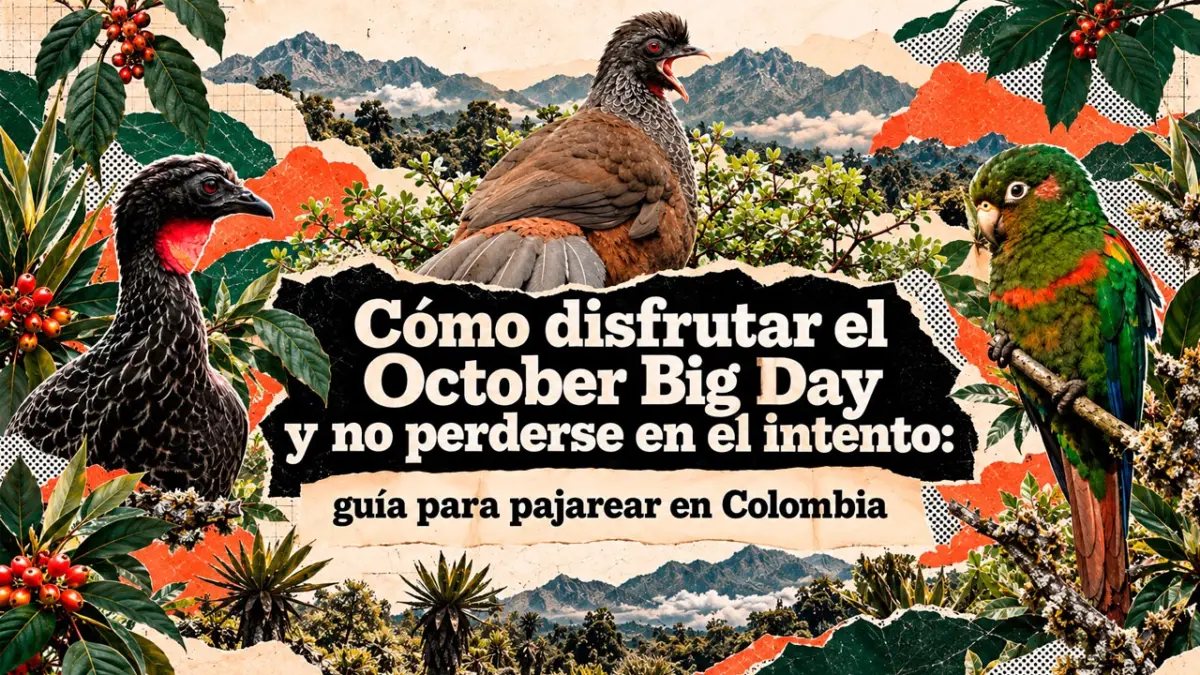
Colombia, globally recognized as an unrivaled superpower of avian biodiversity, is bracing for one of the most anticipated conservation and citizen-science events of the calendar year: the October Big Day 2026. Scheduled for Saturday, October 10, this mass mobilization invites ornithologists, seasoned birdwatchers, rural communities, families, and casual nature enthusiasts to step outside, observe, and document as many bird species as humanly possible within a strict 24-hour window.
The initiative, coordinated globally by the Cornell Lab of Ornithology, transcends a simple hobby or competitive listing exercise. It serves as a vital tool for ecological research. Every sighting, audio recording, and behavioral note logged during the day is uploaded directly to eBird—the world’s largest biodiversity-data platform managed by Cornell. This influx of synchronized, crowdsourced data provides researchers, conservationists, and policymakers with an invaluable snapshot of avian distribution, population shifts, and ecosystem health across diverse geographical landscapes.
For Colombia, a nation holding the crown for the highest number of bird species on Earth (boasting upwards of 1,900 species, representing roughly 20% of the global avian total), the October Big Day is both a celebration of natural heritage and an ongoing exercise in conservation biology. This upcoming autumn edition arrives hot on the heels of the immensely successful Global Big Day held in May 2026, where Colombian participants etched stellar figures into the record books: 1,566 species identified, 15,008 comprehensive checklists submitted, and an active participation pool of 4,210 observers spread across the national territory.
As the clock strikes midnight on October 10, thousands of Colombians—from urban birders in Bogotá’s high-altitude wetlands to rural communities patrolling the steamy Amazonian canopy—will lift their binoculars to the sky. They will participate in a planetary synchronized event that highlights the critical importance of preserving fragile habitats in the face of escalating environmental pressures.
Chronology
To fully understand the weight of the October Big Day 2026, it is essential to trace the historical lineage of the "Big Day" concept and how Colombia cemented its status as a premier birdwatching destination.
The Evolution of the "Big Day"
- Mid-20th Century: The concept of the "Big Day" originated as an informal, spirited challenge among North American birders and ornithologists. The premise was simple yet grueling: dedicate 24 consecutive hours to finding, identifying, and recording as many bird species as possible within a designated geographic region.
- 2015: Recognizing the immense potential of gamifying citizen science for conservation, the Cornell Lab of Ornithology launched the first global-scale iteration of the event. By harnessing the digital infrastructure of eBird, Cornell transformed localized birding competitions into a unified, worldwide mobilization.
- The Dual-Event Model: While the Global Big Day in May remains the flagship spring event—capturing the peak of the North American neo-tropical migration and southern hemisphere breeding seasons—the October Big Day was formally established to capture a different ecological rhythm. October marks the heart of the southward autumn migration for many species, as well as distinct behavioral shifts in resident tropical species. This dual-model approach ensures that year-round ecological monitoring captures seasonal fluctuations in avian populations.
Colombia’s Rise to Birding Prominence
- 2016–2018: Colombia began dominating global participation lists, capturing first place worldwide in species counts during successive Global and October Big Days. Buoyed by the signing of the 2016 peace accords, previously inaccessible biodiverse regions—such as parts of Caquetá, Guaviare, and remote Andean slopes—opened up to scientific exploration and eco-tourism.
- May 2026 (The Precursor): During the most recent Global Big Day earlier this year, Colombia proved its ecological resilience and the growing passion of its local populace. Observers generated 15,008 distinct checklists, capturing 1,566 species through the efforts of 4,210 active participants. This laid a formidable logistical and psychological foundation for the upcoming October event.
- October 10, 2026 (The Main Event): Spanning the Amazon, the Orinoco basin, the Pacific coast, the Caribbean lowlands, and all three Andean cordilleras, the 2026 edition is set to deploy thousands of observers into the field. From pre-dawn owling expeditions to dusk nightjar surveys, the 24-hour marathon will test the endurance and observational sharpness of the nation’s birding community.
Supporting Data
Behind the romance of spotting a colorful tanager or hearing the haunting call of an Andean guan lies a rigorous framework of data collection. The metrics associated with Colombia’s participation in these global events illustrate the sheer scale of the operation and the depth of the scientific contribution.
Statistical Breakdown of Recent Participation
- Total National Bird Species: ~1,920 species recorded historically in Colombia (accounting for roughly 20% of global avian biodiversity).
- May 2026 Global Big Day Performance:
- Species Recorded: 1,566
- Checklists Submitted: 15,008
- Active Participants: 4,210
- Geographical Scope for October 2026:
- National Parks and Protected Areas: Dozens of operational sectors across all six major natural regions (Amazonia, Andes Nororientales, Pacífico, Andes Occidentales, Caribe, and Orinoquía).
- Urban Centers: Major municipal initiatives running concurrently in cities like Medellín, Cali, and Bogotá (featuring specialized routes in the Eastern Hills, wetland reserves, and historical parks).
The Mechanics of eBirding
Data integrity is paramount for the Cornell Lab of Ornithology. Participants do not merely write down what they see; they utilize the eBird platform, which incorporates strict data-validation protocols.
- Real-Time Logging: Observers use mobile applications to log species, GPS coordinates, counts, and breeding codes.
- Expert Review: Automated filters flag unusual sightings (such as out-of-range species or unexpected high counts). Local, volunteer eBird reviewers—expert ornithologists embedded within Colombia—then vet these flagged observations, ensuring that the final datasets are scientifically reliable for academic research, environmental impact assessments, and conservation planning.
Official Responses
As preparations reach a fever pitch, environmental authorities, park rangers, and municipal leaders have mobilized to ensure both a successful count and the safety of all participants.
National Natural Parks of Colombia (Parques Nacionales Naturales)
Parques Nacionales Naturales issued an official advisory detailing the mobilization of park rangers and dedicated observation groups stationed within protected natural areas across the country. Park staff will assist in monitoring remote ecosystems, ensuring that birders have eyes and ears in crucial sanctuaries.
However, the agency issued an explicit cautionary note regarding public access: Participation of protected areas in the October Big Day does not mean that all restricted sectors are open to general public entry.
"Citizens wishing to travel to a national park must verify access conditions, official operating hours, and current environmental restrictions beforehand," the agency stated.
As an example of dynamic park management, authorities pointed to the Puracé National Natural Park in the Colombian Andes. While certain sectors of Puracé have been recently rehabilitated and reopened for eco-tourism and birdwatching, critical pathways leading directly to the summit of the Puracé Volcano and the fragile Coconucos volcanic chain remain strictly closed to protect sensitive alpine ecosystems and maintain volcanic safety protocols.
Urban Initiatives: The Response from Bogotá
Local governments are equally engaged. In the capital, Bogotá, the District Environment Secretariat has programmed a series of specialized guided birdwatching excursions along the ancestral trails of the Cerros Orientales (Eastern Hills).
Furthermore, cultural and scientific hubs are integrating into the city’s birding grid:
- Maloka Interactive Center: Hosting a specialized urban birdwatching excursion (pajareada) kicking off at 6:30 a.m., designed to introduce families and novices to the surprisingly rich birdlife thriving in urban environments.
- Usme Archaeological and Cultural Heritage Park: Running a dedicated morning observation session from 7:00 a.m. to 11:00 a.m., blending avian observation with historical and cultural heritage interpretation.
Implications
The October Big Day 2026 is far more than an exciting Saturday pastime or a competitive bid to top international leaderboards. It carries profound ecological, socioeconomic, and scientific implications for Colombia and the global conservation community.
1. Advancing Conservation Science through Big Data
Biodiversity loss is accelerating globally, and tropical ecosystems face unprecedented threats from deforestation, agricultural expansion, and climate change. By mobilizing thousands of human observers to log simultaneous data across urban parks, deep jungles, high-altitude paramos, and coastal mangroves, the October Big Day creates a high-resolution snapshot of ecological health. Conservation biologists use these crowdsourced maps to identify critical migratory corridors, track population declines in vulnerable species, and advocate for the legal protection of threatened habitats.
2. Democratizing Science and Fostering Environmental Stewardship
One of the most transformative aspects of eBird and the Big Day framework is the democratization of science. Participants do not need a Ph.D. in ornithology or expensive laboratory equipment; a pair of binoculars, a field guide, and a smartphone are enough to contribute meaningfully to global research. This hands-on involvement fosters a deep sense of local ownership and environmental stewardship. When families, children, and rural farmers spend a day actively listening to and identifying the birds in their backyards or local reserves, they transform into frontline defenders of those ecosystems.
3. Boosting Sustainable Eco-Tourism (Aviturismo)
For Colombia, avian biodiversity represents a massive economic opportunity rooted in sustainability. Birdwatching tourism (aviturismo) has blossomed into a thriving industry, providing alternative livelihoods for rural communities that were once affected by conflict or reliant on extractive industries like logging and illegal mining. Events like the October Big Day put local guides, community-run reserves, and regional lodges on the international map, proving that keeping forests intact and birds flying is economically viable and deeply beneficial to local economies.
4. Bridging Urban and Rural Realities
Finally, the event acts as a great equalizer. On October 10, an indigenous leader in the Amazonian canopy, a park ranger in the misty Andean forests, and a university student in downtown Bogotá will all be engaged in the exact same scientific mission. They will look up at the same sky, listen to the same complex choruses of songbirds, and feed their data into a shared global repository. In doing so, the October Big Day weaves a connective tissue across Colombia’s diverse social and geographic landscapes, united by a shared reverence for the nation’s breathtaking natural wealth.



Leave a Reply