

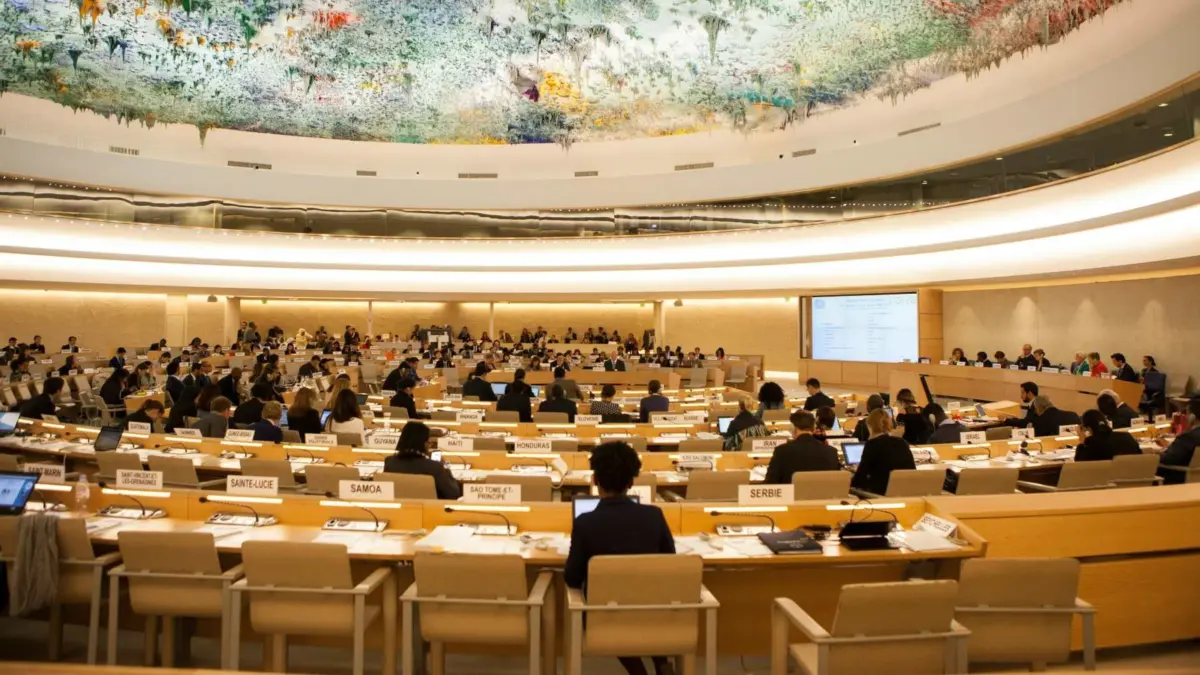
UNITED NATIONS, N.Y. — During the pivotal fifth day of deliberations at the United Nations General Assembly, global leaders converged around the defining dual challenges of the 21st century: the accelerating existential threat of the climate emergency and the volatile, largely unregulated ascent of artificial intelligence (AI).
Gathered at the UN headquarters in New York, heads of state, prime ministers, and high-ranking ministerial delegates delivered impassioned addresses. They forcefully demanded sweeping structural reforms to achieve climate justice, preserve fragile global ecosystems, accelerate the clean energy transition, and establish rigorous ethical boundaries for emerging technologies.
The juxtaposition of these two monumental forces—ecological collapse on one side and hyper-advanced digital disruption on the other—framed a sobering narrative. Speakers repeatedly warned that humanity stands at a critical historical crossroads where the misuse of technology and the neglect of planetary boundaries could prove mutually catastrophic.
Main Facts
- The Dual Nexus: The high-level debates established that climate change and artificial intelligence are no longer isolated issues; they are deeply intertwined global phenomena requiring coordinated multilateral governance.
- Vulnerable Nations on the Frontline: Small Island Developing States (SIDS), including Cabo Verde and the Federated States of Micronesia, issued dire warnings regarding imminent existential threats from sea-level rise, ocean acidification, and severe freshwater scarcity.
- The AI Paradox: Leaders from Belize, China, and Gabon highlighted the double-edged sword of artificial intelligence, balancing its potential to optimize public services and drive sustainable development against severe risks of widening global inequality, labor displacement, and critical infrastructure vulnerabilities.
- Financial Architecture Reform: Developing nations united in demanding a complete overhaul of the global financial architecture to provide direct capital transfers, debt relief, and fair compensation for nations that act as vital ecological stewards, such as tropical rainforest hosts and oceanic guardians.
- Fossil Fuel Phase-Out: Growing international momentum emerged around the proposed Fossil Fuel Non-Proliferation Treaty, alongside urgent calls to curb rampant plastic pollution that degrades marine ecosystems.
Chronology of the Fifth Day: Key Interventions and Debates
The trajectory of the fifth day unfolded through a series of carefully orchestrated plenary sessions, where representatives from diverse geographic and economic backgrounds articulated localized realities that collectively painted a portrait of planetary distress.
Morning Session: The Sinking Frontiers and Ocean Governance
The morning proceedings were overwhelmingly dominated by the existential anxieties of coastal and island nations. These delegations brought raw, empirical urgency to the ornate halls of the General Assembly, shifting the debate from abstract policy metrics to immediate survival.
- Francisco Avelino Vieira de Carvalho (Prime Minister of Cabo Verde): Opening the island-state perspective, Vieira de Carvalho delivered a stark protest against the generalized global response to climate change. He detailed how compounding phenomena—such as severe droughts, rapid desertification, chronic water scarcity, and the relentless warming and acidifying of the Atlantic Ocean—are actively eroding Cabo Verde’s socio-economic fabric. He reminded the assembly that for small island states, climate change is not a future projection, but a present-day catastrophe.
- Aren Palik (Vice President of the Federated States of Micronesia): Continuing the maritime focus, Palik elevated the discourse to the planetary scale of ocean governance. He argued that the health of the global ocean is inextricably linked to the survival of humanity. Palik called for a radical strengthening of marine biodiversity protections, sustainable fisheries management, and stringent regulations to halt the tide of plastic pollution choking marine life.
Midday Session: The Digital Frontier and the Geopolitics of AI
As the agenda transitioned from ecological conservation to technological disruption, the tone shifted toward the unprecedented challenges posed by the artificial intelligence revolution. Leaders grappled with the reality that the race for technological supremacy threatens to leave the Global South further behind.
- John Briceño (Prime Minister of Belize): Briceño offered a nuanced critique of the AI landscape. While acknowledging its immense capacity to revolutionize public administration, optimize energy grids, and democratize access to information, he issued a stern warning regarding its dark side. Briceño highlighted the threats of algorithmic bias, labor market displacement, the exposure of critical national infrastructure to cyber threats, and the danger of locking developing nations into a state of perpetual technological dependency.
- Han Zheng (Vice President of China): Presenting a major economic power’s perspective, Han Zheng advocated for an intentional, guided approach to AI development. He asserted that AI must be cultivated "for good and in a positive direction" to ensure equitable global benefits. Zheng tied technological advancement directly to broader international goals, including poverty eradication, food security, and the ongoing global energy transition.
- Marie-Edith Tassyla-Ye-Doumbeneny (Minister of Foreign Affairs of Gabon): Representing Central Africa, Tassyla-Ye-Doumbeneny focused on the regulatory vacuum surrounding emerging technologies. She demanded the establishment of robust national legal frameworks and international jurisprudence to govern AI, specifically designed to protect national sovereignty, data privacy, and the fundamental rights of developing populations.
Supporting Data and Environmental Realities
The rhetoric of the podium was grounded in increasingly severe environmental and economic data presented by international scientific bodies and specialized UN agencies throughout the week.
- Oceanic Stress: Scientists tracking ocean metrics report that global sea surface temperatures have broken historical records repeatedly over the past three years. Ocean acidification has risen by roughly 30% since the industrial revolution, severely undermining the structural integrity of coral reefs and commercial fisheries upon which millions depend.
- The Carbon Sink Economy: Tropical rainforests, such as those in the Congo Basin championed by Gabon, absorb approximately 15% of global anthropogenic carbon emissions. However, economists estimate that developing nations receive less than 5% of the climate finance necessary to maintain these ecosystems, creating a perverse economic incentive for deforestation.
- The Energy Footprint of AI: While AI offers tools to optimize energy distribution, the training and deployment of large language models and machine learning infrastructures require staggering amounts of electricity and water, threatening to strain clean energy grids just as nations attempt to phase out fossil fuels.
Official Responses and Multilateral Commitments
The convergence of climate and technology crises prompted several notable policy alignments and institutional demands from the gathered delegations:
- The Call for a Fossil Fuel Treaty: Backed by Pacific island nations and supported by various developing economies, momentum grew for the formal adoption of a Fossil Fuel Non-Proliferation Treaty—a mechanism designed to complement the Paris Agreement by setting a binding, managed schedule for the phase-out of coal, oil, and gas extraction.
- Ecosystem Retribution and Carbon Crediting: Gabon, supported by Cabo Verde and Micronesia, spearheaded a diplomatic push for "ecosystem services compensation." This model demands that industrialized nations—historically responsible for the vast majority of cumulative greenhouse gas emissions—pay direct financial dividends to nations that preserve vital carbon sinks and biodiversity hotspots.
- Ethical Guardrails for AI: Delegates reached a broad consensus on the need to draft a universal framework for AI governance under the auspices of the United Nations. This framework aims to prevent the monopolization of AI technologies by a handful of tech conglomerates and superpowers, ensuring open-source access and safety standards for the developing world.
Implications for Global Stability and Future Governance
The fifth day of the 81st UN General Assembly made it abundantly clear that the traditional silos of international diplomacy are obsolete. Issues once treated as strictly domestic or purely technical—such as data algorithms, marine conservation, and fiscal credit ratings—are now recognized as fundamental pillars of international security and human survival.
The core takeaway from the debates led by figures like Aren Palik, Francisco Avelino Vieira de Carvalho, John Briceño, and Han Zheng is that global stability hinges on two monumental systemic shifts:
- First, the radical mobilization and democratization of climate finance, shifting funds away from fossil fuel subsidies and into direct adaptation and ecological preservation.
- Second, the imposition of firm, ethical, and legally binding guardrails on artificial intelligence to ensure that the digital revolution bridges global inequalities rather than deepens them.
As the General Assembly moves toward its concluding sessions, the pressure rests heavily on the international community to translate these high-level moral declarations into concrete, enforceable multilateral treaties before the compounding velocities of climate breakdown and technological disruption outpace humanity’s capacity to govern them.