

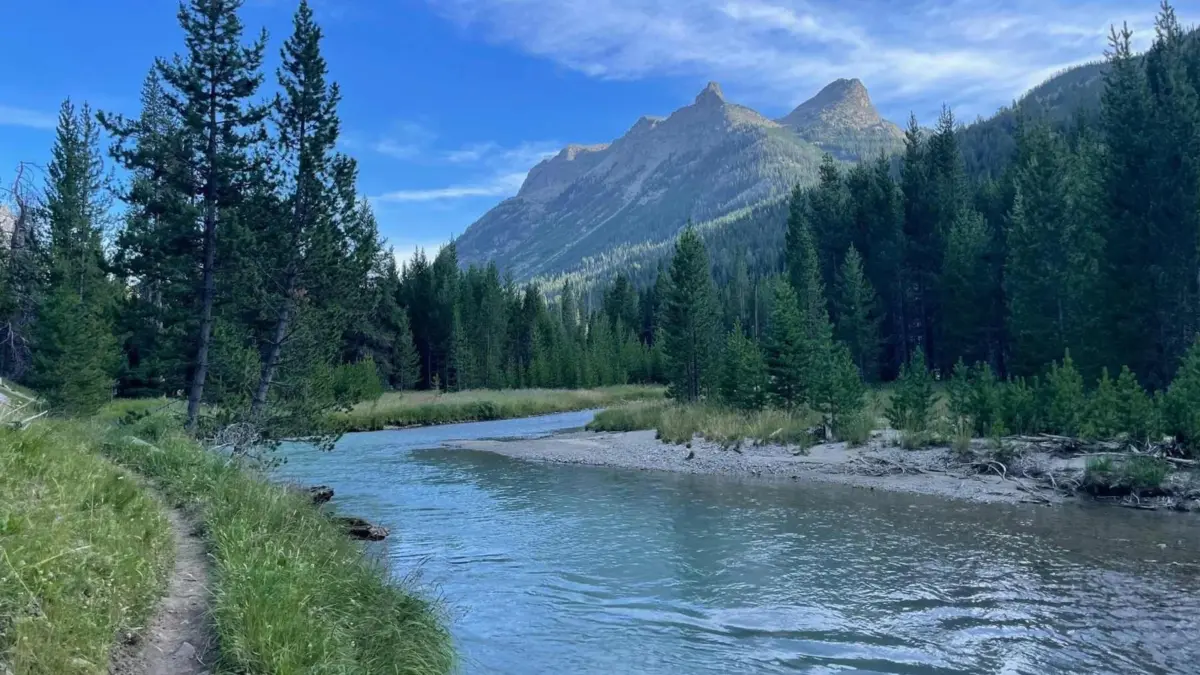
WASHINGTON — In what environmental advocates are calling one of the most significant and sweeping threats to American public lands in decades, the United States Department of Agriculture (USDA) has announced its intention to repeal the landmark Roadless Area Conservation Rule. This pivotal regulation currently stands as the sole federal shield protecting more than 80,000 miles of pristine rivers situated within federal public domains. These waterways are not merely scenic backdrops; they serve as the vital lifeline of clean drinking water for approximately 24 million Americans across multiple states.
For over twenty years, the Roadless Rule has functioned as an environmental bulwark, strictly prohibiting commercial logging operations and the construction of new infrastructure or roadways across millions of acres of wild, undeveloped national forests. However, the impending rollback has ignited a fierce, nationwide controversy. Critics of the proposed repeal argue that opening these untouched sanctuaries to industrial exploitation will permanently scar the American landscape, jeopardize regional water security, devastate delicate ecosystems, and drastically escalate wildfire risks.
As conservation groups mobilize and public outcry mounts, the impending decision has thrust the delicate balance between commercial resource extraction and ecological preservation back to the forefront of national politics.
The Anatomy of the Conflict: Main Facts
At the core of the debate is the future of more than 58 million acres of national forest lands currently safeguarded by the Roadless Rule. Enacted at the turn of the millennium, the policy was designed to prevent the fragmentation of contiguous forest ecosystems, shielding them from the encroachment of industrial development, mining, and road-building.
The stakes of the USDA’s proposed repeal extend far beyond conservation theory. The targeted lands encompass vast watersheds that feed major municipal water systems. According to environmental scientists and resource managers, the undisturbed nature of these forests naturally filters and regulates runoff, ensuring a reliable, high-quality supply of drinking water that requires minimal artificial treatment. Introducing heavy machinery, clear-cutting timber, and constructing logging roads would fundamentally disrupt these natural filtration systems, leading to severe soil erosion and the accumulation of harmful sediments in local riverbeds.
Furthermore, proponents of the rule emphasize its role as a critical defense mechanism against global climate change. Mature, unfragmented forests operate as massive carbon sinks, absorbing and storing immense quantities of atmospheric carbon dioxide in their biomass and soils. Stripping away protections would release stored carbon back into the atmosphere while reducing the capacity of these ecosystems to act as natural climate sanctuaries.
A Timeline of Protection and Peril: Chronology of the Roadless Rule
To understand the gravity of the current administrative pivot, it is necessary to examine the historical trajectory of the Roadless Rule and the ongoing efforts to dismantle or defend it:
- January 2001: Following years of comprehensive scientific assessments and unprecedented public commentary—which yielded over a million public remarks—the Clinton administration officially finalizes the Roadless Area Conservation Rule. The policy places roughly 58.5 million acres of inventoried roadless areas within the National Forest System off-limits to road construction and commercial timber harvesting.
- 2001–2009: The implementation of the rule immediately triggers a flurry of legal challenges from state governments, timber industry associations, and off-road vehicle groups. Throughout the Bush administration, repeated attempts are made to weaken the rule, introduce state-specific petitions, or outright replace the federal framework with decentralized guidelines.
- 2009–2016: Federal courts issue conflicting rulings regarding the legality of the rule, particularly concerning its application in states like Alaska and Idaho. Despite persistent legal friction, the core tenets of the policy endure, preserving millions of acres of wild terrain from industrial fragmentation.
- 2020: The Trump administration moves to fully exempt the Tongass National Forest in Alaska—the largest temperate rainforest in the world—from the Roadless Rule, permitting expanded logging and road development. This decision draws intense criticism from conservationists and indigenous groups.
- 2023: The Biden administration initiates steps to restore full protections to the Tongass National Forest, signaling a renewed federal commitment to the original 2001 framework.
- Present Day: The U.S. Department of Agriculture announces its controversial intention to repeal or substantially weaken the overarching Roadless Rule, sparking a new wave of resistance from environmental coalitions, outdoor recreation advocates, and local communities.
Supporting Data and Ecological Impact
The arguments against repealing the Roadless Rule are heavily grounded in empirical data concerning wildlife biology, hydrology, and wildfire behavior.
Aquatic Ecosystems and Threatened Species
The removal of roadless protections poses an existential threat to numerous native aquatic species. For instance, the western native trout relies heavily on the cold, unpolluted, and structurally complex river networks found exclusively within remote, roadless watersheds. When forests are opened to commercial logging and road construction, increased water temperatures, siltation, and chemical runoff rapidly degrade these specialized habitats. Fisheries experts warn that the proposed policy shift could drive vulnerable native fish populations toward functional extinction.
The Wildfire-Road Correlation
A common talking point among proponents of commercial timber harvesting is that active forest management—including the creation of logging roads—is necessary to mitigate wildfire risks. However, data compiled by ecologists within the U.S. Forest Service directly challenges this narrative.
Studies examining human-caused wildfires within major Southern California national forests—including the Angeles, San Bernardino, Los Padres, and Cleveland—reveal that nearly two-thirds of all human-ignited fires originate directly along established roadways. Furthermore, recent catastrophic blazes in the American West, such as the Caldor, Dixie, and Mosquito fires, were all traced back to origins in close proximity to major transportation corridors. Building new roads into previously untamed forest interiors effectively introduces human ignition sources deeper into fragile ecosystems, contradicting the claim that road expansion enhances fire safety.
Recreation and the Outdoor Economy
Beyond ecological metrics, roadless areas serve as economic engines for rural communities through outdoor recreation. Jessica Smith, a representative from the Tahoe Area Mountain Biking Association (TAMBA), highlighted the unique value of these spaces during a recent panel discussion.
"Mountain bikers and outdoor enthusiasts are drawn to natural areas because of the challenge, the wonder, and the profound tranquility that only remote landscapes can offer," Smith noted. "The regulations that restrict road development ensure that these rare sanctuaries remain pristine, offering experiences that simply cannot be replicated in managed or heavily developed timberlands."
Official Responses and Stakeholder Positions
The announcement from the USDA has triggered a sharp division among stakeholders, pitting commercial timber interests and certain local governments against a coalition of conservationists, recreationists, and municipal water authorities.
The Administration’s Perspective
Proponents of the repeal within agricultural and industrial sectors argue that relaxing restrictions will stimulate rural economies, create jobs in the timber and forestry sectors, and allow for better management of forest health through proactive thinning and resource extraction. Advocates for the policy change contend that federal lands should be utilized to support domestic wood product manufacturing and infrastructure development, particularly in regions economically reliant on resource-based industries.
The Conservationist Backlash
In sharp contrast, national environmental organizations have launched aggressive public awareness campaigns to halt the rollback. Foremost among them is American Rivers, a prominent non-profit conservation organization dedicated to the protection and restoration of the nation’s waterways. Through its digital platforms, American Rivers has detailed the catastrophic downstream consequences of repealing the Roadless Rule, warning that millions of citizens could see their water bills rise due to increased treatment costs, while municipal water security is compromised by up-river industrial pollution.
To mobilize public resistance, American Rivers has introduced a targeted online public comment campaign and survey directed squarely at the USDA, titled "Do Not Repeal the Roadless Area Conservation Rule." The organization is urging citizens, outdoor enthusiasts, and concerned scientists to make their voices heard before administrative deadlines close.
Broader Implications for the Future of American Public Lands
The impending decision regarding the Roadless Rule transcends a simple bureaucratic realignment; it represents a philosophical crossroads for the management of America’s natural heritage.
If the USDA moves forward with the repeal, the long-term consequences will be irreversible. The introduction of heavy industrial footprints into the last remaining bastions of untamed American wilderness will fracture contiguous wildlife corridors, accelerate the erosion of topsoil into vital drinking water reservoirs, and diminish the nation’s capacity to sequester carbon in the face of escalating climate disruptions.
Conversely, preserving the rule reaffirms a national commitment to long-term ecological stewardship over short-term economic gain. As millions of Americans increasingly rely on these public lands for clean water, climate resilience, and sustainable outdoor recreation, the defense of the Roadless Rule remains one of the most critical environmental battles of the modern era. The outcome of this policy fight will determine whether the nation’s most precious natural watersheds remain intact for future generations or fall victim to the pressures of industrial expansion.


Leave a Reply