

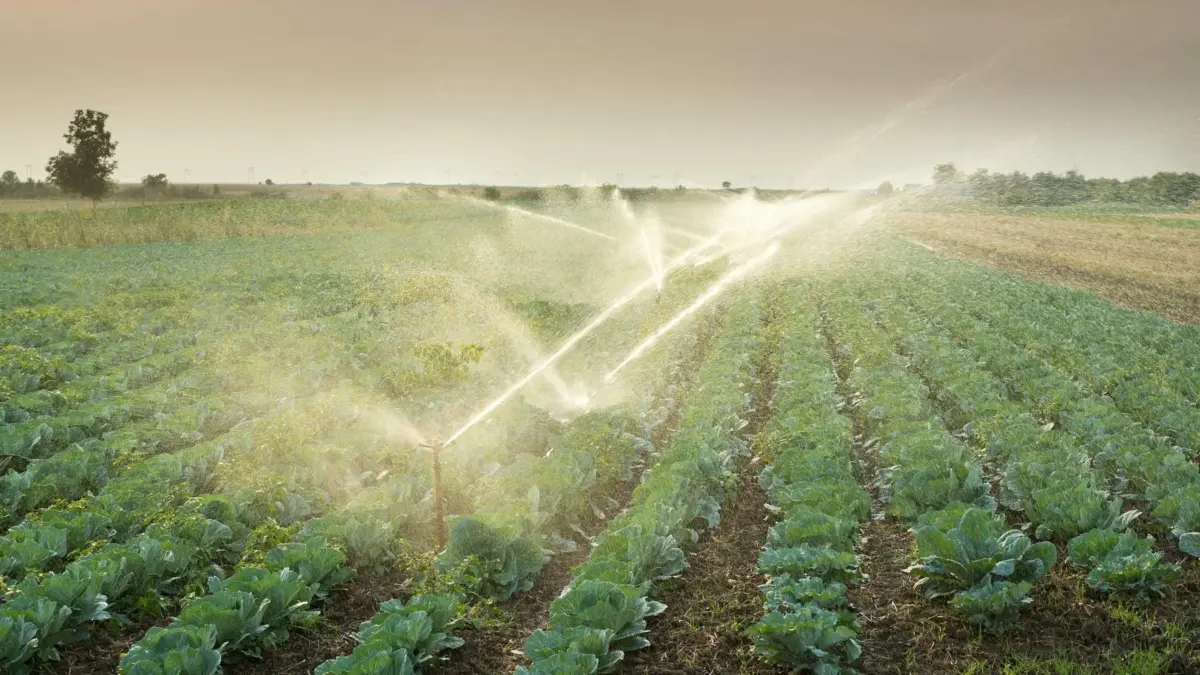
WASHINGTON — In the complex matrix of the global climate crisis, agriculture occupies a dual role. It is both one of the sectors most acutely vulnerable to environmental volatility and a primary economic engine dependent on finite natural resources. For the United States, an industrial powerhouse where agriculture moves billions of dollars across food production, employment, and manufacturing, reconciling productivity with planetary health has never been more urgent.
A groundbreaking study conducted by researchers at the Colorado State University has shed new light on this delicate balance, offering a counterintuitive yet compelling solution: optimized agricultural irrigation. Far from merely serving as a localized tool to combat drought, smart irrigation emerges as a formidable multi-benefit strategy capable of bolstering farm economics, preserving fragile natural ecosystems, and acting as a massive deterrent against greenhouse gas emissions.
Main Facts: The Nexus of Irrigation, Economics, and Emissions
At its core, the Colorado State University research challenges traditional environmental narratives by demonstrating that intensive, highly efficient agricultural irrigation does not necessarily harm the planet; rather, when managed correctly, it can be one of our most potent defenses against runaway climate change.
The primary takeaways of the research center on land-use efficiency and carbon retention:
- The Land-Yield Ratio: By significantly boosting crop yields per acre, irrigation allows farmers to extract more food and fiber from a smaller spatial footprint. Because every acre of land represents a distinct financial and ecological cost, maximizing existing plots protects farmers from the overhead expenses of expanding operations.
- Forestallment of Land Conversion: The most striking revelation of the study is that agricultural irrigation in the United States prevents roughly 363 times more greenhouse gas emissions than it generates. It achieves this by alleviating the systemic pressures that force agricultural expansion into natural ecosystems.
- Massive Global Mitigation Potential: When scaled and combined with clean-energy infrastructure, efficient irrigation practices and the avoidance of unnecessary land conversion could avert approximately 6.86 gigatons of greenhouse gas emissions. This staggering figure translates to roughly 13% of total global emissions.
- The Decarbonization Imperative: To fully realize these benefits, the agricultural sector must address its internal emissions—specifically by transitioning water pumps traditionally powered by fossil fuels toward electrified systems driven by renewable energy sources.
Chronology: The Evolution of U.S. Irrigation and Climate Science
To understand the weight of the Colorado State University findings, it is essential to trace how agricultural resource management has intersected with environmental policy over the past century.
Early 20th Century: Expansion and Engineering
The birth of modern U.S. agriculture was defined by massive engineering feats. The creation of the Bureau of Reclamation and monumental dam projects brought water to the arid American West, transforming dust bowls and desert scrublands into breadbaskets. During this era, irrigation was viewed purely through an economic and developmental lens: more water meant more crops, greater food security, and regional prosperity, with little regard for long-term ecological consequences or carbon accounting.
The Late 20th Century: The Recognition of Scarcity
By the latter decades of the 20th century, the ecological bills of unchecked expansion began to come due. Aquifers like the Ogallala started showing alarming signs of depletion, and the environmental movement began highlighting the degradation of wetlands, rivers, and native grasslands. Irrigation was increasingly scrutinized as a major consumer of dwindling freshwater resources, positioning agriculture and environmentalism at loggerheads.
The 2000s–2010s: The Climate-Agriculture Feedback Loop
As global temperatures rose, the vulnerability of American agriculture became starkly apparent. Severe droughts battered regional economies—ranging from the collapse of grain yields in the Midwest to multi-million-dollar losses in the Texas wine industry. Scientists began mapping the feedback loop: climate change caused droughts, droughts forced farmers to expand or over-extract resources, and the clearing of new land released massive pulses of stored carbon into the atmosphere, which in turn accelerated global warming.
2026: The Paradigm Shift
The publication of the Colorado State University study marks a critical turning point in this chronology. For the first time, researchers quantified the net climate benefits of irrigation at scale. By framing irrigation not as a wasteful luxury, but as a precision tool for land conservation and carbon sequestration, the study bridges the historical gap between agricultural productivity and climate activism.
Supporting Data: Numbers Behind the Climate Defense
The credibility of the new research rests on robust ecological and economic metrics that quantify the hidden costs of dryland farming versus the efficiency of irrigated agriculture.
The Carbon Cost of Land Conversion
Natural ecosystems—including mature forests, native prairies, and undisturbed wetlands—function as monumental planetary carbon sinks. They store vast quantities of carbon within their complex root systems, vegetation layers, and microbial-rich soils.
When these wild landscapes are bulldozed and plowed to establish new rain-fed or marginal agricultural fields, a significant percentage of that stored carbon is instantly oxidized and released into the atmosphere as carbon dioxide. The Colorado State University study emphasizes that avoiding this destructive conversion cycle is far more effective at keeping carbon in the ground than trying to recapture it later through reforestation or untested geoengineering schemes.
The Energy Paradox and the Clean Energy Solution
A critical nuance addressed in the research is the operational footprint of irrigation itself. Historically, pressurized irrigation systems and deep-well pumps have relied heavily on diesel generators or fossil-fuel-generated grid electricity. Running these pumps exacts an environmental toll.
However, the study notes that this hurdle is entirely surmountable. By intentionally coupling efficient irrigation infrastructure with rural electrification initiatives and renewable energy incentives—such as solar-powered pumping stations and wind-backed microgrids—the agricultural sector can systematically strip the carbon footprint out of the watering process entirely.
What the Numbers Exclude
To maintain strict analytical focus, the study’s authors note that their models did not factor in other heavy agricultural emission sources, such as nitrous oxide releases from synthetic nitrogen fertilizers or enteric methane emissions from livestock production. Even when isolating the land-use and crop-yield dynamics, the climate dividends of smart irrigation remain astonishingly high at nearly 7 gigatons of averted emissions.
Official Responses and Expert Perspectives
The agricultural and scientific communities have received the Colorado State University findings with a mixture of validation and forward-looking urgency, sparking dialogues among policymakers, agronomists, and environmental economists.
Agronomists and Crop Scientists
Dr. Elena Vance, a lead agricultural systems analyst, noted that the research finally provides empirical backing for what pragmatic farmers have practiced for generations.
"For years, we’ve treated irrigation as a simple water-delivery mechanism," Vance stated. "What this study proves is that precision irrigation is fundamentally a land-conservation strategy. When you double or triple the output of a single acre through targeted moisture management, you take the pressure off local ecosystems. You tell developers and land-clearers: ‘We don’t need to chop down that forest or plow up that native prairie; we are already producing what the market demands right here.’"
Economic and Trade Analysts
Market economists emphasize the direct financial correlation between land efficiency and grower profitability. In an era marked by volatile land prices, high interest rates, and soaring equipment costs, the economic burden of scaling horizontally (buying more land) versus vertically (optimizing existing plots) is profound.
Trade groups representing specialty crop producers in drought-prone states like Texas, California, and Colorado have pointed out that protecting existing investments against climate shocks prevents cascading economic failures. When extreme heatwaves and prolonged droughts decimate harvests without adequate irrigation safeguards, the financial shockwaves ripple outward—driving up consumer food prices, threatening food security, and forcing distressed agricultural entities into bankruptcy or forced land liquidation.
Environmental Policy Advocates
Conservation organizations have responded with cautious optimism, stressing that the pivot toward electrified, clean-energy-backed irrigation must be managed carefully to avoid triggering local groundwater depletion.
Environmental policy groups argue that federal farm bill subsidies should be directly tied to modernization efforts—rewarding producers who adopt high-efficiency drip systems, soil moisture sensors, and renewable-powered pumps, while penalizing archaic, wasteful flood-irrigation methods that drain regional aquifers.
Implications: Adapting Agriculture for a Warming World
The ramifications of the Colorado State University study extend far beyond academic journals; they offer a concrete roadmap for how global and domestic agricultural policies must evolve to survive the 21st century.
1. Redefining Sustainable Agriculture
For decades, sustainability in farming was often framed in opposition to intensive technological intervention—frequently prioritizing low-input, rain-fed organic methods regardless of their spatial footprint. However, as the global population climbs and climate change renders historical weather patterns obsolete, the luxury of relying solely on rainfall is rapidly disappearing. Sustainable agriculture must embrace high-tech efficiency. Producing more food on less land through smart, clean-powered irrigation is no longer just an economic optimization strategy; it is an absolute ecological necessity.
2. Policy and Subsidy Overhaul
Governments must modernize agricultural support frameworks. Policymakers should leverage financial incentives to accelerate the transition away from fossil-fuel-driven irrigation pumps. By injecting capital into rural green grids and providing low-interest loans for advanced drip-irrigation infrastructure, state and federal agencies can simultaneously achieve macroeconomic stability and aggressive climate targets.
3. Fortifying Global Food Security
As heatwaves intensify and water scarcity threatens traditional agricultural hubs, the vulnerability of the global food supply chain grows increasingly precarious. Implementing resilient, climate-adaptive irrigation systems ensures that crop yields remain stable even under extreme meteorological stress. By insulating farmers from weather shocks, nations can prevent food price spikes, protect rural employment, and secure long-term nutritional stability for millions.
Conclusion
The research from Colorado State University reframes our understanding of the relationship between water, land, and the atmosphere. Far from being a contributor to environmental degradation, optimized agricultural irrigation—when decoupled from fossil fuels—stands out as a vital tool for planetary survival. By maximizing land efficiency, shielding natural carbon sinks from the bulldozer, and mitigating up to 13% of global greenhouse gas emissions, smart irrigation points the way toward a resilient, highly productive, and sustainable agricultural future.



Leave a Reply