

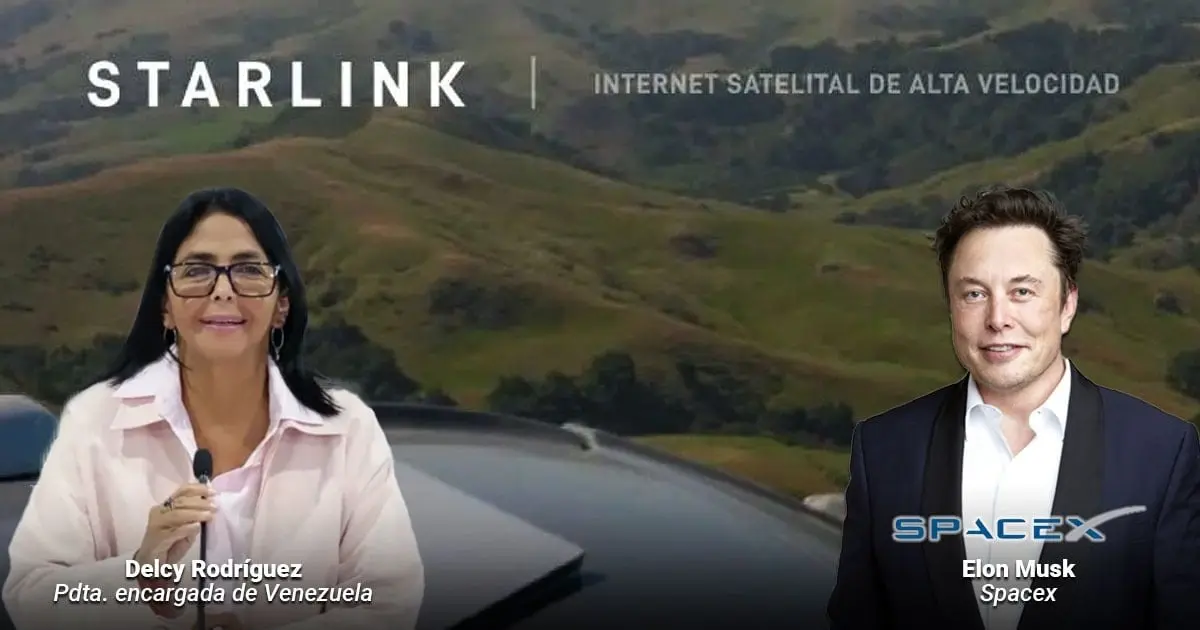
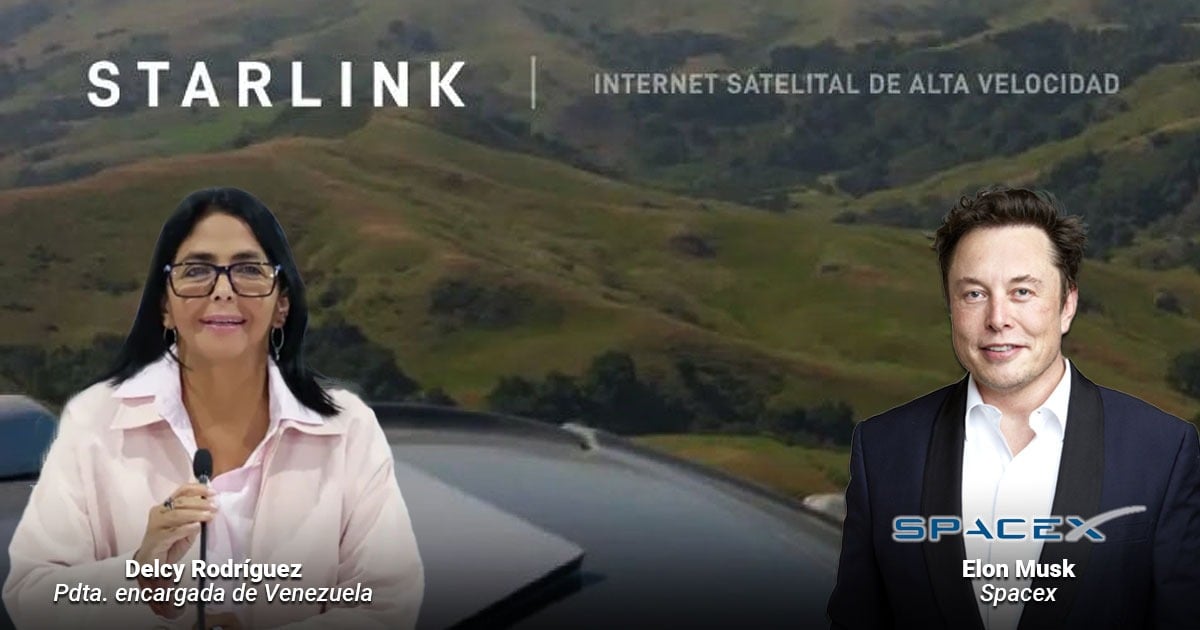
CARACAS / WASHINGTON — In a landmark policy reversal that signals a profound shift in regional geopolitics and telecommunications, SpaceX’s satellite internet service, Starlink, has officially secured authorization to operate commercially across Venezuela. Formalized by the interim administration of President Delcy Rodríguez, the move dismantles years of strict state restrictions imposed during the Maduro era, opening the door for direct U.S. corporate expansion into a market long isolated from mainstream Western technology infrastructure.
The authorization follows a complex web of humanitarian milestones, shifting diplomatic tones toward Washington, and the relentless pressure of a thriving cross-border black market. For Elon Musk, the world’s wealthiest individual, the green light in Caracas marks another victory for his sprawling technological empire, coming on the heels of SpaceX’s historic public market debut and an unprecedented wave of global expansion.
Main Facts
The formal entry of Starlink into the Venezuelan market is anchored by regulatory approvals granted by the National Commission of Telecommunications (Conatel). Through General Authorization HGTS-00639 and seven distinct general concessions in the Ku-band—the segment of the electromagnetic spectrum utilized for satellite telecommunications, subscription television, and broadband services—SpaceX’s local subsidiary, SPACEX VZ, S.C.A., is now legally empowered to provide domestic internet services.
Unlike previous arrangements that forced users to rely on smuggled equipment or international roaming workarounds, the new framework allows for full local operations. Consumers and enterprise clients in Venezuela can now contract services directly, process payments through domestic banking networks, and receive satellite kits delivered straight to their doors.
The breakthrough was catalyzed by emergency relief efforts following a destructive double earthquake on June 24, which devastated terrestrial telephony and internet infrastructure in the coastal state of La Guaira. In the wake of the disaster, Starlink deployed over 1,600 connectivity kits to support rescue teams, medical personnel, and humanitarian organizations. These emergency tests successfully demonstrated advanced technological capabilities, including Direct-to-Device (D2D) messaging across the nation’s three major mobile operators and high-capacity Ku-band operations under flexibilized Equivalent Power Flux Density (EPFD) limits.
Chronology of Events
To understand how Starlink transitioned from an illicit contraband item in Venezuelan border towns to a fully sanctioned state-approved utility, it is necessary to examine the timeline of technological integration and geopolitical maneuvering:
- 2023: Starlink officially launches commercial operations in neighboring Colombia, instantly triggering a massive informal distribution network. Venezuelan merchants, miners, and intermediaries begin purchasing kits in Colombian border cities and online marketplaces, smuggling them across the porous frontier to feed an insatiable demand for high-speed internet.
- June 24, 2026: A powerful double earthquake strikes coastal Venezuela, severely crippling traditional telecommunications infrastructure in La Guaira and surrounding regions.
- Late June – Early July 2026: SpaceX, in coordination with international humanitarian channels and the U.S. Embassy in Caracas, deploys more than 1,600 free Starlink kits to emergency responders, bypassing standard regulatory hurdles under crisis protocols. The field tests prove exceptionally effective, showcasing D2D messaging and resilient satellite links.
- Mid-2026: Amid a warming diplomatic climate and shifting economic policies under interim President Delcy Rodríguez—coinciding with broader geopolitical resets involving the U.S. administration—Conatel begins fast-tracking regulatory compliance talks with SpaceX representatives.
- August 2026: Conatel formally issues General Authorization HGTS-00639 and seven Ku-band concessions to SPACEX VZ, S.C.A., ending the era of state prohibitions. Elon Musk reacts to the news on X (formerly Twitter) with a succinct proclamation: "Starlink, in Venezuela!"
Supporting Data and Market Transformation
The formalization of Starlink’s operations is set to disrupt a lucrative shadow economy that flourished along the Colombia-Venezuela border for years. Because the service was officially available in Colombia but heavily restricted in Venezuela, a thriving gray market emerged. Smugglers transported antennas across rivers and through clandestine checkpoints in the departments of Nariño, Putumayo, and the Orinoco-Amazon basin, catering primarily to remote mining operations, rural enclaves, and non-state actors. Colombian authorities, including the National Navy and National Police, routinely intercepted large illicit shipments of Starlink hardware destined for Venezuelan territory.
With local legal availability and SpaceX’s aggressive enforcement of geofencing and restrictions on prolonged international roaming accounts, the cross-border contraband trade is expected to contract sharply.

Financially, the Venezuelan expansion occurs as SpaceX reaches unprecedented corporate milestones. Elon Musk, who holds a commanding 48.4% equity stake in SpaceX represented by 6.420 billion shares and options, recently steered the aerospace giant through the largest Initial Public Offering (IPO) in history on the Nasdaq exchange, netting approximately $85.7 billion. Bolstered by Musk’s diverse portfolio—spanning Tesla, The Boring Company, Neuralink, and X—the billionaire’s net worth has surged past the historic $1 trillion threshold, cementing his status as a dominant force in both global industry and international geopolitics.
Official Responses and Humanitarian Diplomacy
The path to legalization was paved by pragmatic humanitarian cooperation rather than traditional diplomatic treaties. When the June earthquake struck La Guaira, the immediate deployment of Starlink terminals provided a vital lifeline that local infrastructure could not match.
The U.S. Embassy in Caracas publicly highlighted the critical role played by the more than 1,600 donated connectivity kits, which bridged communication gaps for doctors and civil protection units. This relief effort provided political cover for the interim government of Delcy Rodríguez to embrace a U.S. technology giant without appearing to capitulate to broader ideological pressures. By framing the authorization as a logical extension of disaster recovery and technological modernization, Caracas managed domestic political sensitivities while welcoming vital foreign investment.
Conatel emphasized in its regulatory filings that the concessions granted to SPACEX VZ, S.C.A. subject the company to local fiscal oversight and regulatory compliance, ensuring that the Venezuelan state retains regulatory authority over the airwaves while granting citizens access to cutting-edge global infrastructure.

Implications for Venezuela and the Region
The arrival of Starlink carries profound domestic and international ramifications:
- Breaking the Telecommunications Monopoly: For years, Venezuelan telecommunications have suffered from chronic underinvestment, state censorship, and frequent outages. The introduction of high-speed, censorship-resistant satellite internet provides businesses, academics, and ordinary citizens with an alternative to state-controlled broadband.
- Decimation of the Gray Market: The legalization of direct sales and local banking integration eliminates the risk, markup, and legal precarity associated with contraband antennas smuggled from Colombia. Smugglers and intermediaries who profited from the scarcity of high-speed internet will see their margins vanish.
- A New Frontier for U.S. Corporate Influence: The deal represents a significant milestone for U.S. business interests in Venezuela following years of heavy sanctions and economic decoupling. It may serve as a testing ground for further normalization of commercial ties between Washington and Caracas.
- Security and Geopolitical Oversight: While the service offers undeniable benefits for economic recovery and education, it also presents challenges for state security. The decentralized nature of satellite internet makes traditional state-sponsored monitoring and internet shutdowns significantly more difficult to execute, fundamentally altering the balance of power between information-hungry populations and authoritarian governance structures.
As Starlink activation kits begin shipping directly to Venezuelan households, the country takes a tentative yet irreversible step into the modern era of global satellite connectivity—forever altering its digital landscape under the watchful eye of Silicon Valley’s most influential mogul.