

MEDELLÍN, COLOMBIA — "If you ask me whether the timing was right, I would say: no, it arrived late."
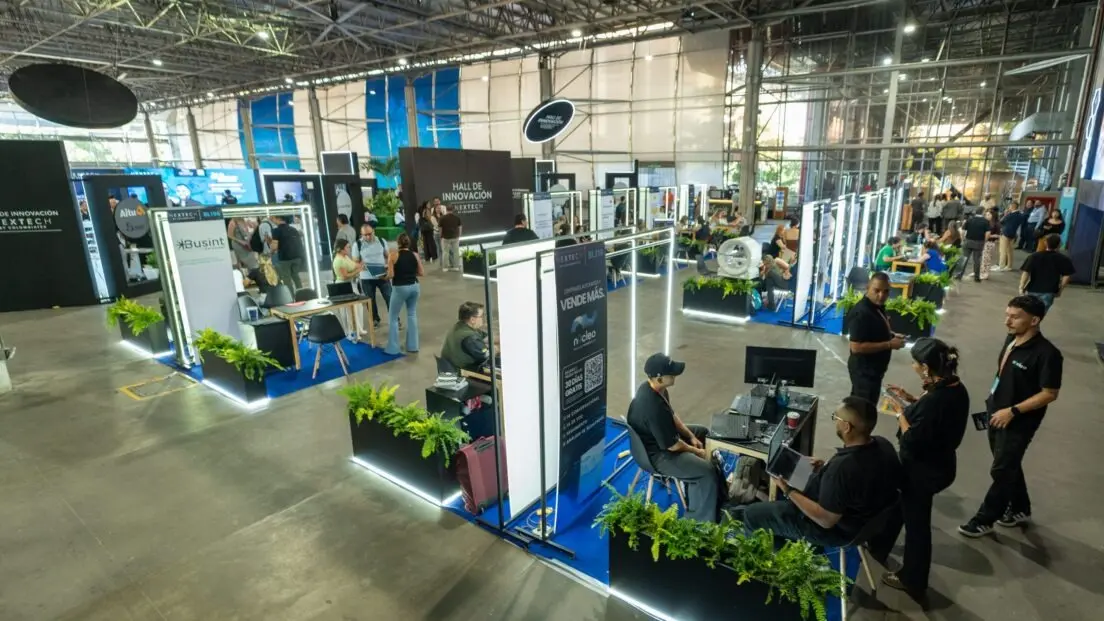
With this striking and candid admission, Sebastián Díez, executive president of Inexmoda, set the tone for the closing moments of the inaugural edition of Nextech. Held at Plaza Mayor in Medellín, the three-day event became a high-stakes crucible where two traditionally siloed universes—textile manufacturing and advanced technology—collided.
Díez’s reflection captured the underlying urgency pulsating through the convention halls. For decades, the fashion industry treated technology as a distant luxury, an operational afterthought reserved for multinational conglomerates with massive capital reserves. Nextech proved that this era of complacency is officially over. Today, digital transformation is no longer a competitive advantage; it is a baseline requirement for survival in a global marketplace being upended by fast-fashion giants, shifting consumer expectations, and stringent international regulations.
Main Facts: Bridging the Gap Between Runway and Algorithm
Nextech transformed Medellín into the epicenter of Latin American fashion-tech innovation, drawing stakeholders from across the entire textile value chain. The event was not merely a showcase of flashy gadgets or abstract concepts; it was designed as a pragmatic problem-solving forum born from the actual pain points of the Sistema Moda (Fashion System).
The exhibition floor offered a holistic view of modern manufacturing. Attendees could walk past heavy-duty industrial sewing machinery and immediately interface with cloud-based enterprise software, automated logistics systems, artificial intelligence (AI) design engines, and data analytics dashboards.
Crucially, the exhibits addressed the entire lifecycle of a garment—mapping what happens long before a piece of cloth is cut, during its assembly, and well after it reaches the end consumer’s hands. From 3D virtual prototyping and bio-based materials engineered from agricultural waste to digital passports verifying garment sustainability, Nextech demonstrated that the future of fashion is deeply coded.
The overarching question guiding every panel, keynote, and booth was not “What technology exists?” but rather, “How does this specific tool solve a business problem for a fashion enterprise?”
Chronology of an Industry Awakening: The Three-Day Evolution of Nextech
Day 1: Laying the Digital Foundations
The opening day kicked off with a sense of cautious anticipation. Industry veterans, factory owners, and software developers mingled in the grand halls of Plaza Mayor, sizing up how digital transformation could realistically integrate into traditional assembly lines.
Opening panels immediately tackled the friction between legacy manufacturing and agile digital workflows. Discussions centered on operational readiness—the realization by tech experts that a company cannot successfully deploy artificial intelligence or machine learning if its baseline production floors are disorganized. Leaders emphasized that automation requires structured, disciplined processes to truly scale.
Day 2: Deep Dives into Data, AI, and Traceability
The second day shifted from theoretical adoption to tactical implementation. Workshops and conferences zeroed in on five core pillars:
- Artificial Intelligence: Framed not as a threat designed to replace human designers or pattern makers, but as a collaborative partner capable of accelerating trend forecasting, streamlining product development, and eliminating tedious administrative burdens.
- Data Analytics: Industry analysts stressed that knowing what sells, when, where, and at what price point is no longer a matter of intuition. In an era where a miscalculated inventory can sink a brand, real-time data integration is vital for optimizing supply chains and minimizing dead stock.
- Traceability and Sustainability: Driven by aggressive international regulations and conscious consumerism, panels explored how blockchain and digital IDs are empowering brands to transparently track raw materials from farm to finished product.
- Process Automation: Exhibitors demonstrated how robotics and smart machinery are transforming labor-intensive bottlenecks into streamlined, high-precision operations.
- Speed to Market: Discussions evaluated how integrated software ecosystems dramatically shrink lead times, enabling local brands to compete with hyper-fast international e-commerce disrupters.
Day 3: The Innovation Showcase and Paradigm Shifts
The final day spotlighted the next generation of disrupters. The Innovation Hall hosted six elite startups from Colombia and Mexico—curated from a competitive pool of over 120 applicants—that showcased cutting-edge solutions in circular economy initiatives, digital fashion design, and advanced material sciences.
The event concluded with Sebastián Díez’s sobering yet visionary closing speech, where he highlighted that technology’s ultimate role in fashion is not to displace human creativity, but to connect previously isolated nodes into an intelligent, responsive, and predictive network.
Supporting Data: By the Numbers
The quantitative success of Nextech’s inaugural edition far exceeded the expectations of its organizers, signaling a profound market appetite for technology-driven fashion discourse:
- 5,000+ total attendees passed through the doors of Plaza Mayor over the three-day event.
- 118 specialized exhibiting companies showcased their hardware, software, and service solutions.
- 25 countries were represented among the participants, cementing Medellín’s status as a continental hub for fashion innovation.
- 24 conferences delivered deep-dive educational sessions for industry professionals.
- 40 international and local speakers shared insights on digital transformation, automation, and sustainability.
- 120+ applications were submitted for the Innovation Hall, from which only six elite startups from Colombia and Mexico were selected to pitch their technologies.
These metrics validate a pivotal shift: decision-makers—not just curious observers—showed up in droves, looking to invest in tools that will future-proof their operations.
Official Responses and Industry Perspectives
The sentiment among industry leaders was a mixture of urgency, realism, and cautious optimism.
Sebastián Díez pulled no punches when evaluating the industry’s historical pace of adoption. By stating that the technological awakening "arrived late," he challenged regional business owners to stop viewing innovation as an optional line item.
"Nextech was born from the challenges faced by the Fashion System, not from technology for technology’s sake," Díez emphasized during his opening remarks.
He further elaborated during the closing session on the prerequisite for digital success:
"To be ready and to be scalable, a company must have structured productive processes backed by technology. You cannot automate chaos."
Exhibitors echoed this perspective. Software developers and machinery manufacturers noted a notable change in the demeanor of visiting executives. Unlike previous industrial fairs where attendees merely window-shopped, business leaders at Nextech arrived with specific operational bottlenecks in mind—seeking concrete solutions for inventory bloat, fabric waste, and sluggish supply chains.
Implications: A Strategic Pivot for the Region
The ripple effects of Nextech 2024 extend well beyond the exhibition floor, carrying profound implications for the local and regional fashion economy.
1. The Death of the Biennial Schedule
Perhaps the most telling indicator of the event’s immediate impact was the organizers’ strategic pivot regarding its frequency. Initially conceptualized as a biennial event to be held every two years, the overwhelming industry response forced Inexmoda to pivot. During the closing ceremony, leadership announced that Nextech will return annually, with the next major edition locked in for 2027.
This transition to an annual cadence recognizes a stark reality: the fashion and technology landscapes evolve at breakneck speeds. A two-year gap is simply too long in a market influenced by rapid digital disruption.
2. The Global Competitive Pressure
The urgency surrounding Nextech is further amplified by external pressures. As low-cost, hyper-efficient global e-commerce titans like Temu and Shein flood Latin American markets, regional brands find themselves squeezed on price and speed. Local manufacturers can no longer rely solely on traditional craftsmanship or cultural affinity. To survive, they must leverage predictive data analytics, automated manufacturing, and agile supply chains to match—or outperform—the agility of global tech-driven competitors.
3. Sustainability as a Market Gatekeeper
Traceability is no longer a niche marketing pitch for eco-conscious boutiques; it is becoming a mandatory entry ticket for international trade. European and North American markets are enacting stringent environmental regulations that penalize opaque supply chains. Nextech positioned regional manufacturers to understand that adopting digital tracking tools is essential to retaining access to premium international export markets.
4. Redefining the Workforce
Rather than rendering human labor obsolete, technology is redefining roles within the textile ecosystem. Designers liberated from manual pattern drafting by AI tools can focus on creative vision. Operators trained on automated machinery transition into high-value supervisors of smart systems. The real challenge for the region will not be job loss, but large-scale workforce upskilling to meet the demands of the digital factory floor.
Conclusion: Beyond the Seams
Nextech has firmly established itself as much more than a new entry on Medellín’s bustling trade event calendar. By forging a direct, unfiltered dialogue between the creators of cutting-edge technology and the architects of the fashion industry, the event has created a vital proving ground.
If Inexmoda and the regional business community can maintain the momentum sparked at Plaza Mayor, Nextech will evolve into the definitive forum where Latin America’s fashion industry stops merely reacting to global trends—and starts engineering its own technological destiny. In a market that shifts faster than any seasonal collection, that proactive stance is the ultimate fashion statement.




Leave a Reply