
BOGOTÁ — In the high-stakes chess match of Colombian national politics, regional power brokers constantly seek pathways to project their influence beyond municipal boundaries. Federico “Fico” Gutiérrez, the charismatic and conservative mayor of Medellín, has proven to be a master strategist in this arena. By extending an early, calculated endorsement to the presidential ticket of Abelardo de la Espriella and vice-presidential candidate José Manuel Restrepo, Gutiérrez has successfully maneuvered his political movement, Creemos, into high-level positions within the national government.
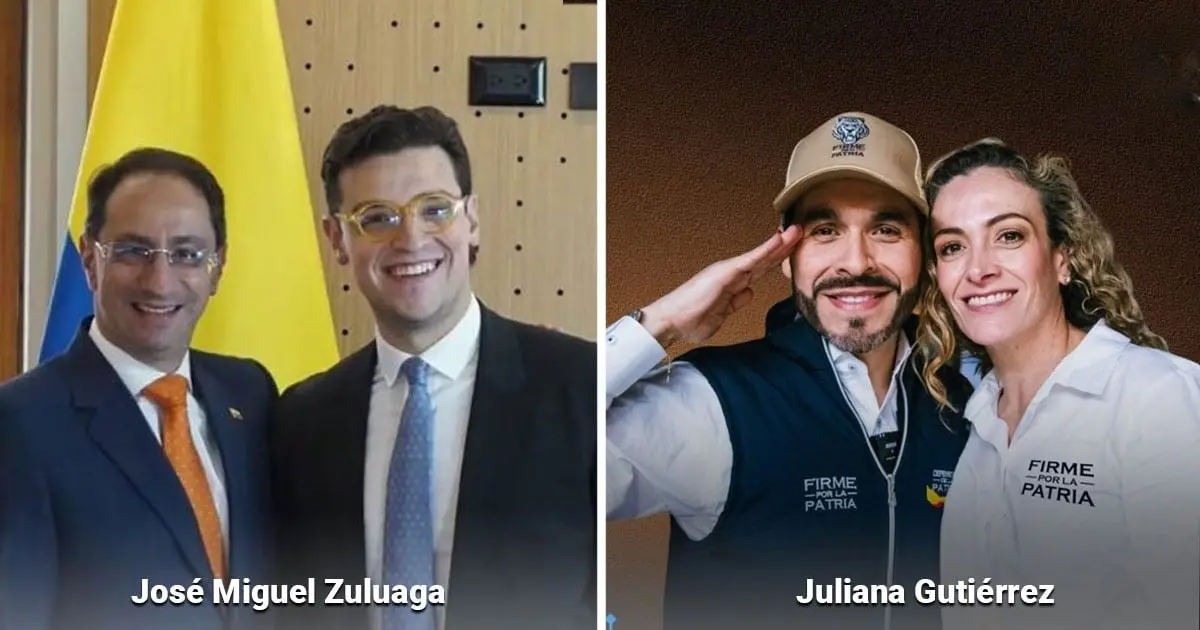
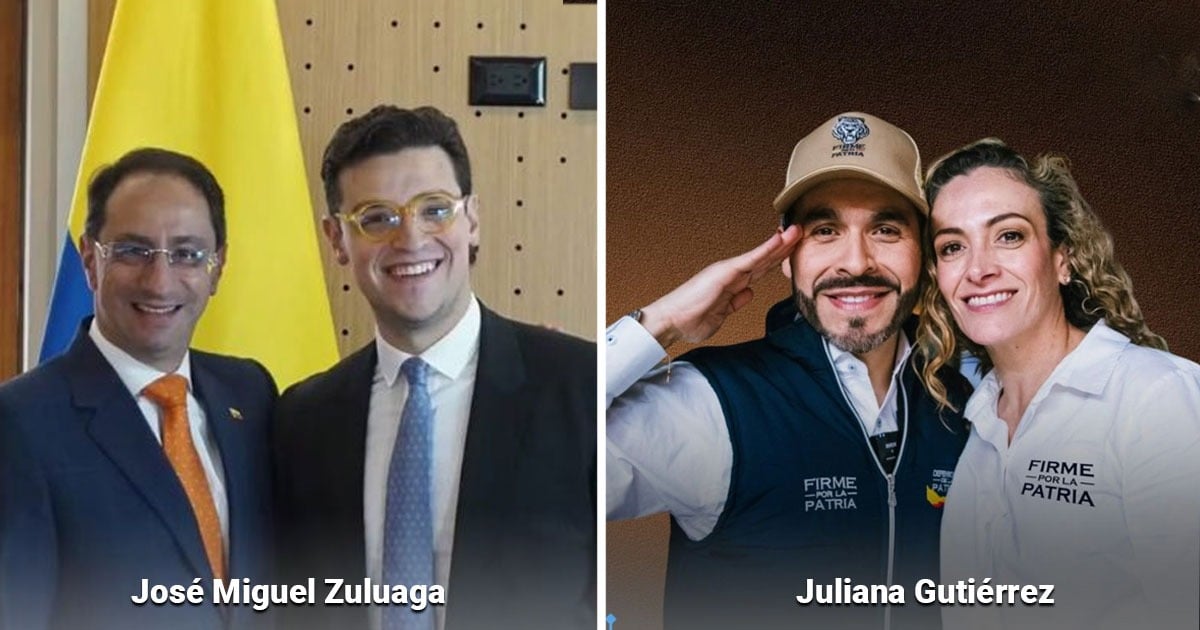
The political payoff for Gutiérrez’s timely gamble is now abundantly clear. Despite legislative setbacks at the ballot box, the Medellín mayor has secured strategic executive appointments for two of his closest confidants and family members: his sister, Juliana Gutiérrez Zuluaga, who now leads the Ministry of Sport, and his cousin, José Miguel Zuluaga Mora, who serves as the private secretary to Vice President José Manuel Restrepo.
This strategic placement not only cements a vital alliance between the local administration of Colombia’s second-largest city and the executive branch in Bogotá, but it also marks a decisive phase in Gutiérrez’s ambition to transform Creemos from a regional vehicle into a nationally influential political force.
1. Main Facts: The Anatomy of a Strategic Alliance
The core of the current political dynamic rests on a transactional relationship forged well ahead of the 2026 electoral calendar. Federico Gutiérrez officially threw his weight behind the De la Espriella-Restrepo presidential ticket on January 28, 2026. For Gutiérrez, the inclusion of José Manuel Restrepo—a respected technocrat, former Minister of Commerce, Industry, and Tourism, and former Minister of Finance—as the vice-presidential nominee was the definitive turning point that earned him the confidence to offer his total backing.
This alliance was not born in a vacuum. It was meticulously engineered through a series of high-profile political summits. The initial groundwork was laid during a private meeting at the Lemont shopping center in Medellín, where Gutiérrez aligned forces with the powerful Casa Char political clan from Barranquilla. This coalition was subsequently formalized during a massive public event at the Central Mayorista de Antioquia, where the leaders unveiled a joint programmatic agenda. The agreement promised mutual support, most notably extending cooperation into the legislative elections held in March 2026.
The Executive Appointments
As the administration took shape, Gutiérrez’s early endorsement yielded direct dividends through two key appointments:
- Juliana Gutiérrez Zuluaga (Minister of Sport): A business administration graduate from the Universidad de Medellín, Juliana has been an architectural pillar of her brother’s political career for more than two decades. She has stood by his side through every phase of his public trajectory—from his early days in the Municipal Youth Councils (CMJ) and the Medellín City Council to the founding and structuring of the Creemos movement.
- José Miguel Zuluaga Mora (Private Secretary to the Vice President): A maternal cousin to both the mayor and the new sports minister, Zuluaga brings rigorous technical credentials to the executive branch. An economist with a master’s degree in Public Policies, he has long contributed to Creemos’s policy teams, specializing in urban security frameworks, youth employment programs, and legislative initiatives such as the proposed anti-mafia laws.
2. Chronology: From Local Governance to National Cabinets
Understanding how Creemos achieved national cabinet-level representation requires tracing a precise timeline of political milestones, alliances, and electoral battles throughout late 2025 and mid-2026.
- Late 2025 (The Backroom Dealings): Representatives of Creemos, aligned with regional powerhouses like the Casa Char, begin secret deliberations regarding the 2026 presidential race. The primary objective is to find a conservative, market-friendly formula capable of uniting the right-wing electorate.
- January 28, 2026 (The Public Endorsement): Following the incorporation of José Manuel Restrepo into Abelardo de la Espriella’s presidential ticket, Mayor Federico Gutiérrez formally announces his endorsement. He highlights Restrepo’s technical competence as the guarantor of a serious, institutional government program.
- Early February 2026 (The Mayorista Rally): The political alliance is sealed at a mass event in the Central Mayorista de Antioquia. The event establishes a unified front for the upcoming legislative campaigns, binding the electoral fates of Creemos candidates with the national presidential aspirations of the coalition.
- March 8, 2026 (Legislative Elections): Colombians head to the polls to elect the Senate and the House of Representatives. Creemos fields a national list led by Juliana Gutiérrez, alongside regional lists in departments like Antioquia.
- Mid-March 2026 (The Cabinet Integration): Following the electoral results, the newly installed national administration announces its cabinet and high-level executive teams. Juliana Gutiérrez is named Minister of Sport, and José Miguel Zuluaga is appointed private secretary to Vice President Restrepo, cementing the Creemos footprint in the executive branch.
3. Supporting Data: The Electoral Paradox of Creemos
A closer examination of the March 8, 2026 legislative elections reveals a striking political paradox: while Creemos struggled to achieve national parliamentary representation, its top-tier candidates commanded significant individual voter support, providing the political leverage necessary to negotiate executive appointments.
The Senate Campaign
Juliana Gutiérrez spearheaded the national Senate list for Creemos. Despite an intense campaign that leveraged her extensive administrative background and her prominent role within the party, the results exposed the structural challenges of expanding a historically regional movement to a nationwide scale:
- Individual Votes for Juliana Gutiérrez: 96,438 votes, reflecting strong personal recognition and a loyal base, primarily concentrated in Antioquia.
- Total National Vote for Creemos (Senate): 227,957 votes, accounting for approximately 1.17% of the total national electorate.
- The Threshold Barrier: Because this aggregate total fell short of the electoral threshold required to secure seats in the Senate, Creemos was shut out of the upper house of Congress.
The House of Representatives and Regional Resilience
Despite the national Senate disappointment, Creemos found solid footing in the departmental races of Antioquia, securing two crucial seats in the House of Representatives:

- Luis Guillermo Patiño Aristizábal: Former Secretary of Education of Medellín, whose administrative profile resonated well with urban voters.
- Simón Molina Gómez: Former Medellín City Councilor, known for his legislative experience and close alignment with Gutiérrez’s municipal governance model.
Meanwhile, José Miguel Zuluaga—who also competed for a seat in the House of Representatives for Antioquia—secured 31,169 votes. Although this represented the third-highest individual vote count within the Creemos list, it was numerically insufficient to earn him a congressional seat. However, his impressive local performance and technical expertise in public policy made him an ideal candidate for the executive branch, leading directly to his appointment alongside Vice President Restrepo.
4. Official Responses and Institutional Reactions
The rapid integration of close relatives of a sitting mayor into high-ranking national ministries has predictably ignited debates across the Colombian political spectrum, drawing sharp contrasts between official justifications and critical assessments.
The Defense of Merit and Continuity
Defenders of the appointments, including spokespersons for Creemos and allies within the national government, emphasize that these positions were earned through decades of dedicated public service, rigorous academic preparation, and proven administrative competence rather than mere nepotism.
Supporters point out that:
- Juliana Gutiérrez possesses a formal business administration degree and has spent over twenty years building municipal institutions from the ground up, providing her with the operational readiness required to manage a complex portfolio like the Ministry of Sport.
- José Miguel Zuluaga holds a master’s degree in Public Policies and has authored significant technical documents on urban security and youth employment, making his role as private secretary to the Vice President a natural extension of his technocratic career.
- The appointments reflect a necessary bridge between successful local governance models—such as Gutiérrez’s security-focused and economically pragmatic administration in Medellín—and the broader execution of national public policy.
Criticisms and Institutional Concerns
Conversely, opposition figures and good-government watchdogs have raised serious ethical questions regarding the concentration of familial and political power. Critics argue that:

- Appointing the sister of a major city’s sitting mayor to a national cabinet post—while simultaneously placing a cousin in the vice-presidential office—risks blurring the lines between private family networks and public state administration.
- The practice undermines the principles of transparency and open merit-based selection, reinforcing traditional clientelist structures under the guise of technocratic efficiency.
- Such maneuvers risk creating conflicts of interest when national budgetary allocations for sports infrastructure, regional security, and urban development are negotiated between the central government and the Mayor’s Office of Medellín.
5. Implications: What This Means for the Future of Colombian Politics
The elevation of Creemos figures into the national spotlight carries profound implications for the political landscape of Colombia, particularly regarding regional autonomy, the future of the conservative movement, and the governance of Medellín.
1. Institutional Bridge-Building
On a practical level, having allies in the Ministry of Sport, the Vice Presidency, and the House of Representatives guarantees that the Mayor’s Office of Medellín will enjoy a direct, unmediated communication channel with the highest levels of the executive branch. In areas such as urban security, judicial reform, and massive regional infrastructure projects, this institutional alignment is expected to fast-track funding and policy coordination. As Mayor Gutiérrez looks toward the final phases of his local mandate, securing national backing ensures that his municipal legacy will remain protected and well-financed.
2. The Nationalization of Creemos
For Creemos as a political vehicle, these appointments represent a double-edged sword. While failing to cross the Senate threshold demonstrated the limits of the movement’s current national appeal, securing executive cabinet positions provides a platform for national visibility. If Juliana Gutiérrez succeeds in modernizing and depoliticizing the Ministry of Sport—delivering transparent management and supporting high-performance athletes nationwide—it could burnish the administrative credentials of the entire Creemos roster. Conversely, any administrative misstep at the national level will instantly rebound upon Mayor Federico Gutiérrez in Medellín.
3. Redefining Regional Power Brokering
Finally, Gutiérrez’s strategy signals a shift in how regional leaders in Colombia project their influence. Rather than relying solely on traditional party machinery or decentralized congressional blocs, regional heavyweights are increasingly leveraging early presidential endorsements to secure executive appointments for their inner circles. This tactical evolution suggests that future national governments will have to negotiate constantly with powerful municipal mayors who command not only local ballot boxes, but also strategic ministries in Bogotá.
As the administration settles into its term, all eyes will remain fixed on how these familial and political alliances translate into concrete public policies—and whether Creemos can successfully bridge the gap between local popularity in Medellín and enduring national political power.