


CALI, COLOMBIA — In a high-stakes nighttime operation that highlights the ongoing tensions surrounding elite prisoner treatment in Colombia, former Valle del Cauca Governor Juan Carlos Abadía was abruptly transferred from a privileged police enclave to the notoriously overcrowded Villahermosa prison.
Abadía, who is serving a staggering 21-year and seven-month sentence for sweeping corruption charges, had been enjoying relative comfort in a special holding pavilion at the National Police’s Carabinero School in Cali. However, an executive order spearheaded by the administration—highlighted by high-profile statements from national leadership—upended his confinement arrangements.
The move follows fierce allegations that the disgraced former politician was running a shadow political machine from behind bars, exercising illicit influence over regional administrative appointments, public contracts, and political maneuverings despite his status as a convicted felon.
Main Facts
The pivotal transfer occurred late at night on Saturday, September 19. At approximately 11:30 p.m., correctional and security forces executed the government’s directive, moving Abadía from the Carabinero School’s specialized wing directly into the general prison population environment of the Villahermosa penitentiary in Cali.
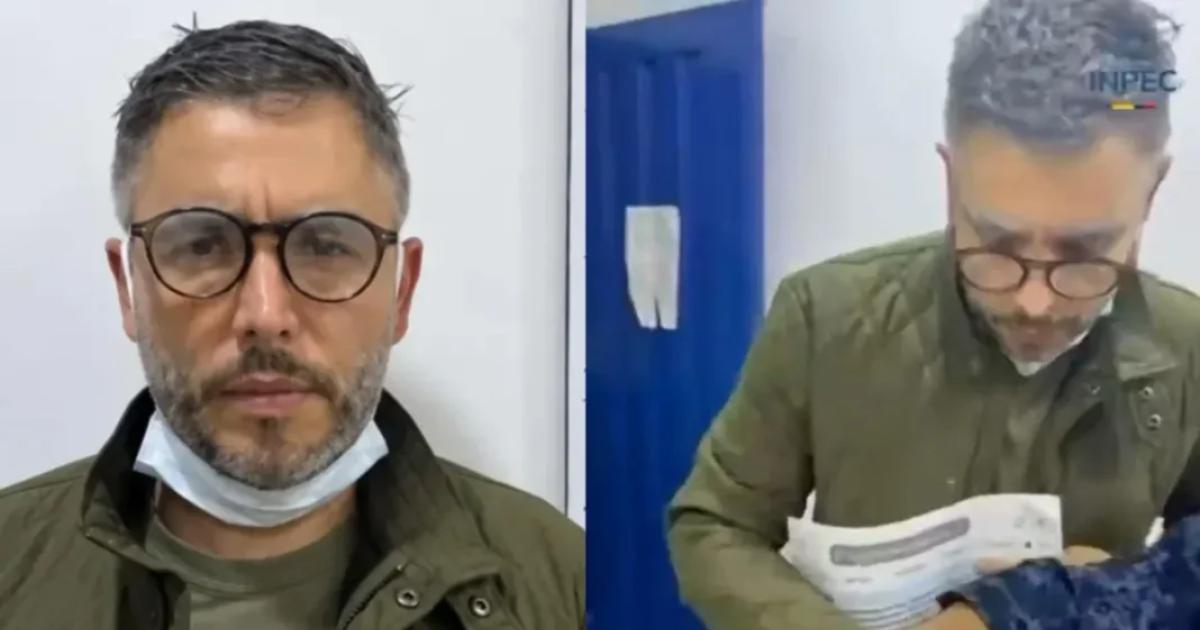
The transfer came on the heels of a dramatic medical diversion. Earlier that day, Abadía was rushed to an undisclosed medical clinic after reportedly suffering a sudden cardiac episode. While his legal and medical representatives framed the hospitalization as a critical health emergency, government officials viewed the timing with extreme skepticism. Administration figures publicly characterized the medical event as a transparent stall tactic engineered to delay or entirely block the impending prison transfer.
Insisting that medical care does not grant immunity from judicial execution, authorities maintained that the transfer would proceed immediately upon the stabilization of his vital signs. True to their word, the moment medical clearance was granted, security details swept in to complete the relocation under tight security.
Chronology of the Scandal and Judicial Process
The road to Abadía’s downfall and eventual midnight relocation spans over a decade of legal battles, political defiance, and systemic corruption:
- 2010: A seemingly routine regional cooperation agreement is signed to supply and equip 40 public school libraries throughout the department of Valle del Cauca. Valued at over 1.07 billion Colombian pesos, the project ultimately becomes the centerpiece of a massive embezzlement scheme.
- 2017: Judicial authorities officially formally impute Abadía, launching a thorough criminal investigation into the irregularities surrounding the library contracts.
- November 20, 2023: Following years of intense judicial scrutiny and oral arguments before the high courts, Abadía is formally declared guilty. He is sentenced to 21 years and 7 months behind bars.
- June 16, 2026: The Corte Suprema de Justicia (Supreme Court of Justice) deals a definitive blow to the defense, formally upholding the conviction and cementing his sentence for entering into contracts without fulfilling legal requirements and embezzlement for the benefit of third parties.
- September 2026: Public outrage mounts as intelligence and investigative reports reveal that Abadía is directing regional politics from his VIP cell in the Carabinero School.
- September 19, 2026 (Night): Following a contested medical episode at a local clinic, Abadía is discharged and forcefully transferred to Villahermosa prison at 11:30 p.m., bringing an end to his preferential treatment.
Supporting Data and Financial Corruption
At the core of Juan Carlos Abadía’s lengthy prison sentence is a blatant betrayal of public trust involving some of the most vulnerable citizens of Valle del Cauca: the region’s students.

According to judicial documents cited extensively by El Espectador and other investigative outlets, the scandal dates back to a 2010 administrative covenant intended to enrich educational infrastructure by equipping 40 public libraries in schools and colleges across the department. The project, officially valued at $1,072 million pesos, was systematically bled of public funds through inflated budgets and phantom services.
Forensic audits and court findings revealed that the venture generated staggering overcosts amounting to at least $817 million pesos—funds that vanished into private pockets rather than purchasing books or educational tools for children.
The Supreme Court determined that these actions constituted severe violations of public administration transparency, specifically charging him with contrato sin cumplimiento de requisitos legales (entering into contracts without legal requirements) and peculado por apropiación en favor de terceros (embezzlement for the benefit of third parties). The cumulative weight of these financial crimes formed the bedrock of the 261-month (21 years and 7 months) prison sentence that Abadía is now forced to serve under standard, rigorous penitentiary conditions.
Official Responses and Political Repercussions
The decision to uproot Abadía from the Carabinero School and throw him into Villahermosa was heavily charged with political rhetoric and a zero-tolerance stance on prison corruption.

High-ranking officials did not mince words regarding the former governor’s audacity. Public statements underscored that Abadía had operated with total impunity, behaving as though he were entirely "untouchable." Critics and government spokespersons pointed out a glaring double standard in the Colombian penal system: while ordinary citizens languish in overcrowded, degrading conditions, politically connected elites often secure plush, low-security quarters inside police or military installations.
From his privileged enclave at the Carabinero School, Abadía allegedly maintained a vice-grip on regional politics. Officials revealed that he routinely hosted political allies, negotiated bureaucratic appointments, purged uncooperative civil servants, and dictated the awarding of public sector contracts—all while wearing the mantle of a convicted criminal.
In sharp public remarks addressing the operation, government leadership asserted that no individual, regardless of their historical political clout or social standing, stands above the law. The midnight transfer to Villahermosa was framed not merely as a disciplinary correction for one man, but as a clear message to other powerful inmates attempting to run criminal or political operations from inside detention centers. Furthermore, authorities signaled that similar crackdowns and facility relocations would continue across the nation as part of a broader campaign to restore integrity to the correctional system.
Implications for Colombia’s Penitentiary and Political Systems
The abrupt removal of Juan Carlos Abadía from a police cantonment to a standard prison carries profound implications for Colombia’s ongoing struggle with institutional corruption and systemic reform.

1. Reining in "VIP" Prisons
For years, civil society organizations and watchdogs have criticized the use of police stations, military bases, and specialized police schools as de facto luxury holding facilities for white-collar criminals and corrupt politicians. These sites frequently lack the rigorous security oversight of traditional prisons, enabling inmates to maintain communication lines, business operations, and political influence. Abadía’s transfer sets a crucial precedent, signaling that the executive branch and judicial authorities are willing to revoke these comfort-laden arrangements when inmates abuse their privileges.
2. Restoring Deterrence to White-Collar Sentences
When high-profile figures receive massive sentences like 21 years for corruption—as was the case with the library embezzlement scheme—the public expects proportional justice. However, when those same figures continue to pull political strings from air-conditioned rooms with privileged visitation rights, public faith in the judicial system erodes. Shifting Abadía to Villahermosa reinstates the punitive and rehabilitative reality of a serious prison sentence, reinforcing the notion that public corruption carries a heavy, unmitigated personal cost.
3. A Warning to Regional Networks
Abadía’s ability to "put and remove" public officials from a prison cell exposed deep-seated vulnerabilities in Valle del Cauca’s administrative machinery. By dismantling his remote command center, state authorities have disrupted local patronage networks that survived long after his initial arrest. Regional politicians and contractors who relied on his behind-the-scenes patronage are now on notice that the political umbrella protecting them has collapsed.
As Juan Carlos Abadía adjusts to the harsh reality of Villahermosa prison, the episode stands as a stark reminder of the fragile boundary between state power and criminal enterprise in Colombia—and the difficult, ongoing fight to ensure that the law applies equally to all.



Leave a Reply