

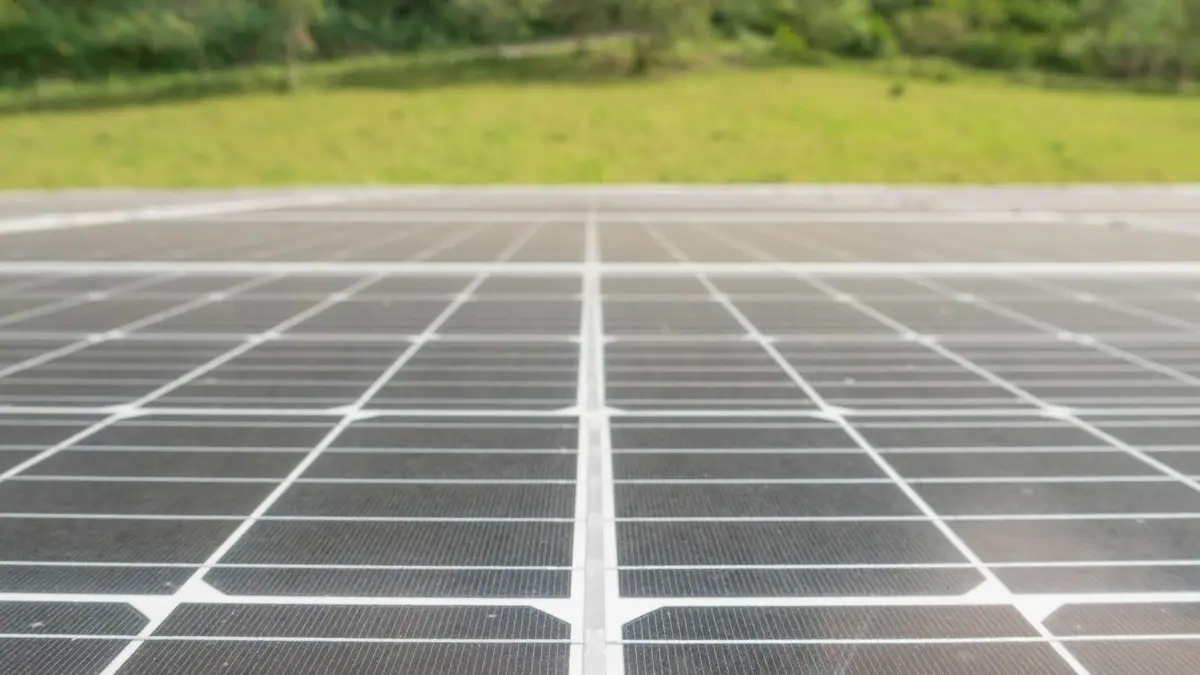
MONROEVILLE, OHIO — As the global demand for clean energy accelerates, the race to decarbonize power grids often collides with a finite and fiercely contested resource: land. In agricultural heartlands and densely populated regions alike, large-scale solar farms frequently compete with food production, housing, and natural ecosystems. However, a groundbreaking renewable energy project in northern Ohio is upending traditional spatial paradigms by taking the solar revolution off the ground and onto the water.
In the small village of Monroeville, a newly operational giant floating solar plant—engineered and developed by clean energy firm D3Energy—is proving that water bodies can double as high-efficiency power stations. Generating a robust 6 megawatts (MW) of electricity from a municipal drinking water reservoir, this installation has effectively doubled the local area’s electrical capacity while preserving tens of acres of fertile soil.
By marrying technological innovation with environmental stewardship, the Monroeville project represents a critical blueprint for the future of renewable energy infrastructure. It addresses the dual imperatives of the energy transition: expanding clean power generation to secure energy independence while safeguarding the landscapes that sustain local economies and ecosystems.
Main Facts
The Monroeville floating solar array stands as a masterclass in efficient land and resource management. Designed to maximize clean energy output without sacrificing the local terrain, the installation encompasses several striking technical specifications:
- Capacity and Output: The facility generates 6 MW of electricity, a massive boost that doubles the electrical generation capacity of the local grid.
- Physical Footprint: The installation covers 11.1 acres of water surface area, consisting of exactly 9,222 high-efficiency photovoltaic panels mounted on specialized floating platforms.
- Land Preservation: By utilizing an existing municipal water reservoir, the project successfully preserves more than 29 acres of valuable land that would otherwise have been required for a ground-mounted solar farm of equivalent capacity.
- Water Conservation: The solar array acts as a protective canopy over the reservoir, significantly mitigating water loss by reducing evaporation during intense summer heatwaves.
- Ecological and Operational Synergy: The close proximity to water provides a natural cooling effect for the photovoltaic panels, inherently boosting their operational efficiency compared to traditional land-based installations. Furthermore, the shade cast by the array helps control and limit unwanted algae blooms in the municipal water supply.
Chronology of the Project
The realization of Ohio’s second floating solar installation was not an overnight success, but rather the result of careful municipal planning, engineering ingenuity, and strategic execution.
Phase 1: Conceptualization and Site Selection (2021–2022)
Faced with the need to expand its renewable energy portfolio while protecting local agricultural lands, municipal leaders in Monroeville began exploring alternative deployment methods for photovoltaic systems. Traditional ground-mounted solar installations faced pushback due to the potential displacement of arable land. The village identified its municipal drinking water reservoir as an underutilized asset capable of serving a dual purpose: securing water resources while hosting a clean energy generator.
Phase 2: Engineering and Partnerships (2023)
Monroeville partnered with D3Energy, an industry leader in floating solar (floatovoltaics) design and deployment. Engineers conducted rigorous feasibility studies to ensure the installation would not compromise water quality, municipal operations, or local wildlife habitats. The engineering team designed a buoyant racking system capable of withstanding local weather extremes, including freezing winters and high winds, while remaining anchored securely within the reservoir.
Phase 3: Construction and Deployment (Late 2023–2024)
Installation began with the assembly of the modular floating platforms along the shoreline before being maneuvered onto the water. Crews systematically mounted the 9,222 solar panels onto the floating infrastructure, integrating specialized underwater cabling to transmit the generated electricity safely to the local grid. Despite the complexities of working over a municipal water body, the construction phase was completed efficiently, keeping environmental disruption to an absolute minimum.
Phase 4: Grid Interconnection and Commissioning (2024–Present)
The plant officially commenced operations, integrating seamlessly into the local power supply. With 6 MW of clean electricity now flowing into the grid, Monroeville has solidified its status as an innovative pioneer in Ohio’s energy landscape, setting a precedent for other municipalities looking to maximize green energy output without spatial compromise.
Supporting Data
To understand the profound impact of the Monroeville project, it is necessary to examine the broader economic, environmental, and technological data surrounding floatovoltaic systems.
| Metric / Parameter | Monroeville Floating Solar Plant Data |
|---|---|
| Total Capacity | 6 Megawatts (MW) |
| Panel Count | 9,222 photovoltaic panels |
| Water Surface Coverage | 11.1 acres |
| Land Saved from Development | >29 acres of arable/usable land |
| Primary Environmental Benefit | Reduced reservoir evaporation & lower panel operating temperatures |
| State Standing | Second major floating solar project deployed in Ohio |
The Thermodynamic Advantage
Scientific evaluations of floating solar installations consistently highlight a major thermodynamic advantage over terrestrial systems. Photovoltaic panels lose efficiency as their internal temperatures rise under direct sunlight. When installed over bodies of water, the ambient microclimate—cooled by natural evaporation and water thermal inertia—keeps the panels operating at lower temperatures. This natural cooling effect typically yields a 5% to 15% increase in energy generation efficiency compared to identical panels mounted on dry, heat-absorbing land or asphalt.
Mitigating Resource Scarcity
Water reservoirs managed by municipalities face continuous threats from evaporation, particularly in regions experiencing shifting climate patterns and prolonged droughts. By covering just a fraction of a reservoir’s surface area, floating solar arrays dramatically cut down water loss. Additionally, the reduction of direct sunlight penetrating the water column suppresses the uncontrolled proliferation of algae, thereby lowering the chemical treatment costs traditionally borne by municipal water treatment plants.
Official Responses and Industry Perspectives
The success of the Monroeville installation has drawn praise from municipal leaders, renewable energy developers, and environmental advocates alike.
"Integrating renewable energy without sacrificing our agricultural roots or valuable land is one of the greatest challenges we face today," noted representatives from D3Energy during the project’s rollout. "Floatovoltaics offer a pragmatic, elegant solution that turns existing water assets into active participants in the clean energy transition."
Local officials in Monroeville have also expressed immense satisfaction with the project’s dual utility. Beyond bolstering the community’s energy resilience, the installation has positioned the small village as a forward-thinking municipality capable of attracting green-tech investments and modernizing its infrastructure sustainably.
From a national perspective, industry analysts view projects like the one in Monroeville as vital stepping stones for the United States’ broader decarbonization goals. While states like Texas continue to dominate headlines with massive utility-scale terrestrial solar parks and strategic public-private partnerships, smaller implementations demonstrate that the energy transition is scalable across diverse geographies and typologies.
Implications for the Future of Renewable Energy
The implications of Ohio’s latest floating solar venture extend far beyond the borders of Monroeville. As land availability grows increasingly scarce and the social license for large-scale land conversion faces tighter scrutiny, the energy sector must look toward three-dimensional solutions.
1. Unlocking Non-Arable and Industrial Waters
The successful deployment of floatovoltaics opens up vast, underutilized expanses of water across the globe. Beyond municipal drinking reservoirs, potential sites include:
- Hydroelectric reservoirs (where transmission infrastructure already exists)
- Man-made lakes and retention ponds
- Abandoned mining quarries
- Industrial wastewater treatment lagoons
By targeting these artificial and industrial bodies of water, energy developers can bypass environmental conflicts associated with natural ecosystems while reaping high energy yields.
2. Zero Negative Impact on Aquatic Ecosystems
A common concern surrounding floating solar arrays is their potential disruption of aquatic life. However, comprehensive environmental monitoring of early floatovoltaic projects has shown that covering a limited portion of a water body does not starve the ecosystem of oxygen or light. In fact, many installations provide shade that benefits fish populations during peak summer temperatures, while the anchoring systems often act as artificial reefs, fostering local biodiversity without introducing toxic materials.
3. Economic and Grid Resilience
Localized generation projects like the 6 MW Monroeville plant enhance grid stability by decentralizing power production. By generating electricity closer to consumption points, municipalities reduce transmission losses and insulate themselves against broader grid failures. Furthermore, the dual economic benefits—lower municipal water treatment costs combined with robust clean energy generation—make floatovoltaics an increasingly attractive asset class for private investors and public administrators alike.
Conclusion
Ohio’s second floating solar plant is much more than a localized engineering triumph; it is a vision of the future. By transforming a routine municipal water reservoir into a high-efficiency power generator, Monroeville and D3Energy have demonstrated that humanity does not have to choose between preserving land and harvesting the sun. As the clean energy transition gathers momentum, floatovoltaics stand ready to anchor a cleaner, smarter, and more spatially harmonious energy future.



Leave a Reply