

Date: September 27, 2026
Author: Global Technology Desk
Main Facts
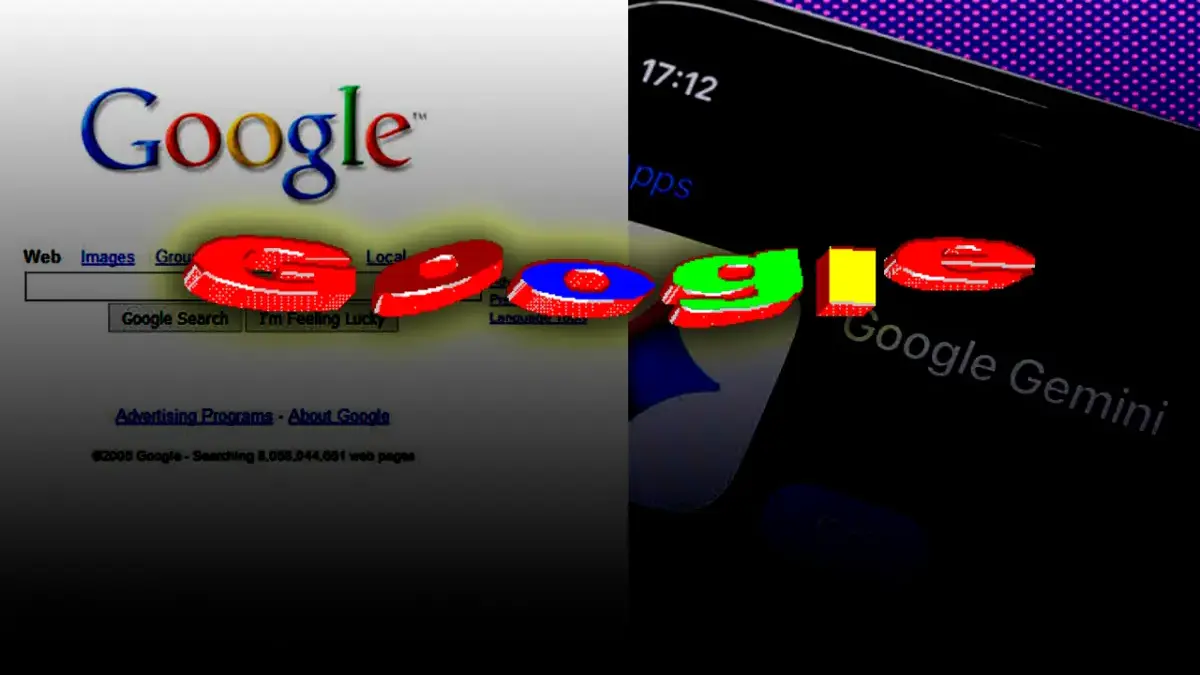
Today, September 27, 2026, Google officially marks its 28th anniversary. To commemorate nearly three decades of shaping the modern internet, the tech giant has transformed its iconic homepage with a nostalgic commemorative Doodle. This special visual tribute resurrects one of the company’s very first historical logotypes, inviting millions of daily users to take a trip down memory lane and reflect on how a humble academic research project evolved into one of the most powerful and ubiquitous technology conglomerates in human history.
What began in the late 1990s as a novel way to index the nascent World Wide Web has grown into an expansive, multifaceted ecosystem that touches almost every aspect of modern digital life. From email communication and mobile operating systems to cloud computing and cutting-edge artificial intelligence, Google’s footprint is global and inescapable. Yet, despite its multitrillion-dollar valuation and a workforce numbering in the tens of thousands, the company chooses its 28th birthday to look backward—celebrating its roots, its founders, and the simple algorithm that started it all.
Chronology: The Evolution of a Tech Titan
To understand how Google became the behemoth it is today, one must trace its trajectory from an abstract mathematical concept to a garage startup, and finally to a pillar of global communication and information architecture.
The Stanford Origins and Backrub (1996–1997)
The story of Google is deeply intertwined with the academic halls of Stanford University. In 1996, Ph.D. students Larry Page and Sergey Brin crossed paths and began collaborating on a search engine project originally codenamed Backrub.
Unlike contemporary search engines that merely counted how many times a keyword appeared on a webpage, Page and Brin’s innovation lay in analyzing the relationships between websites. They developed the revolutionary PageRank algorithm, which evaluated the importance of a site based on the number and quality of other pages linking to it. They theorized that pages with high academic or public relevance would receive more citations, making them more authoritative sources of information. By 1997, the duo realized that the name Backrub no longer suited their rapidly expanding indexing capabilities and opted for a rebrand.
The Birth of Google (1998)
The name "Google" was born out of a playful mathematical typo. It is a misspelling of the term googol, which refers to a colossal number represented by a 1 followed by one hundred zeros. The name was chosen to signify the founders’ boundless mission to organize an apparently infinite amount of information on the internet.
On September 4, 1998, Google officially incorporated as a privately held company in California. This milestone was made possible largely due to a fateful $100,000 investment from Andy Bechtolsheim, a co-founder of Sun Microsystems. Writing a check out to "Google Inc." before the company even had a corporate bank account set up, Bechtolsheim provided the vital runway needed to turn a university experiment into a commercial entity.
The Menlo Park Garage Era (1998–1999)
With capital secured, Page and Brin moved their operations out of their Stanford dorm rooms and into a modest, now-legendary garage in Menlo Park, California. The space was sublet to them by Susan Wojcicki, a Stanford MBA student who would go on to play a pivotal role in Google’s history, eventually serving as the long-time CEO of YouTube. In those early days, the office equipment consisted of little more than mismatched desks, ping-pong tables, and servers built from cheap, assembled computer parts.
The Expansion and Ecosystem Explosion (2000s–2010s)
As the new millennium unfolded, Google rapidly outgrew its garage origins. The company went public in August 2004 with an initial public offering (IPO) that raised $1.67 billion, cementing its status as an economic powerhouse.
Rather than resting on the laurels of its core search engine, Google began aggressively expanding its product suite through internal innovation and strategic acquisitions:
- Gmail (2004): Revolutionized webmail by offering unprecedented storage capacity and threading capabilities.
- Google Maps (2005): Transformed how humanity navigates physical space, eventually giving rise to satellite imagery, real-time traffic updates, and street-level views.
- Android (2005 acquisition, launched 2008): Became the world’s most widely used mobile operating system, powering the vast majority of smartphones globally.
- YouTube (2006 acquisition): Bought for $1.65 billion—a price tag many critics initially thought was wildly inflated—YouTube evolved into the dominant global platform for video sharing, culture creation, and digital media consumption.
- Google Chrome (2008): Upended the browser market with a fast, minimalist interface that quickly eclipsed legacy competitors like Internet Explorer.
Corporate Restructuring and Alphabet (2015)
By 2015, Google had grown so large and diversified into such disparate fields (ranging from life sciences to self-driving cars via Waymo) that leadership deemed a structural reorganization necessary. The company established Alphabet Inc. as a parent holding company, with Google operating as its largest subsidiary. Sundar Pichai was appointed as the CEO of Google, a role he continues to hold today, overseeing both the traditional search empire and the company’s aggressive pivot toward artificial intelligence.
Supporting Data: Google by the Numbers
To fully comprehend the sheer scale of Google on its 28th anniversary, one must look at the quantitative metrics that define its modern existence:
- Global Market Share: As of 2026, Google maintains an ironclad grip on the global search engine market, commanding consistently between 90% and 92% of all search traffic worldwide across desktop and mobile devices.
- Daily Queries: The search engine processes well over 8.5 billion search queries every single day, translating to trillions of searches annually.
- Infrastructure: Google operates massive, highly energy-efficient data centers across North America, South America, Europe, and Asia, consuming electricity on a scale comparable to small industrialized nations.
- Android Ecosystem: The Android operating system runs on over 3 billion active devices globally, anchoring Google’s software services in the hands of the majority of the world’s population.
- Workforce: Alphabet Inc. employs well over 180,000 full-time workers globally, alongside thousands of contractors, making it one of the largest private-sector employers in the technology sector.
The Birthday Paradox: Why September 27?
A perennial piece of trivia surrounding Google’s celebrations involves a discrepancy on the calendar. While Google was legally incorporated on September 4, 1998, the company has spent the last decade and a half celebrating its official birthday on September 27.
The reasons behind this shifting timeline are rooted in corporate lore rather than legal administration. Google’s earliest birthdays were celebrated on various dates depending on when management felt like releasing a commemorative Doodle or when cake was available in the office. In 2005, the company officially designated September 27 as its birthday to coincide with a milestone announcement regarding a record-breaking number of pages indexed by its crawler.
Despite the historical reality of September 4, the September 27 date has stuck, cemented into the cultural consciousness through annual Doodles, celebratory easter eggs, and widespread media coverage.
Implications: From Search to the Age of Gemini
As Google crosses the threshold into its 29th year of existence, the company faces a technological landscape vastly different from the static web pages of 1998. The defining battleground of the mid-2020s is no longer simple keyword matching or mobile supremacy—it is generative artificial intelligence.
For over two decades, Google’s business model relied on a familiar triad: type a query, look at a list of blue links, and click through to a publisher’s website. Today, that paradigm is undergoing its most radical transformation since the invention of PageRank.
The Integration of Gemini
With the rollout and continuous refinement of Gemini—Google’s flagship family of multimodal artificial intelligence models—the company is shifting from an engine that points you toward information to one that synthesizes and generates answers in real time. Integrated directly into the core search experience, workspace tools, and cloud services, Gemini represents Google’s answer to the generative AI revolution catalyzed by competitors like OpenAI and Microsoft.
Regulatory Pressures and Market Realities
However, reaching 28 years old comes with the burdens of maturity and market dominance. As Google celebrates its history, it simultaneously navigates unprecedented regulatory scrutiny across the globe. Antitrust lawsuits in the United States and stringent digital market regulations in the European Union are forcing the company to defend its business practices, app store policies, and default search engine agreements.
Furthermore, the rise of AI-driven search poses existential questions for digital publishers, content creators, and the traditional web advertising economy. If users receive direct, comprehensive answers synthesized by Gemini without needing to click on traditional web links, the foundational traffic model of the open internet faces a dramatic reckoning.
Conclusion
Looking back at its humble beginnings in a Stanford dorm room and the cramped Menlo Park garage, Google’s 28-year journey is a testament to relentless technological iteration. By reviving its retro logo for today’s Doodle, the company invites its billions of users to pause and appreciate the distance traveled—from a rudimentary academic search tool called Backrub to the sprawling, AI-infused infrastructure of Gemini.
As Google steps into its late twenties, it stands at a critical crossroads. The challenges of artificial intelligence integration, shifting user habits, and heavy global regulation will define whether the next decade is characterized by reinvention or vulnerability. Yet, for one day at least, the digital giant is taking a well-deserved moment to look back, blow out the candles, and celebrate 28 years of organizing the world’s information.




Leave a Reply