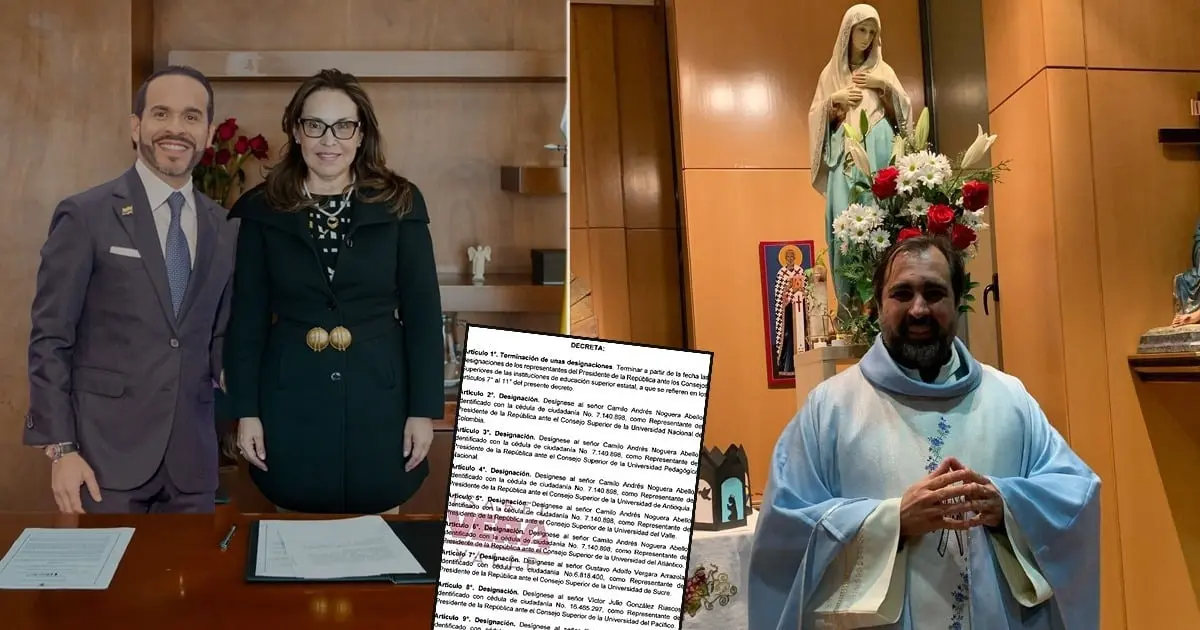
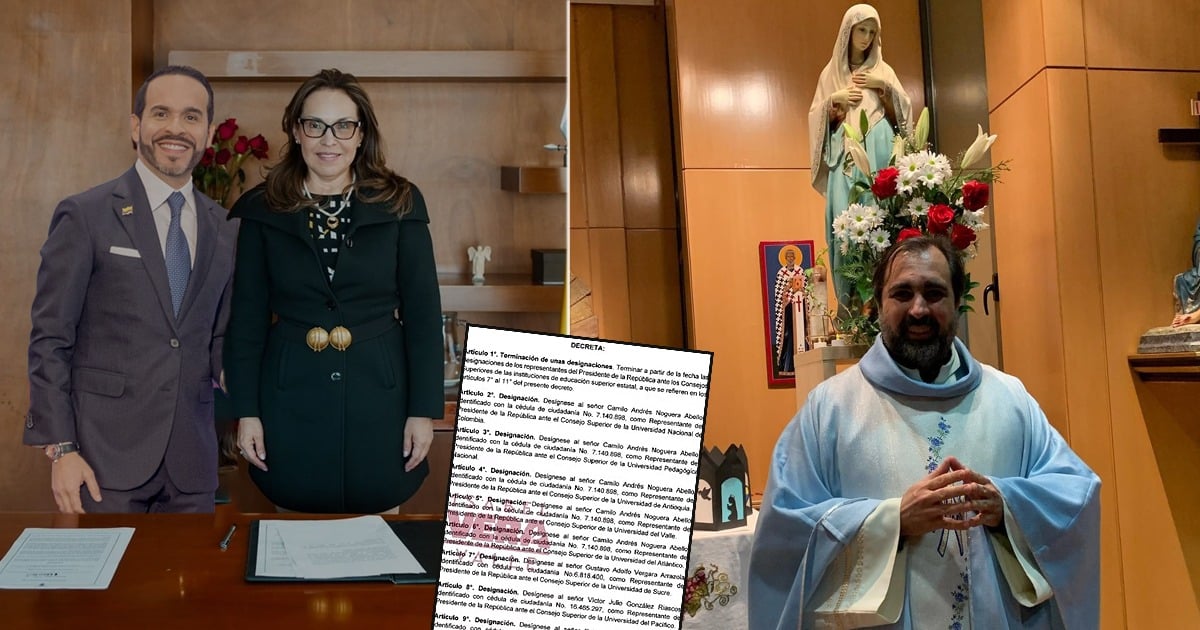
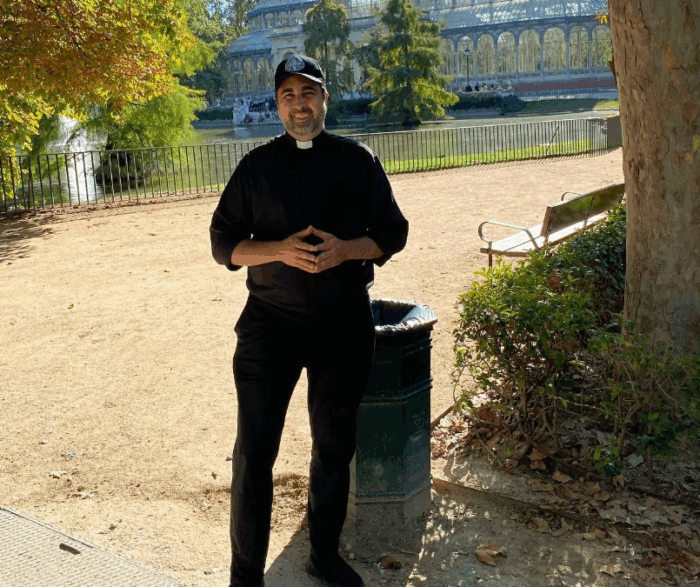
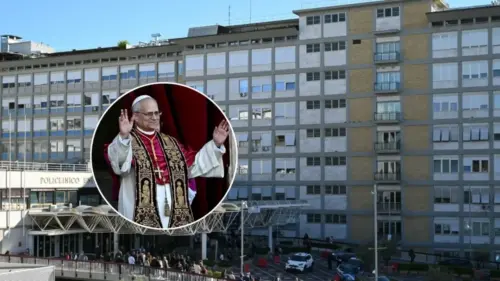
The intersection of politics, religion, and higher education in Colombia has once again generated intense national debate following a high-profile administrative reshuffle. Father Rodolfo Londoño, the presidential chaplain who initially transitioned from spiritual guidance to high-stakes political administration, has seen his sweeping appointment as the government’s representative across five major public universities abruptly reversed.
Londoño, a figure closely aligned with the inner circle of the current administration, had been handed the monumental responsibility of acting as the executive branch’s voice in the Higher University Councils (Consejos Superiores Universitarios – CSU) of some of the nation’s most prominent public institutions: the National University of Colombia, the Pedagogical University, the University of Antioquia, the University of Valle, and the University of Atlántico.
However, following fierce legal challenges, intense political pressure, and a quiet administrative reversal executed just days before a cabinet departure, Londoño’s tenure in these academic bodies lasted a mere 15 days without producing a single official act in the role. He has been replaced by Camilo Noguera Abello, a loyalist figure from the Defensores por la Patria political movement and an alumnus of the Universidad Sergio Arboleda.
Despite losing his seats on these critical university boards, Londoño remains firmly entrenched as the chief spiritual advisor to the president—a role that began long before the current administration took office, rooted in a private retreat at the Marymount College in Barranquilla.
2. Chronology of Events
The unfolding controversy surrounding Father Londoño’s appointment and subsequent removal followed a rapid and contentious trajectory throughout late 2026:
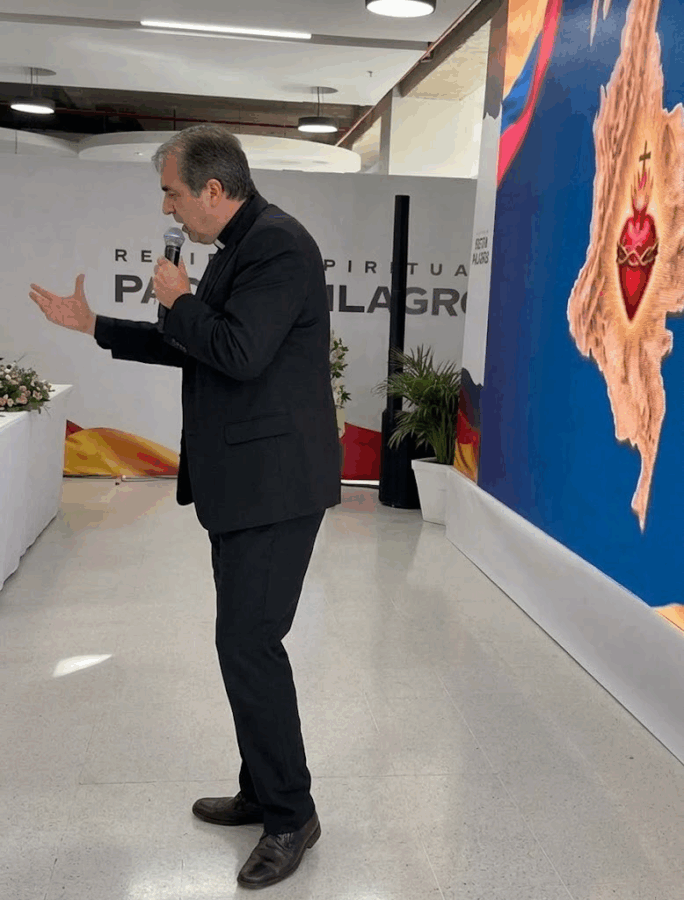
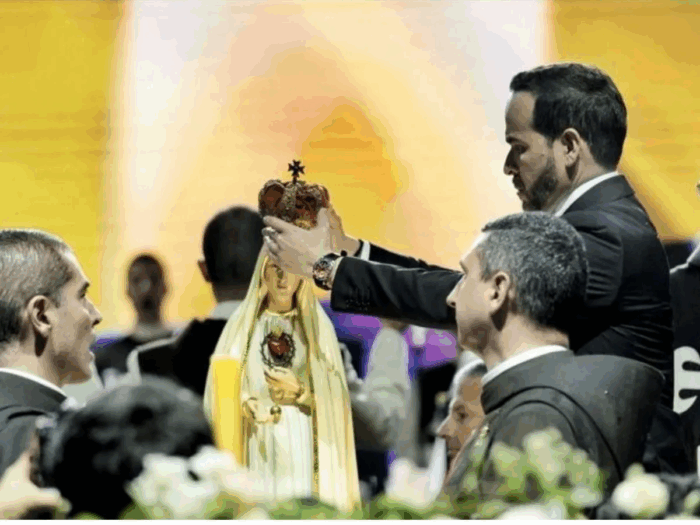
The Genesis (Pre-Inauguration): Father Rodolfo Londoño leads the spiritual retreat that precedes the formal inauguration of the current government. The event takes place at the elite Marymount College in Barranquilla—notably the school attended by the children of high-profile conservative figure Abelardo de la Espriella. Attendees are gifted a Bible titled "Firmes por la patria" (Firm for the Fatherland) and a cándula (prayer bead). At this point, Londoño operates strictly as a religious figure, having previously served as a parish priest in Madrid, Spain, where he balanced pastoral duties with a passion for basketball.
The Expansion of Influence: Seeking to cement ideological alignment within state institutions, the executive branch moves to place loyal figures in key administrative bodies. Londoño is designated as the presidential representative across five major public universities.
The Backlash and Legal Challenge: The appointment of a Catholic priest to politically sensitive secular academic boards sparks immediate outrage among student groups, faculty, and opposition politicians. Representatives from the Pacto Histórico coalition, notably Laura Beltrán (widely known on social media as "Lalis") and Isabel Vera, file formal lawsuits before the Administrative Tribunal of Cundinamarca. The plaintiffs challenge the legality of the appointment, alleging potential conflicts of interest and familial ties to Abelardo de la Espriella—allegations forcefully denied by De la Espriella in public communiqués. The Tribunal formally accepts the demand for review.
September 9, 2026 (The Quiet Reversal): Amid broader political shifts within the Ministry of Education, outgoing Minister Viviane Morales signs Decree 1371. This executive order quietly overturns Londoño’s university designations before he can meaningfully exercise his duties. Simultaneously, the decree appoints Camilo Noguera Abello as his successor.
September 24, 2026 (First Clash at the National University): Newly installed presidential delegate Camilo Noguera Abello makes his debut at the National University. Alongside fellow government delegate Diego Torres and Education Ministry officials, Noguera pushes through the appointment of new deans by a block vote of four against a total council, bypassing formal consensus and sparking an immediate walkout by student and professor representatives.
3. Supporting Data & Institutional Context
To understand the weight of the controversy, it is necessary to examine the structural mechanics of Colombia’s higher education governance and the specific institutions involved:
The Target Institutions: The five public universities from which Father Londoño was removed—the National University, the Pedagogical University, the University of Antioquia, the University of Valle, and the University of Atlántico—represent the pillars of public higher education in Colombia, serving over 160,000 students collectively.
The Legal Threshold Dispute: Under Colombian administrative law and historical precedent (specifically a 2003 ruling by the Council of State), crucial institutional decisions—such as the appointment of deans—require a minimum of five votes (representing a strict majority of the total council membership, usually half plus one) to be legally binding. In the September 24 session at the National University, the government bloc attempted to force a simple majority of four out of eight present members, exploiting a vacant seat on the National Council for Higher Education (CESU).
The Religious and Political Network: While Londoño was stripped of his direct seats in the five flagship universities, the administration’s network within academia remains intact. For instance, Isaura Yaneth Parejo occupies the presidential delegation seat on the Superior Council of the University of Magdalena. Parejo is an active member of Parresia, a Catholic religious community directed by Father Londoño himself.
The Successor’s Profile: Camilo Noguera Abello, the man chosen to replace Londoño, brings a deeply partisan and institutional background. Having studied law at the Universidad Sergio Arboleda, Noguera previously served as General Secretary and Vice-Rector of the university’s Caribbean campuses. On June 30, 2026, he was chosen as the inaugural director of Defensores por la Patria, the administration’s core political vehicle.
4. Official Responses and Public Statements
The rapid evolution of the chaplaincy controversy has elicited sharp, polarized reactions from political actors across the ideological spectrum:
The Opposition and Student Representatives
Left-wing politicians and student leaders framed the reversal of Londoño’s appointment as a major victory for the autonomy of public education. Representative Isabel Vera took to social media platform X (formerly Twitter) to celebrate the outcome:
"CONFIRMED 🚨 The Londoño de la Espriella priest is out of the University of Valle, National, Pedagogical, Antioquia, and Atlántico. I remind you that in our political control exercise, we sued his appointment… Finally, they are removed from these designations and a new one is put in, to which I already announce that I will put the magnifying glass, because the education of the people IS DEFENDED."
Student representatives, such as Gabriela Delgado at the National University, have similarly criticized the incoming administration delegates for utilizing authoritarian tactics, forcing votes without dialogue, and attempting to bypass legal quorum requirements.
The Defense and Legal Denials
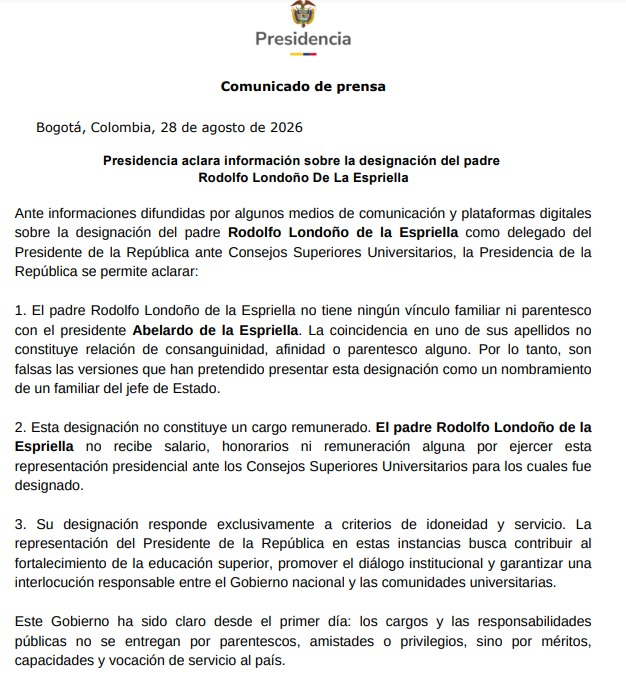
Abelardo de la Espriella issued a formal public statement addressing the controversy surrounding his alleged connection to the clergyman. Despite sharing a prominent surname with the priest, De la Espriella categorically denied any familial consanguinity with Father Rodolfo Londoño de la Espriella. The administration maintained that Londoño’s initial selection was guided strictly by criteria of institutional idleness, moral integrity, and public service, rather than personal favoritism.
5. Implications for Colombian Higher Education
The failed appointment of Father Londoño and the aggressive tactics employed by his replacement, Camilo Noguera Abello, carry profound implications for the future of Colombian public universities:
The Battle Over University Autonomy: Public universities in Colombia have historically guarded their autonomy fiercely against executive interference. The attempt to install a presidential chaplain—and subsequently a hardline partisan director—signal a concerted push by the executive branch to exert ideological control over traditionally independent academic senates.
Increased Litigative Scrutiny: The successful legal challenge mounted by Pacto Histórico representatives sets a powerful precedent. Civil society groups, student unions, and opposition politicians have proven that executive overreach in academic governance can be successfully contested and halted through the administrative tribunal system.
Campus Security and Protest Management: Noguera Abello’s arrival coincides with heightened tensions regarding controversial security policies, specifically proposals to allow the National Police physical access to university campuses to control student demonstrations. The hardline governance style displayed during the September 24 National University board meeting suggests that future council sessions will likely be marked by deep polarization, walkouts, and protracted legal battles.
The Continued Influence of Nontraditional Networks: Although Father Londoño has retreated from his formal university seats, his influence persists through loyal disciples embedded in regional institutions like the University of Magdalena. This demonstrates that while direct political placements can be successfully beaten back by legal opposition, the administration’s broader strategy of integrating ideological and religious networks into state machinery remains active and adaptable.