

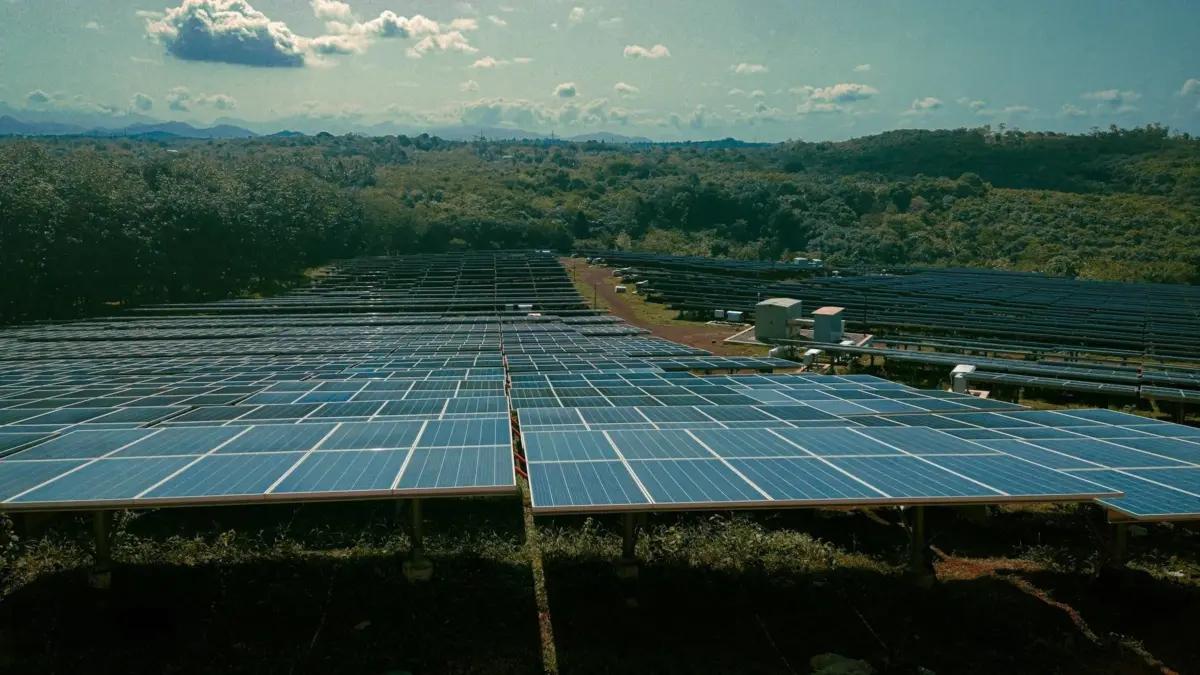
DERRY, NEW HAMPSHIRE — In an era where the global race toward decarbonization often clashes with the preservation of arable land and natural habitats, municipal leaders in New Hampshire have quietly achieved a masterclass in spatial efficiency. A once-dormant, capped municipal landfill sprawling near Route 93 in the town of Derry has been radically reinvented. Today, it stands not as a monument to society’s waste, but as a gleaming, 7-acre photovoltaic array—a testament to how post-industrial brownfields can be successfully repurposed to fuel the green energy transition without sacrificing a single acre of fertile agricultural soil.
Developed, engineered, and operated by Encore Renewable Energy, this newly minted solar installation is far more than a local environmental talking point. It represents a convergence of forward-thinking state legislation, astute municipal financial planning, and cutting-edge ecological engineering. By converting a contaminated wasteland into a decentralized power plant, Derry has established a compelling blueprint for communities across the United States seeking to reconcile mounting energy demands with ecological responsibility.
Main Facts: The Anatomy of the Derry Solar Project
At its core, the Derry landfill solar installation is an engineering feat designed to maximize output within strict geographical constraints. The project comprises 6,474 ground-mounted solar panels meticulously deployed across approximately 7 acres of a terrain that was previously sealed, heavily fenced, and deemed practically useless due to its history as a municipal waste receptacle.
The distribution of the clean energy generated by this array is twofold, balancing direct municipal utility with broader regional grid support:
- Local Municipal Supply: A significant portion of the electricity feeds directly into Derry’s essential public infrastructure, specifically powering the town’s water treatment facilities and wastewater management plants. This ensures that energy-intensive municipal operations run on affordable, zero-emission power.
- Regional Grid Injection: The surplus electricity generated by the panels is exported directly into the New England regional electrical grid, reinforcing the broader interstate transmission lines with reliable renewable generation.
Quantifying the environmental impact, industry experts estimate that the 7-acre facility will produce roughly the same volume of electricity annually as is consumed by 500 average New Hampshire households. While this might seem modest compared to utility-scale desert solar farms, its localized impact is monumental. It proves that energy generation can happen where the demand is, reducing transmission losses and alleviating strain on local substations.
Crucially, the project required zero initial capital outlay from local taxpayers. Encore Renewable Energy financed, constructed, and now operates the system under a long-term agreement, allowing the town to purchase the generated electricity at a heavily discounted rate. Financial analysts project that this arrangement will yield cumulative savings of between $3.5 million and $4 million over the 25-year lifespan of the contract, with first-year savings alone anticipated to hit the municipal coffers at between $250,000 and $300,000.
Chronology: The Road from Rubbish to Renewables
The transformation of the Derry landfill was neither accidental nor instantaneous; it was the culmination of regulatory evolution, strategic planning, and meticulous site remediation.
Phase 1: Closure and Dormancy (Late 20th Century – 2020)
For decades, the site functioned as a standard municipal landfill. Upon its mandated closure, environmental regulations required the area to be capped, sealed, and continuously monitored to prevent leachate leakage and methane migration. For years, the property remained entirely fenced off—a sterile, unproductive liability sitting idle near a major transportation artery.
Phase 2: Legislative Catalyst (2021)
The trajectory of the Derry landfill shifted dramatically in 2021 when the New Hampshire state legislature passed a crucial amendment to its energy laws. Prior to this change, state regulations capped net-metering capacity for municipal and commercial renewable energy projects at 1 megawatt (MW). The 2021 legislative shift dramatically raised this ceiling to 5 MW. This regulatory breathing room made utility-scale, multi-megawatt community solar projects economically viable, opening the floodgates for towns like Derry to pursue large-scale green initiatives that previously made little financial sense.
Phase 3: Development and Construction (2022–2023)
Armed with the new legislative framework, municipal leaders partnered with Encore Renewable Energy. Engineering teams conducted rigorous structural and environmental assessments to ensure that driving mounting posts into the landfill cap would not compromise the underlying geomembrane liners designed to isolate the waste. Utilizing specialized ballasted and non-penetrating mounting techniques where necessary, construction crews installed the 6,474 panels, inverted systems, and transformers required to tie the array into the local distribution grid.
Phase 4: Grid Interconnection and Commissioning (Late 2023 – Present)
Following construction, the project navigated the notoriously complex regional interconnection queue—a hurdle that continues to plague renewable energy developments nationwide. Upon securing final approvals, the system went live. Today, it operates autonomously, feeding clean electrons directly into Derry’s municipal water systems and the New England power pool.
Supporting Data: Economic Viability and the New England Energy Landscape
Understanding why the Derry project is such a resounding success requires a close look at the macroeconomic realities of New England’s energy market.
High Regional Electricity Prices
New England consistently grapples with some of the highest retail electricity prices in the United States. Driven by regional dependence on imported natural gas and constrained pipeline infrastructure, municipal and residential utility bills are exceptionally volatile. According to data aggregators like EnergySage, the average payback period for residential solar installations in New Hampshire hovers around 11 years. For municipalities, whose energy consumption is immense and constant (particularly for water treatment and street lighting), escaping this volatile spot market through Power Purchase Agreements (PPAs) is a matter of fiscal survival.
The Landfill Potential: A Hidden Resource
New Hampshire is home to over 250 closed landfills. While engineering constraints, slope orientations, and environmental profiles mean that not all of these sites are structurally or economically viable for solar development, the subset that can be converted represents an untapped goldmine for clean energy.
By utilizing brownfields and landfills, developers achieve a dual victory:
- Land Preservation: New England features vast tracts of forests and agricultural lands. Constructing utility-scale solar on these greenfield sites frequently sparks local opposition due to deforestation and the loss of food-producing acreage. Utilizing capped landfills bypasses this conflict entirely.
- Brownfield Redevelopment: Many closed landfills are community eyesores that generate ongoing monitoring costs with zero economic return. Turning them into power plants transforms a passive liability into an active revenue and savings generator.
Official Responses and Stakeholder Perspectives
The convergence of municipal cost-saving, corporate renewable development, and state-level policy has drawn praise from multiple sectors.
- Municipal Leadership in Derry: Town officials have repeatedly highlighted the project as a textbook example of fiscal responsibility meeting environmental stewardship. By avoiding upfront capital expenditures while locking in predictable, below-market energy rates for the next two decades, the town council has insulated its taxpayers from future energy price shocks. Water and waste treatment plant operators have noted immense satisfaction in knowing that the energy running their pumps originates directly from the sun, generated mere miles away on land that previously served no communal purpose.
- Encore Renewable Energy: Executives from the development firm have emphasized that the Derry project serves as a scalable template for the rest of New England. In public statements following the plant’s commissioning, company representatives pointed out that overcoming initial regulatory inertia requires close collaboration between private developers, municipal planners, and state utility regulators. They have championed the project as proof that brownfield solar is no longer an experimental niche, but a commercially mature asset class.
- State Energy Advocates: Environmental coalitions across New Hampshire have lauded the project as a vital stepping stone toward meeting state and regional carbon-reduction targets. Advocates point out that while New Hampshire has historically lagged behind some of its New England neighbors (such as Massachusetts and Vermont) in total solar deployment, projects like the Derry landfill demonstrate that local ingenuity can rapidly close the gap.
Implications: The Future of Brownfield Solar in New England and Beyond
The successful execution of the Derry landfill solar project carries profound implications for the broader American energy landscape. As the energy transition accelerates, competition for land will only intensify. Agricultural communities are increasingly pushing back against the wholesale conversion of farmland into solar farms—a phenomenon sometimes referred to as "agri-voltaic friction."
In this context, the transformation of closed landfills, superfund sites, gravel pits, and abandoned industrial brownfields offers an elegant, friction-free alternative.
Overcoming Remaining Hurdles
Despite the triumphs seen in Derry, industry experts caution that widespread replication faces lingering obstacles. Chief among these is the interconnection bottleneck. Across the United States, regional transmission organizations (RTOs) and local utilities are overwhelmed by the sheer volume of renewable energy projects waiting in line to connect to the grid. Streamlining these interconnection studies and upgrading antiquated substation infrastructure will be critical if states like New Hampshire hope to harness the full potential of their dormant brownfields.
Furthermore, engineering challenges remain unique to each site. Capped landfills require specialized oversight to ensure that solar installations do not puncture the impermeable caps designed to keep rainwater out of the waste mass and toxic leachate contained. Monitoring for potential methane gas accumulation beneath mounting infrastructure also demands rigorous safety protocols.
A Blueprint for the Future
Notwithstanding these technical hurdles, the financial and environmental calculus remains overwhelmingly favorable. The Derry project proves that waste sites do not have to be permanent environmental write-offs. Instead, through imaginative engineering and progressive public policy, yesterday’s trash heaps can literally become the engines powering tomorrow’s sustainable cities.
As municipalities nationwide search for ways to rein in municipal budgets, shrink their carbon footprints, and protect open spaces, they would do well to look toward Route 93 in Derry, New Hampshire. There, beneath rows of dark photovoltaic cells soaking up the New England sun, a silent revolution is underway—proving that the path to a clean energy future is sometimes hidden right beneath our feet, buried under the remnants of our past.




Leave a Reply