

MONTREAL, Canada — The echoes of a fiercely contested UCI Road World Championships in Montreal have finally settled, leaving in their wake a reshuffled global hierarchy and profound implications for the international cycling landscape. While the Canadian autumn provided a picturesque backdrop for grueling tactical battles, the true drama unfolded on the ledger of the International Cycling Union (UCI) points table. For the powerhouse cycling nation of Colombia, the championship served as both a reality check and a beacon of resilience, as its top athletes navigated the demands of North American racing.
Globally, the aftermath of Montreal cemented the untouchable dominance of modern cycling’s elite, highlighted by historic milestones in both the time trial and road race disciplines. As the dust settles across the Atlantic, the global cycling community is left to dissect a championship that rewarded tactical brilliance, historical greatness, and unexpected surges up the world rankings.
Main Facts
The 2026 UCI Road World Championships in Montreal, Canada, fundamentally altered the UCI individual world rankings, creating ripples felt acutely across South America and throughout the European pelotons.
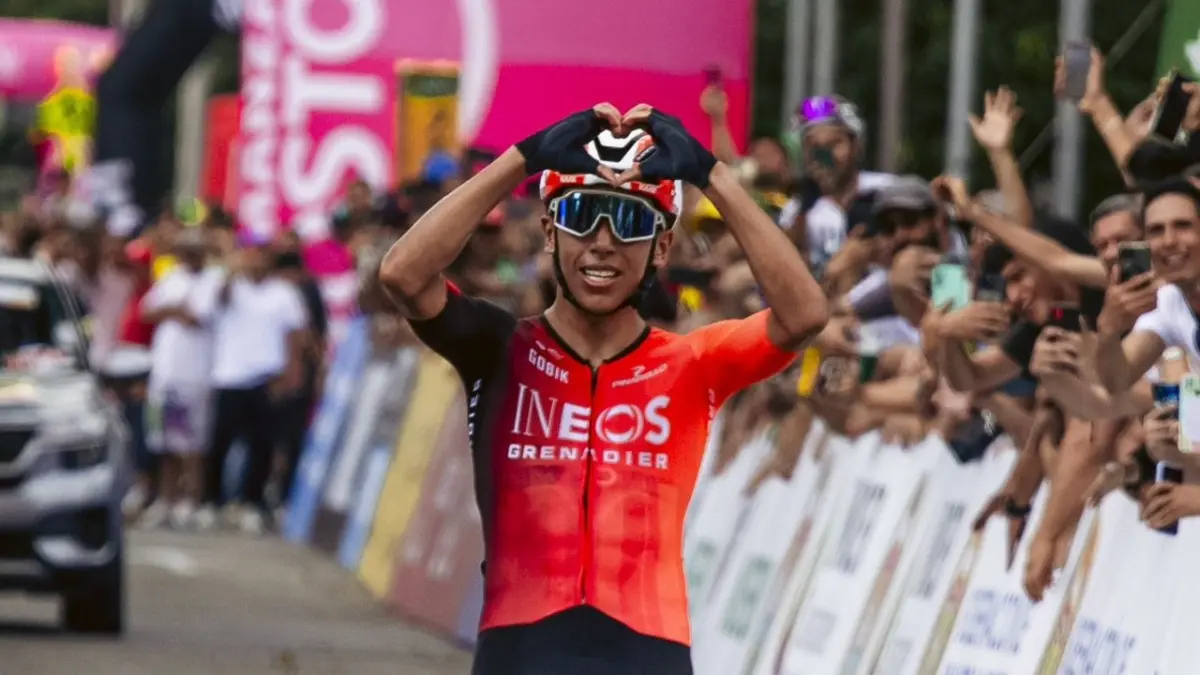
For Colombia, the overarching narrative is one of preservation amid mild regression. Despite dropping three spots, Egan Bernal (INEOS Grenadiers) remains the highest-ranked Colombian cyclist in the global standings, sitting comfortably at No. 45. Hot on his heels is Santiago Buitrago, who occupies the No. 59 spot. Buitrago cemented his status as Colombia’s most impactful rider of the late-season block following a stellar performance at the Vuelta a España—where he captured the coveted King of the Mountains classification—and reinforcing this form as the top-performing Colombian in the Montreal world championship road race. Harold Tejada follows as the third-best Colombian at No. 75, having slipped eight positions, while veteran Grand Tour champion Nairo Quintana sits further back at No. 298.
On the global stage, Slovenian superstar Tadej Pogačar continues his ironclad grip on the summit of the UCI ranking, boasting an extraordinary 10,581.75 points. Belgian powerhouse Remco Evenepoel maintains second place with 7,286.61 points, while Mexican sensation Isaac del Toro rounds out the prestigious podium at 6,586.46 points.
The biggest individual beneficiary of the Montreal Worlds was American Brandon McNulty. Following a tactical masterclass that secured him the elite men’s road race world title, McNulty rocketed up the rankings by a staggering 37 positions to land at No. 29. Meanwhile, Remco Evenepoel added another gilded chapter to his palmarès by capturing his fourth consecutive individual time trial world title, drawing level with all-time greats Fabian Cancellara and Tony Martin.
Chronology of the Montreal World Championships
To understand the shifts in the UCI rankings, one must retrace the cinematic trajectory of the races that defined the Montreal World Championships week.
The Chrono Test: Evenepoel’s Historic Date with Destiny
The championship week opened with a high-stakes individual time trial that tested the aerodynamic mettle and pacing mastery of the world’s finest specialists. On a demanding, undulating Canadian course, Belgium’s Remco Evenepoel delivered a masterclass against the clock. Exhibiting a rare blend of sustained power and immaculate cornering, Evenepoel powered across the finish line to secure the gold medal.
This victory was not merely another line on his illustrious palmarès; it marked his fourth consecutive world title in the discipline. With this triumph, Evenepoel equaled the legendary feats of Swiss maestro Fabian Cancellara and Germany’s powerhouse Tony Martin, etching his name alongside the most dominant chronomen in the history of the sport. The silver and bronze margins were razor-thin, but the day belonged entirely to the Belgian prodigy, whose points haul further solidified his stranglehold on the upper echelons of the UCI individual classification.
The Road Race Odyssey: McNulty’s Golden Strike
Days later, the elite men’s road race delivered a war of attrition across the punishing circuits of Montreal. The race was characterized by relentless accelerations, tactical chess matches between powerhouse national squads, and the gradual elimination of the pure sprinters as the climbs took their toll.
Emerging from the tactical chaos was the United States’ Brandon McNulty. Eschewing the defensive racing that often characterizes modern one-day championships, McNulty seized the moment with a bold, long-range offensive. After shedding his breakaway companions and holding off a high-powered chase group, McNulty crossed the finish line in a staggering time of 6 hours, 17 minutes, and 4 seconds.
Behind him, Australian veteran Michael Matthews used his trademark tactical intelligence to secure the silver medal, while Dutch phenomenon Mathieu van der Poel gritted his teeth to claim the bronze after a relentless day of attacking. McNulty’s victory sent shockwaves through the rankings, translating a single day of brilliance into a 37-place leap in the global standings.
Supporting Data & Comprehensive Rankings Breakdown
Numbers tell the true story of endurance sport. The post-Montreal UCI update provides a fascinating snapshot of where the world’s best stand heading into the final stretch of the season.
Global Top 3 UCI Ranking
- Tadej Pogačar (Slovenia) – 10,581.75 points (Leader)
- Remco Evenepoel (Belgium) – 7,286.61 points
- Isaac del Toro (Mexico) – 6,586.46 points
Colombian Rider Standings Post-Montreal
- Egan Bernal (INEOS Grenadiers): Rank 45 (Down 3 positions) — Despite a minor dip, the Zipaquirá native remains the undisputed anchor of Colombian cycling in the WorldTour, demonstrating steady consistency as he rebuilds his multi-week racing peak.
- Santiago Buitrago: Rank 59 (Climbing trajectory) — Bolstered by his mountains classification triumph at the Vuelta a España and his status as Colombia’s top finisher in Montreal, Buitrago is quickly establishing himself as a premier general classification and stage-hunting threat.
- Harold Tejada: Rank 75 (Down 8 positions) — Experiencing a slight regression following the intense North American block, Tejada remains a vital cog in the Colombian WorldTour contingent.
- Nairo Quintana: Rank 298 — The veteran climber continues to accumulate valuable UCI points as he navigates the twilight of his storied professional career, serving as a mentor and competitive presence in the peloton.
World Championship Podium & Key Metrics
- Elite Men’s Road Race Podium:
- Gold: Brandon McNulty (USA) — Time: 6h 17m 04s (Climbed to World Rank 29)
- Silver: Michael Matthews (Australia)
- Bronze: Mathieu van der Poel (Netherlands)
- Elite Men’s Time Trial:
- Gold: Remco Evenepoel (Belgium) — Fourth consecutive world title, tying Cancellara and Martin.
Official Responses and Stakeholder Perspectives
The fallout from Montreal has sparked widespread commentary from team managers, national federations, and the athletes themselves. The psychological weight of wearing a rainbow jersey or sliding down the UCI ledger cannot be understated in a sport driven by contract values and WorldTour promotion-relegation cycles.
Speaking on his performance and the upward trajectory of American cycling, Brandon McNulty reflected on the magnitude of his road race victory:
"You dream of days like this, where everything falls into place. To wear the rainbow jersey is the ultimate honor in our sport, but to see the hard work translate into a massive jump in the world rankings makes it even more special. Montreal was brutal, but we executed the plan to perfection."
Within the Colombian camp, the reaction is a blend of pragmatism and ambition. National cycling analysts and team directors have pointed out that while the ranking drops for Bernal and Tejada highlight the grueling nature of the global calendar, the emergence of Santiago Buitrago as a consistent championship performer offers immense hope.
A spokesperson for the Colombian Cycling Federation noted regarding the national standing:
"Our riders continue to show heart against the best in the world on every terrain. Egan remains our standard-bearer in the top 50, and seeing Santiago Buitrago carry his Vuelta form directly into the World Championships proves that a new generation is ready to shoulder the legacy of Colombian cycling on the global stage."
Meanwhile, European pundits have lauded Remco Evenepoel’s historic time trial feat, with national team directors emphasizing that the Belgian’s ability to match the historical records of Cancellara and Martin cements his status as a generational talent who fundamentally alters how modern time trials are raced.
Implications for the Future of Pro Cycling
The conclusions drawn from the Montreal World Championships and the subsequent UCI ranking adjustments extend far beyond bragging rights; they carry tangible strategic and financial consequences for riders and teams alike.
1. Shift in National Power Dynamics
The rise of riders like Mexico’s Isaac del Toro firmly inside the global top three, alongside the championship heroics of American Brandon McNulty, signals a democratization of cycling superpowers. While European nations—specifically Slovenia, Belgium, and the Netherlands—still command the highest points totals, the traditional axis of cycling is expanding rapidly into North and Latin America. For Colombia, maintaining multiple riders inside the top 80 ensures continued WorldTour respect and start-line representation, though the federation will undoubtedly look for ways to accelerate the development of young climbers to support Bernal and Buitrago.
2. The UCI Points Economy and WorldTour Strategy
In the modern era of professional cycling, UCI points are the currency of survival. Teams operate under a strict three-year relegation cycle, meaning every position gained—such as McNulty’s 37-spot leap to No. 29—directly impacts a team’s financial viability, Grand Tour wild-card invitations, and overall prestige. Riders are increasingly factoring one-day championships and late-season points-gathering races into their primary objectives, altering traditional periodization models that once prioritized only the Tour de France.
3. The Grand Tour Landscape of Tomorrow
As Egan Bernal navigates his continued stabilization in the top 45 and Santiago Buitrago knocks on the door of the top 50 with proven Grand Tour stage-racing pedigree, the competitive outlook for the upcoming season is electrifying. Pogačar’s unassailable lead at the top serves as both a mountain to climb and a standard of excellence for the rest of the peloton.
As the cycling world packs its bags and looks ahead to the winter preparation blocks, the legacy of Montreal 2026 will be remembered as a championship that rewarded audacity, etched names into the history books, and redrew the global map of professional cycling.


Leave a Reply