

By Global Technology Desk
Published: September 2026
Main Facts
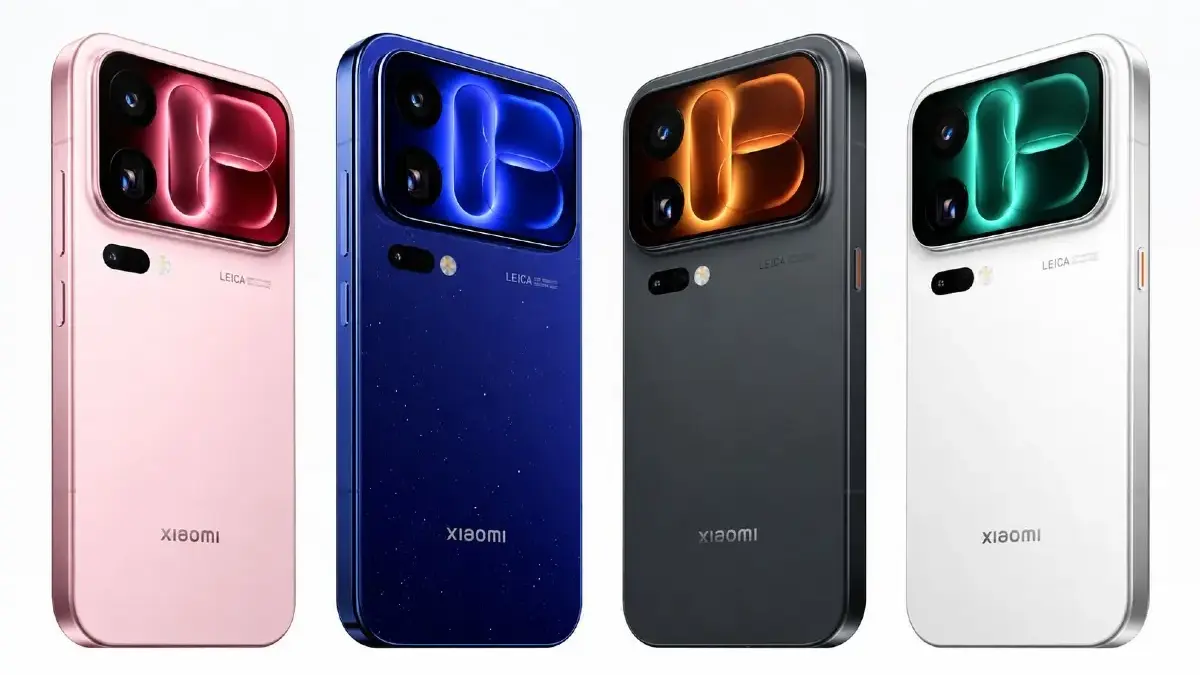
When consumers outside of China purchase the latest flagship smartphones from Xiaomi, they may be paying for a drastically different device under the hood than the one marketed during the brand’s domestic launch events. Recent code strings discovered deep within Xiaomi’s proprietary HyperOS operating system reveal substantial hardware downgrades slated for the international variants of the newly announced Xiaomi 18 Pro and Xiaomi 18 Pro Max.
According to software leaks, these regional adjustments primarily target battery capacity and wired charging speeds. The findings indicate that international buyers will receive significantly smaller battery cells compared to users in China. Specifically, the standard Xiaomi 18 Pro destined for global markets appears to feature a 6,000 mAh battery, a sharp reduction from the 7,000 mAh cell found in the Chinese domestic variant.
The gap widens even further when examining the top-tier model. While the domestic Chinese edition of the Xiaomi 18 Pro Max boasts a massive 8,500 mAh battery, the global model (tracked under the model code 2611FPNFAG) is referenced with a 7,050 mAh capacity. This represents a staggering loss of 1,450 mAh—roughly a 17% reduction in raw energy storage.
In addition to the battery reductions, the global Xiaomi 18 Pro faces a minor nerf in its wired charging architecture. While the Chinese model supports blazing-fast 100W charging, code references suggest the international variant will be capped at 90W. Meanwhile, the Pro Max is expected to retain its native 100W wired charging speed globally, though uncertainty remains regarding its wireless and reverse-charging capabilities.
As of now, these discrepancies do not appear on official corporate spec sheets. They remain confined to firmware strings within HyperOS, awaiting official confirmation when Xiaomi formally announces the global rollout dates, pricing structures, and regional availability.
Chronology of the Leak and Previous Precedents
To understand how these hardware disparities came to light, it is necessary to examine the timeline of events leading up to the discovery and Xiaomi’s historical approach to regional hardware adjustments.
The September 2026 Launch and Subsequent Discovery
- September 23, 2026: Xiaomi officially takes the wraps off its highly anticipated Xiaomi 18 series. During the high-profile domestic keynote in China, the company heavily promotes the unprecedented battery life of the new lineup, highlighting advanced silicon-carbon anode compositions boasting a 32% silicon concentration to maximize energy density. The Xiaomi 18 Pro is introduced with a 7,000 mAh battery, while the Pro Max stuns the industry with an 8,500 mAh cell.
- Shortly After the Keynote: Noted firmware sleuth and leakster Kacper Skrzypek dives into the newly released HyperOS source code. Cross-referencing model numbers, Skrzypek uncovers internal references indicating that the units manufactured for export feature distinctly different power metrics.
- September 23–24, 2026: Skrzypek publishes his findings to social media, clarifying the exact capacity divides: 6,000 mAh globally versus 7,000 mAh in China for the Pro model, and 7,050 mAh globally versus 8,500 mAh in China for the Pro Max. Tech publications quickly pick up the trail, corroborating the code strings through independent checks of regional firmware builds.
Historical Context: A Recurring Pattern
This is not an isolated incident for the Chinese tech giant; rather, it represents a continuation of an established product strategy. Analyzing past generations reveals a consistent trend of downsizing batteries for Western and international markets:
- The Xiaomi 17 Series: When the standard Xiaomi 17 debuted in China, it shipped with a robust 7,000 mAh battery. However, international buyers received an edition limited to 6,330 mAh.
- The Xiaomi 17 Ultra: The flagship Ultra model underwent an even more dramatic shift, dropping from a 6,800 mAh domestic battery down to a 6,000 mAh international equivalent.
This pattern suggests that Xiaomi employs a calculated dual-track hardware strategy, reserving its most extreme engineering feats for the fiercely competitive domestic market while tailoring global versions to meet different logistical, regulatory, or cost-balancing metrics.
Supporting Data and Technical Breakdown
The hardware discrepancies between the Chinese domestic models and their global counterparts involve intricate engineering choices. A closer look at the leaked specifications provides a clearer picture of what international consumers are actually getting.
| Model | Market Version | Battery Capacity | Difference (China vs. Global) | Wired Charging |
|---|---|---|---|---|
| Xiaomi 18 Pro | China | 7,000 mAh | Baseline | 100W |
| Xiaomi 18 Pro | Global | 6,000 mAh | -1,000 mAh (~14% drop) | 90W |
| Xiaomi 18 Pro Max | China | 8,500 mAh | Baseline | 100W |
| Xiaomi 18 Pro Max | Global | 7,050 mAh | -1,450 mAh (~17% drop) | 100W |
The Silicon-Carbon Anode Factor
A primary selling point of the Xiaomi 18 generation is the implementation of cutting-edge battery chemistry. Both the Pro and Pro Max utilize a cell composition featuring a 32% silicon concentration. This high percentage of silicon in the anode allows for significantly greater energy density compared to traditional graphite-based lithium-ion batteries, enabling manufacturers to pack massive energy reserves into relatively slim physical profiles.
Despite the downsized capacities in global models, it remains entirely unconfirmed whether Xiaomi is swapping out this advanced silicon-carbon chemistry for traditional materials in international units, or if the physical cells are simply being scaled down in physical volume to accommodate other internal components (such as distinct cellular radio bands required for international carrier frequencies).
Charging Speeds and Wireless Capabilities
While the Pro Max retains its 100W wired charging capability across all regions, the standard Pro model takes a slight step backward from 100W to 90W for global consumers.
Furthermore, questions remain regarding secondary charging metrics. The Chinese launch highlighted impressive auxiliary power features:
- Wireless Charging: Up to 50W fast wireless charging.
- Reverse Wireless/Wired Power Delivery: Up to 27W reverse charging to power external accessories or other phones.
As of now, Xiaomi has remained silent on whether these wireless and reverse-charging parameters will experience similar downgrades or if they will remain intact for international buyers.
Official Responses and Industry Context
Why would a manufacturer deliberately shrink the batteries of its flagship devices for international markets? Tech enthusiasts and industry analysts often point to a complex web of logistics, regional compliance, and financial variables, though official explanations from executive channels rarely point to a single smoking gun.
Prior Statements from Xiaomi Executives
In previous product cycles, when questioned about regional hardware variances—particularly regarding European rollouts—Daniel Desjarlais, Xiaomi’s Head of Communications, addressed how external economic pressures shape product configurations. Desjarlais has previously explained that heavy import tariffs, localized value-added taxes (VAT), and complex cross-border compliance costs can heavily influence the final manufacturing and component decisions made for specific target markets, particularly in Europe.
However, it is vital to note that Xiaomi has not officially linked these economic factors to the specific battery reductions found in the HyperOS code for the Xiaomi 18 series.
Debunking Speculative Theories
Tech communities frequently speculate on the causes behind regional battery downgrades, but two common theories lack official backing:
- Lithium Transportation Regulations: Some commentators suggest that strict international air and maritime freight regulations regarding the transport of massive lithium-ion batteries (such as UN38.3 compliance and weight/capacity thresholds for cargo classification) force brands to downsize cells. However, millions of high-capacity devices are shipped globally every year, and companies routinely clear these regulatory hurdles without altering cell capacities. Attributing the Xiaomi 18 series changes directly to shipping laws remains entirely speculative.
- Cost-Cutting Assumptions: While reducing raw battery capacity marginally lowers material manufacturing costs, the savings on a premium flagship tier are usually negligible relative to retail pricing. Nevertheless, critics often view such moves as margin-protection strategies for regions where marketing, distribution, and warranty overheads are significantly higher.
Market Implications and Consumer Takeaways
The revelation that international consumers will receive smaller batteries than their Chinese counterparts carries several important implications for the high-end smartphone market.
Real-World Battery Longevity vs. Raw Numbers
It is crucial for consumers to understand that a lower milliamp-hour (mAh) rating does not automatically translate to a proportional drop in daily screen-on time. Real-world battery endurance is a complex ecosystem dictated by:
- Display Power Efficiency: The refresh rates, panel types (such as advanced LTPO OLED panels), and dynamic resolution scaling.
- Processor Architecture: The thermal efficiency and power draw of the onboard system-on-chip (SoC).
- Software Optimization: How effectively HyperOS manages background processes, wake locks, and task scheduling.
While a global Xiaomi 18 Pro with 6,000 mAh will theoretically yield less endurance than a 7,000 mAh Chinese variant, optimization tweaks within HyperOS could narrow the gap in daily usage scenarios. Nonetheless, physics dictates that a larger energy reservoir yields a higher ceiling for longevity.
Consumer Sentiment and Transparency
For tech enthusiasts who closely track import specifications, hardware discrepancies between Chinese domestic releases and global rollouts remain a persistent frustration. Premium smartphone buyers paying top dollar expect parity across global markets. When brands deliver scaled-down hardware under the same flagship moniker, it can lead to consumer distrust and diminished enthusiasm among early adopters who import devices or track global spec sheets meticulously.
Looking Ahead
The Xiaomi 18 Pro and Pro Max are still awaiting their official, dedicated global launch events. Until Xiaomi takes the stage to outline international pricing, distribution footprints, and localized data sheets, the exact configuration of the commercial units remains unsealed.
When those global launch events finally occur, all eyes will be on the spec sheets to see if Xiaomi confirms the HyperOS code leaks—and how the company justifies offering international buyers a lesser battery experience than the one celebrated in its home market.




Leave a Reply