

Date: Tuesday, September 22, 2026
Global Desk & Economic Analysis
1. Main Facts
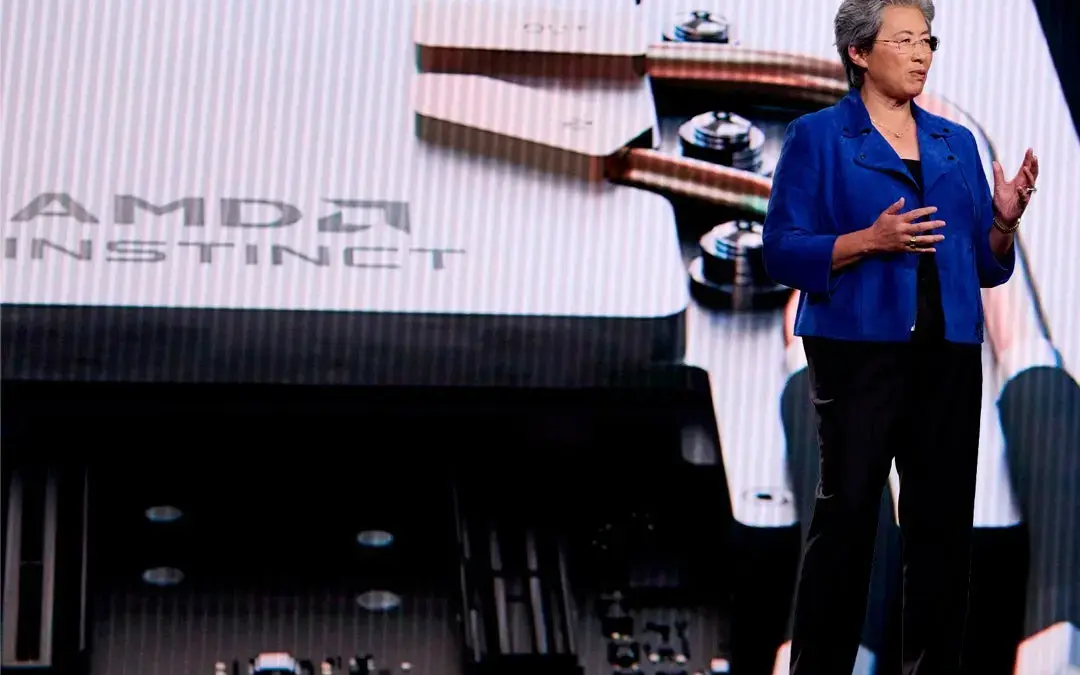
The global economic landscape reached a historic milestone this week as Advanced Micro Devices (AMD) officially crossed the coveted US$1 trillion market capitalization threshold for the first time in its corporate history. Propelled by the relentless global boom in artificial intelligence (AI) and surging investor confidence regarding its expanding market share, AMD’s stock skyrocketed nearly 9.6% in a single session to close at an all-time high of US$613.50 per share. The company’s meteoric rise is further underscored by a staggering year-to-date stock appreciation exceeding 170%, cementing its status alongside other tech behemoths in the elite trillion-dollar club.
Simultaneously, regional and corporate landscapes across the Americas experienced significant developments. In Colombia, the cultural sector celebrated a resounding success as the Fiesta del Libro y la Cultura de Medellín concluded with record-breaking visitor numbers and sales. However, the nation also found itself at the center of geopolitical friction, sparked by a media tour of the Bogotá Metro hosted by the Chinese Embassy—an event that drew sharp rebukes from former local leadership. In the corporate sphere, international footwear icon Converse faced intense public scrutiny and pledged immediate internal overhauls following a racially charged advertising misstep, while local tech executives—such as Rappi’s country manager Matías Laks—defended their hands-on digital public relations strategies on professional networking platforms.
2. Chronology of Events
The unfolding of these diverse domestic and international stories followed a rapid sequence over the preceding days leading up to September 22, 2026:
- Mid-Year Financial Reporting (Late Q2 2026): AMD finalized its quarterly financial evaluations, recording a massive 50% year-over-year revenue surge to US$11.5 billion, laying the groundwork for institutional investor optimism.
- Mid-September 2026: The Fiesta del Libro y la Cultura de Medellín opened its doors, welcoming over 180 exhibitors and hosting thousands of cultural activities over a week-long celebration of literature.
- Thursday, September 17, 2026: Converse released a controversial promotional campaign across digital channels, immediately triggering severe public backlash due to its perceived visual references to the Ku Klux Klan and historical lynchings. The brand hastily pulled the content within hours of the outcry.
- Friday, September 18, 2026: The Chinese Embassy in Colombia organized an exclusive media and political tour to inspect the ongoing construction progress of the Bogotá Metro. Former Bogotá Mayor Enrique Peñalosa publicly criticized the event via social media channels, accusing foreign entities of staging a political spectacle over locally funded infrastructure.
- Weekend, September 19–20, 2026: Matías Laks, Country Manager of Rappi, took to LinkedIn to forcefully defend his active engagement in resolving customer grievances directly on the platform, pushing back against critics who decried his heavy digital presence. Meanwhile, the Medellín Book Festival closed its gates, tallying final commercial figures that exceeded previous benchmarks.
- Monday, September 21, 2026: Wall Street opened with a historic rally for AMD. Buoyed by escalating AI demand and market positioning, the stock surged 9.6% to peak at US$613.50, successfully pushing the company’s valuation past the US$1 trillion mark.
- Tuesday, September 22, 2026: Official statements were issued by corporate executives, diplomatic missions, and market analysts, summarizing the structural impacts of these interwoven global and local events.
3. Supporting Data and Financial Metrics
The breadth of this week’s news cycle is anchored by robust quantitative indicators across technology, culture, and retail commerce:
-
AMD Valuation & Financials:
- Market Capitalization: Surpassed US$1 trillion for the first time.
- Stock Price: Reached an all-time high of US$613.50, reflecting a single-day gain of 9.6%.
- Year-to-Date (YTD) Growth: Exceeds 170%.
- Q2 Revenue: Reached US$11.5 billion, marking a 50% year-over-year increase.
- Executive Leadership: Led by Chairperson and Chief Executive Officer Lisa Su (born 1969), whose strategic pivot toward high-performance computing and AI architecture has been widely credited for the company’s renaissance.
-
Medellín Book and Culture Festival (Fiesta del Libro y la Cultura):
- Total Visitors: Over 560,000 attendees, representing a ~2% increase compared to the previous edition.
- Total Commercial Sales: Approximately $11,000 million COP, reflecting a 10% growth year-over-year.
- Exhibitor Participation: More than 180 commercial and cultural exhibitors.
- Programming Volume: A staggering 3,600 distinct activities.
- Literary Milestones: The official launch of 366 new books.
- Guest Speakers: Over 400 national and international intellectuals, authors, and artists in attendance.
-
Infrastructure and Geopolitical Context:
- Bogotá Metro: A multi-billion-dollar transit project central to the capital’s mobility, built with international contracting but funded locally.
- Key Historical Figures: Former Bogotá Mayor Enrique Peñalosa (born 1954), known for his advocacy of public transit systems such as TransMilenio and urban pedestrianization.
4. Official Responses and Stakeholder Statements
As controversies erupted and financial markets reacted, key figures stepped forward to clarify positions, defend corporate strategies, and manage public relations fallout.
AMD and Executive Leadership
While Lisa Su’s strategic vision has long positioned AMD as a formidable competitor in the semiconductor space, the company’s investor relations team emphasized that crossing the trillion-dollar valuation is merely a milestone in a broader roadmap centered on next-generation artificial intelligence hardware. Analysts note that AMD’s ability to capture market share from traditional rivals in data center chips has been the primary catalyst for institutional buying.
Converse’s Crisis Management
Following widespread condemnation of its recent advertising campaign, the Chief Executive Officer of Converse issued an unequivocal apology and pledged a thorough institutional review.
"These images should never have been utilized," the executive stated, acknowledging that the promotional material inadvertently evoked deeply painful imagery associated with the Ku Klux Klan and historical lynchings. The company confirmed that mitigation protocols were triggered instantly: "We began pulling the material from all commercial and digital channels as soon as the initial concerns were raised, and our senior leadership team is currently conducting a comprehensive internal audit of our creative approval processes to ensure this never happens again."
Rappi and Executive Accountability on LinkedIn
In the realm of corporate communications, Matías Laks, Country Manager of Rappi, drew both praise and criticism for his unorthodox, highly visible approach to digital customer service. When a LinkedIn user publicly criticized Laks for personally addressing consumer complaints and app glitches on the professional networking site, Laks fired back without hesitation:
"Pity I feel for the missed opportunities across Latin America," Laks wrote in a strongly worded response. "I feel zero pity taking the time to respond to feedback and address real problems concerning my own company."
His comments reignited a broader debate regarding executive transparency and the blurring lines between corporate public relations and direct consumer engagement on social media.
Diplomatic Friction Over the Bogotá Metro
The diplomatic spat involving the Chinese Embassy in Colombia and local political figures brought urban infrastructure into the political crosshairs. Following a guided press tour designed to showcase the structural advancements of the Bogotá Metro, former Mayor Enrique Peñalosa launched a sharp critique via public statements. Peñalosa argued that the massive infrastructure project is fundamentally financed by local taxpayers rather than being a foreign donation, asserting that it was inappropriate for a diplomatic mission to orchestrate a promotional "show" around the construction works.
In response, the Chinese Embassy defended the initiative, releasing a statement clarifying that the media tour was intended solely to provide transparency and demonstrate engineering progress to the public. The embassy firmly rejected the characterization of the event as a "show," noting pointedly that formal invitations had been extended to political critics, including Peñalosa himself, who ultimately chose not to participate.
5. Economic, Cultural, and Corporate Implications
The events of September 22, 2026, carry profound multi-sector implications that extend far beyond daily headlines:
The Semiconductor Hegemony and AI Realities
AMD’s entry into the US$1 trillion valuation club signals a permanent structural shift in the global technology sector. It confirms that the artificial intelligence infrastructure boom is not a temporary market bubble, but a capital-intensive, long-term technological transformation. By challenging legacy monopolies in graphics processing and enterprise AI accelerators, AMD has validated investor bets on hardware diversification. For global markets, this milestone redefines supply chain valuations and places immense pressure on competitors to accelerate their own R&D pipelines.
The Resilience of Physical Culture in a Digital Age
The commercial and attendance success of the Fiesta del Libro y la Cultura in Medellín demonstrates the enduring viability of large-scale public cultural investments. Despite macroeconomic headwinds and digital fatigue, generating $11,000 million COP in sales alongside a 10% revenue expansion proves that physical community engagement, literary spaces, and localized cultural tourism remain potent economic engines for municipal development in Latin America.
The High Stakes of Corporate Accountability
The Converse and Rappi episodes highlight the razor-thin margin for error facing modern corporate leadership. In an era of hyper-connected digital scrutiny, creative missteps—such as tone-deaf marketing campaigns—can inflict immediate reputational damage, forcing swift executive intervention and structural policy reviews. Conversely, executives like Matías Laks demonstrate that embracing radical transparency and direct consumer interaction, while occasionally polarizing, can redefine corporate accountability and customer relations in real time.
Geopolitics at the Municipal Level
Finally, the friction over the Bogotá Metro illustrates how local infrastructure projects have increasingly become theatres for broader geopolitical positioning. As international engineering firms and foreign states participate heavily in developing world metropolises, local leaders must navigate a complex balancing act between securing vital foreign investment and preserving local political sovereignty over public works narratives.


Leave a Reply