

For decades, the corrientazo—Colombia’s traditional, budget-friendly daily lunch special—has served as the culinary and financial backbone for millions of working-class and middle-class citizens. Offering a hearty, multi-course meal at an affordable price, it has long been a reliable staple for office workers, laborers, and students alike. However, this foundational pillar of daily Colombian life is undergoing a dramatic squeeze.
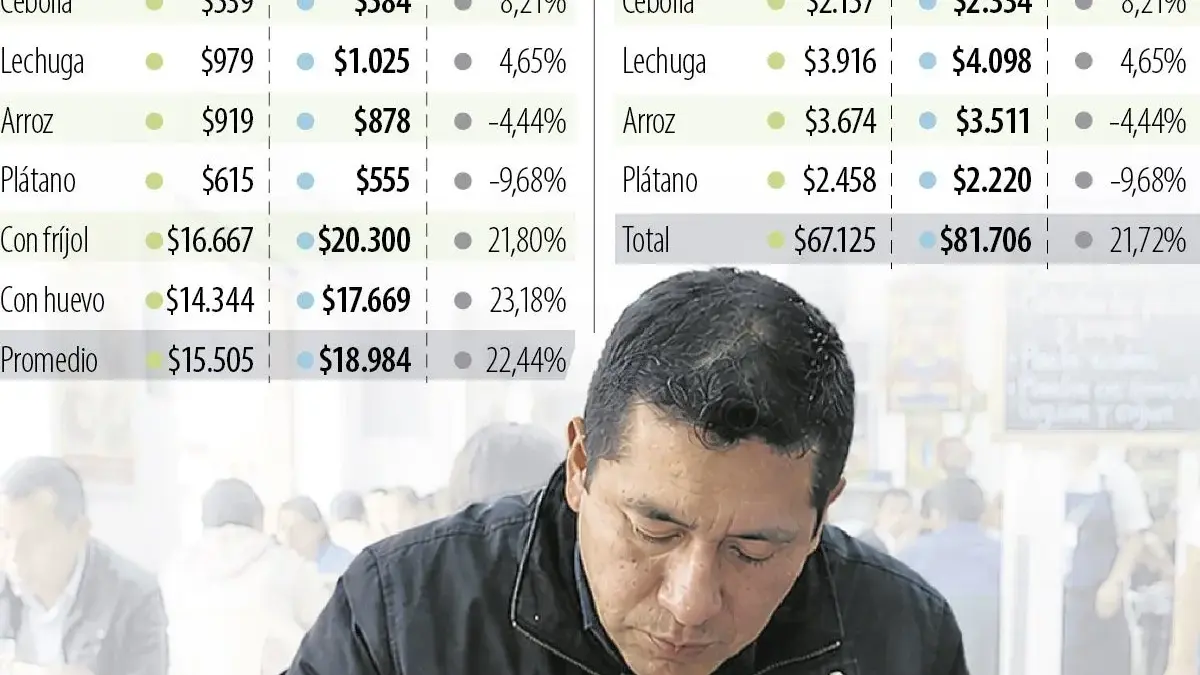
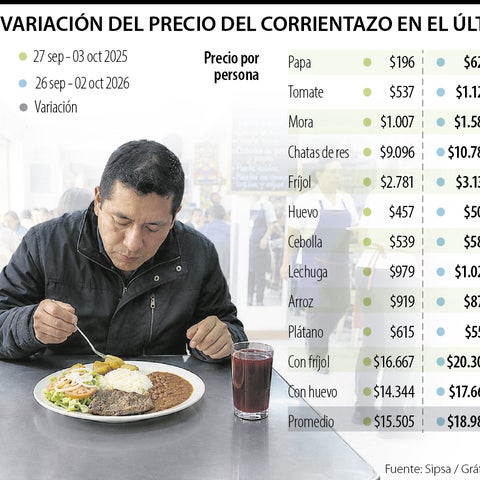
A comprehensive market analysis reveals that the average price of a standard corrientazo—consisting of rice, potato, beef, plantain, salad (lettuce, onion, and tomato), beans or an egg, and a glass of blackberry juice—has surged from 15,505 Colombian Pesos (COP) to 18,980 COP (with some regional estimates averaging 18,894 COP) over the past twelve months. This represents a staggering 22.4% annual increase, pushing the price of a single lunch dangerously close to the 20,000 COP threshold and forcing families across the nation to radically readjust their monthly budgets.
1. Main Facts: The Devaluation of the Daily Lunch Budget
The rapid escalation of food prices has turned what was once an economical dining choice into a financial burden. When household resources are tight, the money set aside for groceries and daily lunches no longer stretches as far as it used to. The situation becomes even more critical when the most affordable options on the market cease to be cheap.
To understand the mechanics behind this price surge, a market study was conducted using data from the Agricultural Sector Price and Supply Information System (SIPSA), managed by the National Administrative Department of Statistics (DANE). The study tracked the wholesale prices of the core ingredients that make up a traditional Colombian lunch:
- White rice
- Beef loin cuts (chatas de res)
- Potatoes (papa)
- Sweet plantains (plátano maduro)
- Salad components (lettuce, tomato, and onion)
- Protein sides (beans or eggs)
- Blackberries (mora de castilla) for juice
The methodology calculated the average price per kilogram of each food item across Colombia’s major wholesale distribution centers (centrales de abasto). To estimate the cost of an individual lunch, each kilogram price was divided by four to represent a standard single portion of 250 grams. By aggregating these individual portion costs, the study established a standardized price for a corrientazo in October of the previous year (2025) and compared it directly to October of the current year (2026).
The findings are stark: a lunch that cost approximately 15,505 COP last year now requires an outlay of up to 18,980 COP. This 22.4% rate of inflation for a single meal far outpaces the country’s general consumer price index (CPI), signaling a deep and painful squeeze on the purchasing power of everyday Colombians.
2. Chronology: How the ‘Corrientazo’ Became a Premium Meal
The journey to an 18,980 COP lunch did not happen overnight, but rather through a series of compounding supply-side shocks and inflationary pressures that built up over the course of late 2025 and throughout 2026.
+------------------+--------------------------------------------------------+
| Timeline         | Key Economic Event / Market Impact                     |
+------------------+--------------------------------------------------------+
| October 2025     | Standard "corrientazo" cost sits at an average of      |
|                  | 15,505 COP. Food inflation is relatively stable.       |
+------------------+--------------------------------------------------------+
| Early 2026       | Agricultural input costs begin to rise. Logistics and  |
|                  | transport fees climb, slowly pushing up wholesale prices|
|                  | at major distribution hubs.                            |
+------------------+--------------------------------------------------------+
| Mid-2026         | Extreme weather patterns disrupt crop cycles. Potato   |
|                  | and tomato yields face sharp localized contractions.   |
+------------------+--------------------------------------------------------+
| September 2026   | Tomato supply drops by 1.8%, triggering a massive      |
|                  | 10.4% monthly spike in the tomato CPI. Potato prices   |
|                  | surge 7.29% in a single month.                         |
+------------------+--------------------------------------------------------+
| October 2026     | Cumulative effects push the "corrientazo" to 18,980    |
|                  | COP, a 22.4% year-on-year increase.                    |
+------------------+--------------------------------------------------------+
During the first half of 2026, minor fluctuations in agricultural yields were absorbed by wholesalers and restaurant owners, who hesitated to pass price hikes onto a highly price-sensitive clientele. However, by the third quarter of 2026, the cumulative weight of rising producer prices, fuel costs, and localized supply shortages made further price absorption impossible.
The tipping point occurred in September 2026, when key perishable items experienced sudden, double-digit monthly inflation rates. This abrupt spike quickly trickled down to retail establishments, forcing neighborhood restaurants to update their menus almost overnight, pushing the price of the daily special closer to the dreaded 20,000 COP mark.
3. Supporting Data: A Detailed Ingredient-by-Ingredient Breakdown
To fully grasp why the corrientazo has become so expensive, it is necessary to dissect the individual components of the plate. While some ingredients remained stable or even decreased in price, others experienced historic, triple-digit surges.
The Major Drivers of Inflation
The primary culprit behind the soaring cost of lunch is the humble potato. Once the most affordable carbohydrate on the plate, the cost of a single 250-gram portion of potato skyrocketed from 196 COP to 628 COP, representing an astronomical 220.9% increase over the 12-month period.
Following closely behind is the tomato, an essential component of both Colombian salads and the traditional hogao sauce. The price of a tomato portion rose by 109.1%, climbing from 537 COP to 1,123 COP.
Other significant increases include:
- Blackberry (mora de castilla): The portion cost for juice jumped 57.4%, rising from 1,007 COP to 1,586 COP.
- Beef Loin (chatas de res): The primary protein on the plate saw an 18.58% increase, with a 250-gram portion rising from 9,096 COP to 10,786 COP.
- Beans: A portion of dry beans rose by 12.83%, adding 357 COP to the plate’s cost.
- Eggs (AA Grade): Often used as an alternative or additional protein, the price of a single egg increased by 10.72%, rising from 457 COP to 506 COP.
The Cost Deflators: Minor Relief
In contrast to the widespread price hikes, two staple foods offered minor relief to consumers and restaurant owners:
- Sweet Plantain (plátano maduro): Portions became 9.6% cheaper over the last year.
- White Rice: The foundational element of the Colombian plate saw a modest 4.4% price reduction.
Despite these minor declines, the massive upward swings in potatoes, tomatoes, and beef easily overwhelmed any savings realized from cheaper rice and plantains.
Food’s Dominant Weight in the CPI
The broader macroeconomic data underscores the disproportionate impact that agricultural goods are having on Colombian inflation. While food and non-alcoholic beverages represent approximately 15% of the total weight in the national consumer price index (CPI) basket, this single category has been responsible for 28% of the acceleration in the country’s overall cost of living throughout 2026.
In September 2026, the annual food CPI continued its upward march, climbing from 6.13% to 6.79%, proving that food remains the primary engine driving national inflationary pressures.
4. Official Responses and Expert Economic Analysis
Economic analysts and market researchers have pointed to a complex mix of supply-side disruptions, rising production costs, and commercialization bottlenecks to explain the current crisis.
Supply-Side Contractions and Producer Costs
Nicolás Cruz Walteros, a local economy expert analyst at Corficolombiana, explained that the dramatic increases in potato and tomato prices are rooted in fundamental supply-side challenges. According to Cruz, producer-side prices for both commodities rose between 16.8% and 22.2% over the year, which naturally forced retail prices upward.
"In the case of tomatoes, this price hike was accompanied by a 1.8% drop in overall supply," Cruz detailed. "This reduced availability made it highly efficient for producers to pass their increased costs directly onto the consumer. This dynamic was clearly reflected in September’s CPI, which saw a massive 10.4% monthly increase for tomatoes alone."
The potato market presented a more perplexing scenario. While overall supply actually increased, prices still rose. Cruz warned that in this case, other underlying factors—such as soaring commercialization, packaging, and domestic transportation costs—exerted heavy upward pressure, leading to a 7.29% monthly increase in the potato CPI for September.
Regarding beef, Cruz noted that while a 10% increase in supply helped moderate the CPI increase to a modest 0.74% for the month, persistent challenges in processing, cold-chain logistics, and retail distribution kept year-on-year prices high.
Macroeconomic Perspectives on Food Inflation
Other economic institutions have voiced similar concerns regarding the sticky nature of food inflation in 2026. Laura Clavijo, Director of Economic Research at Grupo Cibest, highlighted the worrying trajectory of the sector.
"The accumulated food inflation for the year has already reached 8.05%," Clavijo stated. "This figure demonstrates an intensification of inflationary pressures on this specific component, which directly impacts the lowest-income households who spend a larger percentage of their earnings on basic nutrition."
Additionally, the macroeconomic research team at Davibank confirmed that the high inflationary print for September was heavily driven by highly volatile perishable items. "The outcome of the ninth month of the year was primarily explained by the elevated prices of perishables, specifically eggs, tomatoes, and fresh vegetables," the bank’s economic report noted.
5. Economic and Social Implications: Tightening Belts and Future Threats
The rising cost of the corrientazo is not merely an abstract statistical data point; it has profound social and economic consequences for Colombian society.
The Squeeze on Working-Class Households
For an average worker earning the minimum wage, a daily lunch costing nearly 19,000 COP is rapidly becoming unsustainable. If an employee eats a corrientazo twenty days a month, the total expenditure reaches roughly 380,000 COP—devouring a massive portion of their monthly take-home pay.
As a result, many workers are forced to abandon restaurants entirely, opting instead to pack lunches from home. This shift, in turn, threatens the survival of thousands of small, family-owned neighborhood eateries that rely on high-volume daily lunch crowds to pay rent, utilities, and staff.
+--------------------------------------------------------------------------+
|                  THE REAL COST OF A DAILY LUNCH                          |
|                                                                          |
|  Monthly Cost (20 working days):                                         |
|  * October 2025: $310,100 COP                                            |
|  * October 2026: $379,600 COP                                            |
|                                                                          |
|  An additional $69,500 COP per month per worker, draining discretionary  |
|  household income and impacting local consumer spending.                 |
+--------------------------------------------------------------------------+
Emerging Threats: El Niño and Infrastructure Bottlenecks
Looking ahead to the final months of 2026 and the beginning of 2027, economists warn that the worst of the food price shock may not be over. Two major threats loom on the horizon:
- The El Niño Phenomenon: Severe drought conditions and elevated temperatures threaten to dry out key agricultural zones in the Andean region. A prolonged dry spell could severely damage upcoming harvests of potatoes, vegetables, and fruits, triggering further supply deficits and subsequent price spikes.
- Logistics and Freight Costs in Buenaventura: As Colombia’s primary port on the Pacific coast, Buenaventura is critical for importing agricultural inputs, fertilizers, and yellow corn (vital for animal feed). Ongoing infrastructure bottlenecks and rising freight transport rates along this corridor threaten to increase production costs for meat, poultry, and dairy, feeding the inflationary cycle.
If these risks materialize, the traditional corrientazo could easily cross the 20,000 COP threshold, cementing the end of the cheap daily lunch and forcing a deeper restructuring of the Colombian diet and household economy.




Leave a Reply