

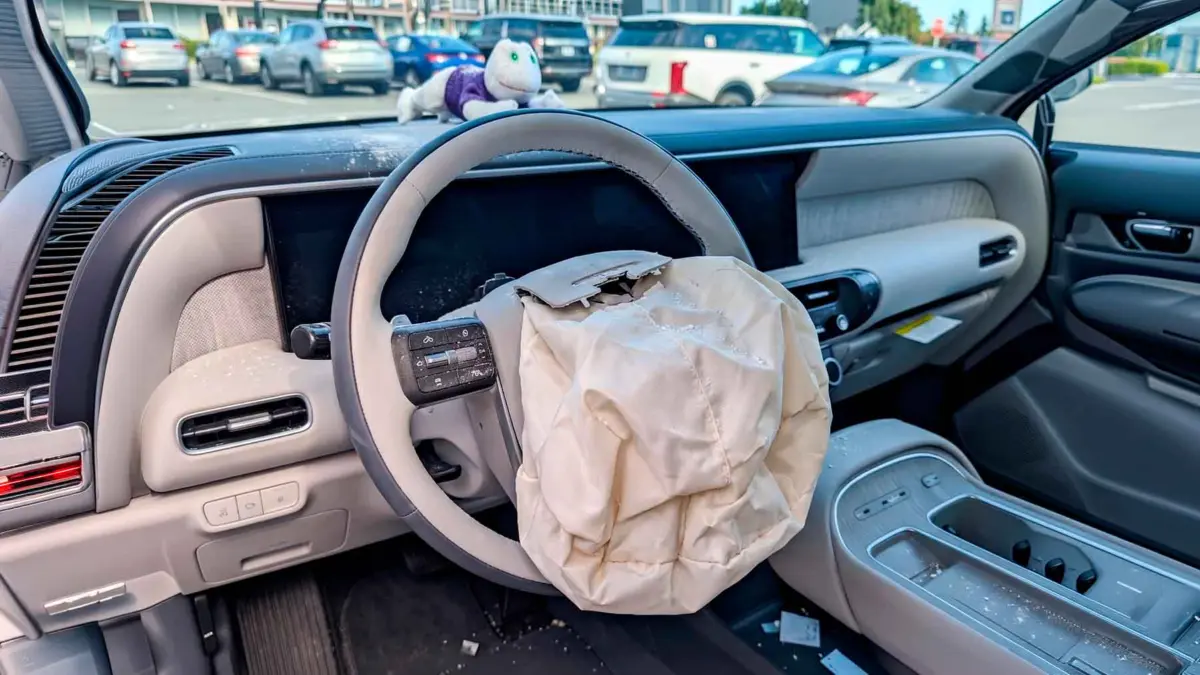
Driving a used vehicle is an increasingly common and practical choice for millions of drivers worldwide, offering affordability and utility in an economically challenging climate. However, beneath the polished exteriors and routine maintenance logs of certain pre-owned cars lies a terrifying and invisible hazard—one that can turn a standard commute into a life-threatening ordeal.
While automotive regulatory bodies routinely issue safety recalls for factory defects, prompting manufacturers to notify owners of mechanical or electronic failures, an entirely unregulated black market for replacement parts has bypassed these safeguards. In the United States, federal safety authorities have sounded the alarm over a deadly influx of counterfeit and illegally imported airbag inflators. Instead of protecting motorists during a collision, these illicit components are engineered to explode with catastrophic force, transforming life-saving safety equipment into dangerous fragmentation devices.
Main Facts: The Anatomy of a Silent Automotive Crisis
At the center of this burgeoning safety crisis are front-driver-side airbag inflators identified by the model designation DTN60DB. Manufactured in China by Jilin Province Detiannuo Safety Technology, these devices were illegally imported into the United States, completely circumventing federal safety standards, quality control inspections, and regulatory oversight.
When deployed during a traffic accident, the structural integrity of these substandard inflators fails catastrophically. Rather than safely inflating the airbag cushion, the excessive internal pressure causes the metal housing to rupture violently. This explosion propels razor-sharp shards of metal directly toward the driver’s face, neck, and upper torso.
The National Highway Traffic Safety Administration (NHTSA) has linked these defective replacement inflators to at least 10 tragic fatalities and 3 severe, life-altering injuries spanning 13 documented accidents across multiple states, including Texas, Florida, Arizona, and California. Although initial incident reports have predominantly involved popular models such as the Chevrolet Malibu and the Hyundai Sonata, security analysts warn that the hazard is not restricted to specific makes or models; rather, it poses a lethal threat to any vehicle into which these components have been surreptitiously installed.
The Blind Spot of the Vehicle Identification Number (VIN)
Perhaps the most alarming aspect of this crisis is its complete invisibility to standard consumer safety checks. For decades, vehicle owners have relied on the Vehicle Identification Number (VIN) to check for open recalls through government and manufacturer databases.
However, because these specific inflators are unauthorized, counterfeit replacements installed entirely outside of factory specifications, they do not exist within official manufacturing records. A prospective buyer or current owner can search a vehicle’s VIN and receive a clean bill of health, remaining entirely oblivious to the ticking time bomb hidden inside their steering wheel. Because these aftermarket parts were installed post-factory—typically following a prior collision—they leave no digital paper trail in official automaker databases, rendering traditional recall warnings entirely ineffective.
Chronology: How Illegally Imported Airbags Entered the Market
To understand how deadly, unauthorized components found their way into civilian vehicles, automotive historians and safety investigators point directly to the complex ecosystem of the used car and collision-repair markets.
1. The Initial Collision and Loss of Original Equipment
Every vehicle safety system has a finite lifespan, and factory-installed airbags are designed to deploy precisely once. When a vehicle sustains a significant front-end impact, the original equipment manufacturer (OEM) airbag modules deploy as intended, saving the occupants. Following the collision, the vehicle often sustains structural or cosmetic damage and is either repaired by insurance-backed body shops or declared a "total loss," sold at salvage auctions, and subsequently rebuilt by secondary owners or independent entities.
2. The Repair Phase and the Sourcing of Cheap Alternatives
For a rebuilt vehicle to return legally to public roadways, deployed airbags must be replaced. While certified dealerships utilize expensive, OEM-certified replacement parts, independent repair operations, budget-conscious rebuilders, or secondary owners often face intense financial pressures to minimize repair costs. This economic vulnerability creates a lucrative opening for unscrupulous suppliers offering deep discounts on replacement parts.
3. Exploiting Regulatory Loopholes and Illegal Imports
Capitalizing on high demand and lax border surveillance regarding specific automotive subcomponents, entities such as Jilin Province Detiannuo Safety Technology manufactured and exported unauthorized DTN60DB inflators into the United States. These items bypassed standard customs declarations or were mislabeled, entering the domestic market without undergoing the rigorous dynamic crash testing required by the NHTSA.
4. The Silent Integration into Pre-Owned Vehicles
Once distributed into domestic supply chains, these counterfeit inflators were installed in vehicles during post-accident restorations. Because these installations occurred outside certified dealership networks, the upgrades were never logged into national databases. The vehicles were subsequently sold to unsuspecting consumers through private sales, independent dealerships, and online platforms, setting the stage for subsequent tragedies.
Supporting Data: The Toll of Substandard Automotive Parts
The sheer scale of the illicit auto parts trade is difficult to quantify, but the human cost associated with the DTN60DB inflators offers a stark reminder of the stakes involved.
- Fatalities and Injuries: Federal safety investigations have directly tied the DTN60DB inflators to 10 confirmed deaths and 3 severe injuries. Survivors of these blasts have reported catastrophic facial trauma, lacerated carotid arteries, and severe ocular damage caused by flying metallic shrapnel.
- Geographic Spread: While importation hubs and distribution networks vary, documented incidents have clustered in high-volume vehicle markets and states with high rates of used vehicle transactions, prominently featuring Texas, Florida, Arizona, and California.
- Vehicle Diversity: Although the highest-profile incidents have involved mid-size sedans like the Chevrolet Malibu and Hyundai Sonata, safety experts emphasize that repair shops frequently interchange or adapt generic aftermarket components across diverse vehicle platforms, widening the potential target demographic significantly.
- Detection Rates: Due to the clandestine nature of counterfeit parts distribution, regulatory bodies estimate that only a fraction of the total imported volume of DTN60DB inflators has been successfully intercepted and seized, leaving an unknown number of units actively deployed in vehicles currently on public roads.
Official Responses and Regulatory Action
As the death toll climbed and federal investigators traced the root cause back to illegal imports, regulatory agencies mobilized to halt the distribution of these lethal devices.
NHTSA Intervention and Import Bans
The National Highway Traffic Safety Administration has taken aggressive enforcement action, formally banning the sale, distribution, and importation of the DTN60DB inflator model. Federal advisories have been broadcast nationwide, warning consumers, salvage yards, and independent mechanics about the extreme risks posed by these specific devices.
However, regulatory bodies face an unprecedented enforcement dilemma. Typically, a recall relies on the manufacturer’s ability to cross-reference the VIN with the vehicle owner’s registration data to issue direct mailers and digital alerts. Because the DTN60DB inflators entered the vehicle fleet through unregulated repair channels, the NHTSA lacks the data required to identify the specific vehicles housing these components. Consequently, traditional, targeted recall campaigns are physically impossible, shifting the burden of discovery entirely onto vehicle owners and independent mechanics.
Industry and Law Enforcement Collaboration
Federal law enforcement agencies, including Homeland Security Investigations (HSI) and U.S. Customs and Border Protection (CBP), have ramped up inspections at ports of entry to intercept incoming shipments of counterfeit automotive safety gear. Concurrently, major automotive trade associations are urging state licensing boards to crack down on unlicensed body shops that utilize unverified, non-OEM replacement parts in structural and safety-critical repairs.
Implications: A Call for Heightened Vigilance in the Used Car Market
The crisis surrounding unauthorized airbag replacements highlights deep vulnerabilities within the global automotive supply chain and the secondary vehicle market. It forces consumers, regulators, and industry professionals to rethink how vehicle safety is verified long after a car leaves the showroom floor.
1. Reassessing Due Diligence for Used Car Buyers
Purchasing a used vehicle can no longer be treated as a simple transaction based on cosmetic appeal and a clean odometer reading. Buyers must demand exhaustive documentation regarding a vehicle’s structural and mechanical history.
The NHTSA and consumer protection advocates strongly recommend the following protocols for anyone acquiring or currently driving a pre-owned vehicle:
- Comprehensive History Reports: Utilize reputable vehicle history databases (such as CARFAX, AutoCheck, or government registries) to review past accident reports, insurance claims of "total loss," theft recoveries, and documented airbag deployments.
- Physical Inspections by Professionals: If a vehicle history report indicates a prior front-end collision, or if a seller discloses that airbags were previously deployed and replaced, the vehicle should be taken immediately to an authorized dealership or a trusted, certified mechanic for a physical inspection of the Supplemental Restraint System (SRS).
- Absolute Avoidance of DIY Diagnostics: Never attempt to inspect, remove, or modify airbag components independently. The electrical charges and explosive propellants housed within steering columns and dashboard modules are highly volatile. Tampering with an airbag without specialized training and proper diagnostic tools can trigger accidental deployment, resulting in severe injury or death.
2. The Mechanics’ Obligation and Chain of Custody
For the automotive repair industry, this crisis serves as a stern warning regarding the sourcing of replacement parts. Independent mechanics and body shops are being urged to source components exclusively through verified, authorized OEM channels. Relying on discount third-party brokers or unvetted online marketplaces for critical safety equipment exposes repair professionals to profound legal liability and places their customers’ lives in immediate jeopardy.
3. Legislative and Structural Reforms
Moving forward, industry analysts argue that consumer protection laws must evolve to address the modern aftermarket parts trade. Suggestions include implementing mandatory digital certification tracking for all structural and safety-related replacement parts, requiring repair facilities to log serial numbers of installed airbags into a centralized national database linked to the vehicle’s VIN, and imposing harsher criminal penalties for entities importing counterfeit safety equipment.
Conclusion
The hidden danger of counterfeit airbag inflators serves as a sobering reminder that automotive safety extends far beyond initial factory production. As millions of used vehicles change hands each year, the invisible history of prior accidents and unverified repairs can harbor lethal secrets.
By understanding the risks associated with unauthorized replacement parts, demanding transparent vehicle histories, and subjecting pre-owned cars to thorough professional inspections, motorists can shield themselves from unseen hazards. In an automotive market fraught with hidden variables, proactive vigilance remains the single most effective defense between a safe journey and an avoidable tragedy.




Leave a Reply