

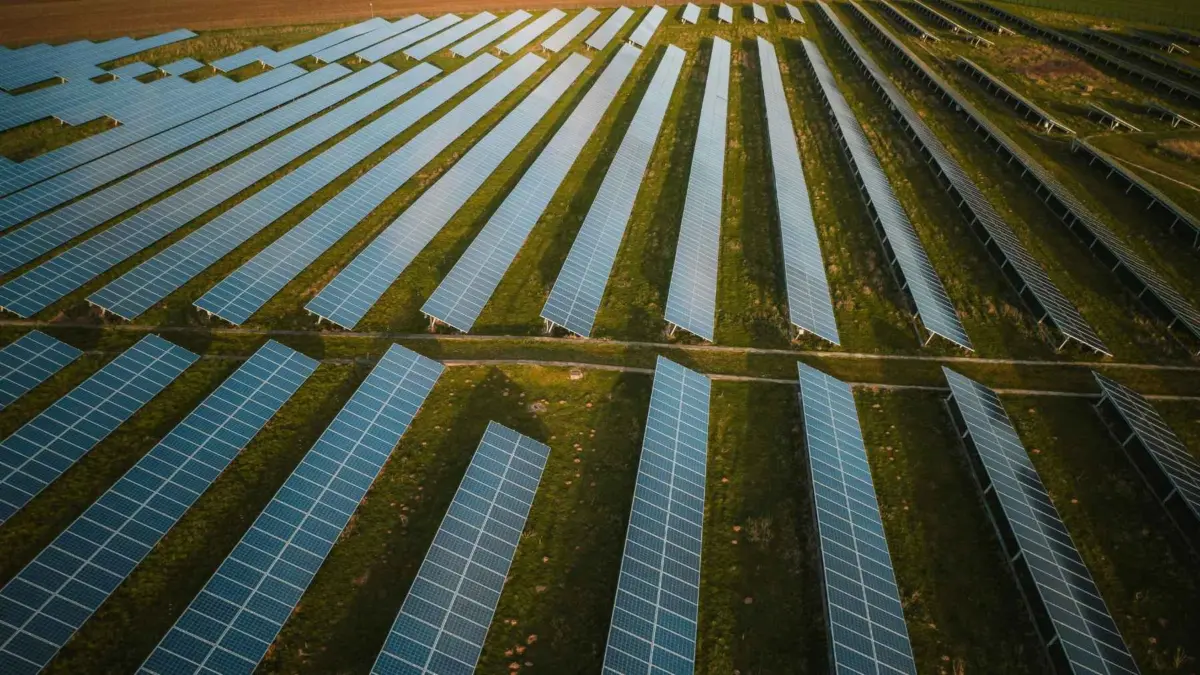
NEW YORK — As global leaders converge for the high-stakes panels and diplomatic roundtables of New York Climate Week, the intersection of surging energy demand, technological disruption, and environmental urgency has taken center stage. Against a backdrop of unprecedented global electricity consumption driven by the rapid expansion of artificial intelligence (AI) and data centers, traditional energy grids are showing profound strains.
It is within this crucible of modern infrastructural challenges that the International Solar Alliance (ISA)—in strategic partnership with India’s Ministry of New and Renewable Energies—has stepped forward with a potential paradigm shift. The ISA officially unveiled "Surya to Silicon," an ambitious, comprehensive roadmap designed to supercharge the global deployment of solar energy, optimize manufacturing supply chains, and democratize clean technology access across both developed and developing nations.
This landmark initiative seeks to solve the fundamental bottlenecks that have historically plagued photovoltaic (PV) integration: intermittent supply, prohibitive capital costs, fragile manufacturing supply chains, and the structural limitations of legacy electrical grids. By examining India’s formidable trajectory in renewable infrastructure, "Surya to Silicon" aims to serve as a blueprint for nations worldwide seeking to transition away from fossil fuels without compromising grid reliability or economic growth.
Main Facts
- The Catalyst: The initiative was formally presented during New York Climate Week, a premier global platform for climate diplomacy, financing, and technological collaboration.
- The Core Innovation: Developed jointly by the International Solar Alliance (ISA) and India’s Ministry of New and Renewable Energies, the "Surya to Silicon" project examines and scales India’s domestic renewable success for a global audience.
- Addressing AI-Driven Demand: The surge in global electricity demand—accelerated exponentially by energy-intensive AI data centers—has exposed the frailties of traditional, fossil-fuel-dependent power grids, making immediate renewable scaling mandatory.
- End-to-End Scope: The initiative encompasses the entire photovoltaic value chain: from raw solar harvesting and the critical production of polysilicon, ingots, wafers, and cells, to advanced digital optimization tools.
- Overcoming Intermittency: Modern advancements in battery storage systems have successfully transformed solar from a temporary, auxiliary power source into a reliable, round-the-clock baseload energy contributor.
- Strategic Objectives: Key goals include unlocking accessible capital, reducing manufacturing and installation costs, reinforcing global supply chains, and ensuring a "just transition" that creates sustainable local livelihoods.
Chronology: The Evolution of Solar Energy and the Birth of "Surya to Silicon"
To understand the weight of the "Surya to Silicon" initiative, one must trace the rapid, sometimes tumultuous evolution of solar power over the past two decades.
Phase I: The Early Promise and Intermittency Hurdle (2010–2018)
For years, solar and wind energy fought an uphill battle against perception and practicality. While advocates championed their environmental benefits, critics frequently pointed to their inherently intermittent nature. Because the sun does not always shine and the wind does not always blow, grid operators viewed renewables primarily as supplementary sources rather than foundational pillars of national energy grids. Solar installations could temporarily offset daytime fossil fuel consumption, but they could not independently guarantee steady power supplies for heavy industry or urban centers.
Phase II: The Storage Revolution and Cost Collapse (2019–2023)
The turning point for photovoltaic technology arrived through a dual miracle: the exponential drop in manufacturing costs and the parallel revolution in battery storage systems. As lithium-ion and alternative storage technologies matured, the hybrid solar-plus-storage model emerged. Utilities and independent power producers could finally capture surplus daytime solar energy, store it efficiently, and dispatch it during peak evening hours. Concurrently, global photovoltaic installation costs plummeted by over 80% across a decade, cementing solar as the cheapest source of new electricity generation in history.
Phase III: The AI Boom and Grid Strain (2023–2025)
By late 2023 and into 2025, a new macroeconomic driver irrevocably altered the energy landscape: the generative artificial intelligence boom. The proliferation of hyper-scale data centers required to train and run complex AI models triggered a massive spike in global electricity demand. Traditional grid infrastructures, many of which were decades old, faced unprecedented reliability threats. Utilities found themselves scrambling for rapid-deployment energy solutions capable of coming online within months, rather than the decade-long timelines required for nuclear plants or major fossil fuel infrastructure.
Phase IV: New York Climate Week and the Launch of "Surya to Silicon" (September 2025)
Recognizing that exponential deployment requires structural reform rather than mere hardware installation, the International Solar Alliance utilized New York Climate Week to unveil "Surya to Silicon." Moving beyond localized deployment, the initiative represents a synchronized international effort to control, optimize, and expand every link in the solar supply chain, turning India’s localized scaling successes into an open-source global playbook.
Supporting Data: The Economics of the Clean Energy Transformation
The urgency behind "Surya to Silicon" is underscored by compelling data regarding global energy markets, climate trajectories, and industrial economics.
- Cost Reductions: Over the past decade, the levelized cost of electricity (LCOE) for utility-scale solar photovoltaics has fallen by approximately 88%, making it universally competitive against coal and natural gas without subsidies.
- Data Center Power Demand: According to recent energy forecasts, global electricity consumption by data centers is projected to double by the end of the decade, with AI workloads serving as the primary growth engine.
- Supply Chain Concentration: Historically, the upstream manufacturing of critical solar components—specifically polysilicon, ingots, and wafers—has faced severe geographic concentration. Diversifying this supply chain, as modeled by India’s recent industrial policies, is considered vital for geopolitical and economic security.
- Job Creation Potential: Energy transitions powered by domestic manufacturing frameworks consistently yield higher employment multipliers than centralized, fossil-fuel extraction industries. The ISA estimates that scaling localized solar manufacturing can unlock millions of green collar jobs across the Global South.
Official Responses and Perspectives
The launch of "Surya to Silicon" has drawn widespread praise and commentary from international energy leaders, policy architects, and environmental economists attending New York Climate Week.
The International Solar Alliance Perspective
Leadership within the ISA emphasized that the next phase of the global energy transition is fundamentally qualitative rather than purely quantitative.
"The next salto (leap) is not just about deploying more solar panels into fields; it is about building the robust systems, technological ecosystems, and human capabilities that allow clean energy to scale faster, reach further, and remain deeply inclusive," stated a senior ISA representative during the unveiling.
The organization stressed that without targeted interventions in financing and supply chain resilience, developing nations risk being left behind in the race to green industrialization.
Indian Ministry of New and Renewable Energies
Co-creators of the project from India’s Ministry of New and Renewable Energies highlighted the nation’s journey from a net importer of energy technology to an emerging manufacturing powerhouse. By sharing regulatory frameworks, financing models, and technological expertise accumulated through ambitious domestic targets—such as achieving 500 GW of non-fossil fuel capacity—India aims to de-risk solar investments for developing economies worldwide.
Financial and Environmental Analysts
Independent energy analysts have lauded the project’s focus on "credible capital." A recurring hurdle in renewable deployment across the Global South has been the high cost of capital due to perceived sovereign and technological risks. By establishing standardized frameworks and pooling resources, "Surya to Silicon" aims to unlock institutional financing that was previously hesitant to enter emerging green markets.
Implications of the "Surya to Silicon" Initiative
The successful implementation of the "Surya to Silicon" project carries profound implications for geopolitics, economic development, and planetary health over the coming decades.
1. Hardening Global Supply Chain Security
By addressing the entire lifecycle of solar technology—from the raw extraction of polysilicon to advanced module fabrication—the initiative seeks to prevent supply chain bottlenecks. By encouraging distributed manufacturing hubs rather than a single point of global production, the framework insulates the renewable sector against geopolitical shocks, trade disputes, and logistical disruptions.
2. Democratizing Energy Access in the Global South
For millions of people living in energy poverty across Africa, Latin America, and parts of Asia, centralized grids remain an unrealized dream. Decentralized solar microgrids, powered by affordable, high-efficiency components derived from scalable manufacturing frameworks, offer an immediate path to electrification. This powers local commerce, improves healthcare delivery through reliable refrigeration, and elevates educational outcomes.
3. A Blueprint for a "Just Transition"
Climate action frequently faces local resistance when it threatens existing livelihoods. "Surya to Silicon" explicitly incorporates socio-economic safeguards, aiming to ensure that the transition away from fossil fuels translates directly into high-quality green jobs. By fostering local technical training, manufacturing facilities, and maintenance networks, the initiative promotes community-level ownership of the energy transition.
4. Road to COP and Future Summits
The dialogue initiated at New York Climate Week will not remain isolated. ISA leadership confirmed that the insights, partnerships, and preliminary frameworks established around "Surya to Silicon" will be carried forward to upcoming international forums, including the high-profile Bharat Re Summit 2026 next month. At these gatherings, the alliance intends to onboard new international partners, secure additional capital commitments, and report on early-stage milestones.
Conclusion
As the world grapples with the dual pressures of an overheated planet and an insatiable appetite for digital-age electricity, initiatives like the International Solar Alliance’s "Surya to Silicon" offer a beacon of pragmatic hope. By transforming solar energy from a volatile alternative into a reliable, industrially secure, and universally accessible foundational power source, the global community takes a decisive step toward a sustainable, electrified, and equitable future.




Leave a Reply