

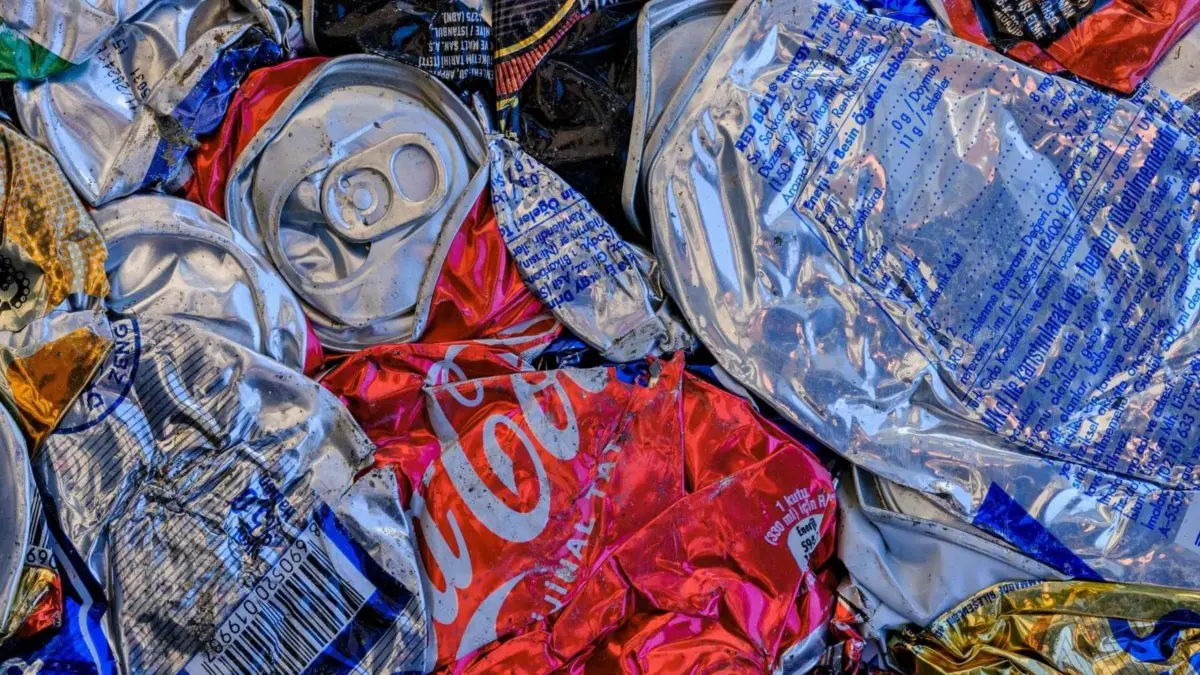
ANNAPOLIS, Md. — In an aggressive push to curb soaring landfill waste and combat the invisible yet devastating ecological footprints of metal production, the Maryland Department of the Environment (MDE) has officially relaunched its statewide aluminum recycling campaign. Centered around the observance of "Crush a Can Day"—celebrated annually on September 27th—the renewed initiative serves as a stark wake-up call for residents regarding the infinite recyclability of aluminum versus its staggering persistence in natural ecosystems.
State environmental officials are leveraging the awareness day to highlight a compelling paradox: while an aluminum can tossed into a recycling bin can be processed, remanufactured, and back on supermarket shelves as a brand-new container in a mere 60 days, one left to languish in a municipal landfill can take up to 500 years to degrade entirely. Along the way, it leaches heavy metals and occupies finite space, representing a monumental squandering of resources that Maryland can no longer afford to ignore.
Main Facts: The Infinite Cycle and the Local Deficit
The core message of Maryland’s renewed campaign centers on the closed-loop nature of aluminum. Unlike plastics, which typically degrade in quality each time they are processed—a process known as downcycling—aluminum can be recycled infinitely without any degradation of its mechanical properties.
However, despite these remarkable properties, Maryland’s local metrics tell a troubling story. According to the state’s most recent comprehensive recycling report released in 2024, Maryland’s aluminum recycling rate languishes at a meager 21%. This falls drastically short of the national average of 45%, leaving the state trailing behind broader environmental benchmarks.
To bridge this wide gap, state officials are echoing a broader national target: achieving a 70% aluminum recycling rate nationwide by the year 2030. To motivate the public, the MDE is sharing startling energy-saving equivalencies. For instance, recycling just a single aluminum can saves enough energy to power a 45-inch television for several hours. On a national scale, the wasted aluminum sitting in American landfills translates into a catastrophic loss of power—enough, according to energy audits, to supply 1.5 million American homes with electricity for an entire year.
Chronology: From Grassroots Awareness to Industrial Processing
The push for better metal stewardship in Maryland is built upon a structured timeline of awareness, collection, and industrial transformation.
- The Grassroots Spark (Late September): The campaign kicks off each year around September 27th with "Crush a Can Day." Designed as an interactive educational touchpoint for adults and children alike, this day encourages communities to rethink their daily habits. While mechanical crushing is not strictly required by all modern municipal recycling facilities—as automated sorting machines at material recovery facilities (MRFs) can easily sort whole cans—crushing cans at home serves a vital practical purpose: saving precious space in residential recycling bins.
- Collection and Aggregation: Once residents place their clean, empty cans into designated recycling bins, municipal fleets collect the material and transport it to local transfer stations. Here, the aluminum is sorted, cleaned of remaining residues, and mechanically compacted into colossal, densely packed industrial cubes.
- The Industrial Rebirth: These massive cubes are shipped directly to specialized metal foundries and recycling plants. At these facilities, the aluminum is shredded, melted down in high-temperature furnaces, and cast into new sheets of metal. Within just two months of being discarded in a bin, that aluminum re-emerges as a pristine beverage can ready to be refilled, dramatically compressing production timelines and eliminating the need for virgin mining.
Supporting Data: The Scale of Waste and Energy Inefficiency
The statistics driving Maryland’s campaign underscore a systemic national crisis regarding resource management. Across the United States, landfills continue to accumulate more than 1 billion pounds of discarded aluminum every single year. This astronomical figure translates to roughly 32 billion individual cans discarded annually, representing a multi-billion-dollar loss in recoverable raw materials and embedded energy.
The economic and ecological arithmetic behind aluminum production heavily favors recycling:
- 95% Energy Reduction: Manufacturing new aluminum from recycled scrap material consumes up to 95% less energy than producing primary aluminum from raw bauxite ore.
- 40% Waste Diversion Goal: Maryland as a whole has achieved an impressive overall solid waste diversion rate of 40%, but state environmental regulators emphasize that specific material streams—particularly metals—require targeted interventions to pull them out of general waste bins.
- Household Preparation: To optimize the industrial sorting process, environmental agencies urge households to rinse their cans and, whenever possible, remove paper or plastic labels before tossing them into the bin. This simple preparatory step reduces contaminants at the foundry level and accelerates the melting process.
Official Responses: Insights from the Maryland Department of the Environment and the EPA
The push for localized reform is heavily backed by federal data concerning the upstream damage caused by the extraction of raw materials. According to the United States Environmental Protection Agency (EPA), the conventional mining of bauxite—the primary ore used to create virgin aluminum—relies heavily on destructive open-pit mining techniques.
In official statements, federal and state regulators have laid bare the hidden environmental costs of bypassing recycling:
"The extraction of bauxite is a primary vector of environmental degradation in mining regions," noted an EPA ecological impact summary. "It causes severe soil erosion, eradicates native vegetation across vast swathes of land, and disrupts fragile regional watersheds long before the metal ever reaches a consumer’s hand."
Furthermore, the chemical processing required to refine virgin aluminum releases dangerous perfluorocarbon (PFC) compounds into the atmosphere. Belonging to the broader family of per- and polyfluoroalkyl substances (PFAS), these potent greenhouse gases can be up to 92,000 times more damaging to the global climate system than an equivalent molecule of carbon dioxide ($textCO_2$). These industrial emissions inflict direct damage on the air quality of manufacturing regions across the United States, reinforcing the argument that utilizing scrap metal is not merely a waste management choice, but an urgent climate imperative.
Implications: Building a Circular Economy in the Mid-Atlantic
The implications of Maryland’s refreshed recycling campaign extend far beyond local cleanliness or landfill capacity; they represent a fundamental pivot toward a circular economy. By addressing the state’s sluggish 21% aluminum recovery rate, Maryland is positioning itself as a regional leader in industrial decarbonization.
If the state successfully mobilizes its population to meet or exceed the national 45% average—and eventually scale toward the 2030 national target of 70%—the cumulative environmental benefits will be profound. Reduced reliance on virgin bauxite mining means less ecosystem fragmentation, lower regional water table contamination, and a sharp curtailment in the release of climate-warming perfluorocarbon emissions.
For the everyday consumer in Maryland, the call to action is clear and immediate. Whether participating in "Crush a Can Day" educational workshops, ensuring that beverage containers are rinsed and separated at home, or simply spreading awareness about the 60-day lifecycle of a recycled can, every individual choice ripples outward. As state environmental agencies ramp up inspections, public service announcements, and community outreach, Maryland is betting that local action can help solve a global crisis—one crushed can at a time.




Leave a Reply