

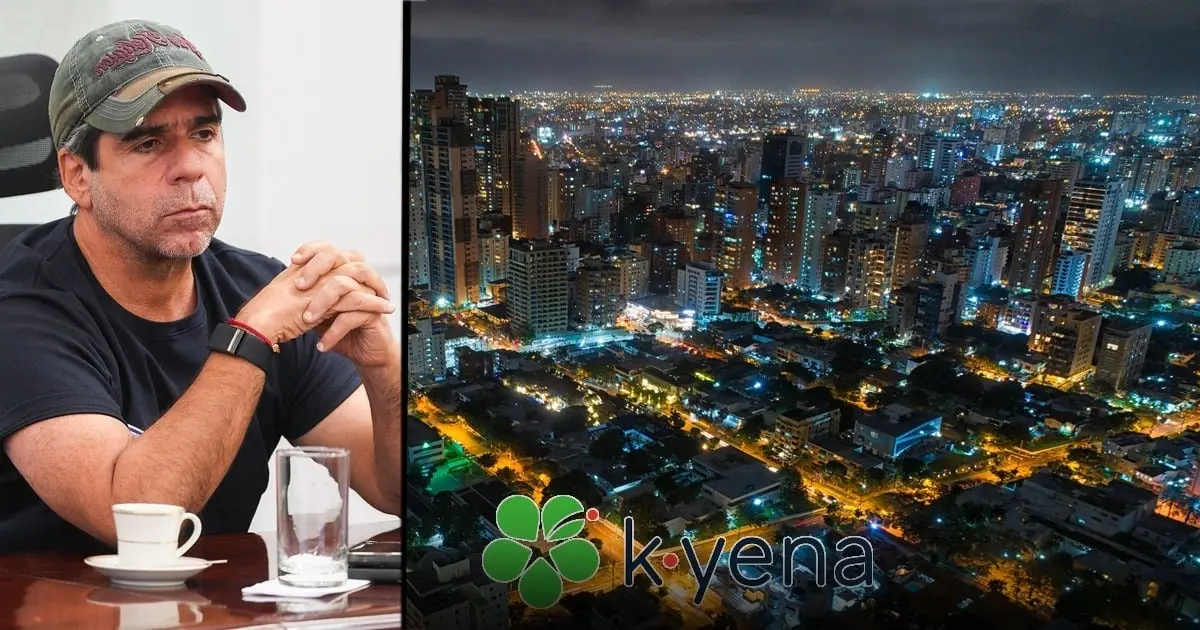
BARRANQUILLA — In a move designed to bridge the digital divide in Colombia’s Caribbean hub, the District of Barranquilla, under the leadership of Mayor Alejandro Char, has awarded a lucrative mixed-economy contract valued between 48,000 and 50,000 million pesos. The agreement tasks the public-private partnership (PPP) company K-Yena with managing, designing, and implementing the ambitious municipal initiative known as Internet con Propósito (Internet with Purpose).
The contract aims to modernize the city’s technological infrastructure by delivering free high-speed fiber-optic internet—offering speeds of up to 50 megabits per second—to 25,000 low-income households in strata 1 and 2. While the social objective of the program has been widely touted by local administration officials as a transformative leap forward for digital equity, the award has simultaneously thrust the complex web of municipal contracting, private utility monopolies, and generational wealth into the national spotlight.
At the center of the controversy and discussion is K-Yena’s corporate composition, which links powerful corporate conglomerates, historical local elites, and the heirs of one of Colombia’s most formidable infrastructure magnates: the late William Vélez.
1. Main Facts: The K-Yena Contract and "Internet con Propósito"
The core of the newly minted agreement centers on digital transformation, but its operational mechanism relies on an entrenched corporate vehicle. K-Yena operates as a mixed-economy society (sociedad de economía mixta), a hybrid business model where public entities and private investors share capital, risk, and operational control.
The private stakeholder within K-Yena is Barranquilla Capital de Luz (formerly known as Alumbrado Público de Barranquilla), which holds a strategic 35% stake in the enterprise. This private-public entity is tasked with operating, modernizing, and administering not only the municipal street lighting system and solar energy projects, but now, the expansive municipal telecommunications rollout.

Barranquilla Capital de Luz itself is a heavy-hitting consortium comprised of several powerhouse firms in the Colombian energy and infrastructure sectors:
- Eléctricas de Medellín
- Alutrafic Led
- Megaproyectos de Iluminación
- Iluminación de Villavicencio
- Celsia
Through the Internet con Propósito initiative, K-Yena will deploy its technical capabilities to wire vulnerable neighborhoods that have historically suffered from digital exclusion. However, analysts note that this telecommunications contract is merely the latest in a long line of massive, high-value projects funneled through the same corporate apparatus.
2. Chronology: From Streetlights to Fiber Optics — A History of Concessions
To understand the weight of the K-Yena contract, it is necessary to examine the evolution of Barranquilla’s public lighting and energy concessions over the last three decades.
- The 1990s—Establishment of the Concession: For nearly thirty years, the entity responsible for public lighting in the capital of the Atlántico department maintained an ironclad monopoly over infrastructure management and the associated tax collections in the region.
- 2021—The Green Transition Pivot: During the mayoral administration of Jaime Pumarejo (a close political ally of the Char family), the municipal government awarded K-Yena a direct-contracting agreement valued at a staggering 354,000 million pesos. This mandate was designed to accelerate the city’s energy transition, leading to the modernization of 75,000 urban streetlights and the installation of solar photovoltaic systems across public schools and government buildings.
- 2022—Corporate Realignment: Christian and José Manuel Daes—prominent industrialists and founders of Tecnoglass—previously held an indirect stake in Alumbrado Público de Barranquilla via Barranquilla Capital de Luz. However, in 2022, the Daes brothers restructured their holdings, famously donating their shares in the Triple A subsidiary back to the District, altering the local balance of private corporate influence.
- The Present Day: With the Daes family stepping back from certain direct utility matrices, other corporate giants have consolidated their positions. K-Yena has successfully transitioned from lighting and solar energy into digital infrastructure, securing the 50-billion-peso Internet con Propósito contract under Mayor Alex Char’s current term.
3. Supporting Data: The Industrial Ecosystem and the Vélez Legacy
The corporate architecture behind K-Yena is deeply intertwined with the legacy of William Vélez, one of Colombia’s most influential and prolific contractors of public services. Before his passing, Vélez built an expansive business empire that captured lucrative sanitation, energy, and infrastructure concessions across multiple departments.
The Ethuss Conglomerate and Allied Firms
Vélez anchored his regional power through strategic alliances with local public entities, ultimately founding the Ethuss Group, a massive corporate conglomerate spanning civil works, waste management, and energy distribution. Key components of this ecosystem include:

- Eléctricas de Medellín: Founded in 1969, this firm stands as a foundational pillar in electrical engineering, lighting, and power grid maintenance in Colombia.
- Interaseo: Established in 1996, Interaseo became the crown jewel of Vélez’s waste management operations. The company currently manages solid waste collection, sweeping, and sanitary landfills in major Colombian cities, including Valledupar, Ibagué, Pereira, San Andrés, and Riohacha.
Following the death of the patriarch, the Vélez family has not relinquished its grip on these strategic assets. Instead, the heirs have seamlessly assumed management of these corporate participations, maintaining active representation and operational continuity within high-level mixed societies like K-Yena.
4. Official Responses and Institutional Justifications
The District of Barranquilla has defended the contractual framework surrounding K-Yena, emphasizing that mixed-economy societies allow the city to leverage private sector efficiency and capital to execute projects that would otherwise take decades to fund through traditional public budgeting.
Representatives from the Mayor’s Office argue that Internet con Propósito is structured under rigorous legal guidelines designed to guarantee transparency and direct benefit to marginalized populations. According to municipal communications, partnering with an established consortium like K-Yena eliminates bureaucratic delays, ensuring that technical deployment—such as laying fiber-optic cables and configuring high-speed nodes—adheres to strict private-sector execution timelines.
Furthermore, officials stress that the inclusion of clean-energy leaders like Celsia and historic engineering firms within the K-Yena ecosystem guarantees that the city’s technological leap is backed by proven logistical capacity. Proponents maintain that utilizing established municipal partners prevents the fragmentation of public works, creating a unified "smart city" grid where lighting, solar power, and digital connectivity operate under a synchronized administrative umbrella.
5. Implications: Monopoly Concerns and the Concentration of Public Contracting
Despite the official narrative of technological progress and social inclusion, the award of the 50-billion-peso contract has ignited debate among regional watchdogs, transparency advocates, and local political analysts.

The Concentration of Power
The primary concern centers on the continuous awarding of high-value public contracts to a tightly knit circle of corporate entities. Critics point out that whether the city is upgrading streetlights, installing solar panels, or rolling out municipal internet, the contracts repeatedly flow back to the same constellation of corporate stakeholders—namely, firms historically tied to industrial heavyweights and inherited family conglomerates like those of the late William Vélez.
By utilizing mixed-economy societies where private partners hold significant control (such as the 35% stake held by Barranquilla Capital de Luz), the administration creates long-term institutional inertia. This arrangement makes it difficult for new market competitors or smaller tech enterprises to break into the municipal procurement ecosystem.
Social Impact vs. Corporate Profit
While the promise of 50-megabit fiber-optic connections for 25,000 low-income households is an undeniably progressive social policy, civil society groups argue that the financial structures underpinning these concessions merit deeper public scrutiny. The blending of public funds with private corporate governance can sometimes obscure financial oversight, raising questions regarding profit margins, asset ownership, and long-term maintenance costs once the initial implementation phase concludes.
As Barranquilla continues its transformation into a self-styled Caribbean technology and energy hub, the K-Yena model serves as a case study in modern Colombian municipal governance. It highlights the profound efficiency of public-private partnerships in delivering rapid infrastructure, while simultaneously laying bare the enduring concentration of wealth and contracting power among the nation’s legacy business dynasties.