

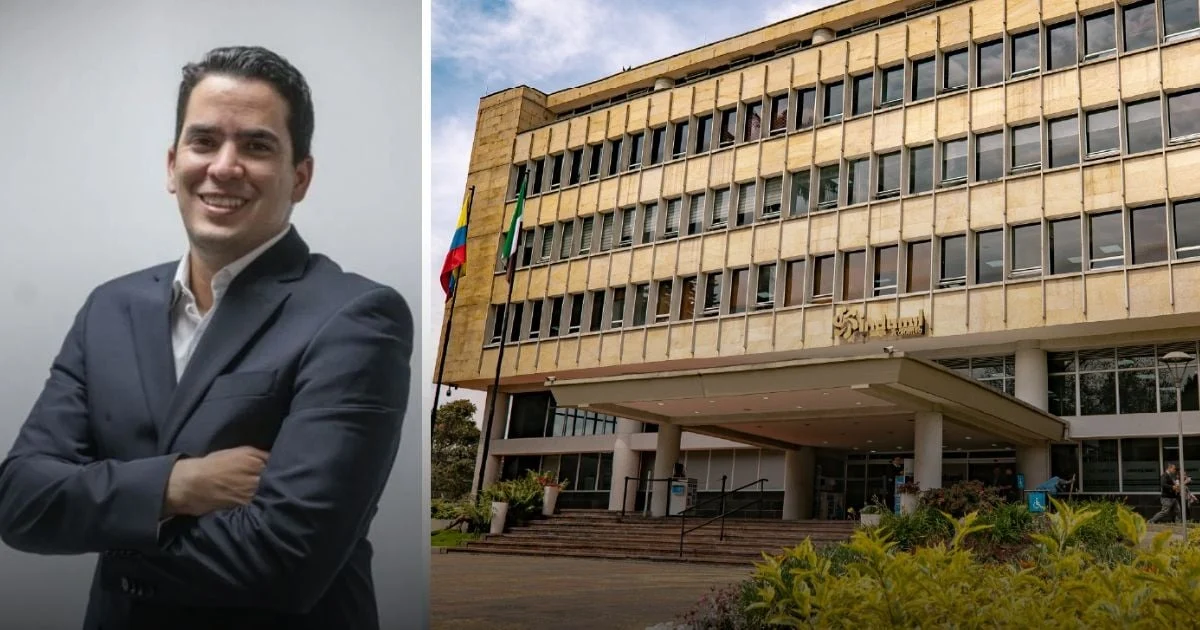
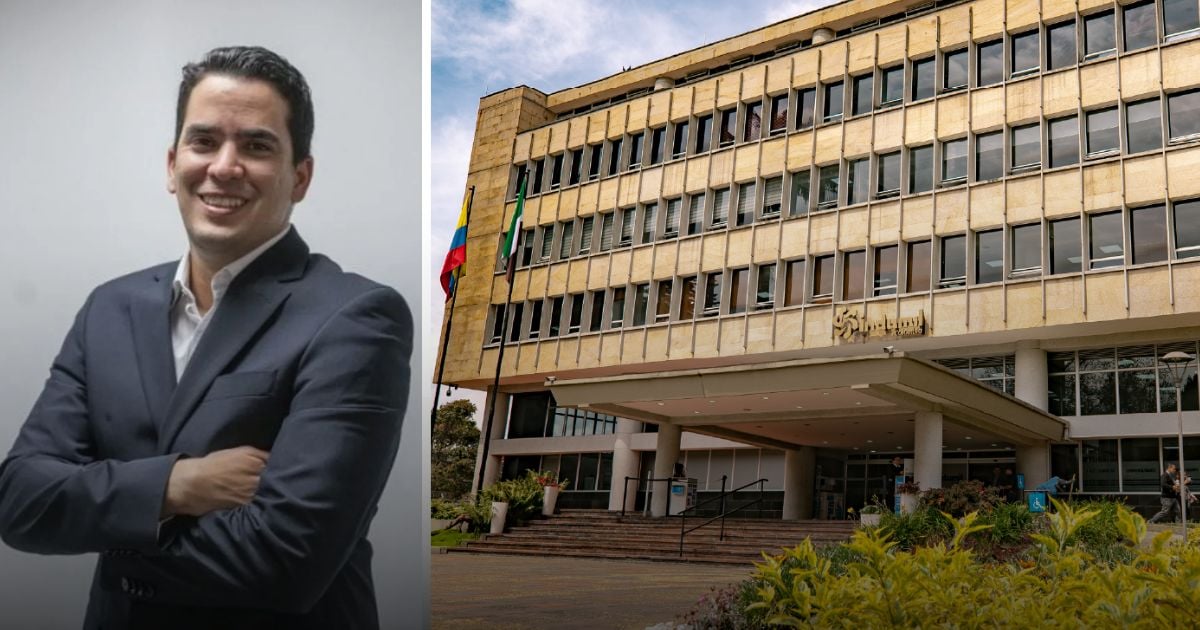
BOGOTÁ — In a move that signals a pronounced departure from traditional military leadership at the upper echelons of state-owned defense manufacturing, Lucas Eduardo Ariza has been officially appointed as the new president of Industria Militar (Indumil). The state enterprise is responsible for manufacturing and supplying weapons and ammunition to the nation’s Military Forces and the National Police.
Ariza, an administrator from the Universidad del Norte in Barranquilla holding a master’s degree in international marketing, assumes the presidency with a strong background in corporate management, logistics, and port administration. However, his résumé notably lacks any prior experience within the defense sector or the complex, highly regulated global arms manufacturing industry—a stark contrast to the military generals and defense specialists who have historically occupied the post.
The appointment comes at a critical juncture. As the administration pivots toward a security strategy that emphasizes stronger state enforcement and a concurrent relaxation of restrictions on civilian firearm permits, Indumil finds itself at the center of intense national debate. With looming logistical challenges, technological milestones, and policy shifts regarding civilian armament, Ariza’s tenure will test whether corporate management expertise can successfully navigate the heavily specialized and geopolitical realities of the defense sector.
Main Facts
The transition of leadership at Indumil involves several key structural and administrative elements:
- The New Appointee: Lucas Eduardo Ariza, a business administrator and international marketing specialist, takes over as president of Indumil. His appointment was formalized alongside that of Jorge Iván Gómez Bejarano through an executive decree.
- The Notification Channel: The official mandates require both Ariza and Gómez Bejarano to be formally notified through the Vice Ministry of Veterans and the Social Business Group of the Defense Sector (GSED).
- Core Business of Indumil: Indumil is the state monopoly responsible for producing and supplying small arms, ammunition, explosives, and related military hardware to the Colombian Armed Forces and National Police, while also managing regulatory aspects of domestic arms distribution.
- The Policy Shift: The appointment coincides with a significant executive decision to lift the general suspension on firearm carrying permits for civilians, shifting from a blanket restriction to a regulated system governed by new governmental directives.
- Technological Imperatives: Beyond meeting potential surges in domestic demand, Indumil’s new leadership must oversee the continued development of the "Jaguar" rifle—a homegrown military technology intended to eventually replace the iconic Galil rifle used by the security forces.
Chronology of Leadership and Policy Shifts
To understand the weight of Ariza’s appointment, it is necessary to examine the professional trajectory of the new president and the policy timeline leading up to this moment:
- 2019: Lucas Eduardo Ariza assumes the executive direction of Asoportuaria (the Association of Ports of the North Region of Colombia), where he spends years managing stakeholder relations, negotiating with industrial sectors, and reporting operational and financial metrics. Prior to this, his career included administrative stints at Cormagdalena (the Cormagdalena Corporation) and Colinagro.
- Recent Past: Successive administrations traditionally selected retired high-ranking military officers or engineers with deep technical backgrounds in ballistics, defense economics, and international defense procurement to lead Indumil. The selection of a civilian business administrator represents a calculated gamble by the current administration.
- Recent Presidential Declarations: President De la Espriella articulates a firm stance on security, emphasizing the deployment of military forces to decisively retake control of national territory. This doctrine elevates Indumil’s strategic importance as the primary supplier of munitions and tactical equipment.
- The Firearms Decree: The executive branch signs a decree lifting the blanket suspension on civilian firearm carry permits. Rather than maintaining an absolute restriction, the government establishes a framework where permits can once again be issued under specific, government-decreed guidelines.
- Present Day: The executive decree appointing Ariza and Gómez Bejarano takes immediate effect, thrusting a corporate administrator into an agency navigating simultaneous domestic security expansions, civilian arms debates, and technological transformation.
Supporting Data: The Industrial and Logistical Reality
Indumil is not merely a government bureau; it is a sprawling industrial conglomerate operating multiple factories across Colombia, producing everything from propellants and explosives to hand grenades and assault rifles. Managing this enterprise requires balancing fiscal accountability with sensitive international supply chains and strict legal frameworks.
The Civilian Arms Market and Demand Projections
The relaxation of the general suspension on civilian firearm permits fundamentally alters the domestic market dynamics. Under previous restrictions, the legal acquisition and carrying of firearms by private citizens faced near-insurmountable bureaucratic hurdles or outright bans.
With the new decree allowing permits under updated government parameters, security analysts project a measurable uptick in legal firearm purchases. As the sole legal manufacturer and importer-distributor of approved personal defense weapons and ammunition in the country, Indumil faces an immediate operational question: Can its production lines scale efficiently to meet a potential surge in civilian demand without compromising the steady supply required by the Military Forces and the National Police?
Technological Independence: The Galil Legacy and the Jaguar Project
One of the most pressing technical challenges awaiting Ariza on his desk involves Colombia’s sovereign military capabilities. For decades, the standard-issue assault rifle for the Colombian military has been the Galil, produced under license and heavily reliant on specialized metallurgical and mechanical inputs.
However, geopolitical shifts—including strained diplomatic relations and the cessation of certain defense cooperation agreements with key international partners like Israel—have complicated the maintenance and domestic production lifecycle of the Galil platform. Without uninterrupted access to specialized foreign components and technical assistance, maintaining the operational readiness of the national arsenal becomes increasingly difficult.

To counter this vulnerability, Indumil has been spearheading the development of the Jaguar rifle. Conceived entirely as a domestic technological alternative to replace the aging Galil inventory, the Jaguar represents the future of Colombian military self-sufficiency.
For a corporate administrator like Ariza, successfully shepherding the Jaguar project from its developmental stages into mass production and widespread institutional adoption by the Armed Forces will be the ultimate test of his tenure. The project requires delicate coordination between research and development teams, financial controllers, and military commanders who must validate the weapon’s battlefield efficacy.
Official Responses and Institutional Reactions
The appointment of a civilian business executive to head a defense manufacturing titan has generated diverse reactions across political, military, and industrial circles.
Proponents of the Corporate Model
Defenders of the administration’s decision argue that modern state enterprises—even those within the sensitive defense sector—benefit immensely from rigorous corporate governance, financial transparency, and modern management techniques.
Supporters point out that Ariza’s extensive background in port management (Asoportuaria), riverine logistics (Cormagdalena), and agricultural-industrial supply chains (Colinagro) has provided him with decades of experience in negotiating high-stakes contracts, managing large workforces, and delivering tangible performance results. In an era where Indumil must operate with fiscal efficiency while supplying state forces, proponents view a CEO focused on administrative excellence and operational optimization as a major asset.

Skeptics of Civilian Defense Leadership
Conversely, critics and retired military officials have expressed concern over the lack of specialized defense knowledge in the agency’s highest office. Historically, running Indumil demanded an intimate understanding of ballistics, international arms trafficking conventions, state-to-state military procurement, and the complex geopolitical dynamics governing defense technology transfers.
Skeptics argue that placing a civilian marketer and administrator at the helm during a time of heightened national security focus and shifting firearms policies risks a disconnect between corporate Key Performance Indicators (KPIs) and the harsh, tactical realities of military procurement. Furthermore, critics question whether a non-specialist can effectively arbitrate complex debates regarding civilian armament and the strategic redirection of state-manufactured weaponry.
Broader Implications for National Security and Defense Policy
The convergence of three major factors—a corporate-trained president at Indumil, an intensified governmental security doctrine, and the reopening of legal channels for civilian firearm ownership—carries profound implications for the country:
- Prioritizing Management Over Military Tradition: By passing over traditional military or engineering candidates in favor of a business administrator, the government is signaling that it views Indumil primarily through an economic and managerial lens. The expectation is that Ariza will streamline production, optimize supply chains, and run the state enterprise with corporate agility.
- Navigating the Civilian Arms Debate: As the state resumes the issuance of firearm carry permits, Indumil will inevitably be drawn into the sociopolitical crossfire regarding gun control, public safety, and private armament. The company’s commercial strategies must carefully balance market demand with strict regulatory compliance to prevent arms from leaking into unauthorized channels.
- The Imperative of Technological Autonomy: The success or failure of Ariza’s administration will be judged heavily on how effectively he manages strategic projects like the Jaguar rifle. Achieving technological independence from foreign suppliers is vital not only for national defense readiness but also for positioning Colombia as a competitive exporter of military hardware within the region.
As Lucas Eduardo Ariza steps into his new office, he inherits an institution steeped in military tradition yet tasked with modern economic execution. Whether his corporate background in marketing and business administration will prove sufficient to steer Indumil through an era of heightened security demands and technological reinvention remains one of the most closely watched developments in the nation’s defense sector.




Leave a Reply