

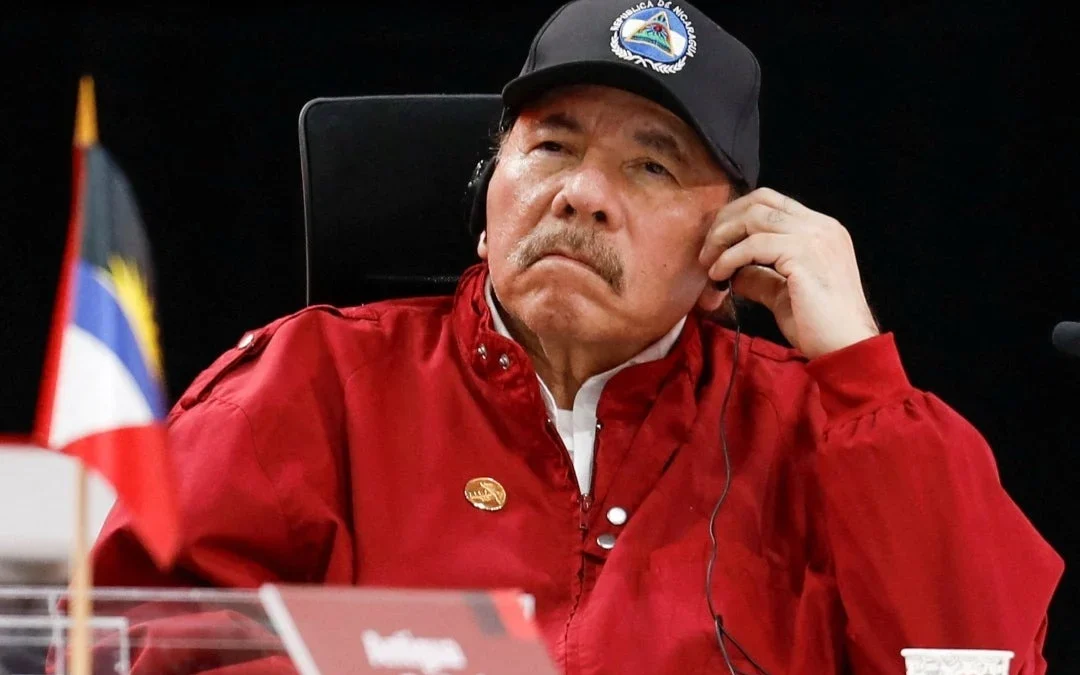
MANAGUA — In a move that further deepens its international and regional isolation, the government of Nicaragua has announced its immediate and unilateral withdrawal from the Central American Parliament (Parlacen). The decision, characterized by the administration of President Daniel Ortega as an assertion of national sovereignty, came in direct response to a stinging resolution from the Organization of American States (OAS) demanding the urgent restoration of public liberties, the release of political prisoners, and the return of democratic norms to the Central American nation.
The diplomatic rupture was formalized through an official communique issued by the Nicaraguan Ministry of Foreign Affairs (Cancillería) on Saturday afternoon. In the statement, Managua declared that it was "denouncing" the constitutive Treaty of Parlacen—originally signed in Guatemala on October 2, 1987—with "immediate effect."
This drastic step marks another milestone in the Ortega-Murillo administration’s systematic dismantling of its ties to multilateral bodies that monitor human rights and democratic governance.
Main Facts of the Diplomatic Rupture
The immediate catalyst for Nicaragua’s withdrawal was a consensus resolution passed by the foreign ministers of the Organization of American States (OAS). The resolution, which received no opposing votes from any Central American nation, urged the Nicaraguan executive branch—led by President Daniel Ortega and his wife, Vice President Rosario Murillo—to dismantle its repressive apparatus, restore fundamental civil liberties, release dozens of remaining political prisoners, and permit free, fair, and internationally supervised elections.
+-------------------------------------------------------------------------+
|                           KEY DEVELOPMENTS                              |
+-------------------------------------------------------------------------+
| • Nicaragua denounces the 1987 Parlacen Constitutive Treaty.            |
| • The withdrawal is declared to have "immediate effect."                |
| • Action follows an OAS consensus resolution demanding democratic reform.|
| • No Central American nations voted against the OAS resolution.         |
| • Ortega reaffirms ban on opposition "coup plotters" in elections.      |
+-------------------------------------------------------------------------+
Rather than addressing the international community’s concerns, the Nicaraguan Foreign Ministry chose to sever ties with Parlacen. In its official dispatch, the government stated it acted "in full exercise of its sovereignty," rejecting what it characterized as intolerable external interference in its domestic affairs.
Parlacen, based in Guatemala City, was established during the peace processes of the late 1980s to foster regional integration, dialogue, and democratic consolidation among Central American states. Nicaragua’s abrupt departure strikes a major blow to the institutional framework of Central American integration.
Chronology of the Nicaraguan Crisis (2018–Present)
To understand Nicaragua’s sudden exit from Parlacen, it is necessary to examine the multi-year political crisis that has reshaped the country’s domestic landscape and foreign policy.
  2018 (April)     -->   2021 (November)   -->   2023 (November)   -->   Present Day
  Mass protests          Controversial           Formal exit           Withdrawal from
  met with state         elections; opposition   from the OAS          Parlacen over
violence. candidates jailed. completed. democratic pressure.- April 2018: The Spark of Protest. The crisis began when student-led demonstrations erupted over proposed social security reforms. The protests quickly expanded into a nationwide movement demanding the resignation of Ortega and Murillo. The government responded with a heavy-handed crackdown, utilizing national police and armed pro-government paramilitary groups.
- Late 2018–2020: Consolidation of Control. Following the suppression of the street protests, the government systematically outlawed independent non-governmental organizations (NGOs), closed independent media outlets, and forced prominent journalists, activists, and business leaders into exile.
- June–November 2021: The Electoral Cleansing. In the lead-up to the November 2021 presidential elections, the Nicaraguan judiciary and police arrested seven leading opposition presidential pre-candidates, alongside dozens of civic leaders. Unsurprisingly, Ortega secured a fourth consecutive term in an election widely condemned by the international community as a sham.
- November 2021: Renouncing the OAS. In response to international condemnation of the 2021 elections, Nicaragua announced its formal withdrawal from the OAS. Under the organization’s charter, this process required a two-year transition period, which concluded in November 2023.
- July 2023: Ortega Rules Out Opposition Participation. During a public address, President Ortega declared that there would be no future elections in Nicaragua featuring "coup plotters" (golpistas), his preferred term for the political opposition and civic leaders who participated in the 2018 protests.
- Present Day: The Parlacen Exit. Following the latest OAS resolution demanding democratic reforms, the Nicaraguan government chose to preemptively exit Parlacen, signaling its refusal to engage in regional diplomatic dialogues regarding its internal human rights record.
Supporting Data and Statistical Context
The human and political toll of the Nicaraguan crisis since 2018 is documented by various international human rights bodies, including the Inter-American Commission on Human Rights (IACHR) and the United Nations High Commissioner for Human Rights (OHCHR).
Human Casualties and Displacement
- Fatalities: According to the IACHR, the state-sponsored crackdown on the 2018 protests resulted in at least 355 documented deaths, the majority of whom were young demonstrators and students.
- Injuries: More than 2,000 individuals sustained injuries during the clashes, with many denied medical treatment at public hospitals on government orders.
- Exile and Migration: The political climate and economic stagnation have triggered an unprecedented exodus. Over 600,000 Nicaraguans have fled the country since 2018, seeking asylum primarily in Costa Rica, the United States, and Spain. This represents nearly 10% of the nation’s total population.
Civic Space and Political Imprisonment
- Banned Organizations: Since 2018, the Nicaraguan National Assembly has canceled the legal status of more than 3,500 non-governmental organizations, including humanitarian groups, universities, religious orders, and private business associations.
- Political Prisoners: While the government released and stripped the nationality of 222 high-profile political prisoners in February 2023—deporting them to the United States—local human rights organizations report that dozens of individuals remain detained under highly restrictive conditions for political reasons.
Official Responses and Statements
The diplomatic fallout from the withdrawal has generated sharp exchanges between Managua and the broader international community.
The Nicaraguan Government
In its official communication, the Nicaraguan Foreign Ministry framed the withdrawal as an act of anti-imperialist defiance:
"The Government of Reconciliation and National Unity, in full exercise of its national sovereignty, denounces the Constitutive Treaty of the Central American Parliament. Nicaragua will not remain a party to regional bodies that serve as instruments for foreign interventionist agendas aimed at violating our self-determination."
President Daniel Ortega has repeatedly defended his administration’s hardline stance, asserting that the country’s electoral and political systems are closed to those who supported the 2018 civil unrest. "Here, there will be no elections for coup plotters, for those who sold out the homeland, or for those who seek to hand Nicaragua over to foreign powers," Ortega stated in his July address.
The Organization of American States (OAS)
The OAS resolution, which triggered Managua’s retaliation, was adopted by consensus during a general assembly. The document represents a rare moment of unified regional consensus regarding Nicaragua’s democratic backsliding. Notably, neighboring Central American governments—some of which have historically taken a cautious or neutral stance on Nicaragua—chose not to block the resolution.
The text of the resolution calls for:
- The immediate restoration of fundamental public freedoms, including freedom of expression, assembly, and association.
- The unconditional release of all political prisoners.
- The initiation of a transparent, inclusive dialogue to pave the way for credible, competitive, and observed electoral processes.
Geopolitical and Regional Implications
Nicaragua’s withdrawal from Parlacen is not merely a symbolic gesture; it carries significant geopolitical and legal ramifications for Central America.
+-----------------------------------------------------------------------------+
|                          GEOPOLITICAL FALLOUT                               |
+-----------------------------------------------------------------------------+
|                                                                             |
|  [Nicaragua] --- Severing ties ---> [Regional Integration Bodies]           |
|       |                                     |                               |
|       +--- Geopolitical Pivot ---> [Russia, China, Iran, Venezuela]         |
|                                                                             |
|  [Regional Impact]:                                                         |
|  • Weakens the Central American Integration System (SICA).                  |
|  • Sets a precedent of avoiding regional democratic accountability.         |
|  • Legal disputes over the validity of "immediate" treaty withdrawal.       |
+-----------------------------------------------------------------------------+
The Erosion of Central American Integration
Parlacen was designed to be the political forum of the Central American Integration System (SICA). By withdrawing, Nicaragua weakens the institutional cohesion of the region. This exit could paralyze joint regional initiatives on security, trade, migration, and environmental management, as SICA operates largely on consensus among its member states.
Legal Challenges to "Immediate Effect"
Diplomatic and legal experts have raised questions regarding the validity of Nicaragua’s "immediate" withdrawal. Historically, regional treaties of this nature do not permit instantaneous exit; they require structured transition periods to resolve budgetary, administrative, and legal obligations.
When Panama attempted to withdraw from Parlacen in 2009 under President Ricardo Martinelli, the Central American Court of Justice ruled the move unconstitutional and a violation of international law, forcing Panama to remain. A similar legal battle may emerge regarding Nicaragua’s status, though the Ortega administration has shown a consistent willingness to ignore international judicial rulings.
A Shift Toward Autocratic Alliances
By cutting ties with the OAS and Parlacen, the Nicaraguan government is effectively closing its remaining diplomatic channels with the Western Hemisphere. To compensate for this isolation, Managua has intensified its geopolitical alignment with non-Western autocratic states.
In recent years, Nicaragua has signed strategic cooperation agreements with China, expanded its military and economic ties with Russia, and deepened diplomatic relations with Iran and Venezuela. This realignment poses a challenge to U.S. and regional security policies in Central America, turning Nicaragua into a key strategic outpost for extra-regional powers.
Domestic Consequences for Nicaraguan Citizens
For the citizens of Nicaragua, the withdrawal represents the loss of another international avenue for human rights advocacy and political mediation. With the country now outside both the OAS and Parlacen, domestic opposition groups have fewer institutional levers to pressure the government.
As the Ortega-Murillo administration insulates itself further from external diplomatic pressure, analysts warn that the domestic political environment may become even more restrictive, with little prospect for peaceful democratic reform in the near future.


Leave a Reply