

LONDON — The global apparel industry is navigating a period of profound structural realignment. According to the latest annual industry valuation report by brand evaluation consultancy Brand Finance, the aggregate value of the world’s top 50 most valuable apparel brands contracted by 4% year-on-year, falling to $350.9 billion. This decline highlights the impact of persistent macroeconomic headwinds, high inflation, and shifting consumer behavior on discretionary spending worldwide.
The report reveals a highly polarized marketplace. While high-end French couture houses continue to command the highest valuations, they face significant downward pressure. Meanwhile, agile fast-fashion giants and functional, utility-driven basic wear brands are rapidly closing the gap. This polarization reflects a broader consumer trend: the search for either absolute exclusivity and investment-grade luxury, or high-value, functional everyday wear.
Main Facts: The New Hierarchy of Global Fashion
The latest Brand Finance ranking illustrates a shifting landscape where traditional luxury, athletic performance, and high-street retail coexist, though their financial trajectories are diverging:
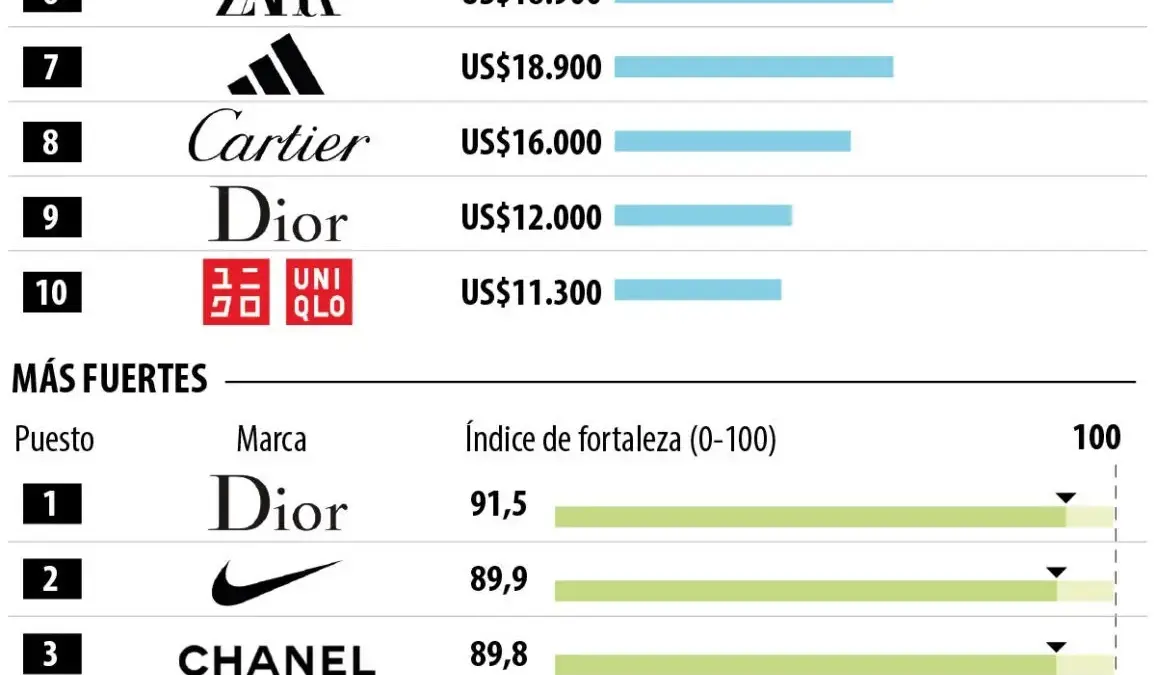
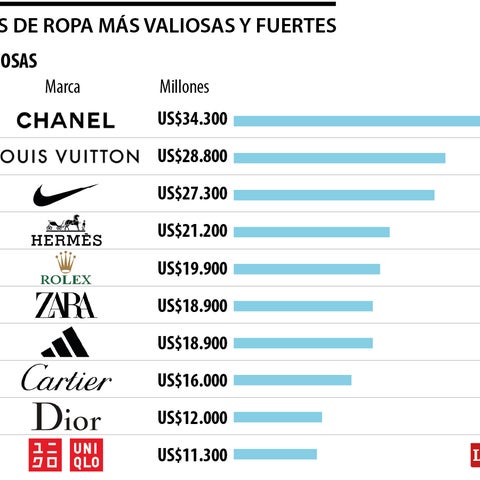
- Chanel Retains the Crown: For the second consecutive year, Chanel secured the top spot as the world’s most valuable apparel brand. Its brand valuation stands at $34.339 billion, despite a 9% decline compared to the previous year. Chanel maintains a commanding lead of nearly $6 billion over its closest competitor.
- Louis Vuitton Holds Second Place: The luxury powerhouse saw its brand value contract by 12%, landing at $28.814 billion. The brand has increasingly relied on its historical travel heritage while simultaneously leveraging high-profile sports sponsorships to attract new demographics.
- Nike Leads Sports Performance: Nike remains in third place globally with a valuation of $27.314 billion, representing a 7% year-on-year decrease. Despite the dip, Nike remains a dominant force, securing the second-highest Brand Strength Index (BSI) score in the entire sector.
- The Exclusivity Premium: Hermès ($21.171 billion) and Rolex ($19.859 billion) claimed the fourth and fifth positions, respectively. Both brands successfully leveraged artificial scarcity and waitlists to insulate themselves from broader market declines.
- Zara Overtakes Adidas: In one of the most notable shifts in the middle tier, Spanish fast-fashion giant Zara climbed to sixth place with a valuation of $18.946 billion, narrowly displacing German sportswear giant Adidas ($18.894 billion) by a margin of just $52 million.
- Dior Suffers Steepest Decline: French fashion house Dior experienced the most severe contraction within the top ten, with its brand value plummeting by 31% to $12.005 billion, dropping it to ninth place.
- Uniqlo Re-enters the Top Ten: Japanese basic-wear retailer Uniqlo climbed back into the top tier, demonstrating that affordable, high-quality, and technologically functional apparel remains highly resilient in a challenging economic climate.
Chronology: From Post-Pandemic Euphoria to the "Great Normalization"
To understand the current contraction in brand values, it is necessary to trace the economic developments of the past several years:
[2021–2022: Revenge Spending Era]
   ──> High growth; luxury brands raise prices aggressively.
[2023–2024: Macroeconomic Cool-off]
   ──> Rising interest rates & persistent inflation squeeze middle-class consumers.
[2025–2026: The Great Normalization]
   ──> Total Top 50 value drops 4% to $350.9B; consumers pivot to "investment" pieces or utility basics.
The Post-Pandemic Boom (2021–2022)
Following the lifting of global pandemic restrictions, the apparel sector—particularly luxury—experienced unprecedented growth. Driven by accumulated savings and "revenge spending," consumers rushed to purchase high-end goods. Brands capitalized on this demand by aggressively raising prices, which temporarily boosted revenues and brand valuations.
The Macroeconomic Cool-off (2023–2024)
As central banks raised interest rates to combat inflation, the economic environment shifted. Rising living costs began to squeeze aspirational luxury consumers—those who occasionally buy entry-level luxury items. Concurrently, economic growth slowed in mainland China, a critical growth engine for luxury fashion, leading to high inventory levels and a decline in retail foot traffic.
The Era of Consolidation and Realignment (2025–Present)
The current valuation decline of 4% represents a stabilization period, or "the great normalization." Brands can no longer rely solely on price increases to drive valuation growth. Instead, they must adapt to a consumer base that is increasingly selective, prioritizing either long-term investment pieces (such as watches and classic handbags) or highly functional, cost-effective everyday apparel.
Supporting Data: Brand-by-Brand Performance Metrics
The table below outlines the performance, valuations, and strategic positioning of the top ten most valuable apparel brands:
| Rank | Brand | Country of Origin | Brand Value (USD Billions) | Year-on-Year Change | Key Strategic Drivers |
|---|---|---|---|---|---|
| 1 | Chanel | France | $34.339 | -9% | Market strength in China, France, and the UK; creative momentum under artistic direction. |
| 2 | Louis Vuitton | France | $28.814 | -12% | Integration of heritage travel goods with pop culture and sports ambassador campaigns. |
| 3 | Nike | United States | $27.314 | -7% | Focus on elite athletic performance; high consumer loyalty (BSI score of 89.9/100). |
| 4 | Hermès | France | $21.171 | Highly Stable | Strict control over supply chain; multi-year waitlists for Birkin and Kelly bags. |
| 5 | Rolex | Switzerland | $19.859 | Highly Stable | Sole pure-play watchmaker in top five; strong secondary market value. |
| 6 | Zara | Spain | $18.946 | Positive Growth | Ultra-responsive supply chain; rapid translation of runway trends to retail. |
| 7 | Adidas | Germany | $18.894 | Marginal Decline | Focus on heritage lifestyle sneakers (Samba, Gazelle) and running tech. |
| 8 | Cartier | France | $16.019 | Positive Growth | High jewelry and watches increasingly viewed as hard-asset investments. |
| 9 | Dior | France | $12.005 | -31% | Steepest decline in top ten; high exposure to shifting aspirational consumer spend. |
| 10 | Uniqlo | Japan | Under $12.000 | Positive Growth | Re-entry to top ten; focus on technical fabrics (HeatTech, AIRism) and value. |
National Performance: France vs. United States
The geographical distribution of brand value highlights a clear division of labor in the global fashion economy.
Total Brand Value by Nation (Top 50)

France:        ██████████████████████████ $120.7B (8 Brands)
United States: ███████████████ $68.8B (12 Brands)
France remains the dominant force in terms of absolute financial value. The country boasts eight brands in the top 50, representing a combined valuation of $120.7 billion. However, this total reflects an 11% decline from the previous year, alongside the loss of one brand from the top 50. This contraction underlines the vulnerability of the luxury sector during broader economic downturns.
In contrast, the United States leads in terms of volume, placing 12 brands in the top 50 with a collective value of $68.8 billion. The U.S. footprint is heavily anchored in sportswear, denim, and accessible mass-market brands, which tend to see more stable, volume-driven demand during periods of economic uncertainty.
Analytical Framework: What Drives Brand Value in 2026?
Brand Finance calculates brand value using the Royalty Relief approach, a methodology that estimates the future sales attributable to a brand and calculates the royalty rate that would be charged for its use. A key component of this calculation is the Brand Strength Index (BSI), which evaluates marketing investment, stakeholder equity, and business performance.
The Power of Brand Loyalty: Nike’s BSI Resilience
Nike’s performance illustrates the importance of brand strength over pure short-term revenue. Despite a 7% decline in overall brand value to $27.314 billion, Nike achieved a Brand Strength Index score of 89.9 out of 100.
This high score is driven by strong consumer emotional connection and brand loyalty. Nike’s continuous investment in high-profile sports sponsorships, such as its prominent marketing campaigns during major global athletic events, helps maintain its top-of-mind status. This brand equity acts as a buffer, preventing steeper valuation declines during retail downturns.
The "Investment" Trend: Cartier and Rolex
In times of economic volatility, consumers often view luxury purchases through an investment lens. This trend has benefited brands like Rolex ($19.859 billion) and Cartier ($16.019 billion, up to eighth place).
Classic products like the Cartier Tank watch or the Love bracelet are increasingly viewed by consumers as stores of value rather than purely discretionary purchases. This shift in consumer perception has helped jewelry and horology brands maintain more stable valuations compared to fashion-forward apparel houses.
Strategic Implications: The Future of the Global Fashion Economy
The findings of the Brand Finance report suggest several key takeaways for the future of the global apparel industry:
1. The Squeeze on Mid-Market Brands
The divergence between fast-fashion giants like Zara and luxury brands like Chanel suggests that mid-market apparel brands—those offering neither absolute luxury nor low-cost utility—face the most challenging outlook. Consumers are increasingly bifurcating their spending: they either save on high-quality basics or invest in high-end luxury items, leaving mid-tier brands vulnerable.
2. Supply Chain Agility as a Competitive Moat
Zara’s rise to sixth place highlights the value of supply chain agility. By utilizing a nearshore production model and real-time data analytics, Zara can design, produce, and deliver new garments to stores within weeks. This minimizes inventory risk and allows the brand to respond rapidly to changing consumer trends, a key advantage in an unpredictable retail market.
3. The Growing Importance of Utility and Tech-Infused Fabrics
Uniqlo’s return to the top ten highlights a growing consumer preference for functional, technology-driven apparel. Proprietary fabric technologies such as HeatTech (retaining body heat without bulk) and AIRism (breathable, moisture-wicking fabric for warm weather) have allowed Uniqlo to build brand loyalty based on utility and comfort rather than fleeting fashion trends. This functional approach provides a more stable revenue base during economic downturns.
4. Re-evaluating the Luxury Pricing Strategy
The double-digit declines in brand value for major luxury houses like Louis Vuitton (-12%) and Dior (-31%) suggest that the luxury sector may have reached the limits of its pricing power. Aggressive price increases implemented over the past several years have begun to alienate aspirational buyers. Moving forward, luxury brands may need to focus more on product innovation, exclusive in-store experiences, and brand heritage to justify their premium pricing, rather than relying on simple price hikes.
As the apparel sector adapts to a more challenging global economy, the brands that maintain clear strategic positioning—whether through absolute exclusivity, technological utility, or supply chain efficiency—are best positioned to preserve and grow their brand equity in the years ahead.


Leave a Reply