

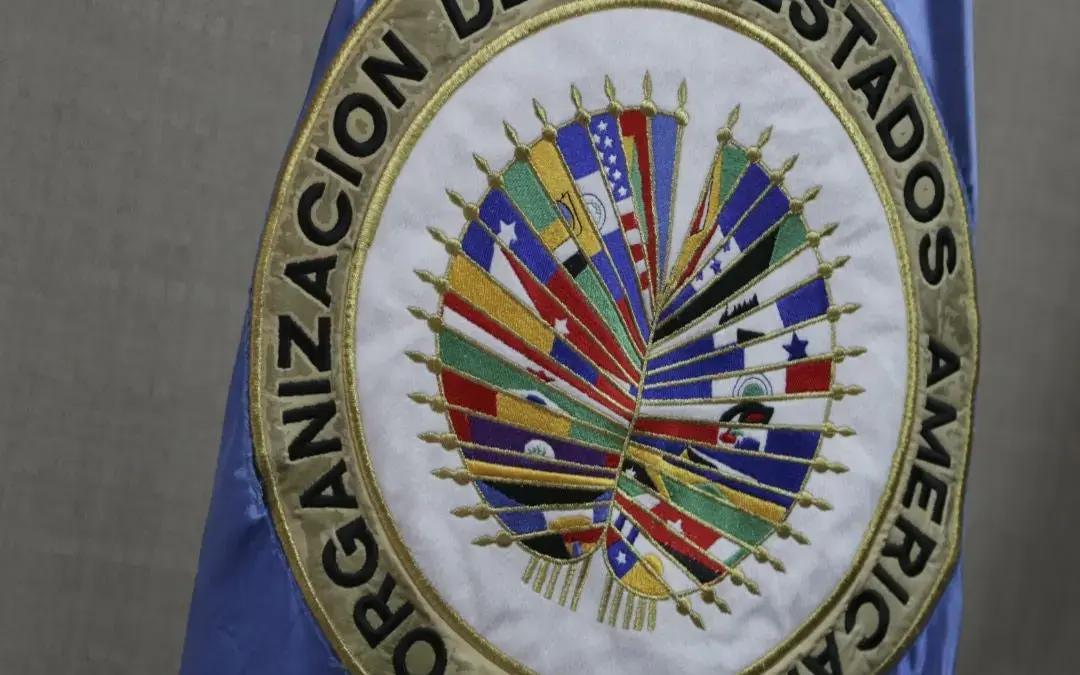
WASHINGTON, D.C. — In a decisive diplomatic move addressing the ongoing political crisis in Central America, the Organization of American States (OEA) has approved a comprehensive and sternly worded resolution demanding that the government of Nicaragua immediately cease its systematic dismantling of democratic institutions. The high-stakes diplomatic development unfolded during the XXXI Meeting of Consultation of Ministers of Foreign Affairs, held at the OEA headquarters in Washington, D.C.
The gathering served as an exclusive forum to evaluate, debate, and formulate a unified regional response to the deteriorating human rights and political landscape in Nicaragua under the administration of President Daniel Ortega. The finalized resolution not only condemns ongoing authoritarian practices but also establishes actionable mechanisms, including a dedicated ministerial monitoring group, designed to pressure Managua into compliance with international human rights standards.
Main Facts
The resolution passed by the OEA represents one of the most cohesive regional efforts in recent years to confront the Ortega administration. Central to the document is an explicit demand that the Nicaraguan government reverse its domestic policies, which the regional body characterizes as a systematic assault on democratic governance, civic space, and fundamental freedoms.
Key demands outlined in the OEA resolution include:
- Release of Political Prisoners: The immediate and unconditional release of all individuals detained for political reasons.
- Restoration of Nationality: The immediate annulment of measures that have stripped political dissidents, journalists, and human rights defenders of their Nicaraguan citizenship.
- Reestablishment of Civil Liberties: The full restoration of freedom of expression, freedom of the press, freedom of assembly, and religious freedoms.
- Electoral Reform: The creation of transparent, verifiable, and inclusive conditions necessary to hold free and fair democratic elections.
- Monitoring Mechanism: The establishment of an ad-hoc Ministerial Follow-Up Group tasked with facilitating dialogue between the Nicaraguan authorities and civil society actors to ensure compliance with the resolution’s objectives.
The diplomatic initiative was spearheaded and championed during the plenary sessions by Chilean representatives, reflecting Santiago’s active foreign policy stance on hemispheric human rights issues. The session drew high-level diplomats, regional experts, and international observers to the American capital, underscoring the gravity with which the international community views the ongoing crisis in Managua.
Chronology of Events: The Path to the XXXI Meeting of Consultation
To fully understand the weight of the OEA’s recent resolution, it is essential to trace the escalation of political turmoil in Nicaragua over the past decade, culminating in this extraordinary ministerial summit.
2018–2019: The Social Explosion and State Crackdown
The current deep-seated political crisis ignited in April 2018, when widespread protests erupted against proposed social security reforms. The demonstrations quickly broadened into a nationwide movement demanding the resignation of President Daniel Ortega and Vice President Rosario Murillo. The government’s response was swift and severe, utilizing police forces and pro-government paramilitary groups to suppress the protests. According to reports from the Inter-American Commission on Human Rights (CIDH), hundreds of people were killed, thousands injured, and tens of thousands forced into exile, marking a profound turning point in Nicaragua’s modern history.
2020–2021: The Pre-Electoral Purge and Suppression of Dissent
As Nicaragua approached the November 2021 general elections, the Ortega administration systematically neutralized political opposition. Between May and June 2021, authorities arrested nearly 40 opposition leaders, including prominent presidential hopefuls, student leaders, journalists, and business figures, under sweeping and widely criticized "treason" laws. These actions effectively eliminated any viable electoral competition, leading to widespread international condemnation and declarations that the subsequent electoral process lacked democratic legitimacy.
2022–2023: International Isolation and Stripping of Nationality
Following the contested 2021 elections, Nicaragua accelerated its diplomatic estrangement from the international system. In November 2021, the government officially announced its withdrawal from the OEA—a process that took two years to formalize due to procedural requirements. Concurrently, the domestic crackdown intensified. In early 2023, the Nicaraguan judicial system stripped 317 political opponents, writers, human rights defenders, and religious figures of their citizenship, declaring them "traitors to the homeland" and confiscating their personal assets.
2024: The Convening of the XXXI Meeting of Consultation
Recognizing the deepening humanitarian and political emergency, member states within the OEA framework utilized diplomatic channels to convene the XXXI Meeting of Consultation of Ministers of Foreign Affairs. Designed specifically to address exceptional and urgent threats to democratic order in the hemisphere, this meeting served as the launchpad for the consensus-driven resolution championed by Chile and supported by a broad coalition of member states.
Supporting Data and Institutional Assessments
The diplomatic consensus achieved in Washington D.C. was informed by extensive documentation compiled by regional human rights bodies, independent monitors, and civil society organizations. These reports paint a stark statistical portrait of a nation experiencing an unprecedented civic shutdown.
According to data presented by the Inter-American Commission on Human Rights (CIDH) and its specialized monitoring mechanisms:
- Civic Space Eradication: Over 3,000 non-governmental organizations (NGOs), civil society groups, human rights foundations, and academic institutions have had their legal status revoked and their properties seized by the state since 2018. This includes historic cultural institutions, medical associations, and international humanitarian agencies.
- Forced Displacement: Independent demographic and human rights estimates suggest that upwards of 600,000 Nicaraguans have fled the country since the 2018 protests began, seeking refuge primarily in neighboring Costa Rica, the United States, and Spain. This exodus represents a severe "brain drain," draining the country of medical professionals, educators, legal experts, and journalists.
- Freedom of the Press: Independent journalism has been virtually criminalized inside Nicaragua. Major media outlets, including the iconic La Prensa newspaper and television stations critical of the administration, have been raided and expropriated. Dozens of journalists have been forced into exile, while those remaining face severe legal persecution for reporting on government corruption or human rights abuses.
- Judicial Independence: International legal observers have repeatedly noted the complete lack of judicial independence in Nicaragua, where the judiciary functions as an extension of the executive branch, routinely issuing politically motivated sentences against dissidents without adhering to due process guarantees.
Official Responses and Diplomatic Perspectives
The adoption of the OEA resolution elicited strong reactions from regional leaders, diplomats, and human rights advocates gathered in Washington D.C.
Chile’s Diplomatic Leadership
Representing Chile at the summit, Undersecretary of Foreign Affairs Patricio Torres delivered a compelling address that underscored his country’s historic commitment to democracy and human rights. Torres framed the resolution not as an act of intervention, but as an essential regional duty to protect fundamental freedoms.
"Exhortamos a las autoridades nicaragüenses a acoger la oportunidad de diálogo que ofrece esta resolución y a trabajar con la comunidad internacional para avanzar hacia el restablecimiento de la institucionalidad democrática," stated Undersecretary Torres during his formal intervention before the plenary.
Torres emphasized that Latin America and the Caribbean cannot remain indifferent while democratic norms are systematically dismantled within the inter-American system. He urged Managua to view the newly established Ministerial Follow-Up Group as a constructive bridge rather than an adversarial mechanism.
The Inter-American Human Rights System Speaks Out
The Special Rapporteur for Nicaragua of the Inter-American Commission on Human Rights (CIDH), Rosa María Payá, also voiced unequivocal support for the OEA resolution. Payá praised the international community for maintaining solidarity with the Nicaraguan people and keeping the spotlight on ongoing abuses.
"This resolution is a vital step toward accountability and regional solidarity," Payá noted following the vote. "The systematic dismantling of democracy, the arbitrary deprivation of nationality, and the criminalization of dissent cannot be normalized by the international community. We stand resolute in our mission to accompany the victims and ensure that justice ultimately prevails in Nicaragua."
The Response from Managua
To date, the government of President Daniel Ortega has largely dismissed external pressure from the OEA, reiterating its stance that such resolutions constitute an infringement on national sovereignty and internal affairs. Historically, the administration has characterized regional bodies as instruments of United States foreign policy. Observers note that while the immediate compliance of the Ortega-Murillo regime with the resolution’s demands appears unlikely in the short term, the diplomatic pressure exerts sustained financial, political, and reputational costs on the government.
Implications and Future Outlook
The passage of the XXXI Meeting of Consultation resolution carries profound implications for the geopolitical landscape of the Americas and the future of democratic governance in Central America.
1. Strengthening Regional Multilateralism
By successfully forging a unified stance among diverse member states, the OEA has demonstrated its ongoing relevance as a forum for collective action in defense of the Inter-American Democratic Charter. Despite internal political divisions and institutional challenges, the organization has signaled that gross violations of democratic norms will continue to face formal diplomatic censure.
2. The Role of the Ministerial Follow-Up Group
The creation of the ad-hoc Ministerial Follow-Up Group introduces a proactive diplomatic architecture. Unlike static declarations, this committee is mandated to maintain active channels of communication with both regional stakeholders and domestic Nicaraguan civil society actors in exile. By bridging the gap between displaced civic leaders and international policymakers, the group aims to keep policy recommendations actionable and ready for implementation should political dynamics shift within Nicaragua.
3. Sustaining International Visibility
For thousands of political exiles, human rights defenders, and families of political prisoners, the OEA resolution provides a crucial morale boost and ensures that the plight of Nicaragua remains on the global agenda. In an era marked by competing international crises—ranging from conflicts in Eastern Europe and the Middle East to severe economic pressures globally—maintaining institutional focus on Central America is critical to preventing the institutionalization of authoritarian rule from becoming normalized.
As the international community monitors the implementation of the resolution’s mandates, the eyes of the hemisphere remain fixed on Managua, where the ultimate resolution of the crisis will depend on internal resilience, continued regional solidarity, and an eventual return to democratic norms.


Leave a Reply