


BOGOTÁ, COLOMBIA — In a sweeping escalation of the nation’s security policy, the Colombian government has executed a high-stakes, coordinated transfer of 120 high-profile inmates from the Pacific port district of Buenaventura to maximum-security prisons scattered across the country.
The decisive move, spearheaded by the administration of President Abelardo de la Espriella and executed by the National Penitentiary and Prison Institute (INPEC), marks a critical milestone in an aggressive state campaign to dismantle criminal networks that have long operated with impunity from behind prison walls. The operation directly followed the high-profile capture of Jonathan Orobio, alias "Menor," a feared regional kingpin whose arrest laid bare the persistent nexus between incarcerated cartel leaders and ongoing street-level violence.
As the state seeks to wrest territorial control back from armed factions in key strategic corridors, this latest crackdown highlights a broader, uncompromising penal strategy aimed at severing the communication lines of criminal masterminds and choking off the financial lifeblood of urban extortion networks.
1. Main Facts
The logistics of the operation unfolded rapidly following explicit directives from the executive branch. On September 19, INPEC completed the transfer of 120 individuals deprived of their liberty from detention facilities in Buenaventura. These inmates, categorized as high-risk actors linked to powerful criminal structures, were dispersed to various maximum-security facilities nationwide where communication restrictions are exponentially tighter.
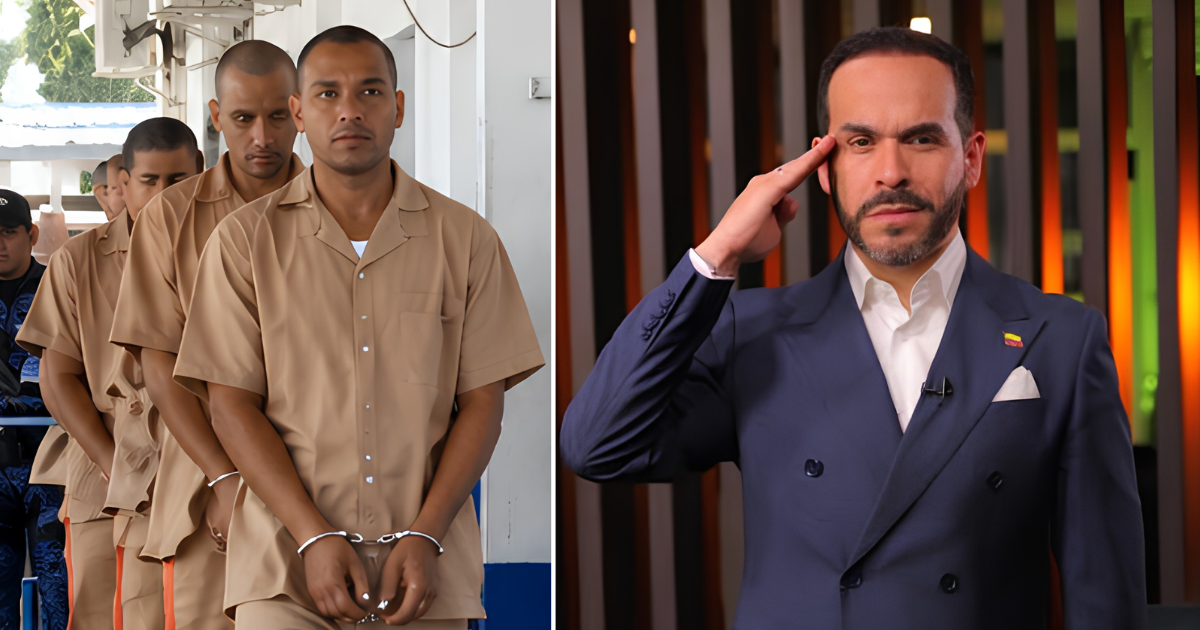
The core objective of the state intervention is twofold:
- To neutralize the command-and-control capabilities of imprisoned syndicate leaders who continue to orchestrate urban warfare, contract killings, and systematic extortion rings from their cells.
- To restore institutional authority in Buenaventura—Colombia’s primary maritime gateway—which has historically suffered from intense territorial disputes between rival criminal factions vying for drug-trafficking routes and local rackets.
President De la Espriella framed the operation through social media and official channels with characteristic directness, declaring that "contemplation and coddling of criminality have ended in Colombia." By isolating these key operatives in maximum-security isolation, the government aims to degrade the operational continuity of syndicates that treat regional correctional facilities as executive boardrooms for illicit enterprises.
2. Chronology of Events
The sequence of events leading up to the September 19 prison transfers reveals a meticulously planned security sweep designed to decapitate regional criminal leadership before neutralizing their secondary echelons:
- Mid-September (The Intelligence Phase): State security forces finalize a comprehensive intelligence matrix identifying key nodes of coordination between imprisoned gang leaders in Buenaventura and active cell structures on the streets.
- September 15 (Operation Poseidon): In a major blow to local syndicates, the National Police execute "Operation Poseidon" in Comuna 10 of Buenaventura. They capture Jonathan Orobio, alias "Menor," identified as the zonal kingpin of the criminal organization known as Los Chiquillos. Authorities note that Menor possessed a 12-year criminal trajectory, seven judicial records, and an active arrest warrant for aggravated homicide.
- September 15 (The Presidential Directive): Directly following the capture of alias "Menor" during a presidential visit to the port city, President De la Espriella issues a public and immediate order to INPEC Director Colonel Daniel Gutiérrez. The mandate: prepare the immediate extraction and dispersal of 120 high-risk inmates from Buenaventura’s local facilities.
- September 15–18 (Operational Preparations): INPEC, flanked by tactical units of the National Police and military escorts, establishes the logistical framework, security protocols, and destination routing for the clandestine transfer of the 120 prisoners.
- September 19 (Execution): The massive transfer operation is successfully executed. Video footage and official statements confirm the departure of the inmates under heavy guard, marking the physical implementation of the government’s zero-tolerance penal policy.
3. Supporting Data and Broader Context
The Buenaventura intervention does not occur in a vacuum; rather, it represents the latest chapter in a systematic nationwide restructuring of the correctional system’s high-security protocols under the current administration.

The government’s prison-clearing strategy has steadily gathered momentum over recent months:
- The Itagüí Precedent: In August, a major operation saw 117 high-profile inmates moved out of the notorious Itagüí prison in Antioquia to disparate maximum-security facilities across Colombia. Of that total, 103 were pulled directly from the Antioquian facility, stripping long-term bosses of their local patronage networks and physical comfort zones.
- The Barranquilla Front: Parallel operations have been conducted out of the Caribbean coastal city of Barranquilla, where intelligence reports flagged similar patterns of incarcerated bosses running transnational extortion rings, coordinating targeted hits, and managing regional drug distribution via contraband cellular devices.
When combined with the latest movement of 120 prisoners from Buenaventura, the administration’s strategy demonstrates a systemic refusal to allow regional prisons to function as safe havens for transnational organized crime. By systematically rotating and isolating high-profile prisoners, the state aims to break the entrenched psychological and operational control these figures hold over local street gangs.
4. Official Responses
The government’s hardline approach has drawn varied reactions from political figures, security analysts, and civil society, illuminating the deep-seated complexities of managing crime in Colombia’s conflict-affected zones.
The Executive Position:
President De la Espriella and his security cabinet have positioned the transfers as an indispensable act of state sovereignty. In statements broadcast across national media, the administration has insisted that peace cannot be negotiated while criminal kingpins retain the capacity to terrorize cities from the relative comfort of standard detention centers. By cutting off their communication conduits, the state seeks to level the playing field and protect civilian populations—particularly merchants and transport workers—from relentless extortion schemes.

Security and Penitentiary Officials:
Colonel Daniel Gutiérrez, heading INPEC, has emphasized the logistical rigor required to execute these operations safely. Security officials note that moving high-value targets carries inherent risks of ambushes or coordinated prison riots, necessitating unprecedented levels of inter-agency coordination between the military, national police, and prison guards.
Local and Academic Reception:
While local residents in Buenaventura have largely welcomed visible actions against figures like alias "Menor," human rights advocates and regional experts maintain a cautious stance. Analysts point out that while isolating kingpins disrupts short-term communications, structural issues—such as systemic poverty, lack of state presence, youth recruitment, and deep-seated corruption within local institutions—continue to fuel the cyclical rise of successor gangs like Los Chiquillos.
Furthermore, questions remain regarding the long-term capacity and human rights conditions within Colombia’s notoriously overcrowded maximum-security facilities, where overcrowding has historically served as a breeding ground for radicalization and structural prison corruption.
5. Implications for National Security and the Future of Public Order
The aggressive containment strategy adopted by the Colombian government carries profound implications for the future of domestic security, the penal system, and urban conflict management.

Disrupting the "Office" Model of Crime
For decades, Colombian criminal syndicates have relied on an institutionalized model where captured leaders maintain their status as active CEOs of their illicit enterprises from prison cells. Bribes, smuggled smartphones, and corrupt correctional personnel have traditionally rendered prison walls porous. By aggressively isolating these figures in dispersed maximum-security units and restricting visitation and communication rights, the state is actively attempting to break the "office" dynamic, forcing fragmented street gangs to operate without central, experienced coordination.
The Challenge of Decentralized Criminality
A critical test for the government’s current strategy is whether decapitating leadership and cutting communication channels leads to a permanent reduction in crime, or merely triggers a chaotic fragmentation of criminal groups. When top-tier bosses are locked away in isolation, junior commanders often engage violent internal power struggles to fill the vacuum, potentially sparking short-term spikes in localized homicides and extortion turf wars in cities like Buenaventura.
Institutional Reform and the Correctional Crisis
Ultimately, the success of these high-profile transfers will depend on sweeping institutional reforms within INPEC itself. Without purging corrupt elements from the prison guards and administrative staff who facilitate the entry of contraband communication tools, even the most secure maximum-security facilities risk being compromised.
As Colombia enters this new phase of security governance, the operation in Buenaventura stands as a clear message: the state is willing to deploy the full weight of its penal apparatus to reassert control. Whether this "iron fist" doctrine yields lasting peace in the country’s most volatile ports and cities will depend heavily on the state’s ability to follow up military and penal strikes with enduring social and economic investments.




Leave a Reply