

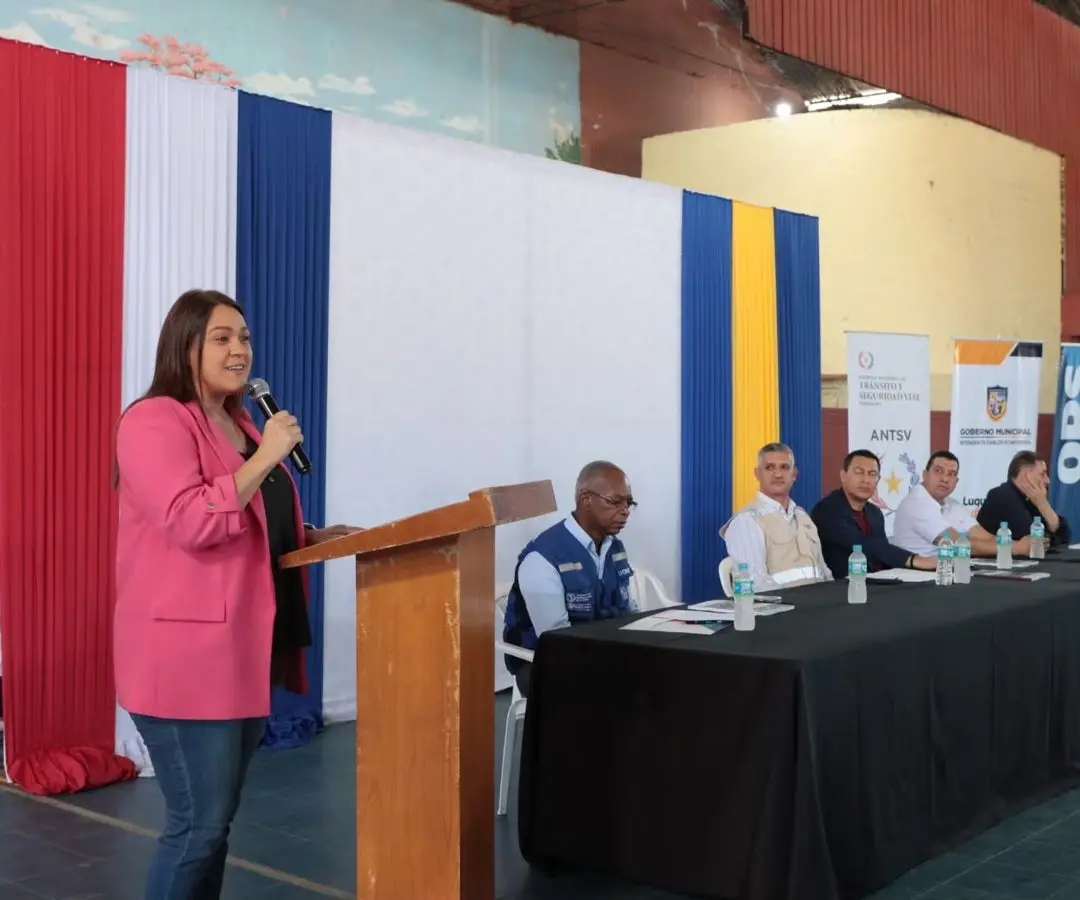
LUQUE, Paraguay — In a landmark development for public health and urban planning in South America, the bustling Paraguayan city of Luque has officially unveiled a comprehensive, data-driven Urban Road Safety Plan. This historic initiative establishes Luque as the first municipality in the entire country to institutionalize a holistic roadmap aimed at systematically reducing traffic collisions, mitigating fatalities, and fostering a culture of sustainable, secure mobility.
The strategy, developed through rigorous technical diagnostics, represents a paradigm shift from reactive traffic management to proactive, evidence-based urban design. By integrating infrastructure engineering, stringent enforcement, targeted community education, and optimized emergency response, Luque’s municipal administration is setting a new benchmark for road safety management that national urban planners hope will be replicated across Paraguay and the wider region.
Main Facts
The newly minted Urban Road Safety Plan for the city of Luque is built upon a multifaceted framework designed to tackle the systemic causes of traffic-related injuries and deaths.
- Pioneering Status: Luque stands alone as the inaugural municipality in Paraguay to adopt a dedicated, comprehensive Urban Road Safety Plan.
- Core Pillars: The strategy rests on five foundational pillars: infrastructure modernization, enhanced traffic control and enforcement, comprehensive road safety education, institutional coordination for emergency response, and targeted protection for vulnerable road users.
- Vulnerable Populations: Special emphasis is placed on safeguarding pedestrians, cyclists, and motorcyclists—demographics statistically proven to bear the brunt of traffic violence.
- Governance and Oversight: The initiative establishes a newly minted Municipal Road Safety Council, tasked with ensuring cross-institutional coordination and maintaining accountability during the implementation phase.
- Strategic Collaboration: The plan was formulated with technical insights from international public health authorities, notably the Pan American Health Organization (PAHO) and the World Health Organization (WHO).
- Target Demographic: The overarching goal of the initiative is to curb the alarming rates of mortality and permanent disability caused by traffic collisions, which disproportionately ravage populations of adolescents and young adults.
Chronology of a Milestone: How Luque’s Plan Came to Life
The path toward transforming Luque into a safer urban environment did not happen overnight. It is the culmination of months of meticulous data collection, inter-institutional dialogue, and political commitment.
Phase 1: Data Diagnostics and Risk Mapping (Early to Mid-2023)
The genesis of the plan lay in an exhaustive technical diagnosis of Luque’s traffic patterns. Urban planners and traffic safety experts analyzed historical collision data, emergency room admissions, and spatial mapping to identify high-risk corridors and "black spots"—intersections and roadways where accidents occurred with alarming frequency. This diagnostic phase isolated the primary risk factors plaguing Luque’s streets, including excessive speed, failure to yield, lack of proper signage, and non-compliance with helmet laws among motorcyclists.
Phase 2: Collaborative Drafting and Inter-Institutional Alignment (Late 2023 – Early 2024)
Armed with empirical data, municipal authorities engaged in a series of consultative workshops. Recognizing that road safety cannot be solved by the transit department alone, city leaders brought together stakeholders from public health, education, civil engineering, and public security sectors. International bodies, including representatives from the PAHO/WHO, provided consultative support to ensure the emerging policies aligned with global best practices and the United Nations Sustainable Development Goals (SDGs) related to sustainable cities and communities.
Phase 3: Institutionalization and Council Formation (Mid-2024)
To ensure the plan would outlive political cycles, the municipal government institutionalized the strategy through formal decrees. A critical milestone during this phase was the creation of the Municipal Road Safety Council. This multi-sectoral body was designed to serve as the steering committee for the strategy, charged with monitoring benchmarks, evaluating program efficacy, and ensuring transparency.
Phase 4: Official Unveiling and Launch (Recent)
In a high-profile public presentation attended by national civic leaders, international health officials, and community stakeholders, Luque officially launched the Urban Road Safety Plan. The event served not only as an introduction of the technical documents but also as a call to action, emphasizing that safer streets require active participation from every citizen, from behind the wheel to the crosswalk.
Supporting Data: The Urgent Need for Action
To fully understand the gravity and necessity of Luque’s new plan, one must examine the broader epidemiological and urban transit data that forced municipal and international health authorities to intervene.
The Heavy Toll on Youth
Across Latin America, road traffic injuries represent a silent epidemic. Public health data consistently demonstrates that traffic collisions are among the leading causes of death and permanent disability for individuals aged 15 to 29. In Paraguay, rapid urbanization and a massive surge in the number of motorcycles on the road over the past two decades have exacerbated this crisis.
Motorcycles frequently account for the vast majority of trauma admissions in urban hospitals. In Luque—a city experiencing exponential commercial and residential growth—the sheer volume of daily commuters traveling to and from the capital city of Asunción has strained traditional transit infrastructure, resulting in chronic congestion and heightened accident risks.
Vulnerable Road Users Under the Microscope
Statistical analyses underpinning Luque’s diagnostic phase revealed a stark imbalance in road danger:
- Pedestrians: Often forced to navigate unpaved shoulders, poorly lit avenues, or missing crosswalks, pedestrians represent a disproportionate share of urban fatalities.
- Cyclists: With cycling growing as an economic and recreational alternative, the lack of protected bike lanes has left riders exposed to heavy vehicular traffic.
- Motorcyclists: Representing the backbone of affordable personal transport in the city, motorcyclists face severe risks due to intermittent helmet enforcement, aggressive driving behaviors, and unstable road surfaces.
By anchoring the new strategy in this hard data, Luque has moved away from speculative policymaking. Every guideline, budget allocation, and engineering intervention in the plan corresponds directly to a quantified risk identified during the preliminary diagnostic studies.
Official Responses and Stakeholder Perspectives
The unveiling of the Urban Road Safety Plan drew widespread acclaim from local leaders, national government agencies, and international public health organizations alike.
Municipal Leadership: Balancing Growth with Safety
During the inaugural ceremony, Luque’s municipal authorities emphasized that economic development and urban expansion cannot come at the expense of human lives.
"As our city grows economically and geographically, our infrastructure and civic policies must evolve in tandem," stated a municipal spokesperson during the presentation. "We can no longer accept traffic collisions as inevitable ‘accidents.’ They are preventable tragedies, and this plan gives us the structural tools to prevent them."
City officials underscored that the plan’s success relies heavily on breaking down bureaucratic silos. By binding traffic enforcement, civil engineering, and public health education into a single cohesive strategy, the municipality aims to foster a culture of shared responsibility on the road.
International Health Authorities: The PAHO/WHO Perspective
Representatives from the Pan American Health Organization (PAHO) and the World Health Organization (WHO) lent their full support to the initiative, highlighting Luque as a pioneer for the region.
"Evidence-based public policies are the single most effective instrument we have to prevent trauma, reduce lifelong disabilities, and save precious lives," noted a PAHO/WHO technical advisor present at the launch.
International health experts commended Luque for abandoning outdated traffic paradigms. They noted that modern road safety is no longer about simply punishing drivers after an infraction occurs, but rather about designing a "Safe System" approach—an urban philosophy that anticipates human error and ensures that a mistake on the road does not result in a death sentence.
Community and Civil Society Engagement
The establishment of the Municipal Road Safety Council was praised by local civic groups, who have long campaigned for better pedestrian infrastructure. By incorporating community leaders, neighborhood associations, and transport unions into the council, the city has ensured that grassroots voices will directly influence how safety measures are rolled out block by block.
Implications of the Plan: Transforming Luque and Inspiring Paraguay
The implementation of the Urban Road Safety Plan carries profound implications for the future of Luque, while setting a powerful precedent for the rest of Paraguay.
1. Transforming the Urban Landscape
Over the coming months and years, residents of Luque can expect to see tangible physical changes to their cityscapes. The infrastructure pillar of the plan dictates the installation of traffic-calming devices in residential zones, the widening and repaving of pedestrian walkways, the creation of dedicated cycling lanes, and the redesign of hazardous intersections. These physical alterations will slow down vehicular traffic organically, forcing drivers to remain vigilant in high-pedestrian areas.
2. A Shift in Enforcement and Culture
Beyond concrete and asphalt, the plan mandates a cultural transformation. Enhanced traffic control measures will be paired with transparent, continuous public education campaigns. Schools, community centers, and driving academies will integrate the plan’s safety tenets into their curricula. The goal is to cultivate a generational shift in how citizens perceive road etiquette, transforming compliance from a fear of fines into an intrinsic civic duty.
3. Optimization of Emergency Response
Recognizing that the minutes immediately following a collision are critical for survival, the plan explicitly focuses on emergency medical services. By improving coordination between municipal traffic police, local firefighters, and paramedic networks, Luque aims to reduce emergency response times and streamline trauma care pathways, thereby lowering mortality rates for severe accident victims.
4. A Blueprint for National Replication
Perhaps the most significant implication of Luque’s initiative extends beyond its municipal borders. Paraguay has long grappled with high rates of transit-related trauma, and smaller municipalities have frequently lacked the technical frameworks needed to design comprehensive safety strategies. By acting as the pioneering guinea pig, Luque has forged a scalable, adaptable blueprint.
National transport authorities and urban planners are already looking to Luque as a test case. If the municipality successfully demonstrates a measurable reduction in traffic injuries over the next fiscal cycles, the framework is expected to be championed by national ministries for adoption in other major Paraguayan cities, including Ciudad del Este, San Lorenzo, and the capital district itself.
Conclusion
Luque’s adoption of the country’s first Urban Road Safety Plan marks a watershed moment in Paraguayan municipal governance. By merging meticulous technical diagnostics, international public health standards, infrastructure renewal, and community-driven oversight, the city is tackling the crisis of traffic violence head-on.
As the newly formed Municipal Road Safety Council begins rolling out these vital initiatives, the eyes of the nation will be fixed on Luque. The city’s journey from high-risk corridors to safe, sustainable mobility offers a beacon of hope—proving that with political will, empirical science, and community solidarity, urban spaces can be reclaimed for the people who walk, ride, and drive through them every single day.


Leave a Reply