

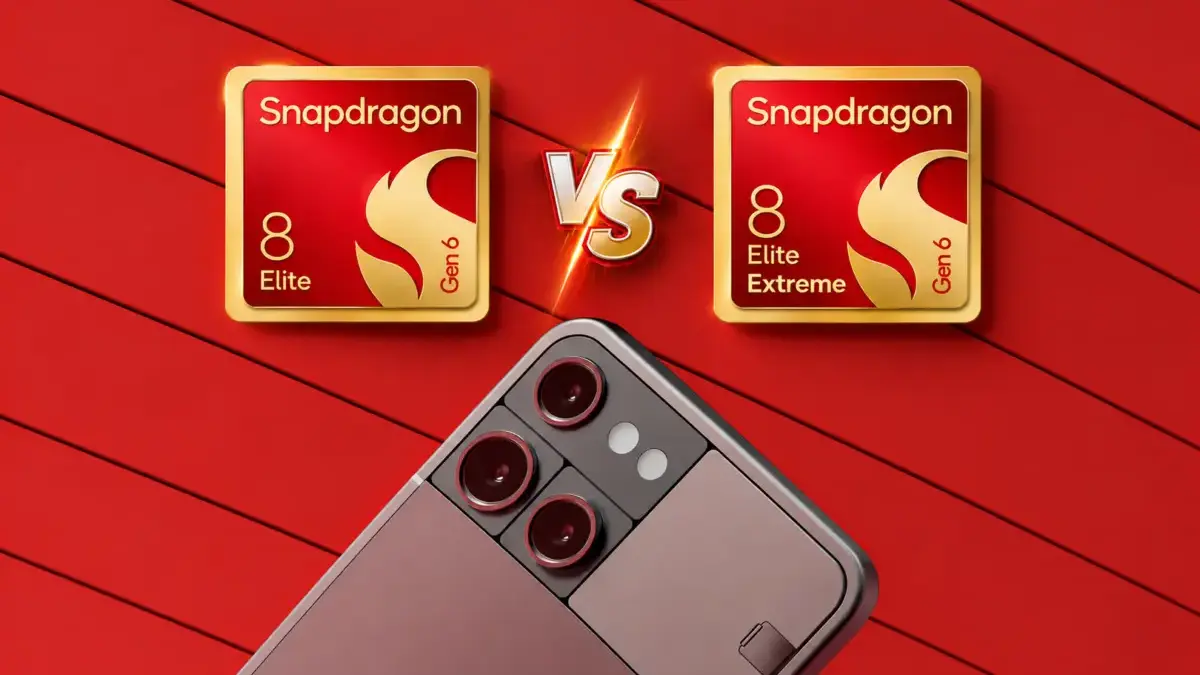
MAUI, Hawaii — In a strategic shift that promises to reshape the Android flagship landscape, semiconductor giant Qualcomm has fractured its most advanced mobile processor into two distinct tiers. Unveiled during the high-profile Snapdragon Summit 2026, the new lineup introduces the Snapdragon 8 Elite Gen 6 alongside its more muscular sibling, the Snapdragon 8 Elite Gen 6 Extreme.
While both chips share a foundational architecture and are built on an ultra-efficient 2-nanometer fabrication node, their divergence in graphics, artificial intelligence, and video capture capabilities marks a new era for smartphone segmentation. Rather than relying on a one-size-fits-all approach for premium devices, Qualcomm is equipping device manufacturers with the tools to differentiate their high-end portfolios—ensuring that two phones powered by the same generational family may offer radically different capabilities under the hood.
1. Main Facts: Understanding the Two-Tier Strategy
The core proposition of the Snapdragon 8 Elite Gen 6 series is simple: democratization of high-end core performance paired with specialized, elite-tier capabilities for power users.
Both the standard and Extreme models rely on Qualcomm’s custom Oryon CPU architecture, pushing clock speeds up to a staggering 5 GHz on their primary cores. However, the architectural divergence becomes immediately apparent when looking at specialized tasks.
- The Standard Model: Designed for the broad sweep of modern flagship devices, the baseline Gen 6 offers a notable 10% boost in CPU performance and a 37% improvement in energy efficiency compared to its predecessor. Its graphics processing unit (GPU) gains a 35% performance uplift alongside a 40% leap in efficiency, supplemented by 12MB of dedicated graphics memory.
- The Extreme Model: Pushing the envelope further, the Extreme variant elevates CPU performance gains to 13% over the previous generation, while its graphical prowess surges by an impressive 44%. It is purpose-built for sustained, heavy workloads such as high-refresh-rate gaming, complex neural rendering, and professional-grade mobile filmmaking.
Despite these performance deltas, both processors share identical connectivity foundations, proving that Qualcomm is not gatekeeping essential modern infrastructure behind the more expensive silicon.
2. Chronology: The Road to the Snapdragon Summit 2026
The path to the Snapdragon 8 Elite Gen 6 launch has been defined by Qualcomm’s aggressive push into 2-nanometer architecture and on-device generative AI.
- Early Development Phase (2024–2025): As mobile applications demanded higher neural processing power and desktop-class gaming fidelity, Qualcomm engineers began conceptualizing a silicon strategy that could address the widening gap between casual smartphone users and mobile content creators.
- The 2nm Breakthrough (Mid-2025): Transitioning to a 2-nanometer manufacturing process allowed Qualcomm to squeeze significantly more transistors into a tight mobile footprint while simultaneously curbing thermal output and power consumption.
- Snapdragon Summit 2026 Announcement (September 22–24, 2026): Officially unveiled in Maui, Hawaii, the summit served as the global stage where Qualcomm formally introduced the split-tier strategy, detailing the technical boundaries between the standard Gen 6 and the Extreme variant.
- Post-Summit Ecosystem Rollout (Late 2026 and Beyond): Following the announcement, major OEMs—including Xiaomi, Honor, Motorola, and others—confirmed their participation in the upcoming hardware cycle, setting the stage for commercial device launches.
3. Supporting Data: Under the Hood of the Gen 6 Architecture
A granular look at the benchmarking and hardware specifications reveals how Qualcomm has fine-tuned these processors for specific use cases.
CPU and Everyday Responsiveness
Both processors utilize Oryon cores clocked at up to 5 GHz. However, raw frequency alone does not dictate real-world snappiness; device memory architecture, thermal management, and software optimization play vital roles. For everyday tasks—such as launching messaging apps, checking email, or browsing the web—the performance gap between the standard Gen 6 and the Extreme model is virtually imperceptible. The Extreme’s surplus power is deliberately isolated for applications designed to exploit heavy multi-threaded and neural workloads.
Gaming and Graphics: The 12MB Advantage
Graphics processing represents the widest chasm between the two chips. The standard Gen 6 includes 12MB of dedicated memory for graphics, keeping vital rendering assets close to the GPU rather than fetching them repeatedly from the main system memory.
The Extreme model builds on this with Adreno Neural Fusion, a technology that bridges traditional graphics rendering with artificial intelligence. By combining AI with GPU output, the Extreme chip can intelligently upscale resolutions, reconstruct missing visual details, and generate intermediate frames. This allows compatible games to run with sharper fidelity and smoother motion without placing an unsustainable burden purely on raw graphical muscle.
Artificial Intelligence and the NPU
Neural Processing Units (NPUs) have become the primary battleground for modern mobile silicon.
- The standard Gen 6 delivers a 14% improvement in NPU performance over the prior generation.
- The Extreme model boasts a dramatic 35% performance increase, alongside a 33% boost in performance-per-watt efficiency.
Despite these figures, Qualcomm notes that real-world AI utility will heavily depend on operating system implementations and third-party software development. To maintain efficiency during ambient tasks, both chips feature the Qualcomm Sensing Hub, which processes voice, audio, and sensor data locally at minimal power consumption.
Video Capabilities: Where the Difference is Visible
For multimedia creators, the hardware split is immediately noticeable in video recording parameters:
- Standard Gen 6: Supports video capture up to 8K at 30 frames per second (fps) and 4K slow-motion at 120 fps. It also features Intelligent Pixel Control to suppress halos and lens reflections.
- Extreme Model: Pushes boundaries to 8K at 60 fps and 4K slow-motion at a staggering 240 fps. Furthermore, it exclusively features Advanced Professional Video (APV), a codec technology designed to retain maximum dynamic range and color data during capture, giving mobile filmmakers significantly more latitude in post-production color grading and editing.
Connectivity Parity: 5G and Wi-Fi 8 for All
Crucially, Qualcomm decided not to segment networking capabilities. Both the standard and Extreme variants are equipped with the Snapdragon X105 5G modem, offering theoretical peak download speeds of up to 14.8 Gbps and upload speeds of 4.2 Gbps (though real-world performance remains dependent on carrier infrastructure and signal congestion).
Additionally, both platforms integrate the FastConnect 8800 system, bringing cutting-edge Wi-Fi 8 compatibility (alongside Wi-Fi 7 and Wi-Fi 6) to every device in the tier. Choosing a phone with the Extreme chip yields zero advantages in wireless connectivity.
4. Official Responses and Industry Reactions
Following the Maui unveiling, representatives from Qualcomm emphasized that the dual-version strategy is a direct response to the maturation of the smartphone market. High-end consumers no longer fall into a single demographic; a mobile gamer or professional content creator requires vastly different hardware optimizations than a productivity-focused executive who values battery longevity and everyday reliability above all else.
Major smartphone manufacturers have already lined up to adopt the new platform. According to official Qualcomm disclosures, an expansive roster of brands—including Honor, iQOO, Motorola, OnePlus, OPPO, Redmi, RedMagic, vivo, and Xiaomi—will incorporate the Snapdragon 8 Elite Gen 6 generation into their upcoming product roadmaps.
Industry analysts point out that while Qualcomm has published the list of partnering manufacturers, it remains to be seen which specific upcoming flagships will house the Extreme variant versus the standard baseline. OEMs now face strategic choices regarding BOM (Bill of Materials) costs and how they position their respective devices against fierce competition from rivals like MediaTek in the high-end Android ecosystem.
5. Implications: What This Means for Consumers and the Market
The bifurcation of Qualcomm’s premier mobile processor carries profound implications for the smartphone buying public.
- More Granular Flagship Pricing: By offering two distinct versions of its top-tier silicon, Qualcomm enables manufacturers to introduce ultra-premium "Pro" or "Ultra" models equipped with the Extreme chip, while offering slightly more accessible flagship alternatives running the standard Gen 6 without compromising on core processing power or 5G/Wi-Fi 8 connectivity.
- Clearer Buying Criteria: For consumers comparing devices, the decision-making process becomes much more transparent. Buyers who prioritize casual photography, standard web browsing, and general productivity will find little practical reason to overpay for a device featuring the Extreme chip. Conversely, mobile gamers, heavy AI power users, and smartphone content creators shooting high-framerate 8K video will find distinct, tangible benefits in opting for the Extreme tier.
- Software Differentiation: Because raw percentage gains in NPU and GPU performance do not automatically translate to universally faster apps—heavily relying instead on OEM software tuning—consumers will need to look closely at how individual brands utilize Qualcomm’s hardware building blocks. Two phones sharing the same baseline Gen 6 chip could offer completely different user experiences depending on the manufacturer’s software ecosystem.
As the first commercial devices powered by the Snapdragon 8 Elite Gen 6 and Extreme chips begin rolling out globally, the market will soon reveal how successfully Qualcomm’s dual-track vision translates into real-world consumer adoption. One thing is certain: the era of the uniform flagship processor has officially come to an end.




Leave a Reply