

Main Facts
Every year, as autumn settles across the globe, humanity pauses to look upward. From October 4 to 10, the World Space Week unites nations, scientists, educators, and dreamers in a synchronized global celebration. Established in 1999 by the United Nations General Assembly, this international observance recognizes the profound contributions of space science and technology to the betterment of the human condition.
During these seven days, space agencies, universities, museums, science centers, and amateur astronomy clubs open their doors to the public, hosting workshops, exhibitions, and lectures. The overarching goal is not merely to celebrate historical achievements, but to inspire the next generation of scientists, engineers, and explorers.
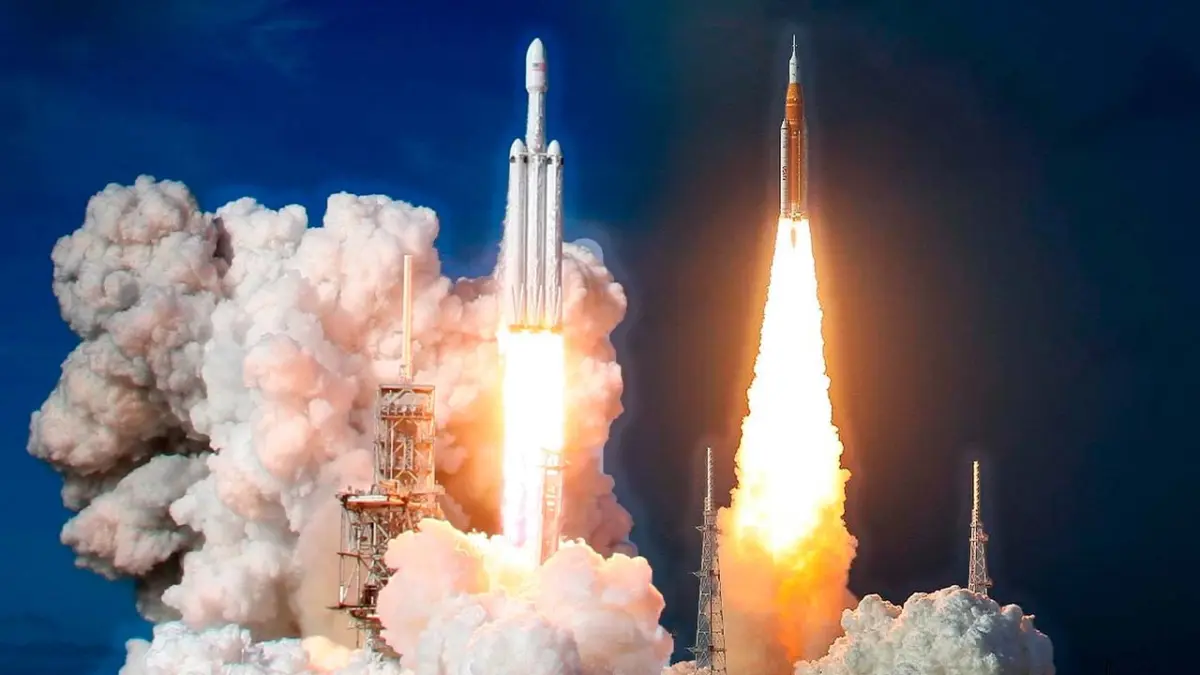
The theme for World Space Week 2026—“Rocket Revolution”—captures a transformative moment in human history. No longer is space exploration the exclusive domain of a few heavily funded superpowers. Today, the cosmos is being democratized by reusable launch vehicles, commercial enterprises, academic endeavors, and emerging national space programs. From the return of crewed lunar missions to the expansion of satellite constellations, the barriers to entry are dissolving, opening up a dynamic new chapter in our relationship with the universe.
Chronology: Milestones That Shaped Our Cosmic Journey
The dates of World Space Week are historically significant, anchored by two pivotal milestones that fundamentally altered the trajectory of human civilization:
- October 4, 1957 – The Dawn of the Space Age: The launch of Sputnik 1, the world’s first artificial satellite, by the Soviet Union. This metallic sphere, no larger than a beach ball, beeped its way around the globe, signaling the beginning of the space race and proving that humanity was no longer bound solely to Earth.
- October 10, 1967 – The Rule of Law in the Heavens: The entry into force of the Treaty on Principles Governing the Activities of States in the Exploration and Use of Outer Space, Including the Moon and Other Celestial Bodies—commonly known as the Outer Space Treaty. This landmark international agreement laid the legal foundation for peaceful space exploration, declaring the cosmos the "province of all mankind" and banning weapons of mass destruction in orbit.
Recent Historic Leaps (2025–2026)
The momentum leading up to the 2026 celebrations has been staggering. Most notably, Artemis II marked a triumphant return to deep-space crewed exploration. Launched on April 1, 2026, the NASA mission carried a four-person crew on a historic flyby around the Moon before safely returning to Earth on April 10. It was the first time humans had ventured back to the lunar vicinity in over half a century, rigorously testing the life-support systems of the Orion spacecraft and allowing astronauts to conduct vital geological observations of the Moon’s mysterious far side.
Parallel to NASA’s efforts, lunar exploration has diversified remarkably. Programs led by China, India, and Japan have achieved unprecedented lunar landings and sample returns, transforming the Moon from a distant horizon into a collaborative, buzzing frontier of scientific inquiry.
Supporting Data: The Exponential Growth of the Space Sector
The scale of global engagement with space has grown exponentially over the past two decades. What began as localized academic events has exploded into a planetary phenomenon.
According to official metrics from the World Space Week Association, the 2025 edition shattered all previous records, registering more than 50,000 distinct activities across 102 countries. These numbers reflect a widespread democratization of science, driven by digital connectivity, low-cost educational toolkits, and an insatiable public appetite for cosmic discovery.
The Rise of Commercial Spaceflight
The private sector has become the engine of the modern "Rocket Revolution." Companies like SpaceX, founded by Elon Musk, have fundamentally disrupted traditional aerospace economics. By pioneering reusable rocket technology—most notably with the Falcon and Starship vehicle families—SpaceX has dramatically slashed the cost of placing payload and humans into orbit.
The following breakdown illustrates the shifting paradigm of the modern space economy:
- Traditional Model: Government-funded, single-use expendable rockets with decades-long development cycles.
- Commercial Model: Rapid prototyping, reusable hardware, frequent flight cadences, and commercial-driven payloads (such as Starlink broadband networks and commercial space stations).
- Academic/Emerging Model: Nanosatellites, CubeSats, and university-built payloads that allow developing nations to enter orbit at a fraction of historical costs.
Official Responses and Perspectives
As the aerospace landscape evolves, global leaders, policymakers, and visionaries are grappling with both the immense opportunities and the profound responsibilities of our expanding cosmic footprint.
International bodies emphasize that the "Rocket Revolution" must be managed sustainably. With thousands of active and defunct satellites cluttering Low Earth Orbit (LEO), space debris mitigation has transitioned from a theoretical concern to an urgent operational priority. The United Nations Committee on the Peaceful Uses of Outer Space (COPUOS) continues to urge nations and private entities to adhere to strict debris-removal protocols and traffic-management standards.
Concurrently, scientific leaders point out that technological leaps on Earth are deeply intertwined with advancements made above our atmosphere. Groundbreaking achievements—such as Francis Halzen’s Nobel Prize-winning work with high-energy cosmic neutrinos—demonstrate how astrophysics continuously refines our understanding of fundamental physics, ultimately filtering down into revolutionary terrestrial technologies.
National leaders, particularly in the Global South, are also shaping their own narratives. Rather than remaining passive observers, developing nations are actively carving out niches in Earth observation, satellite manufacturing, and space policy.
Implications: Colombia’s Cosmic Ambitions and Cultural Reflections
While nations like the United States, China, and India dominate heavy-lift capabilities, developing nations are proving that space exploration is no longer limited to those who can build massive orbital rockets. Colombia serves as a prime example of a nation steadily building its indigenous space capabilities through strategic planning, academic dedication, and international collaboration.
Colombia’s Ascent into Orbit
Although Colombia does not yet possess a domestic orbital launch site, the country has carved out a vital space identity focused on Earth observation, scientific research, and nanosatellite operations.
A milestone in this journey was achieved in 2023 with the successful deployment of the FACSat-2 “Chiribiquete”, the second space asset developed under the aerospace program of the Colombian Air Force (now the Colombian Aerospace Force). Designed to monitor natural resources, deforestation, and climate phenomena, Chiribiquete represents a practical application of space technology tailored to national needs.
Furthermore, the introduction of the comprehensive Colombian Space Policy aims to institutionalize research, expand infrastructure, foster local talent, and lay the groundwork for a robust national space industry.
Culture, Education, and Inspiration
The spirit of World Space Week extends far beyond engineering blueprints and launchpads; it deeply touches culture and imagination. In Colombia, platforms like RTVCPlay are bringing these aspirations closer to the general public through cinematic storytelling.
The 54-minute documentary Sueños de astronauta ("Astronaut Dreams") available on the platform, chronicles Colombia’s quiet yet passionate space journey. Through the eyes of scientists, university students, amateur astronomers, and artists, the film explores a central, inspiring thesis: a nation’s space future is forged as much in its classrooms and cultural spaces as it is in mission control centers.
Looking Forward
As the World Space Week 2026 unfolds under the banner of the "Rocket Revolution," humanity stands at a breathtaking crossroads. We are venturing back to the Moon to stay, opening the cosmos to private enterprise, and witnessing a generation of young minds across the globe—from the bustling tech hubs of North America to the emerging astronomical societies of Latin America—gazing up at the night sky with a renewed sense of possibility. The universe is no longer just a realm of distant wonder; it is our collective future.




Leave a Reply