
Main Facts
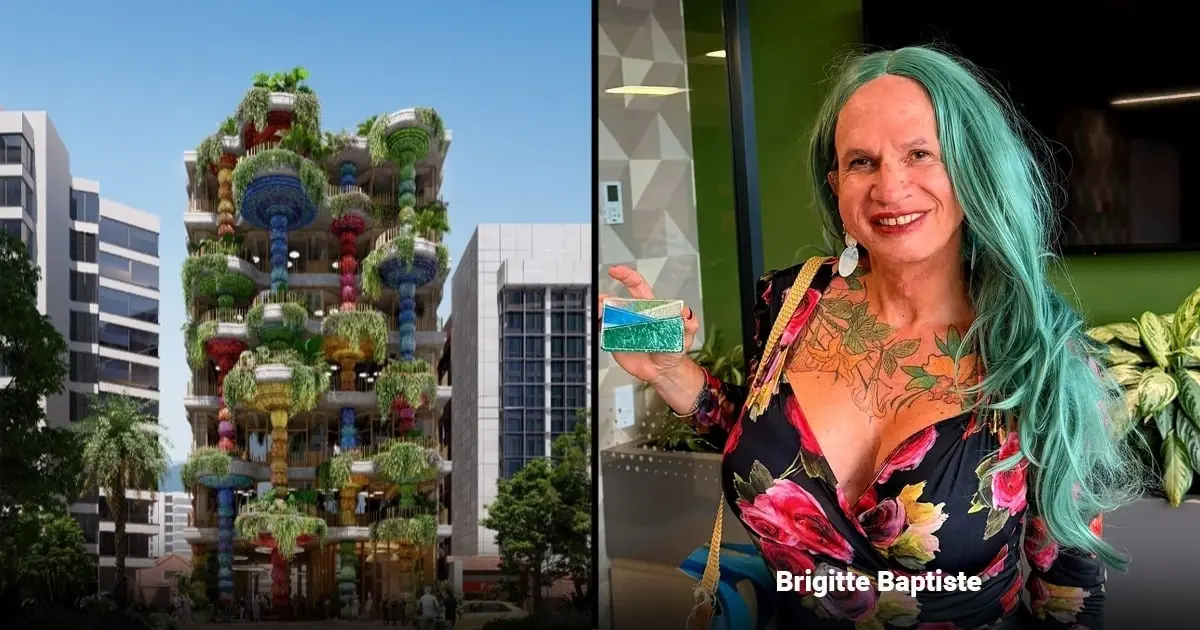
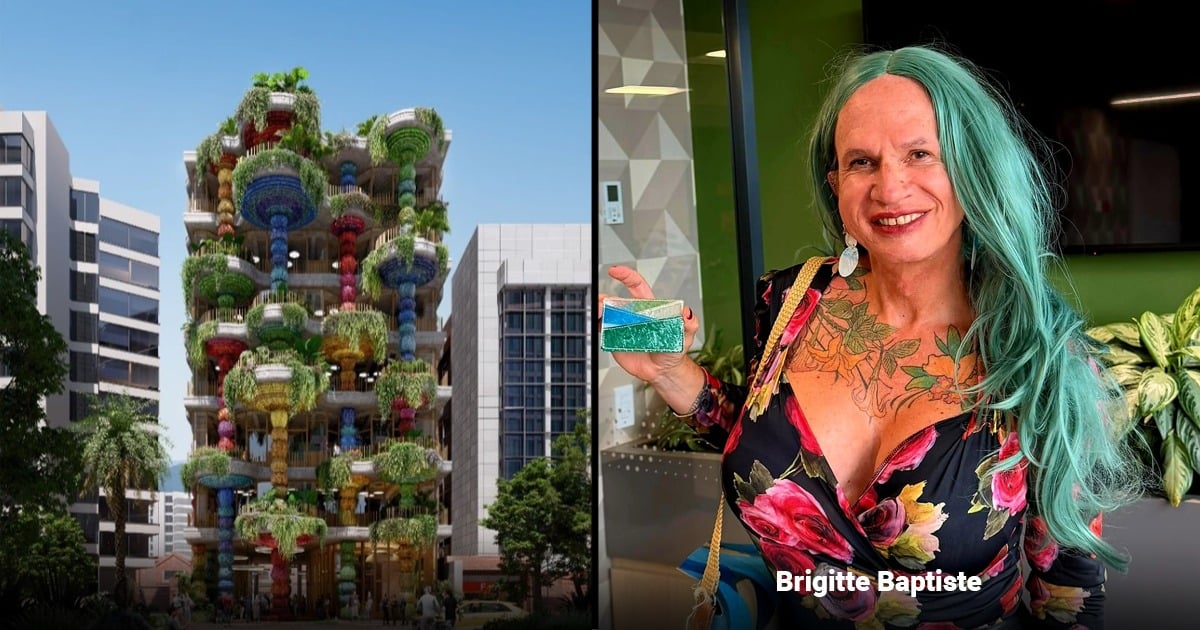
In the heart of Bogotá’s bustling financial district—where the ceaseless motion of commerce meets the unrelenting gray of concrete—a quiet revolution in architectural philosophy is taking root. Universidad EAN has initiated construction on a landmark building destined to house its newly minted Faculty of Sustainable Art and Design. Slated for completion in late 2027, this seven-story architectural marvel will fundamentally alter the visual and ecological landscape of Calle 72 with Carrera 9.
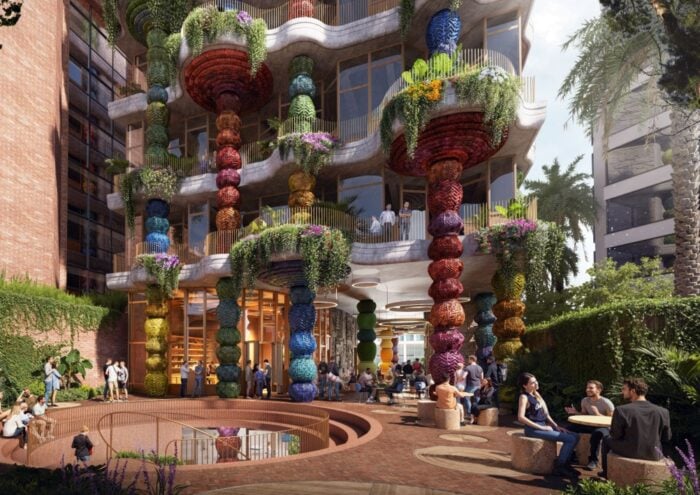
Designed by the world-renowned British architect Thomas Heatherwick and his London-based practice, Heatherwick Studio, the project marks a historic milestone: it is Heatherwick’s very first built work in South America. The structure rejects the sterile anonymity of modern corporate architecture. Instead, it features cascading open-air terraces, sprawling urban gardens, and an eye-catching facade defined by vibrantly colored columns. These structural elements draw direct inspiration from Colombia’s rich natural biodiversity and Indigenous craftsmanship, paying specific homage to the intricate Werregue basketry of the Wounaan community.
Far more than a conventional academic facility, the building serves as the physical manifestation of Universidad EAN’s forward-thinking educational model. It champions urban biodiversity, circular economy principles, native vegetation integration, and expanded public space. Underpinned by Heatherwick’s global Humanise philosophy—which contends that monotonous, hostile built environments actively harm human psychological well-being—the project promises to inject warmth, life, and ecological resilience into one of the Colombian capital’s most hectic intersections.
Chronology
The journey toward this transformative architectural addition spans several years of strategic planning, visionary institutional leadership, and international collaboration:
- 2021: The Mayor’s Office of Bogotá commits to ambitious urban nature declarations aligned with the C40 Cities climate network, establishing a municipal framework prioritizing green infrastructure to mitigate climate change effects.
- 2023: Universidad EAN initiates preliminary conceptualizations for a groundbreaking new building dedicated to its upcoming art and design programs. Institutional leadership identifies the need for a structure that breaks traditional academic molds.
- 2023–2024: Universidad EAN partners with Heatherwick Studio—founded in 1994 and comprising over 250 architects, designers, urban planners, and engineers—to develop a design blending local heritage, human-centric public spaces, and avant-garde ecological engineering.
- Late 2026: Outgoing Universidad EAN Rector Brigitte Baptiste prepares to step down, leaving behind the finalized blueprints and active rollout of the ecological campus tower as a cornerstone of her administrative legacy.
- Late 2027 (Projected): Official completion and inauguration of the Thomas Heatherwick-designed sustainable arts building on Avenida Chile, marking the formal arrival of Heatherwick Studio’s design ethos on the South American continent.
Supporting Data and Architectural Philosophy
To fully understand the weight of Universidad EAN’s new facility, one must examine the empirical data and philosophical tenets driving Heatherwick Studio. Established three decades ago, the studio has built a formidable global portfolio spanning major projects in the United States (such as Google’s Bay View campus in Silicon Valley), the United Kingdom, Japan, China, and Singapore. Across these geographies, the firm has consistently pushed the boundaries of material experimentation, structural fabrication, and human-scaled urbanism.
The Bogotá project is anchored by the Humanise movement, a crusade spearheaded by Heatherwick against what he terms "boring, heartless buildings." This philosophy is not merely aesthetic; it is backed by growing bodies of neuro-architectural and psychological research. According to studies cited by the studio, prolonged visual exposure to flat, monotonous, and uncomplex architectural surfaces triggers elevated cortisol levels in humans, directly contributing to chronic stress, anxiety, and a sense of alienation.

Conversely, complex patterns, organic geometries, vibrant natural colors, and tactile textures stimulate positive neurological responses, fostering a sense of community belonging and psychological ease. At the EAN campus, these principles translate into:
- Biophilic Integration: Vertical gardens and native Andean flora woven directly into the building’s exterior and interior spaces, acting as a functional urban lung along the busy Avenida Chile corridor.
- Cultural Materiality: Facade columns deeply pigmented and textured to echo the weaving techniques of Indigenous Colombian artisans, bridging the gap between cutting-edge global design and local heritage.
- Microclimate Mitigation: Open terraces and green roofs designed to capture rainwater, reduce the urban heat island effect, and lower the overall energy consumption of the academic facility.
Official Responses and Institutional Vision
The announcement of the project has generated significant excitement within academic, municipal, and architectural circles across Colombia. Universidad EAN has long positioned itself as a pioneer in sustainable development, circular economics, and ecological entrepreneurship within the country.
A pivotal force behind this institutional direction has been the university’s rector, Brigitte Baptiste. A prominent Colombian biologist, environmentalist, and thought leader, Baptiste has consistently championed the integration of biodiversity into urban planning. Under her stewardship, the university decided that the expansion of its academic footprint could not simply mean adding square footage of concrete. Instead, it required a profound statement on how higher education institutions can actively heal urban ecosystems. The EAN tower directly operationalizes the city’s C40 commitments, proving that private-academic partnerships can deliver world-class ecological infrastructure in dense urban cores.
Furthermore, university officials note that the building serves as the pedagogical cornerstone for EAN’s newly launched Faculty of Art and Design. The administration’s goal is to train a new generation of multidisciplinary creators who view design not as an exercise in superficial styling, but as a dynamic problem-solving tool capable of transforming human reality, driving social equity, and regenerating natural systems. By studying inside a living, breathing architectural masterpiece crafted by a global master, students will absorb the principles of sustainable innovation simply by inhabiting their classrooms.
Implications
The construction of Thomas Heatherwick’s first South American project in Bogotá carries profound implications for the future of urban development, architectural practice, and higher education in Latin America.
1. Catalyzing Urban Regeneration in Bogotá
Bogotá, like many rapidly expanding Latin American metropolises, has historically struggled with the adverse effects of vertical densification: loss of green space, visual pollution, traffic congestion, and pedestrian alienation. By planting a radically green, culturally resonant, human-centric structure right in the heart of the financial district (Avenida Chile), Universidad EAN sets a powerful precedent. It demonstrates to private developers and municipal planners that density and ecology are not mutually exclusive. The building serves as a catalyst, encouraging neighboring properties to rethink how private developments can contribute positively to the public realm.
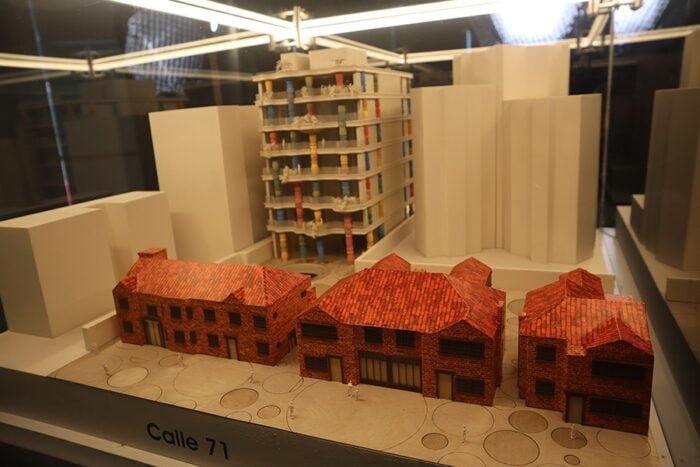
2. Redefining Academic Architecture in Latin America
Traditionally, university buildings in the region have leaned toward either austere modernist blocks or enclosed corporate-style campuses. EAN’s new faculty building challenges this paradigm by dissolving the boundary between the interior academic environment and the outside street life. Through open terraces, accessible public spaces on lower levels, and transparent facades, the building invites the city in. It re-envisions the university not as an ivory tower insulated from society, but as an open civic forum that actively nurtures the public sphere.
3. Elevating Local Craftsmanship onto the Global Stage
By explicitly incorporating references to Indigenous traditions—such as the Wounaan community’s Werregue cestería—into a cutting-edge global design framework, the project establishes a respectful dialogue between ancestral knowledge and contemporary engineering. This approach counters cultural homogenization, proving that international architectural interventions can—and should—deeply reflect the local identity, narrative richness, and biodiversity of their host countries.
As construction pushes toward its projected late 2027 completion date, the Universidad EAN building stands as a beacon of hope for urbanites weary of gray concrete. It signals a shift toward a more compassionate, joyful, and ecologically integrated urban future—one where architecture remembers that buildings are ultimately built for people, and that cities, too, can learn to bloom.