

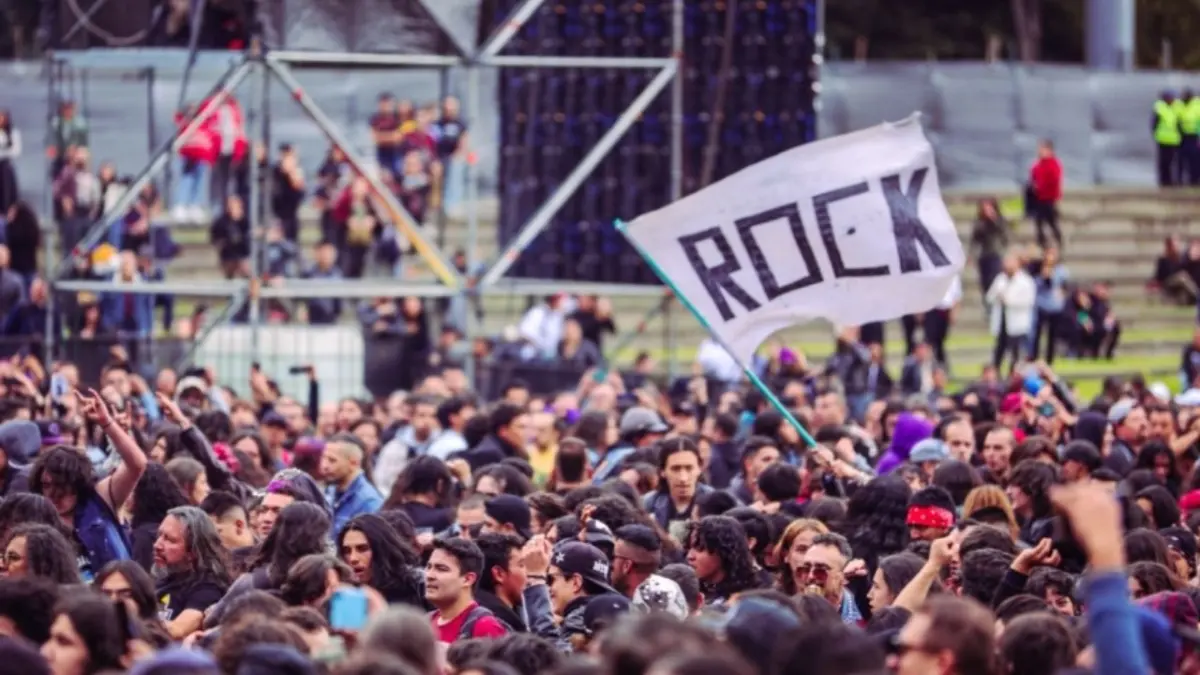
BOGOTÁ, Colombia — The sprawling green expanse of the Parque Metropolitano Simón Bolívar once again opens its gates to a tidal wave of leather jackets, combat boots, and soaring guitar riffs. Rock al Parque, Latin America’s largest free-admission rock festival, has officially kicked off a landmark edition celebrating three decades of musical rebellion, cultural integration, and community in the heart of Colombia’s capital.
Over the course of three action-packed days—running from October 10 to October 12—more than 60 musical acts from across the globe will converge on four distinct stages. This year’s monumental anniversary line-up bridges generational divides, bringing together foundational pioneers of rock and metal alongside contemporary heavyweights and a vibrant representation of homegrown Colombian talent.
As tens of thousands of attendees descend upon the park, the festival proves once more why it remains a crown jewel of Bogotá’s cultural agenda, offering a masterclass in how free public art can foster unity, diversity, and unadulterated sonic power.
Main Facts: A Historic Milestone for Latin America’s Premier Rock Festival
Celebrating its 30th anniversary, Rock al Parque is operating at peak capacity, deploying four customized stages—Escenario Plaza, Escenario Bio by Vans, Escenario Eco, and Escenario BBC—to accommodate a massive influx of local, national, and international artists.
The festival’s roster spans a staggering array of subgenres, ensuring that fans of traditional heavy metal, black metal, thrash, death metal, punk, and avant-garde rock find something to satiate their auditory appetites. International delegations hailing from Sweden, Switzerland, Finland, Spain, and the United States share the spotlight with legendary local scenes from Bogotá, Medellín, and beyond.
Headlining this year’s heavy metal showcase are international icons such as Finland’s symphonic cello-metal pioneers Apocalyptica and power metal legends Stratovarius, alongside extreme metal royalty like Switzerland’s Triptykon (performing exclusive classic sets from Hellhammer and Celtic Frost), Swiss all-female heavy metal powerhouse Burning Witches, American progressive tech-death masters Between the Buried and Me, and melodic death metal veterans Darkest Hour.
Representing Colombian heavy metal royalty, the legendary band Kraken takes center stage, reminding audiences of the enduring legacy of South American heavy metal pioneers.
Chronology: The Complete Schedule and Stage Breakdown
With simultaneous performances unfolding across four dynamic zones, meticulous planning is essential for festival-goers attempting to catch every must-see act. Below is the complete schedule for the festival’s heavy-hitting opening day, broken down by stage.
Escenario Plaza
- 2:00 p.m. – 2:40 p.m.: Solegnium
- 2:55 p.m. – 3:35 p.m.: Narcocracia
- 3:50 p.m. – 4:30 p.m.: Vein
- 4:50 p.m. – 5:40 p.m.: Hellbutcher
- 6:00 p.m. – 6:50 p.m.: Burning Witches
- 7:15 p.m. – 8:15 p.m.: Stratovarius
- 8:35 p.m. – 9:20 p.m.: Perpetual Warfare
- 9:45 p.m. – 10:45 p.m.: Apocalyptica
Escenario Bio by Vans
- 3:20 p.m. – 4:00 p.m.: Maskhera
- 4:15 p.m. – 4:55 p.m.: Ataque de Pánico
- 5:15 p.m. – 5:55 p.m.: Syracuse
- 6:15 p.m. – 7:05 p.m.: Between the Buried and Me
- 7:20 p.m. – 8:00 p.m.: Valore
- 8:20 p.m. – 9:10 p.m.: Grave
- 9:30 p.m. – 10:30 p.m.: Triptykon (performing classics by Hellhammer and Celtic Frost)
Escenario Eco
- 3:00 p.m. – 3:40 p.m.: No Dependiente
- 3:55 p.m. – 4:45 p.m.: End It
- 5:00 p.m. – 5:50 p.m.: Agua Bendita
- 6:05 p.m. – 6:55 p.m.: Nadie
- 7:10 p.m. – 8:00 p.m.: I.R.A.
- 8:15 p.m. – 9:15 p.m.: Darkest Hour
Escenario BBC
- 2:50 p.m. – 3:35 p.m.: Darkness
- 3:50 p.m. – 4:35 p.m.: El EM3
- 4:55 p.m. – 5:40 p.m.: Real House of Hate
- 6:00 p.m. – 6:45 p.m.: Kraken
- 7:05 p.m. – 7:50 p.m.: Info
- 8:10 p.m. – 8:55 p.m.: Pornomotora
- 9:15 p.m. – 10:00 p.m.: Los Setas
Supporting Data: Mobility, Transit, and Logistics
Hosting hundreds of thousands of rock enthusiasts over three days requires a massive logistical deployment. Municipal authorities and transit operators have rolled out comprehensive infrastructure support to ensure safe and efficient transit for attendees.
Extended TransMilenio Operations
To facilitate smooth departures from the Parque Metropolitano Simón Bolívar once the final guitar chords fade, mass transit operator TransMilenio has announced extended operating hours for strategic stations surrounding the venue. Services will run until midnight, adjusted dynamically according to passenger demand.
Key stations and specific routes available for festival attendees include:
- Estación Siete de Agosto: Routes D21, Fácil 4, B12, F32, G12, S42, H17, and H21.
- Estación Movistar Arena: Routes Fácil 4, B72, D21, C25, H21, L25, and H72.
- Estación CAN – British Council: Routes Fácil 1, K10, K54, B16, B23, H54, L10, and M86.
- Estación Salitre El Greco – Vive Claro: Routes Fácil 1, K43, K10, K54, S43, L10, B16, B23, and H54.
Transport officials strongly recommend that attendees check real-time transit applications and official TransMilenio social media channels prior to departure, as route modifications may occur based on crowd density and sudden surges in demand.
Parking Availability for Private Vehicles
For those choosing to arrive by car or motorcycle, the Parque Metropolitano Simón Bolívar offers an on-site parking facility with a total capacity of 800 vehicles.
According to data provided by the District Institute for Recreation and Sport (IDRD), the parking lot will operate continuously from 5:00 a.m. to 10:00 p.m. across all three days of the festival. Because parking is a paid service with strictly limited capacity, motorists are advised to arrive early and verify applicable rates and security policies directly with the parking administration upon entry.
Official Responses and Social Media Buzz
The excitement surrounding the 30th-anniversary milestone has reverberated strongly across digital platforms. The festival’s official organizing body took to social media to amplify the enthusiasm, highlighting the sheer scale of the event:
“¡Ya está la programación por días de #RockAlParque30Años! Del 10 al 12 de octubre, el Parque Simón Bolívar recibe a más de 60 agrupaciones. Mon Laferte, Serú Girán, Apocalyptica y grandes nombres nacionales e internacionales. 🎸 ¯ Entradas libre Bogotá Ciudad Rock.”
— RockalParqueOFICIAL (@rockalparquefes), September 24, 2026.
Municipal leaders have echoed this sentiment, emphasizing that Rock al Parque is far more than a weekend concert series—it is a cornerstone of Bogotá’s cultural identity. By maintaining free admission, the festival democratizes access to world-class performing arts, ensuring that economic background never serves as a barrier to experiencing top-tier live music.
Implications: Cultural Legacy and Socio-Economic Impact
As Rock al Parque enters its fourth decade, its ongoing survival and expansion carry profound implications for Colombia’s cultural landscape and the broader Latin American music industry.
Cultural Preservation and Generation Bridge
The curation of the 30th-anniversary edition illustrates a deliberate effort to honor the past while nurturing the future. When legendary acts like Kraken share festival grounds with modern extreme metal outfits like Perpetual Warfare or international titans like Triptykon, a living generational dialogue occurs. Younger musicians study the stagecraft of veterans, while aging fans introduce their children to the communal rituals of the mosh pit. This cross-pollination ensures that rock and metal culture remains vibrant, relevant, and generationally sustainable in Colombia.
Economic and Tourism Engine
Beyond its artistic value, the festival serves as a massive economic catalyst for Bogotá. Hotels, restaurants, local merchants, and the transport sector experience a substantial boost in revenue during the October holiday weekend. Music tourists from across Colombia and neighboring South American countries flock to the capital, cementing Bogotá’s reputation as the undisputed rock capital of Latin America.
Safety, Tolerance, and Community
Perhaps the most enduring legacy of Rock al Parque is its proven track record of peaceful coexistence among massive crowds. Despite the high-energy aggression inherent in heavy metal and punk subcultures, the festival continually demonstrates that diversity, mutual respect, and a shared love for heavy music can transcend social friction.
As the sun sets over the Simón Bolívar park and the cello-driven melodies of Apocalyptica ring out into the crisp Bogotá night, the festival does not merely celebrate thirty years of history—it boldly declares that the spirit of rock in Colombia is unbreakable, evolving, and fiercer than ever.

Leave a Reply