
By Global Investigative Desk
Published in International Affairs & Financial Crime Review
1. Main Facts
On a crisp morning on Wednesday, January 30, 2019, operational inspectors from Migración Colombia intercepted an executive aircraft arriving from Panama at the Ernesto Cortissoz International Airport in Barranquilla. Stepping off the private jet was Ronald Alexander Ramírez Mendoza, a Venezuelan national dispatched with a singular, high-stakes mission: to assume the presidency of Monómeros, the pivotal petrochemical conglomerate whose control had long been a geopolitical tug-of-war between Bogotá and Caracas.
Ramírez never cleared immigration. Informing him that he was an unwelcome entity on Colombian soil, authorities immediately placed him on a return flight. Behind this swift deportation lay a web of transnational intelligence, spearheaded by Venezuela’s former Attorney General Luisa Ortega, who had fled to Colombia in August 2017 after declaring herself a victim of political persecution by the Nicolás Maduro administration. Ortega’s dossier exposed Ramírez not as a legitimate corporate executive, but as an operational pawn serving two master fixers of the Venezuelan regime: Álex Saab and Álvaro Pulido.
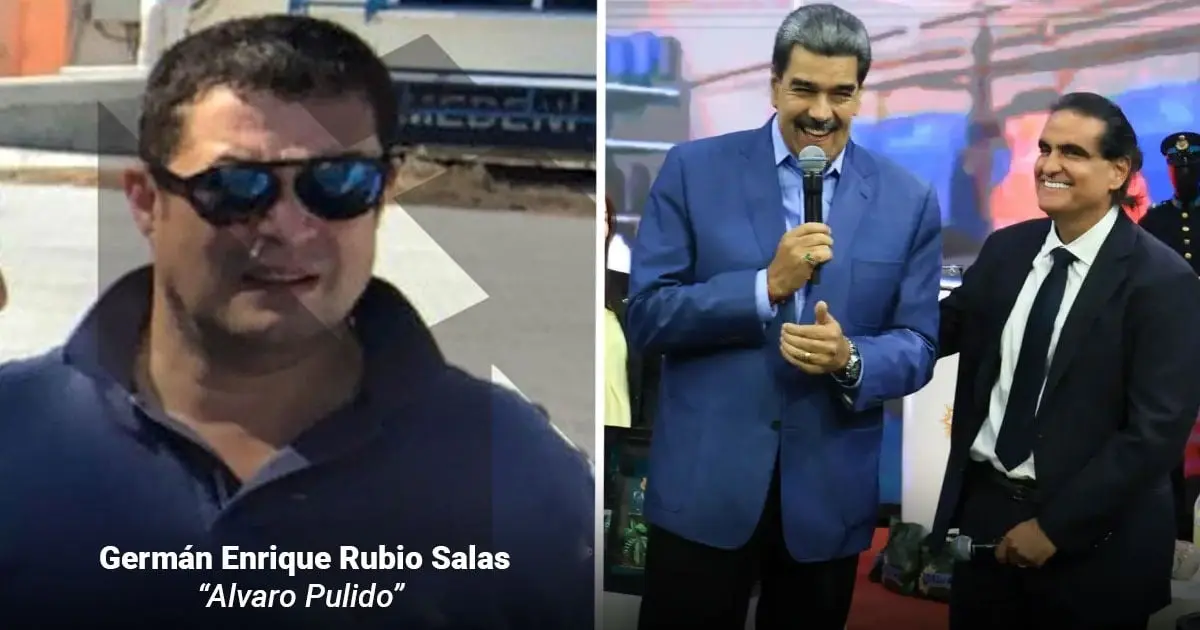
What made Pulido—whose real name is Germán Enrique Rubio Salas—so dangerous to international authorities was not merely his proximity to the corridors of power in Miraflores, but his subterranean history. A convicted drug trafficker in Italy dating back to 1997 with historical ties to the Bogotá cartel and connections brushing against the periphery of Pablo Escobar’s enterprise, Rubio had engaged in one of the most audacious identity thefts in modern Latin American criminal history. By utilizing the birth certificate and civil registry of a deceased individual, Rubio successfully manufactured a phantom persona, "Álvaro Pulido," to mask a multi-decade career spanning international narcotics trafficking, multi-million-dollar corporate fraud, and state-level money laundering.
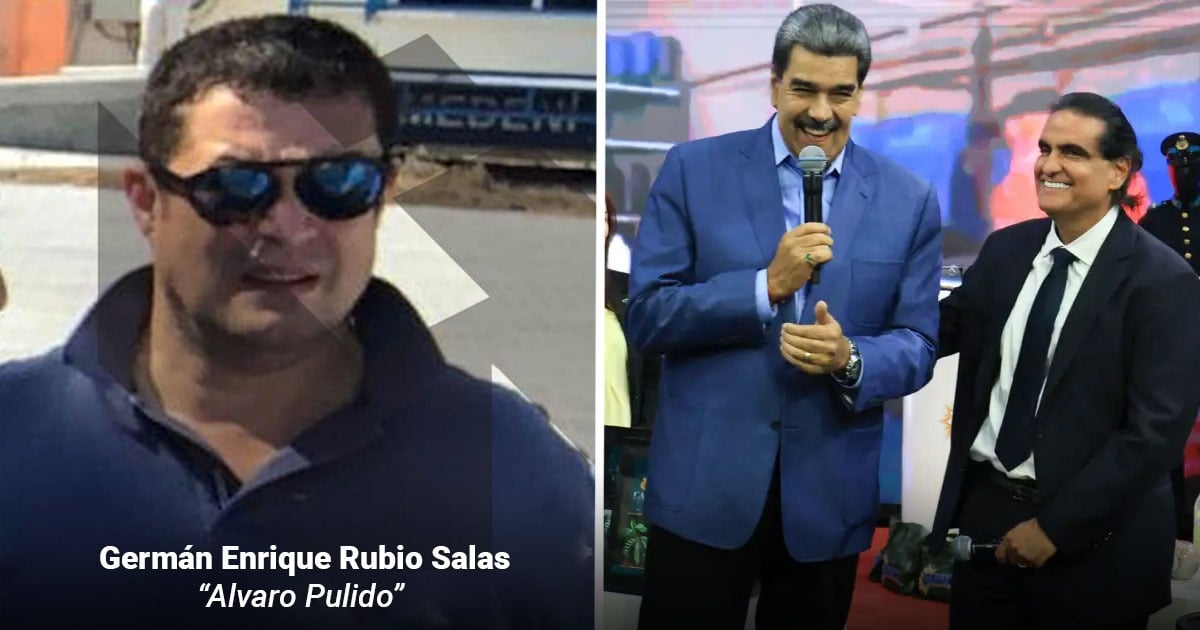
The convergence of Saab, Pulido, and frontmen like Ramírez underscored how the Venezuelan petro-state had outsourced its financial survival to private networks of transnational criminals. When Pulido was finally captured in Venezuela by the U.S. Drug Enforcement Administration (DEA) and subsequently extradited to the United States, it marked the collapse of one of the most lucrative and destructive kleptocratic partnerships of the 21st century. Today, both Saab and Rubio face federal courts in the U.S., holding the keys to unlocking the inner mechanisms of Maduro’s billion-dollar illicit economy.
2. Chronology of Events
- 1997: Germán Enrique Rubio Salas is convicted of international drug trafficking in Italy, establishing early, deep-seated connections to Latin American trafficking cartels, including networks operating out of Bogotá.
- Early 2000s: Rubio orchestrates a sophisticated identity theft operation, adopting the name and civil identification of a deceased citizen to wipe his slate clean and re-emerge as "Álvaro Pulido."
- August 2017: Escalating political turmoil in Venezuela prompts former Attorney General Luisa Ortega to flee to Colombia. She begins handing over critical intelligence dossiers to international and Colombian authorities detailing the illicit financial architectures of Álex Saab and Álvaro Pulido.
- January 30, 2019: Migración Colombia blocks Ronald Alexander Ramírez Mendoza—Maduro’s handpicked nominee to head the strategic fertilizer company Monómeros—from entering Barranquilla, neutralizing a potential intelligence and financial bridgehead for the Saab-Pulido network.
- June 2019: The U.S. Department of the Treasury officially includes Álvaro Pulido on the Office of Foreign Assets Control (OFAC) "Clinton List," documenting roughly $350 million in laundered assets siphoned from Venezuelan public construction and the controversial CLAP food import program.
- October 2021: Álex Saab is extradited to the United States from Cape Verde after being intercepted with a cargo of Venezuelan gold, stripping him of the diplomatic immunity bestowed upon him by Maduro.
- October 2026: Following shifts in the political landscape, DEA agents execute a targeted operation in Venezuela, detaining Pulido (Rubio) and swiftly moving him onto an aircraft bound for the United States to face federal money laundering and conspiracy charges.
3. Supporting Data and Financial Engineering
The scale of the financial pillage engineered by Álex Saab and Germán Rubio ("Álvaro Pulido") defies conventional comprehension. Investigative reporting, most notably chronicled by Colombian journalist Gerardo Reyes in his definitive book on Álex Saab published by Planeta, dismantled the myth of Pulido as a legitimate businessman. Reyes confirmed through forensic identity tracking that Pulido’s paperwork was a phantom construct designed to insulate Rubio from his Italian narcotics conviction and his South American cartel history.
Through a sprawling corporate matrix comprising at least 36 registered companies in Colombia alone, the duo established multi-layered conduits to drain state coffers. Key nodes in this financial architecture included:
- Fondo Global de Construcción: A flagship vehicle used by Saab, with Pulido managing the critical Ecuadorian chapter. This entity became the center of a $160 million fraudulent export scheme, which later devolved into protracted legal maneuvers against former Venezuelan bankers whom Pulido accused of attempting to defraud and discredit him.
- Trenaco: An unregistered shell entity utilized by the Saab-Pulido partnership to infiltrate Venezuela’s state-owned oil conglomerate, Petróleos de Venezuela, S.A. (PDVSA), securing lucrative, high-value infrastructure contracts later characterized by exiled Venezuelan Supreme Court magistrates as systemic money laundering operations.
- Group Grand Limited: Incorporated later in Hong Kong, this company served as the primary procurement vehicle for the Comités Locales de Abastecimiento y Producción (CLAP) program. Through Group Grand Limited, the syndicate imported basic food boxes for impoverished Venezuelan citizens at astronomical overprices, funneling hundreds of millions of dollars into offshore accounts.
Parallel to these corporate maneuvers, financial intelligence units tracked the systematic conversion of Venezuela’s sovereign gold reserves. The Maduro regime utilized the Saab-Pulido network to physically and digitally move gold bullion out of Caracas vaults, routing assets through intermediaries in Russia, Iran, and Turkey to bypass international financial sanctions.

4. Official Responses and Geopolitical Fallout
The revelation that a convicted international drug trafficker utilizing a stolen identity could come within a hair’s breadth of controlling Monómeros—a company vital to Colombian agricultural supply chains—sparked intense diplomatic friction between Bogotá and Caracas.
When Luisa Ortega defected and began leaking internal state documents to Colombian prosecutors, the narrative surrounding the Maduro government shifted from ideological governance to transnational organized crime. Colombian authorities found themselves grappling with an unprecedented security challenge: a domestic corporate landscape heavily infiltrated by front companies acting on behalf of foreign kleptocrats.
The geopolitical chessboard grew even more complex when former Colombian Minister Armando Benedetti publicly floated the possibility of Colombia acquiring Monómeros for $300 million during his tenure as ambassador to Venezuela. Although the transaction ultimately collapsed, intelligence analysts noted that the attempted installation of Ronald Ramírez in 2019 was a calculated maneuver by the Saab-Pulido axis to retain economic leverage over the asset regardless of ownership shifts.
In Washington, the U.S. Department of Justice and the Treasury Department viewed the network as a direct threat to hemispheric security. The designation of Pulido on the Clinton List in 2019 provided the legal teeth needed to systematically dismantle his global assets. Following Saab’s extradition from Cape Verde and subsequent imprisonment, the capture and U.S. extradition of Rubio in October 2026 completed the immobilization of Maduro’s primary financial architects.

5. Implications and Future Outlook
The neutralization of the Álex Saab and Germán Rubio ("Álvaro Pulido") partnership carries profound implications for the legal stability of the Nicolás Maduro regime. For years, the Venezuelan government operated under the assumption that appointing compromised actors as "diplomatic agents" or commercial ambassadors would grant them absolute immunity from foreign prosecution. The successful trials and detentions of both men in the United States signal the definitive evaporation of that protective shield.
For Rubio, the legal reality in an American federal courtroom leaves few options. Having transitioned from a shadowy drug trafficker in 1990s Italy to a multi-million-dollar state looter disguised behind a dead man’s identity, Rubio now faces the prospect of spending his remaining years behind bars. Legal experts predict he will leverage his decades-long intimacy with the inner workings of Miraflores to strike a cooperative plea agreement with U.S. prosecutors.
Should Rubio choose to cooperate, his testimony could provide federal investigators with the smoking gun needed to expand indictments against high-ranking Venezuelan officials, linking state policy directly to transnational cocaine trafficking, gold smuggling, and systematic public embezzlement.
Ultimately, the saga of Germán Rubio and Álex Saab serves as a textbook study in modern kleptocracy—illustrating how transnational criminal syndicates can capture sovereign institutions, weaponize shell companies, and exploit geopolitical divides until international law enforcement systematically dismantled their illicit empires piece by piece.