

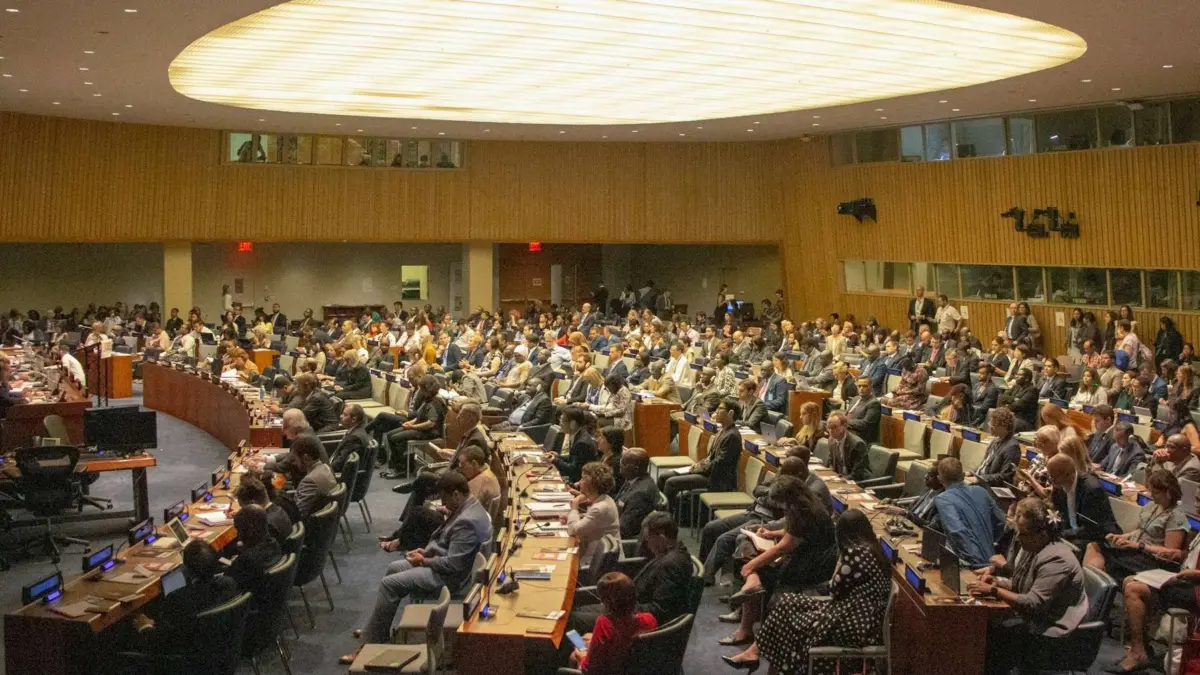
NEW YORK — The United Nations General Assembly officially commenced its high-level General Debate on September 22, setting the stage for six days of intense diplomatic engagement, sharp ideological clashes, and urgent warnings about the trajectory of international affairs. As heads of state, prime ministers, and global diplomats take to the iconic rostrum in New York, the overarching atmosphere is one of profound apprehension. The world is navigating a polycrisis characterized by escalating geopolitical conflicts, widening economic inequalities, accelerating climate disruption, and the largely unregulated frontier of artificial intelligence.
In an opening address that set a sobering tone for the week, UN Secretary-General António Guterres delivered a stark assessment of the state of the planet. Challenging the traditional paradigms of international relations, Guterres called for a radical reassessment of global power dynamics, urging leaders to pivot away from competition and toward collective survival.
The debates scheduled throughout the six-day session are expected to lay bare the deep fractures within the international community, particularly regarding climate change, national sovereignty, and the future of multilateralism.
Main Facts: The Core Pillars of the 2022–2024+ General Debate
The opening day of the UN General Debate established the primary thematic battlegrounds that will dominate discussions among world leaders over the course of the week.
- The Secretary-General’s Warning: António Guterres framed the current global landscape around four existential threats: deepening geopolitical conflicts, persistent economic inequalities, the worsening climate crisis, and the disruptive potential of emerging technologies, notably artificial intelligence.
- The Climate Imperative vs. Skepticism: While the UN leadership and numerous nations—led by emerging economies like Brazil—emphasized the absolute necessity of transitioning away from fossil fuels and protecting critical biomes, dissenting voices challenged the foundational consensus of global environmental governance.
- The Clash of Multilateralism and Sovereign Nationalism: The debate immediately highlighted a ideological rift between advocates of strengthened international institutions and leaders prioritizing strict national sovereignty, challenging the authority of bodies such as the International Criminal Court (ICC) and UN-backed global agendas.
- A Six-Day Diplomatic Marathon: Over the course of six key days, dozens of world leaders will articulate their national strategies, foreign policies, and responses to transnational challenges, making this session one of the most consequential in recent diplomatic history.
Chronology of the Opening Day: From Guterres’s Address to National Posturing
The rhythm of the first day of the General Debate moved swiftly from institutional warnings to starkly contrasting national visions for global governance.
Morning Session: The UN Secretary-General Sets the Stage
At 9:00 AM EST, the General Assembly Hall fell silent as António Guterres took the podium. His address was designed to shock the international community out of what he termed a "fatal complacency." Guterres focused heavily on the architecture of global power, arguing that contemporary institutions are failing to keep pace with modern realities.
"Our world is navigating an age of great friction," Guterres declared. "We are hurtling toward a multipolar world, yet we lack the multilateral instruments to manage it. Power is diffuse, but responsibility is evaded."
He specifically targeted the energy sector and global economic systems, noting that financial architectures established in the post-World War II era are incapable of supporting developing nations through the compounding crises of debt, poverty, and climate change. Crucially, Guterres turned his attention to the technological horizon, warning that the unchecked advancement of artificial intelligence threatens to exacerbate misinformation, displace workforces, and automate warfare without adequate ethical guardrails.
Afternoon Session: Divergent Visions from World Leaders
As the afternoon session commenced, the theoretical warnings of the Secretary-General collided with the practical, often conflicting political agendas of member states. The floor played host to a series of high-stakes speeches that underscored the ideological chasm dividing the international community.
Among the most scrutinized interventions of the day was that of former U.S. President Donald Trump, whose address diverted sharply from the multilateral consensus championed by the UN leadership. Trump pivoted his narrative toward a defense of military achievements during his administration as a primary mechanism for conflict resolution. Rejecting the frameworks of global governance, he delivered a robust defense of unilateral national sovereignty, explicitly criticizing the influence of global agendas and international judicial bodies such as the ICC.
In a direct counterweight to the prevailing environmental anxieties of the assembly, Trump maintained his long-standing skepticism regarding green energy initiatives and international frameworks designed to combat global warming, arguing that such policies unduly encumber national economies.
Shortly thereafter, Brazilian President Luiz Inácio Lula da Silva took the podium to present a fundamentally different vision for the planet. Lula leveraged his platform to highlight tangible progress achieved by his administration in curbing the destruction of the Amazon rainforest—a vital carbon sink for the global ecosystem. However, the Brazilian leader framed this environmental achievement as merely a baseline, issuing an urgent call for the international community to redouble its efforts to mitigate worsening climate imbalances. Lula emphasized that the burden of climate action must be shared equitably between the developed nations historically responsible for industrial emissions and the developing economies striving for sustainable growth.
Supporting Data: The Quantitative Reality of Global Crises
To contextualize the rhetoric of the General Debate, international bodies and scientific institutions have released a trove of data underscoring the urgency of the issues raised by Guterres, Lula, and other leaders.
The Climate and Energy Equation
According to data compiled by the Intergovernmental Panel on Climate Change (IPCC) and the World Meteorological Organization (WMO):
- Temperature Anomalies: Global average temperatures continue to hover near record highs, with the past decade marking the warmest period in human history.
- Emissions Trajectory: Despite numerous national pledges under the Paris Agreement, global greenhouse gas emissions have not yet peaked at the scale required to limit global warming to 1.5°C above pre-industrial levels.
- Fossil Fuel Subsidies: Despite calls for a rapid energy transition, international financial tracking reveals that global fossil fuel subsidies remain at historic highs, undercutting investments in renewable infrastructure such as solar, wind, and green hydrogen.
Deforestation and Biodiversity Loss
- The Amazon Basin: Brazil’s recent data indicates significant strides in reducing deforestation rates within the Amazon, dropping by over 30% in key periods. However, scientists warn that tipping points remain perilously close as recurring droughts and climate-induced forest degradation threaten the biome’s capacity to absorb carbon dioxide.
- Global Biodiversity: The WWF’s Living Planet Report highlights an average decline of nearly 73% in monitored vertebrate wildlife populations globally over the last fifty years, reinforcing Guterres’s warnings regarding the degradation of the natural world.
Geopolitical Conflict and Economic Inequality
- Displacement Crises: The UN Refugee Agency (UNHCR) reports that over 110 million people are currently forcibly displaced worldwide due to conflict, persecution, and human rights violations—a post-WWII high.
- The Wealth Gap: According to Oxfam and World Bank metrics, the richest 1% of the global population captured nearly two-thirds of all new wealth created since 2020, illustrating the profound structural inequalities that fuel social unrest and political polarization.
Official Responses and Diplomatic Reactions
The juxtaposition of Guterres’s plea for multilateral solidarity, Trump’s defense of nationalist sovereignty, and Lula’s push for ecological accountability generated immediate reactions across the global diplomatic corps.
- European Union Representatives: Diplomats from several EU member states privately and publicly reaffirmed their commitment to the Paris Climate Agreement and the strengthening of international legal frameworks. European leaders underscored that trans-border crises—ranging from climate refugees to supply chain disruptions—cannot be resolved through unilateral isolationism.
- Global South Coalition: Delegations from Latin American, African, and Pacific Island nations expressed strong support for President Lula’s emphasis on climate justice. Developing nations reiterated their demands for predictable, long-term climate financing from wealthy industrialized nations, warning that empty promises from past climate summits are eroding trust in the multilateral system.
- National Sovereignty Advocates: Conservative factions and nationalist political movements globally praised the emphasis on non-interference and domestic economic prioritization, signaling that the debate over the limits of globalization will remain a defining feature of international politics for the foreseeable future.
Implications: What the 79th General Debate Means for the Future
As the UN General Debate continues through its remaining days, the long-term implications of these opening sessions are already coming into sharp focus.
- The Erosion of Consensus: The ideological distance between leaders who advocate for deeply integrated global governance and those who champion hardline national sovereignty is widening. This polarization threatens to paralyze the UN Security Council and other vital bodies, rendering them less effective in brokering peace or enforcing environmental accords.
- The Economic Cost of Climate Inaction: The data presented by scientific institutions leaves little room for ambiguity: the window to avoid catastrophic climate tipping points is closing rapidly. The resistance of certain political leaders to green energy transitions risks locking global economies into high-emission trajectories that will trigger severe financial and human costs.
- The Test of Multilateralism: Ultimately, this year’s General Debate serves as a stress test for the post-war international order. If member states fail to forge meaningful compromises on conflict resolution, technological regulation, and climate financing, the UN risks sliding further into irrelevance, replaced by fragmented, regional, and transactional alliances.
As leaders continue to speak from the podium over the coming days, the world watches to see whether rhetoric will translate into the decisive collective action demanded by the Secretary-General, or whether geopolitical rivalry will continue to dictate the fate of the planet.



Leave a Reply