

Introduction
In the hyper-accelerated ecosystem of modern on-demand delivery platforms, convenience is marketed as the ultimate consumer luxury. With just a few taps on a smartphone screen, hot meals, groceries, and retail goods are supposed to materialize on doorsteps within minutes. Yet, beneath the polished interface of Latin America’s most valuable technology "unicorn," a darker reality often plays out for everyday users.
When transactions fail, consumers frequently find themselves trapped in a labyrinth of automated chat loops, unresponsive customer support agents, and financial losses. A prime example of this systemic breakdown is the case of Mauricio Cárdenas, a Colombian consumer whose simple order of four pizzas and three sodas devolved into a month-long ordeal. His experience is not an isolated incident; rather, it is a micro-cosm of the broader operational and regulatory challenges facing Rappi, highlighting an urgent need for accountability in the booming gig economy.
Main Facts
The incident involving Mauricio Cárdenas centers on a standard digital transaction that went entirely off the rails. Cárdenas used the Rappi mobile application to place an order from a Little Caesars Pizza franchise located in the bustling Restrepo neighborhood. The purchase consisted of four pizzas and three soft drinks, totaling 152,000 Colombian pesos (approximately $40 USD).
Adhering to standard digital commerce protocols, Cárdenas opted to pay online via credit card at the moment of confirmation. The financial transfer was immediate; the funds left his account instantly, leaving him with only one expectation: the arrival of the delivery courier.
The assigned delivery driver, identified in the application as Jesús Leonardo Bastidas, picked up the complete order from the restaurant and traveled to the designated delivery address. However, according to Cárdenas, the physical handover never took place. Bastidas allegedly marked the order as delivered, kept the food, and departed the scene without transferring a single item to the customer.
What followed exposed a bizarre breach of standard delivery ethics. When Cárdenas confronted the courier regarding the missing food, Bastidas allegedly demanded that the customer submit a second payment directly to him in order to receive the products. In essence, the delivery worker attempted to force the consumer to pay twice for an order that had already been processed digitally and which the courier had already absconded with.
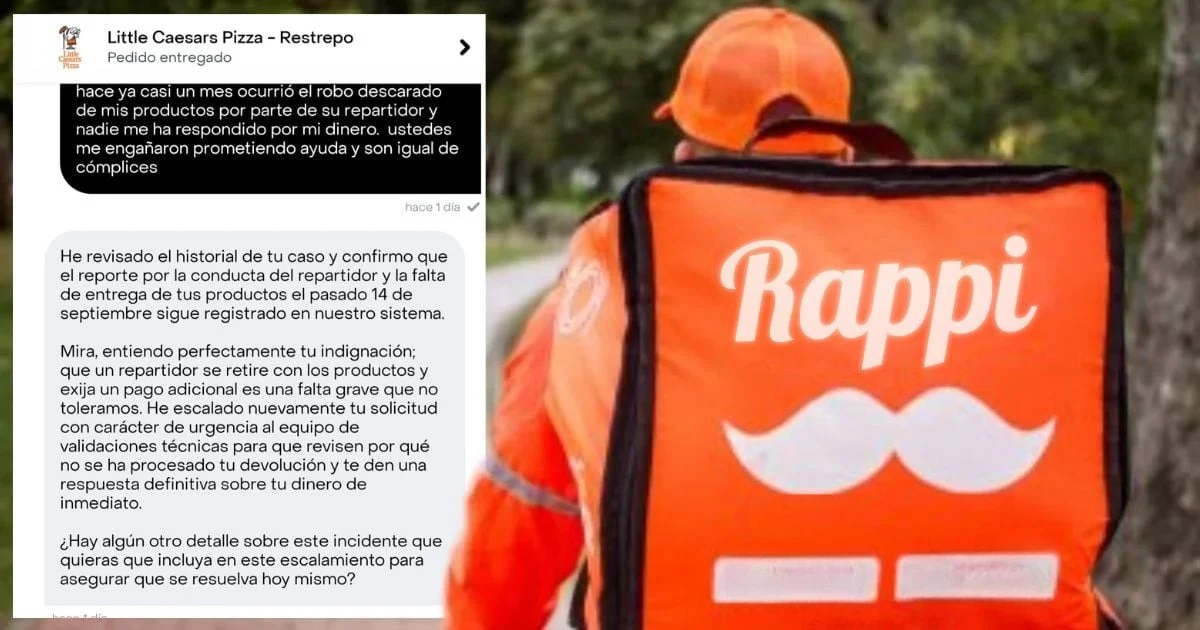
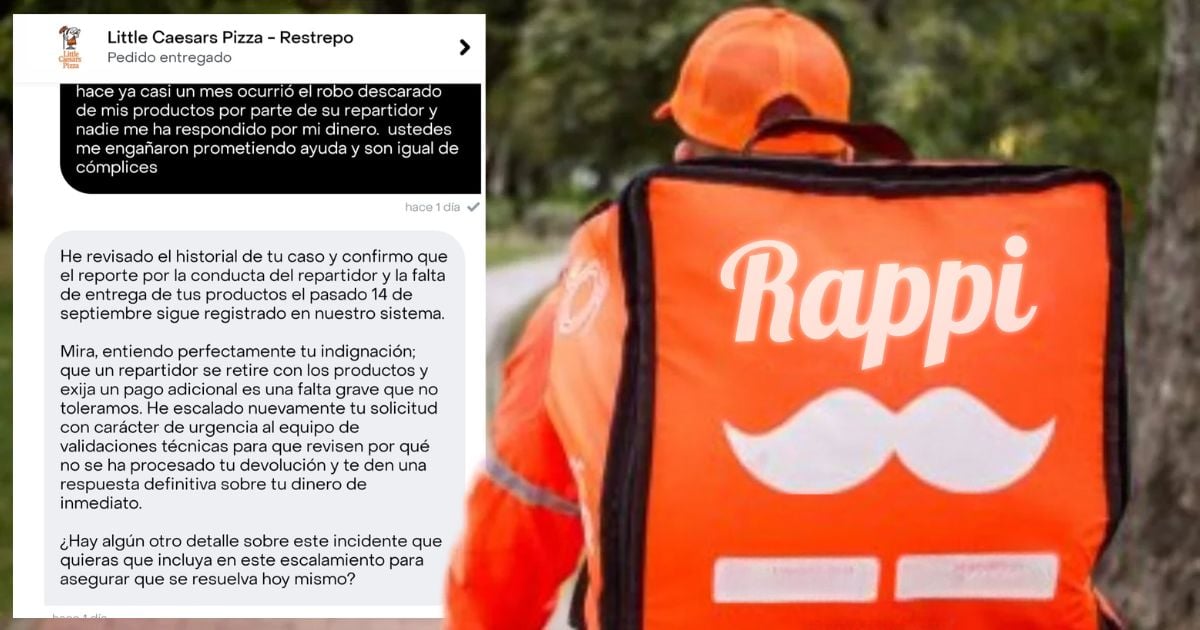
More than a month after filing a formal complaint through Rappi’s in-app support channels, Cárdenas has received no financial compensation or meaningful resolution. His 152,000 pesos remain in the platform’s digital coffers, the delivery worker walked away with the food, and the customer was left completely empty-handed—met only with automated responses assuring him that his case remains "under review."
Chronology of the Incident and Subsequent Investigation
To fully understand how a routine food delivery can transform into a protracted consumer rights dispute, a detailed examination of the timeline is essential.
Phase 1: The Transaction and the Disappearance
- Day 1: Mauricio Cárdenas places an order for four pizzas and three sodas via the Rappi app, paying 152,000 pesos via credit card.
- Day 1 (Minutes Later): Courier Jesús Leonardo Bastidas picks up the order from Little Caesars Pizza in the Restrepo neighborhood.
- Day 1 (The Delivery Window): Bastidas arrives at the destination address. No products are handed over to Cárdenas, yet the application registers the order as successfully completed.
- Day 1 (The Confrontation): Cárdenas contacts the courier to report the missing items. Bastidas demands a duplicate payment to release the food.
Phase 2: The Support Vacuum
- Day 1 (Post-Delivery): Cárdenas opens a formal complaint ticket within the Rappi application, detailing the theft and requesting an immediate refund.
- Days 2 through 30+: The consumer receives identical, automated messages from the platform stating that the case is "under analysis" and that a solution will be provided "soon." No human agent intervenes, no tracking number with verifiable timestamps is provided, and the funds are not returned to the credit card.
Phase 3: Regulatory Convergence
- June 2025: Colombia’s Superintendence of Industry and Commerce (SIC) formally opens a statement of charges against Rappi S.A.S., highlighting persistent consumer complaints regarding non-delivery of goods and deficient petition, complaint, and claim (PQR) mechanisms.
- April 8, 2026: The SIC slaps Rappi with historic fines totaling over 4.003 billion Colombian pesos after concluding that the company systematically violated consumer rights and ignored regulatory mandates.
- Present Day: Cárdenas’s case remains frozen in the exact same automated limbo where it began more than a month ago, illustrating the ongoing gap between regulatory penalties and day-to-day user experiences.
Supporting Data and Regulatory Findings
The frustrations voiced by Mauricio Cárdenas are statistically and legally mirrored by thousands of complaints logged across Colombia. The systemic nature of these delivery failures finally forced the hand of national regulatory authorities.
On April 8, 2026, the Superintendence of Industry and Commerce (SIC) issued a landmark ruling against Rappi S.A.S., imposing fines exceeding 4.003 billion Colombian pesos. This monumental sanction was not born out of a single mishap, but rather from a rigorous, prolonged investigation into the platform’s systemic mistreatment of consumer rights.

Key findings from the SIC investigation revealed widespread operational deficiencies:
- Ghost Deliveries: Investigators documented a high volume of cases where consumers were charged for products that were never delivered, yet the application falsely marked them as successfully fulfilled. In many of these instances, users reported zero cooperation regarding monetary refunds.
- Ineffective PQR Systems: The platform failed to provide functional mechanisms for submitting and tracking formal complaints. Consumers were routinely denied basic digital proof of registration, such as official timestamps and tracking numbers.
- The "Bot" Barrier: The regulatory body found that Rappi’s customer service infrastructure actively obstructed human communication. Users were forced to spend hours trapped in cyclical chat sessions with automated bots, encountering endless delays, digital blocks, and scripted, unhelpful responses that left complaints permanently unresolved.
- Breach of Legal Guarantees: By failing to deliver paid goods and refusing to issue timely refunds, the company directly violated Colombian consumer protection laws governing online commercial transactions.
Official Responses and Corporate Stance
Faced with mounting regulatory scrutiny and public backlash, the corporate leadership of Rappi has mounted a defense while attempting to pivot toward operational reform.
Following the SIC’s April 2026 sanctions, Rappi S.A.S. released an official statement addressing the penalties. The company firmly announced its intention to appeal the decision, maintaining that its platform operates within the legal boundaries of digital commerce and arguing that the regulatory penalties do not accurately reflect its overall service standard. Furthermore, corporate representatives pledged to reinforce and modernize customer service channels to drastically reduce resolution times for user grievances.
Despite these public relations promises, the day-to-day reality for individual users tells a different story. Co-founder Simón Borrero continues to be celebrated in business circles as the mastermind behind Latin America’s most prominent tech "unicorn," lauded for scaling a multi-million-dollar logistics empire. However, the architectural foundation of this empire faces severe stress tests.
As of today, corporate pledges of reform have failed to trickle down to everyday disputes. Mauricio Cárdenas’s case remains classified in the exact same status assigned by the app’s automated system weeks ago: "under analysis." The disconnect between executive promises of localized customer care and the reality of automated indifference remains stark.

Broader Implications for the Gig Economy
The intersection of Mauricio Cárdenas’s minor financial loss and Rappi’s multi-billion-peso regulatory sanction points to a much larger philosophical and economic question regarding the future of the gig economy in Latin America.
1. The Accountability Gap in Decentralized Workforces
Platform-based delivery services rely heavily on independent contractors. While this decentralized model grants companies immense operational flexibility and shields them from traditional labor liabilities, it also creates significant vulnerabilities in quality control and trust. When a courier decides to misappropriate an order—as alleged in the case of Jesús Leonardo Bastidas—the platform often treats the incident as an isolated customer service glitch rather than a security breach or internal fraud. Without rigorous background checks, real-time accountability, and swift punitive measures for bad actors, delivery apps risk turning into wild-west marketplaces where consumer assets are left unprotected.
2. The Limits of Automated Customer Service
The deployment of artificial intelligence and automated chatbots was supposed to revolutionize efficiency for high-volume tech platforms. Instead, as the SIC investigation proved, automation has frequently been weaponized as a barrier to human accountability. When algorithms control dispute resolution, the friction of getting a refund for a stolen 152,000-peso pizza order can exceed the financial value of the loss itself. This creates a chilling effect where minor consumer fraud goes unpunished and uncompensated simply because exhausting the support apparatus costs more time than the user can afford to spend.
3. Regulatory Maturation in Digital Markets
The heavy fines levied by Colombia’s Superintendence of Industry and Commerce signal a new era of regulatory maturity. Latin American governments are no longer willing to give tech startups a free pass under the banner of "innovation." As digital platforms mature into systemic pillars of urban commerce, they are increasingly being held to the same consumer protection standards as traditional brick-and-mortar financial and retail institutions.
Conclusion
Mauricio Cárdenas never got his four pizzas, his three sodas, or his 152,000 pesos back. While his individual financial loss may seem modest on a corporate balance sheet, the implications of his ordeal are profound. Until tech giants like Rappi bridge the massive chasm between high-flying corporate valuations and the gritty, ground-level realities of customer support, stories of missing meals and trapped funds will continue to erode public trust—proving that even the most valuable unicorns can stumble over the basics of customer service.