

Main Facts
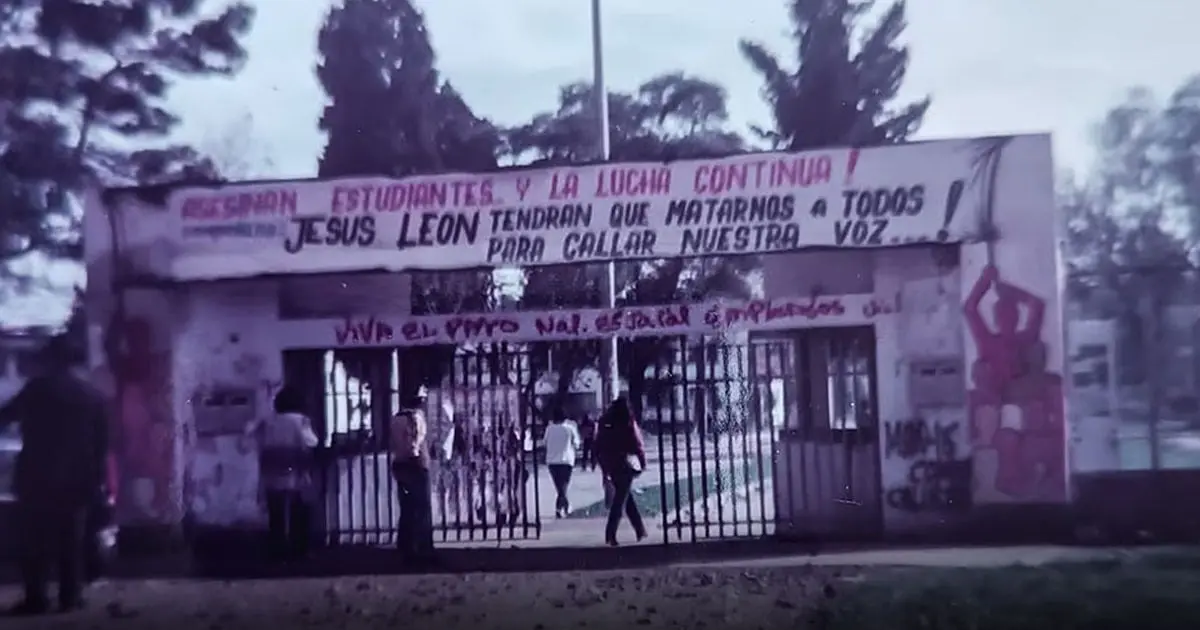
On May 16, 1984, the National University of Colombia (Universidad Nacional de Colombia) in Bogotá became the epicenter of one of the most violent military and police interventions in the history of Latin American higher education. Operating under a state of siege decreed by the administration of President Belisario Betancur, security forces deployed tanquettes, heavy weaponry, and tactical units directly onto the historic campus.
The immediate catalyst for the operation was the explosion of a high-impact bomb on university grounds, but the intervention served as the violent culmination of escalating tensions. Just two days prior, on May 14, 1984, Jesús "Chucho" León—an influential dental student and student movement leader from Pasto—was assassinated in Cali. León’s death had galvanized the radicalized student body, which was already heavily influenced by urban guerrilla movements such as the M-19, the ELN, and the FARC, particularly after the collapse of Betancur’s early peace overtures.
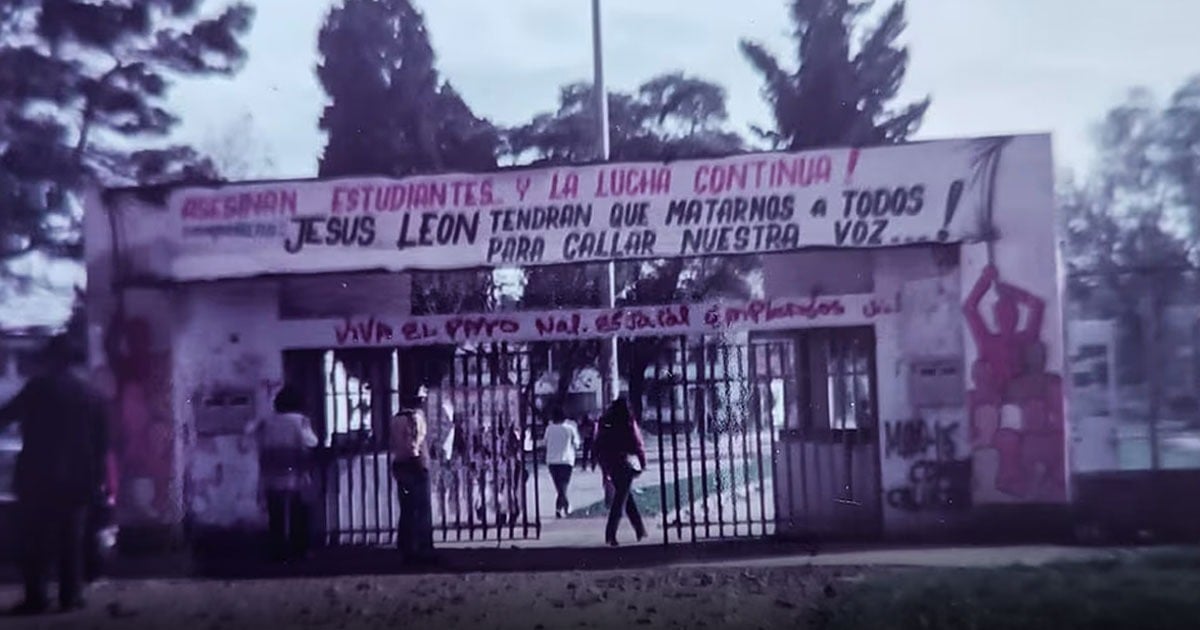
The raid left a profound, bloody scar on the academic community. Official tallies recorded dozens of injuries, widespread structural destruction, the arbitrary detention of 81 individuals who suffered systematic torture, and an unspecified number of student deaths. In the wake of the massacre, the university was ordered closed indefinitely by the Higher University Council—a shutdown that lasted until April 1985, marking the longest closure in the institution’s history. Decades later, the true death toll remains contested, and the high-ranking civilian and military officials believed to have orchestrated the operation have never faced criminal accountability.
Chronology of Terror: May 16, 1984
The tragedy unfolded in a matter of hours, transforming a sanctuary of higher education into a theater of war.

- The Prelude: Following the assassination of Jesús León in Cali, the National University campus in Bogotá was gripped by intense grief, outrage, and active mobilization. Rumors and intelligence reports had circulated for weeks suggesting that military high command was crafting a blueprint to militarize public universities.
- Zero Hour: On the morning of May 16, a high-impact explosive device detonated inside the campus. The blast served as the pretext for a massive, unannounced incursion by the National Police and military units.
- The Incursion: Armored tanquettes carrying heavily armed officers tore through the perimeter fences, notably demolishing the main gates near Calle 26. Police officers on motorcycles and on foot entered firing indiscriminately, treating fleeing students as enemy combatants.
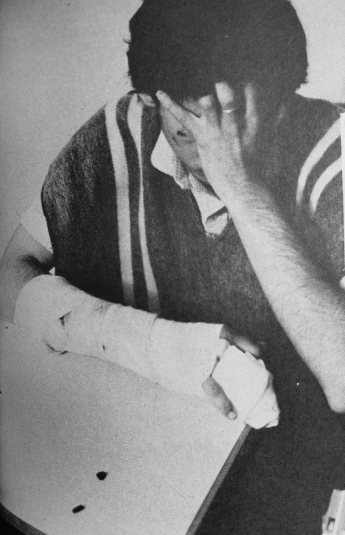
- The Persecution of Yesid Bazurto: Among those caught in the chaos was 20-year-old zootechy student Yesid Bazurto, who was attempting to locate his sister Pilar, an odontodology student. Pursued by police officers on a motorcycle who fired repeatedly, Bazurto was struck in the chin and later shot in the right cheek while lying defenseless on the ground. Feigning death among piles of corpses, Bazurto survived the ordeal through sheer endurance and a clandestine escape orchestrated by student peers.
- The Afternoon Sweeps: By late afternoon, security forces had secured the campus, rounding up scores of students, forcing them into brutal detentions, and leaving administrative hallways—including the Faculty of Medicine—slick with student blood.
Supporting Data and Human Impact
The quantitative and qualitative fallout of the May 16 raid exposes the systemic brutality meted out against the academic community during the height of Colombia’s 1980s internal conflict.
- Casualties and Detentions: While the exact number of students killed during the operation remains unverified due to the chaotic nature of the cover-up and subsequent clean-up operations, 22 police officers reportedly sustained minor injuries, largely from makeshift projectiles (miples) thrown from campus buildings. A total of 81 civilians were detained. Of these, 11 were released the following day, 68 were sent to the District Jail under dubious charges, and two faced full trials for illegal weapons possession—one based on fabricated evidence.
- Systematic Torture: Documentation from survivors and human rights archives reveals that detainees held at the Sixth Police Station and other makeshift holding areas experienced severe physical and psychological abuse. Methods included beatings with fists, boots, metal chains, police batons (bolillos), and brass knuckles (manoplas), alongside cigarette burns and forced exposure to freezing water during dawn hours.
- Gender-Based Violence: Female students inside the detention centers faced targeted sexual violence and gendered degradation, including explicit threats of rape, coercion forcing male students to masturbate in front of their peers, and instances where female detainees were stripped naked and forced to sit on blocks of ice overnight.
- Institutional Collapse: Then-rector Fernando Sánchez Torres, returning from an international trip amidst the crisis, immediately submitted his resignation. The physical destruction of university property, coupled with the ongoing security threats, forced the university to close its doors for nearly eleven months.
Official Responses and Institutional Silence
The response from the Colombian state in 1984 reflected the rigid "national security doctrine" prevalent throughout Latin America during the Cold War. President Belisario Betancur’s administration, caught between failed peace negotiations with leftist guerrillas and mounting pressure from military hardliners, implicitly authorized the militarization of public spaces under the umbrella of emergency state-of-siege powers.

High-ranking military and police officials implicated in the planning and execution of the raid—including then-Minister of Defense General Miguel Vega Uribe, National Police Director General Víctor Alberto Delgado Mallarino, and Bogotá Police Commander General José Luis Vargas Villegas—never faced judicial inquiries or formal charges. Despite Rector Sánchez Torres publicly acknowledging that military brass had long plotted the university’s intervention, state institutions maintained a wall of silence.
For decades, the official narrative sought to minimize the atrocities, framing the intervention as a necessary counter-insurgency measure against radicalized elements within the National University. It was only through grassroots archival preservation, independent documentaries (such as those by Tercer Canal), and survivor testimonies that the full scope of the human rights violations came to light.

Implications for Modern Colombia
More than four decades later, the ghosts of May 16, 1984, continue to haunt contemporary debates regarding civil liberties, higher education autonomy, and public security in Colombia.
The memory of the massacre serves as a fierce warning against the erosion of university autonomy (autonomía universitaria). Whenever political figures or conservative factions—such as representatives from parties like Salvación Nacional—propose protocols to allow public security forces back onto university grounds to maintain order, student movements immediately invoke the trauma of 1984. For these generations, police entry into a campus is not synonymous with public safety; it is historically linked to state-sponsored terror, extrajudicial executions, and the silencing of critical thought.
Furthermore, the lack of historical accountability for the events at the National University underscores the broader impunity that has historically characterized Colombia’s armed conflict. As current educational policies increasingly debate the privatization of schooling and the expanding reach of state oversight in academic institutions, the 1984 massacre remains a stark reminder of the lethal price paid when the state turns its military might against its own youth and centers of intellectual inquiry.



Leave a Reply