

By Thyanni Puello Osorio
Published via Las2Orillas (Adapted and Expanded)
Main Facts: The Turning Point at the United Nations
The architecture of international relations, carefully constructed in the wake of the Second World War, is no longer merely under strain—it is actively fracturing. For decades, the global consensus rested upon a foundational promise: that deep economic integration, predictable multilateral institutions, and adherence to international law would suffice to guarantee global peace. However, a watershed moment at the United Nations General Assembly laid bare an unavoidable diagnostic: the contemporary geopolitical framework is experiencing a profound, systemic rupture.
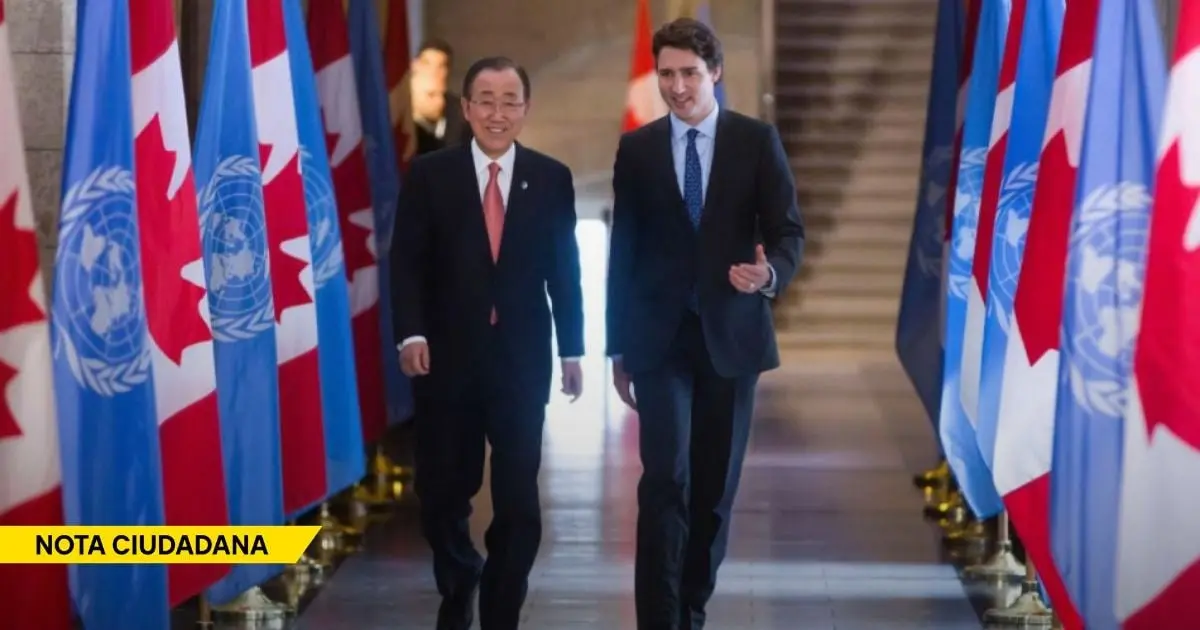
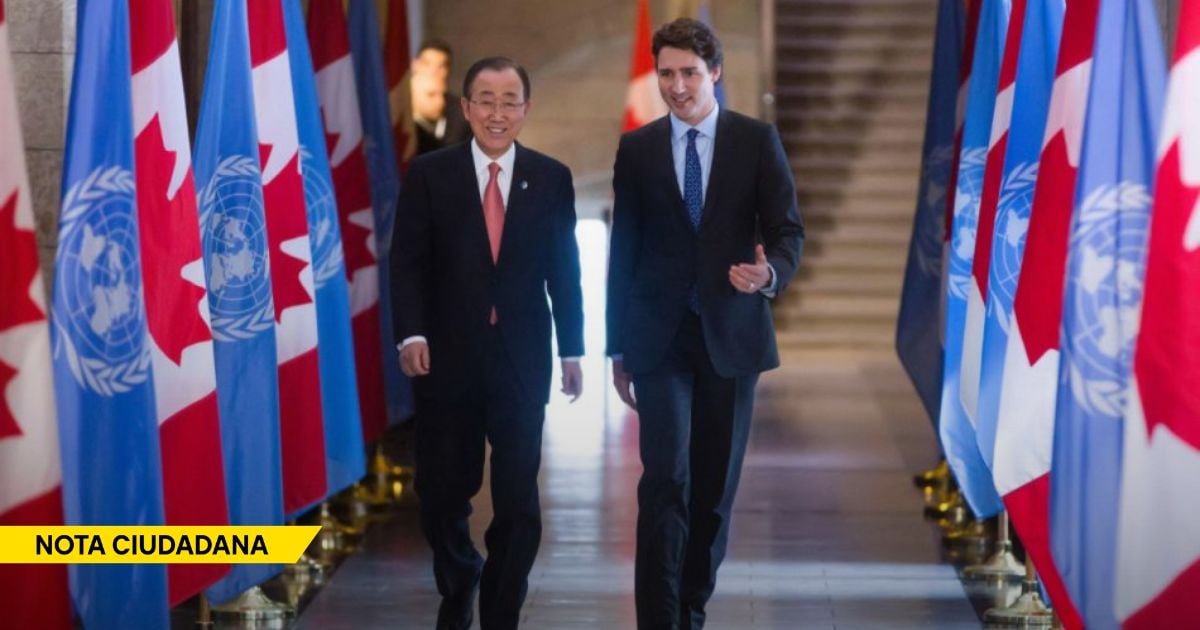
In a landmark address, Canadian Minister of Foreign Affairs Anita Anand articulated what diplomats have whispered behind closed doors for years. The post-Cold War liberal international order has given way to an era defined by aggressive transactionalism, the reassertion of unilateral hegemony by superpowers, and a blatant disregard for the sovereignty of smaller and middle-tier nations.
For Canada—a G7 economy historically defined by its multilateral idealism and steadfast alignment with traditional security anchors—this speech was not merely rhetorical. It signaled a profound paradigm shift. The core takeaways of this geopolitical pivot include:
- The End of Monolithic Dependency: Ottawa’s open admission that relying on a single major partner for economic and security survival is an obsolete strategy.
- The Rise of Strategic Autonomy: Middle powers are no longer waiting for paralyzed global bodies to act; instead, they are aggressively diversifying their diplomatic and economic portfolios.
- The Pragmatism of "Coalitions of the Willing": Slow, consensus-driven global institutions are being sidelined in favor of agile, issue-specific mini-lateral blocs.
- The Militarization of Diplomacy: A concurrent rise in defense spending to meet stringent alliance obligations, signaling that hard power remains the ultimate currency in a fragmented world.
Chronology: From Post-Cold War Optimism to Fragmented Realism
To understand the magnitude of Canada’s recent stance at the UN, one must trace the historical trajectory that brought the international community from the zenith of globalization to the current precipice of fragmentation.
Phase 1: The Illusion of Unipolar Stability (1991–2008)
Following the collapse of the Soviet Union, international relations entered a brief, overly optimistic period often described as "the end of history." Globalization accelerated, trade barriers fell, and institutions like the World Trade Organization (WTO), the International Monetary Fund (IMF), and the United Nations were heralded as permanent arbiters of global disputes. Middle powers like Canada comfortably functioned as diplomatic intermediaries and enthusiastic proponents of multilateralism.
Phase 2: The Structural Shocks and Institutional Paralysis (2008–2020)
The 2008 global financial crisis exposed the vulnerabilities of hyper-financialized globalization. Concurrently, the return of assertive authoritarian capitalism in Beijing, the resurgence of Russian revanchism (culminating in the 2014 annexation of Crimea), and the rise of populist, inward-looking politics in Western democracies exposed deep structural cracks in global governance. The UN Security Council increasingly suffered from institutional paralysis due to frequent use of the veto, rendering it incapable of resolving major humanitarian and geopolitical crises in Syria, Yemen, and beyond.
Phase 3: The Poly-crisis and the Strategic Awakening (2020–Present)
The COVID-19 pandemic, followed by supply chain weaponization, the acute return of major war in Europe via the Russian invasion of Ukraine, and escalating great-power competition between the United States and China, shattered the remaining illusions of the old order. It is within this crucible that Canada’s recent foreign policy shift took shape. Recognizing that traditional international mechanisms can no longer guarantee economic security or territorial defense, Ottawa—alongside other middle powers—began executing a quiet yet radical overhaul of its foreign policy doctrine.
Supporting Data and Strategic Shifts: Navigating a Multipolar World
The transition from multilateral idealism to strategic autonomy is grounded in concrete economic and geopolitical realignments. Canada’s strategic pivot is illustrative of broader macroeconomic and diplomatic trends observed across middle-tier nations from Europe to the Asia-Pacific.
1. Supply Chain Diversification and the Indo-Pacific Strategy
For decades, Canadian trade remained overwhelmingly tethered to its southern neighbor under the NAFTA/USMCA framework. Recognizing the systemic vulnerabilities exposed by pandemic-era bottlenecks and geopolitical coercion, Ottawa launched its comprehensive Indo-Pacific Strategy.

- Critical Minerals: Canada has prioritized the domestic extraction and secure international supply of critical minerals (such as lithium, cobalt, and nickel)—the lifeblood of the green energy transition. By forging partnerships outside traditional Western orbits, Ottawa aims to break dependency monopolies.
- Market Expansion: Diplomatic and commercial overtures toward Latin America, the Gulf states, and Southeast Asian economies reflect a new risk-mitigation mantra: "never put all your diplomatic eggs in one basket."
2. The Defense Budgetary Realignment
The tension between multilateral ideals and hard realism is most visibly manifested in national accounts. To remain a credible security partner within traditional alliances, Canada—long criticized by allies for under-spending on defense—has faced mounting pressure to meet NATO’s benchmark of allocating 2% of GDP to military expenditures. The simultaneous commitment to international human rights frameworks and the ramp-up of Arctic defense capabilities demonstrates that middle powers can no longer afford the luxury of separating normative diplomacy from hard-power readiness.
Official Responses and Diplomatic Reactions
The articulation of this new geopolitical realism by Canadian leadership has sparked intense debate within international circles, drawing varied responses from global capitals.
- Traditional Allies (Washington and European Capitals): Reaction from Western partners has been a mixture of quiet relief and anxious accommodation. While Washington welcomes Canada’s increased focus on defense preparedness and the Indo-Pacific, American policymakers remain watchful of any strategy that hints at European or Canadian "strategic ambiguity" or detachment from core U.S. security frameworks.
- Global South and Developing Nations: Emerging economies have expressed mixed views. On one hand, many developing nations view the proliferation of exclusive "coalitions of the willing" with suspicion, fearing it further marginalizes the voice of the Global South within universal bodies like the UN General Assembly. On the other hand, the diversification efforts of middle powers are often welcomed as opportunities to secure alternative trade and investment partners outside the traditional U.S.-China bipolar tug-of-war.
- Institutionalists and Multilateral Purists: Career diplomats and international law advocates have raised alarms regarding the erosion of universal norms. They argue that bypassing the UN Security Council and General Assembly in favor of ad-hoc alliances undermines international law, reducing global governance to a transactional exercise dictated strictly by raw power dynamics.
Implications: The Future of Global Governance
As the dust settles on this new era of international relations, several profound implications emerge for the future of global stability and the role of middle powers.
The Rise of "Mini-lateralism"
The traditional model of universal consensus is giving way to mini-lateralism—flexible, mission-specific coalitions designed to tackle targeted challenges. Whether it is securing semiconductor supply chains, coordinating sanctions against aggressor states, or managing maritime security in the Arctic and the Indo-Pacific, these agile groups bypass the bureaucratic gridlock of larger institutions. However, the proliferation of mini-lateralism risks creating a fragmented, two-tier international system where powerful nations negotiate solutions while smaller states are relegated to the sidelines.
The Survival Challenge for Universal Institutions
Institutions like the United Nations face an existential crisis. If major powers and influential middle powers increasingly view the UN as a mere talking shop while executing their substantive security and economic policies through exclusive clubs, the legitimacy of the multilateral system will collapse entirely. Preserving the normative authority of the UN while acknowledging the practical necessity of flexible coalitions is the ultimate balancing act for 21st-century diplomacy.

The Path Forward for Middle Powers
Persisting in the nostalgia of a post-Cold War global order that will never return is a recipe for diplomatic irrelevance. As Anita Anand’s UN address made clear, the capacity of middle powers like Canada to influence global outcomes will no longer derive from moral suasion alone. Instead, it will depend on their agility: the ability to seamlessly integrate hard strategic realism with the defense of universal principles.
The ultimate challenge for the international community is clear: how to navigate strategic autonomy and competitive fragmentation without allowing the temporary necessity of ad-hoc alliances to become a permanent state of global lawlessness. In this new era, middle powers must act not merely as survivors of a broken system, but as architects of a durable, adaptable architecture that prevents the fragmentation of the present from becoming the permanent dystopia of the future.




Leave a Reply