

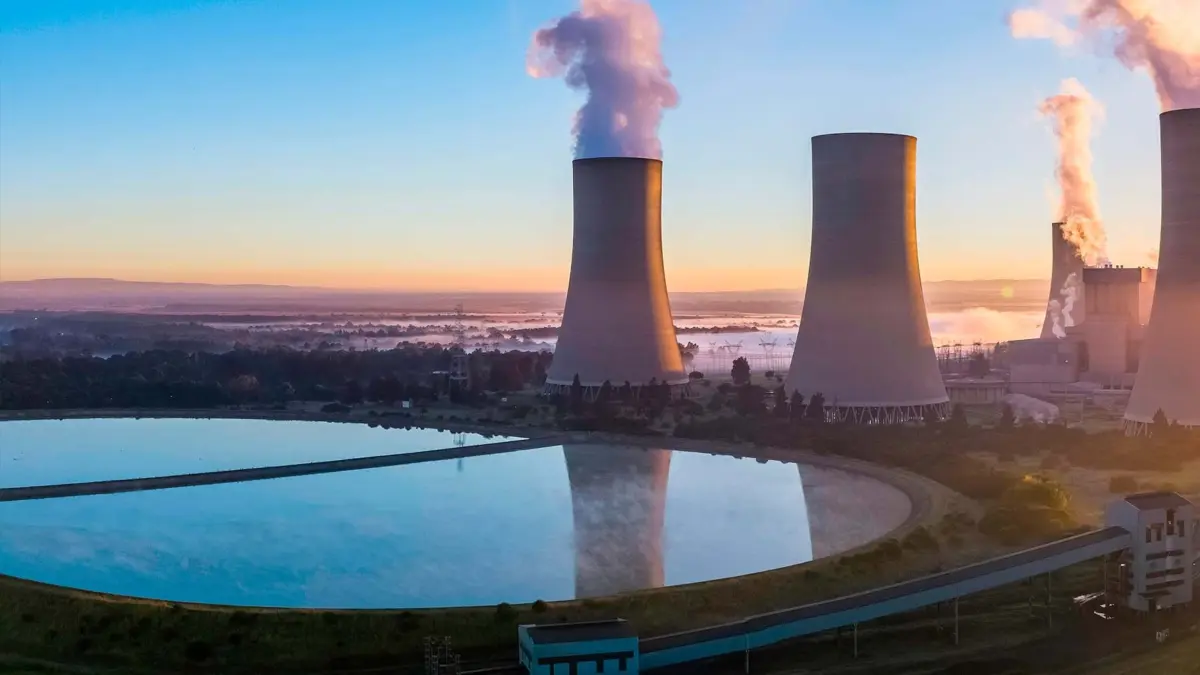
PHOENIX, Arizona — At first glance, the notion of operating a massive nuclear power facility in the scorched expanse of the Sonoran Desert defies basic logic. Nuclear power generation is inherently water-intensive, relying on colossal volumes of fluid to cool steam and drive turbines. In an arid environment defined by blistering heatwaves and extreme drought, securing a steady, reliable water source is a monumental engineering challenge.
Yet, for decades, the Palo Verde Generating Station—the largest nuclear power plant in the United States by net generation—has thrived roughly 50 miles west of Phoenix. Its survival in a region devoid of major rivers or natural lakes has long depended on an ingenious, unconventional solution: treated municipal wastewater.
Today, however, Palo Verde faces a new kind of crisis, one rooted not in engineering limits, but in economics and resource competition. As treated wastewater becomes increasingly valuable to growing desert communities, the nuclear giant must once again innovate. Partnering with federal researchers, the plant is racing to cut its reliance on municipal wastewater by 20%, confronting technical hurdles, mineral-heavy groundwater, and the harsh realities of climate change.
1. Main Facts: The Anatomy of Desert Nuclear Cooling
To understand why Palo Verde consumes such staggering amounts of water, one must look at the fundamental mechanics of thermal power generation. Like a giant domestic kettle, a nuclear reactor splits atoms to generate intense heat, which boils water into high-pressure steam. This steam drives massive turbines to produce electricity.
Once the steam has done its work, it must be cooled down, condensed back into liquid water, and recycled through the core. This is where the cooling towers come in.
- The Scale of Consumption: During peak summer months, when ambient temperatures in the Arizona desert routinely soar past 110°F (43°C), the Palo Verde cooling towers can consume up to 60,000 gallons of water per minute to compensate for massive evaporative losses.
- The Wastewater Lifeline: To sustain this operation without draining local aquifers or competing directly with agricultural irrigation for pristine river water, Palo Verde struck a groundbreaking agreement decades ago. It utilizes treated effluent piped directly from nearby municipalities, including the sprawling Phoenix metropolitan area.
- Annual Volume: The facility reuses more than 20 billion gallons of treated wastewater annually, making it the only nuclear plant in the world to rely exclusively on municipal effluent for its cooling needs.
While this system has functioned reliably for generations, it has created a vulnerable nexus between nuclear energy production and municipal urban planning. As the population of the American Southwest booms, the wastewater that Palo Verde has long depended upon is no longer viewed as a waste product to be disposed of—it is viewed as a vital, highly contested commodity.
2. Chronology: From Innovative Solution to Modern Resource Competition
The history of Palo Verde’s water strategy is a timeline of adaptation, foresight, and shifting environmental landscapes.
- 1970s–1980s: Conception and Construction. Recognizing the absence of a nearby river, planners and engineers designed Palo Verde from its inception to utilize reclaimed municipal wastewater. This forward-thinking move bypassed the political and ecological battles associated with drawing fresh water from the shrinking Colorado River basin.
- 1986–1988: Phased Commissioning. The plant’s three nuclear reactors came online sequentially. As power generation ramped up, the infrastructure piping millions of gallons of treated sewage from Phoenix and surrounding towns became the beating heart of the plant’s cooling infrastructure.
- Late 1990s–2010s: The Era of Efficiency. For decades, the arrangement was mutually beneficial. Municipalities needed a reliable buyer for their treated effluent, and Palo Verde had a perpetual demand. However, as the American Southwest entered a historic megadrought, water rights and recycling initiatives gained unprecedented legal and economic urgency.
- Present Day: The Cost Crunch. Treated wastewater is no longer cheap or abundant relative to demand. Competing municipal needs, groundwater recharge projects, and agricultural adaptations have driven up the market value of reclaimed water. Recognizing that water acquisition costs could threaten long-term operational economics, Palo Verde initiated a strategic pivot. Partnering with the Sandia National Laboratories, the plant set an ambitious goal: reduce its consumption of treated municipal wastewater by roughly 20%, translating to a savings of approximately 9 million gallons per day.
3. Supporting Data: The Math of Conservation in the Arid West
The challenges facing Palo Verde are underscored by hard data regarding water availability, thermodynamic efficiency, and logistical constraints.
| Metric | Value / Description |
|---|---|
| Annual Effluent Reuse | Over 20 billion gallons per year. |
| Peak Summer Consumption | Up to 60,000 gallons per minute (evaporative loss). |
| Target Reduction Goal | ~20% reduction in treated wastewater usage. |
| Daily Volume Saved | Approximately 9 million gallons per day. |
| Primary Alternative Explored | Brackish groundwater reserves in the Buckeye region. |
| Alternative Technologies | Dry and hybrid cooling systems (evaluated but limited by thermal efficiency penalties). |
These figures highlight the delicate balance engineers must maintain. A 20% reduction is not merely a matter of closing a valve; it requires finding millions of gallons of replacement water daily without destabilizing complex cooling cycles.
4. Official Responses and Technological Solutions
Faced with rising water costs and dwindling margins, plant operators and federal researchers have launched exhaustive investigative efforts to diversify the plant’s water portfolio.
Exploring the Buckeye Groundwater Reserves
One of the most promising alternatives lies right beneath their feet: deep underground aquifers in the nearby Buckeye area. At first glance, tapping local groundwater seems like an obvious solution for a desert facility. However, subsurface water in this region presents a severe chemical obstacle.
"It is not simply a matter of dropping a straw into the ground and pumping water into our cooling system," explains an engineering liaison familiar with the project. "The local groundwater is heavily laden with salts, minerals, and total dissolved solids (TDS)."
If untreated or improperly blended, highly mineralized water accelerates scaling, corrosion, and biological fouling within the plant’s multi-million-dollar cooling infrastructure. This can severely degrade heat transfer efficiency and threaten reactor safety margins.
The Sandia National Laboratories Partnership
To overcome this, Palo Verde teamed up with scientists and data modelers at Sandia National Laboratories. Researchers have been running advanced simulations and empirical trials to test various blending ratios—mixing brackish groundwater with treated municipal effluent in precise proportions.
By identifying the optimal chemical mix, the plant hopes to stretch its municipal water supply while safely utilizing local geological resources.
The Limits of Dry and Hybrid Cooling
Researchers also evaluated transitioning toward dry-cooling or hybrid wet-dry cooling systems, technologies that utilize massive fans rather than evaporation to shed heat. While these systems dramatically reduce water consumption, they introduce a devastating trade-off in the desert environment:
- Energy Penalty: Dry cooling systems are significantly less efficient when ambient air temperatures exceed 100°F.
- Economic Burden: Retrofitting an existing nuclear plant with dry cooling requires massive capital expenditure and can parasiticistically drain the plant’s net electricity output, reducing the amount of power delivered to the grid precisely when consumer demand (driven by air conditioning use) peaks.
Ultimately, engineers concluded that dry cooling is not a silver bullet, reinforcing the necessity of optimizing water chemistry and blending sources.
5. Implications: What Palo Verde’s Struggle Means for the Future of Energy
The water-conservation trials at Palo Verde transcend the operational concerns of a single utility company. They offer a cautionary tale and a blueprint for heavy industry across the globe as climate change intensifies resource scarcity.
1. The Energy-Water Nexus is Tightening
Energy production and water security are inextricably linked. Traditional thermoelectric plants—including coal, gas, and nuclear facilities—account for a massive share of global water withdrawals. As climate change accelerates droughts and depletes aquifers, power plants everywhere will face the same economic pressures that Palo Verde is navigating today. The era of cheap, abundant cooling water is officially over.
2. The Economic Valuation of Wastewater
Municipal wastewater is undergoing a paradigm shift. Once treated merely as a compliance obligation for sanitation districts, reclaimed water is increasingly recognized as a strategic economic asset. Facilities that rely on effluent must now compete with agricultural districts, urban greening projects, and industrial tech sectors (such as semiconductor fabrication plants, which also require massive volumes of ultrapure water in arid hubs like Arizona).
3. Innovation as a Survival Imperative
Palo Verde’s ongoing efforts prove that heavy industry can adapt, but doing so requires deep cross-sector collaboration. By bridging nuclear engineering with advanced materials science, chemical hydrologists, and national laboratory research, the facility is rewriting the playbook on resource management in extreme environments.
As the American Southwest continues to warm, the lessons learned in the scorching deserts of Arizona will reverberate globally. For Palo Verde, the mission is clear: to keep the atoms splitting, the turbines turning, and the lights on, the plant must master not just the science of the nucleus, but the precious chemistry of every single drop of water it touches.



Leave a Reply