
BUENOS AIRES — October 6, 2026, will forever be etched in the annals of global sports history. Tonight, under the floodlights of a packed Estadio Monumental in Buenos Aires, Lionel Andrés Messi Cuccittini laces up his boots for the final time in the iconic Albiceleste shirt. The international friendly against the national team of Benin serves not merely as an athletic exhibition, but as a deeply emotional, national pilgrimage. For more than two decades, the boy from Rosario carried the hopes, dreams, and immense pressures of a football-obsessed nation on his shoulders. Tonight, that legendary chapter comes to a definitive close.
An estimated 85,000 passionate supporters have flooded the tribunes of the Monumental, creating a deafening sea of light blue and white. Across Colombia and the rest of South America, millions more are glued to their screens, watching the 6:00 p.m. (local time) kickoff. This evening marks the culmination of a 21-year international odyssey that reshaped the landscape of modern football, elevating Messi from a prodigious talent into a cultural deity.
Main Facts: The Final Curtain for a Global Icon
The fixture against Benin has been orchestrated as a grand celebration of gratitude. It brings together the remnants of Argentina’s historic World Cup-winning generation and the fresh faces of a burgeoning new era, all gathered to honor the greatest player to ever grace the sport.
While Messi officially confirmed his impending international retirement via a heartfelt letter published on August 31, 2026, tonight makes the reality palpable. The global football ecosystem pauses to reflect on a career that defied statistical norms and narrative arcs alike.
- The Match: Argentina vs. Benin (International Friendly)
- Venue: Estadio Monumental, Buenos Aires, Argentina
- Attendance: ~85,000 capacity crowd
- Kickoff Time: 6:00 p.m. (Colombia time) / 8:00 p.m. (Argentina time)
- Status: Final official international match of Lionel Messi’s career
Despite stepping away from international duty, Messi’s professional career is far from over. The historic forward remains under contract with Major League Soccer (MLS) side Inter Miami, where he will continue to weave his magic at the club level, sparing fans worldwide from a complete retirement from the pitch.
Chronology: Two Decades in the Albiceleste
To understand the weight of tonight’s farewell, one must trace the timeline of a career marked by precocious brilliance, devastating heartbreak, and ultimate redemption.
The Dawn of a Legend (2005)
On August 17, 2005, a youthful 18-year-old Lionel Messi stepped onto the pitch in Budapest for a friendly match against Hungary. It was a momentous occasion that lasted mere seconds; coming on as a second-half substitute, Messi was shown a controversial red card just moments later for an accidental arm movement against Vilmos Vanczák. Few could have predicted that this turbulent debut would birth the most prolific career in South American football history.
Early Glory and Youth Success
Before conquering the senior stage, Messi tasted international success with Argentina’s youth ranks. He led the under-20 squad to glory at the 2005 FIFA World Youth Championship in the Netherlands, finishing as the tournament’s top scorer and best player. Three years later, at the 2008 Beijing Olympic Games, he orchestrated a dazzling campaign that culminated in an Olympic Gold Medal, forging a telepathic partnership with Juan Román Riquelme and Angel Di Maria.
The Years of Agony (2007–2016)
The senior path was paved with agonizing near-misses. Messi reached three consecutive major tournament finals—the Copa América in 2015 and 2016, and the 2014 FIFA World Cup in Brazil—losing every single one. The weight of expectations became unbearable. Following the heartbreaking penalty-shootout defeat to Chile in the 2016 Copa América Centenario, a drained and devastated Messi shocked the world by announcing his temporary retirement from the national team, stating, "For me, the national team is over. I’ve done all I can. It hurts not being a champion."
Fortunately for Argentina, the exile was short-lived. Public pressure and an unyielding internal desire brought him back to drag a struggling squad through the qualifiers for the 2018 World Cup.
The Glorious Renaissance (2021–2024)
The second half of Messi’s international career stands as one of the greatest redemption arcs in sports history. Under the guidance of manager Lionel Scaloni, the Albiceleste constructed a cohesive unit centered around maximizing Messi’s twilight brilliance.
- Copa América 2021 (Brazil): Breaking a 28-year senior title drought, Argentina defeated Brazil 1-0 at the Maracanã. Messi claimed his first major senior international trophy, alongside the tournament’s Golden Ball and Golden Boot.
- Finalissima 2022: Argentina outclassed European champions Italy 3-0 at Wembley Stadium, adding another piece of silverware to Messi’s cabinet.
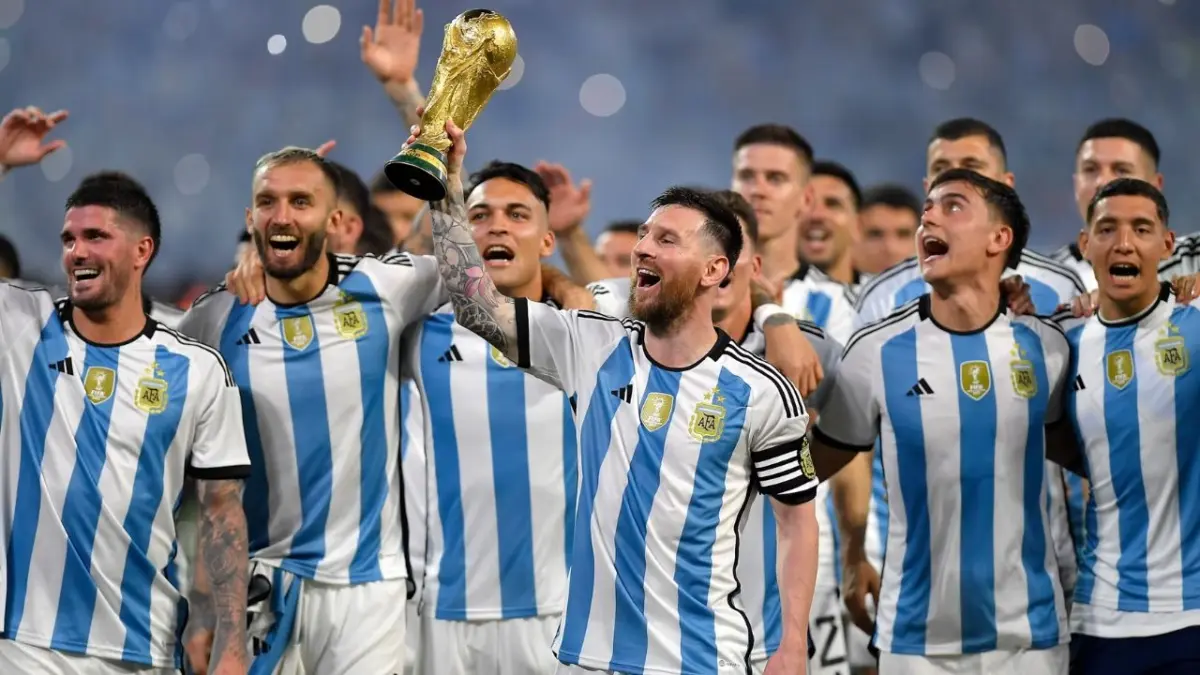
- FIFA World Cup Qatar 2022: In what many consider the greatest World Cup final in history, Argentina triumphed over France on penalties following a thrilling 3-3 draw. Messi scored twice, converted his penalty in the shootout, and finally lifted the elusive golden trophy that cemented his status alongside Pelé and Diego Maradona.
- Copa América 2024 (USA): Messi added a final continental crown to his resume, defending Argentina’s throne in the United States despite dealing with an ankle injury in the final against Colombia.
Supporting Data: The Unmatched Legacy in Numbers
The statistical footprint Messi leaves behind on international football is staggering. Over 21 years, he redefined efficiency, longevity, and offensive dominance.
- Total International Appearances: 207 matches (an all-time record for the Argentine national team).
- Total International Goals: 125 goals (making him the undisputed all-time top scorer for La Albiceleste, well ahead of Gabriel Batistuta and Sergio Agüero).
- Major Trophies Won: 6 distinct international titles across youth and senior levels (FIFA World Cup, 2x Copa América, Finalissima, FIFA U-20 World Cup, Olympic Gold Medal).
- World Cup Records: Most appearances in World Cup history (26 matches), most assists in World Cup knockout stages, and the only player to win the Golden Ball twice (2014, 2022).
Official Responses and the Catalyst Behind the Retirement
The finality of tonight’s match traces back to an announcement made on August 31, 2026. Through an emotional open letter shared across his digital channels, Messi revealed that he had officially closed the book on his international career.
According to revelations in the letter, the decision had actually been penned months earlier, on July 21, 2026—just two days after the conclusion of the 2026 FIFA World Cup cycle. The emotional toll of the tournament was compounded by profound personal grief: the passing of his beloved father, Jorge Messi. In his statement, Messi explained that navigating the tournament amidst such deep personal loss cemented his conviction that the time had come to step aside.
"The decision was painful, agonizing to process, but deep down, I knew my race in this shirt had run its course," Messi wrote in his August statement. "I leave with a heart full of gratitude—to my teammates, our coaches, the dedicated staff, the AFA leadership, and above all, the millions of Argentines who suffered and rejoiced with us through every high and low. I am stepping aside so that the new generation can build the future of our football."
Tributes from the global football community poured in instantly. FIFA President Gianni Infantino praised Messi as "a timeless artist who made billions fall in love with the beautiful game." Meanwhile, Argentina manager Lionel Scaloni remarked in a pre-match press conference: "You cannot replace Lionel Messi. You can only hope to honor his legacy by maintaining the competitive standards, humility, and passion he instilled in this locker room."
Implications: A New Dawn for La Albiceleste
As the referee blows the final whistle at the Monumental tonight, Argentine football crosses a profound threshold. The "Post-Messi Era" is no longer a theoretical exercise for sports analysts; it is the immediate reality facing the reigning world champions.
For Scaloni and his coaching staff, the tactical blueprint must evolve. For over a decade and a half, the tactical identity of the national team was inextricably linked to finding, feeding, and freeing Messi. The emergence of young talents—pioneered by a fresh wave of attackers coming through Europe’s top leagues—means the Albiceleste must now pivot toward a decentralized, collective style of play.
Yet, the cultural impact of Messi’s departure will reverberate far longer than any tactical shift. He leaves behind a culture of winning, resilience, and unity that rescued the Argentine national team from decades of psychological baggage and near-miss trauma.
As the lights dim on the Monumental tonight and the chants of "Muchachos" echo one last time for their undisputed captain, Argentina does not merely say goodbye to a player. They bid farewell to the living embodiment of their national sporting soul. Lionel Messi walks off the international stage as he lived upon it: a champion, an immortal, and forever Argentina’s favorite son.