

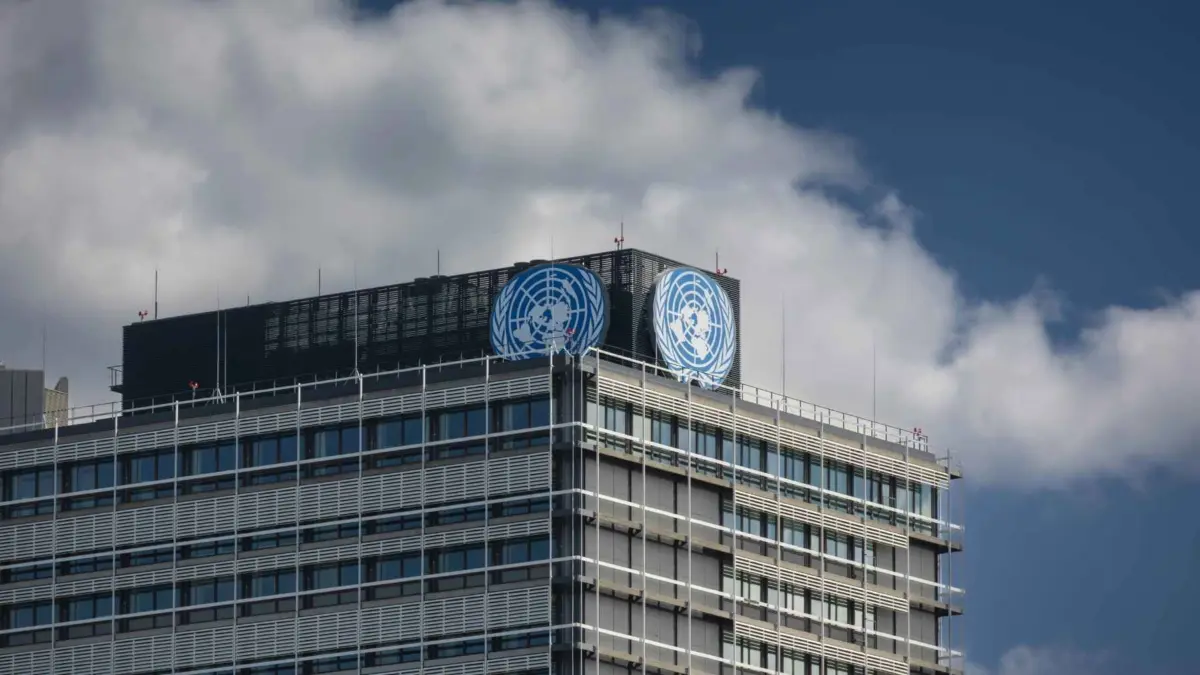
UNITED NATIONS, NEW YORK — As world leaders gathered for the high-level debate of the United Nations General Assembly, the global stage became a battleground of urgent priorities. While intractable armed conflicts and the rapid evolution of artificial intelligence dominated the headlines, an equally formidable thread wove through the speeches of heads of state: the escalating climate crisis.
Amid stark warnings about global security and the ethical boundaries of emerging technologies, leaders shifted critical focus toward environmental degradation, sustainable development, and specific ecological battlegrounds. From the melting glaciers of Central Asia and the vanishing waters of Lake Issyk-Kul to the vast, carbon-absorbing forests of Suriname and the protection of global grasslands, the UN General Assembly served as a stark reminder that the fate of human civilization and the health of the planet are inextricably linked.
Main Facts
The latest session of the UN General Assembly highlighted an interconnected matrix of global crises, with particular emphasis on four defining pillars of the modern era: warfare, technological regulation, deepening social inequalities, and the climate emergency.
- The Fourfold Threat: UN Secretary-General António Guterres opened the proceedings by identifying war, artificial intelligence, inequality, and climate change as the four existential challenges determining the future of humanity.
- Geopolitical Flashpoints: Chronic conflicts—most notably in Gaza and Ukraine—drew fierce criticism from leaders such as Turkey’s Recep Tayyip Erdogan, who condemned humanitarian conditions, and Jordan, which detailed the spillover effects of regional war on food and water security.
- Financial Commitments to Sustainability: Unlikely environmental advocates stepped forward with substantial fiscal pledges, exemplified by significant economic reforms aimed at sustainable development.
- Ecosystem Preservation: Mongolia lauded the UN’s historic pasturing initiatives to protect global grasslands, while Kyrgyzstan and Suriname made impassioned pleas for international financing to protect melting glaciers and expansive rainforests, respectively.
Chronology of the Debate: A Week of Urgent Warnings
Day One: Setting the Global Agenda
The assembly commenced with an address by UN Secretary-General António Guterres, who wasted no time establishing a sense of profound urgency. Guterres emphasized that humanity is navigating uncharted waters, driven by rapid technological disruption and ecological collapse. He called for immediate human-centric guardrails on artificial intelligence and a galvanized, rapid transition toward renewable energy.
French President Emmanuel Macron echoed Guterres’s sentiment, urging the international community not to succumb to fatalism in the face of overlapping global crises. However, the tone quickly sharpened as Turkish President Recep Tayyip Erdogan took the podium. In one of the most blistering critiques of the session, Erdogan targeted the architecture of international diplomacy, labeling the ongoing humanitarian crisis in Gaza as "the most inhuman and shameful concentration camp of our time" and criticizing the UN Security Council’s perceived paralysis.
The Ripple Effects on Natural Resources
As the debate progressed from general security to regional impacts, the conversation illuminated how armed conflict exacerbates ecological and humanitarian distress. Representatives from Jordan took the floor to explain how the war in the Palestinian enclave directly threatens regional stability by imposing severe pressures on Jordan’s own fragile food and water security systems. The nation called for a binding international framework to restore order and safeguard vital natural resources from the collateral damage of geopolitical strife.
Shifting Paradigms on Climate Action
Midway through the assembly, the dialogue transitioned more explicitly toward ecological resilience. Even leaders historically detached from mainstream environmental agendas found themselves compelled to address sustainability. For instance, representatives linked to conservative political figures announced major domestic economic reforms, including the reallocation of billions of dollars toward green infrastructure and environmental initiatives—proving that the economic imperative of sustainability has become too loud to ignore.
Simultaneously, leaders from developing and climate-vulnerable nations utilized the UN platform to shift the burden of conservation from local treasuries to the global community, arguing that ecological guardians protect planetary assets that benefit all of humankind.
Supporting Data: Figures and Metrics Shaping the Debate
Behind the rhetoric of the world leaders lay hard data, underscoring the physical and financial dimensions of the crises discussed:
- US$17 Billion Reallocation: Demonstrating a pragmatic approach to environmental policy, governments have begun restructuring domestic budgets. Notably, recent policy shifts have unlocked billions of dollars dedicated explicitly to mitigating environmental degradation and fostering sustainable economic development.
- 14 Meters of Lost Depth: Highlighting the severe vulnerability of mountainous regions, Kyrgyz President Sadyr Zhaparov revealed that Lake Issyk-Kul—a vital high-altitude body of water—has seen its water level plummet by nearly 14 meters over recent years due to accelerated glacial melt and changing precipitation patterns.
- 90% Forest Coverage: Suriname reinforced its position as a vital global ecological asset, reporting that more than 90% of its national territory remains covered by dense, pristine rainforests. This gives the nation a net-negative carbon footprint, actively pulling carbon dioxide out of the global atmosphere.
- Four Global Pillars: Guterres’s framework underscored that addressing climate change can no longer be separated from regulating artificial intelligence (which carries its own massive carbon footprint through data centers) or addressing extreme wealth and resource inequality.
Official Responses and Statements
The General Assembly floor became a megaphone for leaders demanding accountability, structural reform, and financial solidarity.
The Call for Glacial Preservation
Central Asia emerged as a vocal proponent of high-altitude climate adaptation. Kyrgyz President Sadyr Zhaparov warned that landlocked, mountainous nations are bearing the brunt of glacial recession without possessing the independent financial resources required to combat the phenomenon.
"Our nation is exceptionally vulnerable to the cascading effects of disappearing glaciers," Zhaparov stated, calling for the creation of a specialized trust fund dedicated to saving Lake Issyk-Kul and safeguarding regional mountain ecosystems. “Climate action in our region cannot succeed without the robust financial backing of the international community.”
The Burden of Global Ecological Services
Suriname’s President, Jennifer Geerlings-Simons, brought a compelling equity argument to the UN podium. Highlighting her nation’s negative carbon emissions and near-total forest canopy, she argued that keeping these lungs of the Earth intact provides an incalculable service to the entire world.
"Because our conservation efforts benefit the global population at large, the staggering economic costs of maintaining these vast territories should not fall solely on our shoulders," Geerlings-Simons asserted. She urged member states to recognize that planetary preservation requires shared financial responsibility, not just localized sacrifice.
Grasslands and Global Resilience
Mongolian President Khurelsuhk Ukhnaa focused his address on the earth beneath our feet. Welcoming the United Nations’ new initiatives regarding pastoral lands, Ukhnaa described the move as a historic turning point.
"The protection of our grasslands is not merely an agricultural concern; it is a foundational pillar for economic stability, climate resilience, and long-term global food security," he noted.
Implications: What This Means for the Future of Global Policy
The convergence of war, technology, and climate change at this year’s UN General Assembly marks a distinct evolution in international diplomacy. No longer can environmental degradation be siloed as a secondary issue to be addressed after geopolitical conflicts are resolved. Instead, water scarcity, glacial retreat, and food insecurity are increasingly recognized as catalysts for future conflicts.
- The Rise of Climate Security: The explicit links drawn by nations like Jordan and Kyrgyzstan prove that climate change is a national security multiplier. Future UN resolutions will likely integrate environmental restoration directly into peacebuilding frameworks.
- Redefining Conservation Economics: The demands made by Suriname and Kyrgyzstan challenge the traditional model of conservation financing. The global North is under mounting pressure to establish permanent, equitable trust funds that compensate developing nations for acting as the planet’s primary carbon sinks and water towers.
- Technological Dualism: As Secretary-General Guterres emphasized, the rush to regulate artificial intelligence must happen concurrently with the green transition. Ensuring that AI infrastructure does not accelerate the energy crisis remains one of the premier regulatory challenges of the decade.
Ultimately, the UN General Assembly laid bare a sobering truth: while leaders remain divided over how to handle modern warfare and geopolitical rivalries, the silent, relentless advance of the climate crisis continues to rewrite the physical boundaries of our world—leaving the international community with a narrowing window to turn consensus into collective survival.


Leave a Reply