

By Investigative Desk
Published in Global Insights & Investigations
Main Facts
The complex, murky intersection of wealth, political patronage, armed actors, and the lucrative mineral trade in Colombia has once again been brought to light. At the epicenter of this latest controversy is Olimpo Oliver Peñaranda, widely known in business and political circles as a prominent gold entrepreneur. Peñaranda recently secured a lucrative mining concession from the Colombian government through his company, OP Gold Capital, granting rights to four rich mineral blocks—specializing in copper and gold—in the municipality of San Diego, located in the department of Cesar (though historical and regional reports frequently interlace operations across Sucre and northern territories).
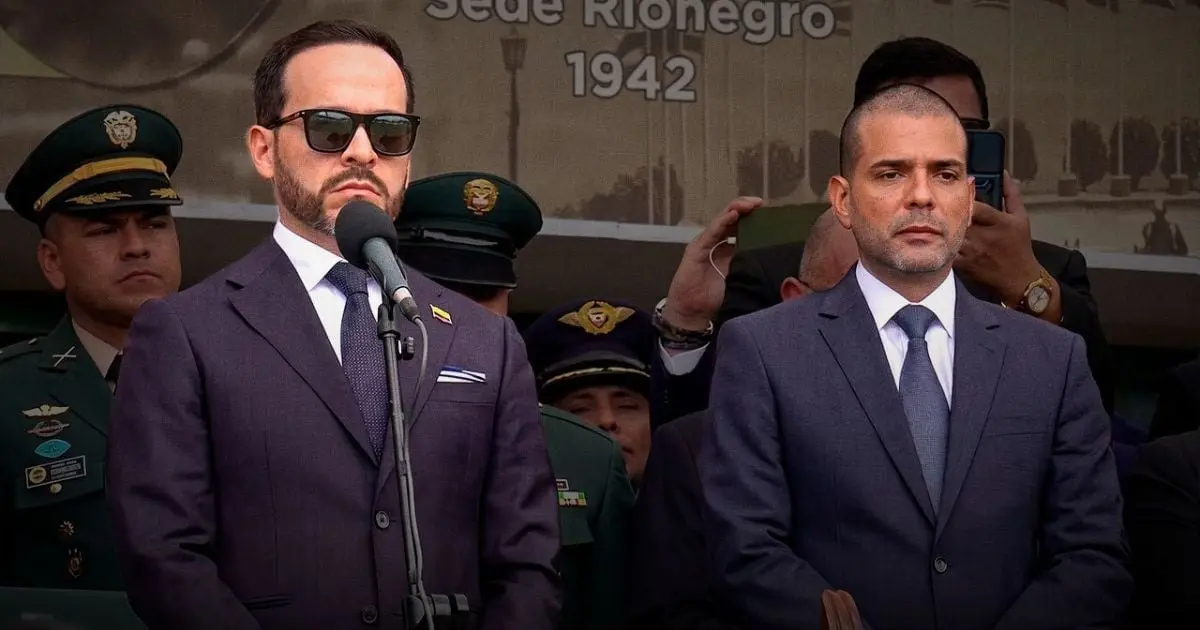
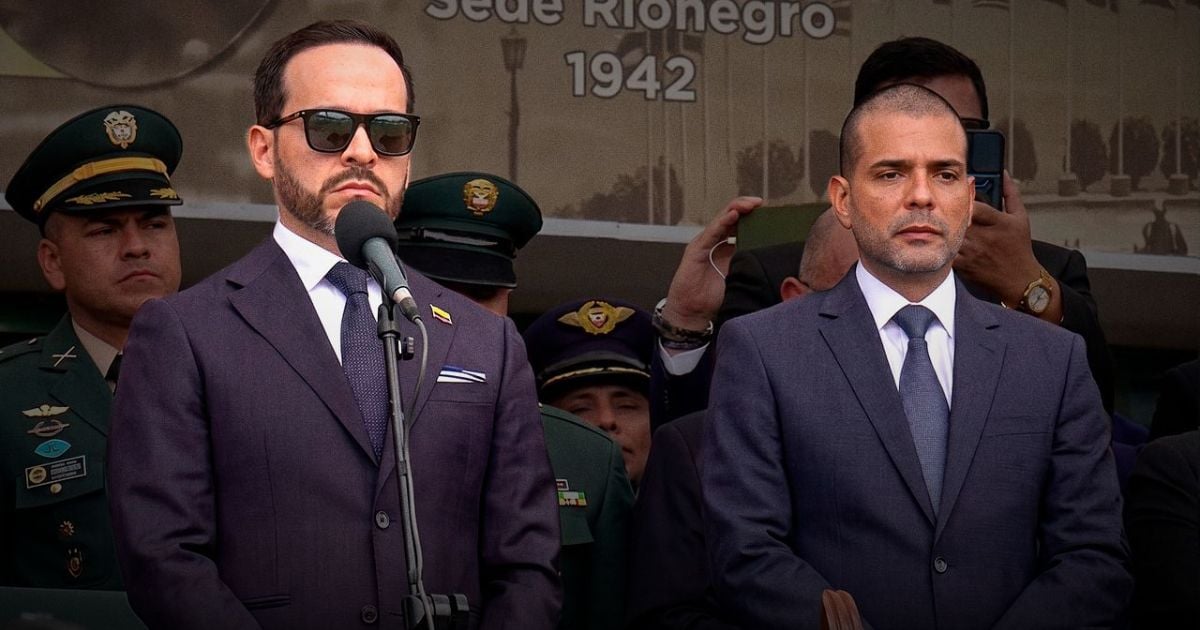
The concession was officially awarded by the National Mining Agency (ANM) following an objective selection process that initiated in late 2025. However, the legitimacy of the award has been overshadowed by serious questions regarding conflicts of interest and optics. Peñaranda is not merely a private businessman operating in a vacuum; he is publicly recognized as a close, long-standing friend of high-profile attorney Abelardo de la Espriella, and has been photographed in proximity to the highest tiers of Colombian political power, including recent public appearances alongside the nation’s president at military ceremonies.
This latest institutional win comes just seven months after Peñaranda miraculously survived a brazen daylight assassination attempt outside a high-end gym in the exclusive La Cabrera neighborhood in northern Bogotá. The botched hit, executed by a sicario (contract killer) who allegedly confused his targets, claimed the lives of Gustavo Aponte, a prominent rice entrepreneur, and his bodyguard, Luis Gabriel Gutiérrez.
The convergence of a high-stakes government mining contract, a narrow escape from a cartel-style assassination, historical links to figures tied to paramilitary factions, and deep ties to elite legal and political defenders paints a troubling portrait of how fortunes are forged in Colombia’s extraction economy.
Chronology of Events: From El Ubérrimo to the Streets of Bogotá
To understand how Olimpo Oliver Peñaranda arrived at his current status as a favored mining concessionaire amidst controversy, it is necessary to examine a timeline stretching back over a decade.
2014: The El Ubérrimo Photograph
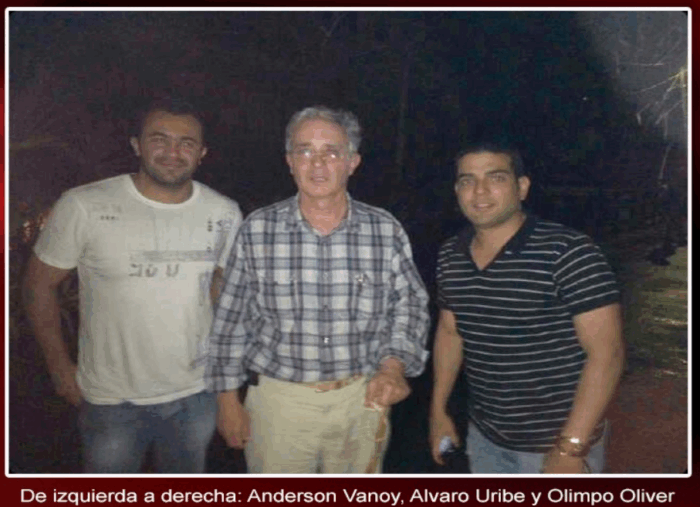
The public profile of Peñaranda first intersected with high-level national controversy when journalist Daniel Coronell published a column in Semana magazine. The report featured a striking photograph taken at El Ubérrimo, the sprawling estate of former Colombian President Álvaro Uribe Vélez. The image captured Peñaranda alongside Uribe and Anderson Vanoy Pemberty—the son of Ramiro Vanoy, alias "Cuco Vanoy," a notorious former commander of the Mineros Bloc of the United Self-Defense Forces of Colombia (AUC).
According to explanations provided by Peñaranda to journalists at the time, the encounter was entirely accidental. He claimed he was having lunch with Anderson Vanoy in Montería when he learned that Uribe was selling livestock. Peñaranda and Vanoy reportedly traveled to El Ubérrimo to inspect the animals. Though Peñaranda ultimately decided against purchasing any livestock—deeming them overpriced—they seized the opportunity to pose for a photograph with the former head of state.

Coincidentally or not, around the same period, Luis Fernando Jaramillo Arroyave, alias "Nano"—who had assumed leadership of the AUC’s Mineros Bloc following the capture of Ramiro Vanoy—was arrested in a Medellín restaurant while dining with none other than Anderson Vanoy.
2017: The Battle for the Walter Mine
Peñaranda’s footprint in the mineral sector deepened significantly in 2017, when he thrust himself into the legal and operational battles surrounding the Walter Mine, one of the most prolific gold deposits in southern Bolívar. Seeking legal fortification for his interests, Peñaranda turned to his university-era friend, high-profile attorney Abelardo de la Espriella.
Because De la Espriella was formalizing his departure from his prominent law firm to pursue other ventures, he referred Peñaranda to Daniel Peñarredonda, then-director of De la Espriella Lawyers. Peñarredonda was tasked with defending the corporate interests of Coopcaribona and Minecar—entities in which Peñaranda had previously held stakes. The legal strategy involved aggressively contesting claims brought by local artisanal miners who argued they had historical priority rights to the gold-rich deposits.
Peñaranda later defended his aggressive corporate maneuvers by framing them as an anti-illegal mining crusade. He claimed that his efforts to bring formal order to the Walter Mine made him a primary target for execution by armed groups, specifically identifying dissident factions of the FARC and the ELN, who had historically milked the region’s mineral wealth without state interference.
Late 2025 – Mid-2026: The Assassination Attempt and Concessions
The latent dangers of Peñaranda’s business dealings materialized violently. In late 2025 or early 2026, an assassin opened fire outside a Bodytech gym in the upscale La Cabrera neighborhood of Bogotá. Peñaranda escaped with his life only because the gunman misidentified his target, gunning down rice entrepreneur Gustavo Aponte and his bodyguard instead.
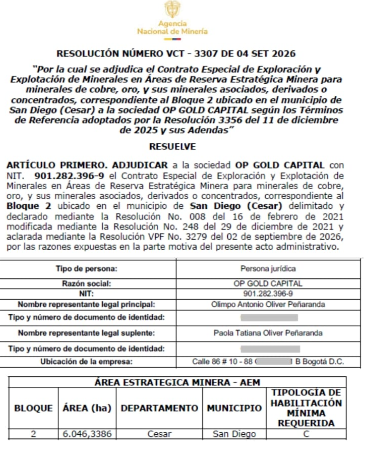
Just months after cheating death—and shortly after being spotted wearing an immaculate dark suit alongside the president during troop recognition ceremonies at the José María Córdova Military Cadet School—Peñaranda’s company, OP Gold Capital, was awarded four crucial mining blocks (Blocks 1, 2, 3, and 25) in San Diego, Cesar, by the National Mining Agency (ANM).
Supporting Data: The Scale of Colombia’s Gold Economy
The controversy surrounding OP Gold Capital’s new concessions cannot be separated from the macroeconomic and criminal reality of gold mining in Colombia. According to assessments by the Office of the Procurator General (Procuraduría General de la Nación) and the Ombudsman’s Office (Defensoría del Pueblo), approximately 55 tons of illegal gold are extracted annually in Colombia.
This shadow economy accounts for billions of pesos, frequently bypassing environmental regulations, labor protections, and state royalties. The sector has long served as a primary laundering mechanism for drug cartels, dissident guerrilla groups, and remnants of paramilitary structures.
Furthermore, state oversight of confiscated or disputed mineral assets has faced intense scrutiny. Recent investigative reports by independent media outlets like Las2orillas have highlighted questionable asset management by entities like the Special Asset Society (SAE) under the Petro administration, pointing to missing millions and opaque administrative trails within state-managed gold enterprises. Within this high-stakes, high-risk environment, the formalization of mining titles to individuals with complex political and social backgrounds carries profound systemic risks.
Official Responses and Institutional Positions
Faced with mounting public criticism over the awarding of the Cesar mining blocks to a controversial businessman with direct ties to the executive branch and elite legal circles, state agencies have rushed to defend the procedural integrity of the contracts.
The National Mining Agency (ANM)
The ANM has maintained that the assignment of the mining titles in San Diego, Cesar—targeted at exploring copper, gold, and other precious minerals—was entirely above board. Agency officials stressed that the contracts were awarded strictly through an "objective selection process" that commenced at the end of 2025. According to the ANM, all legal, technical, and financial requirements were met by OP Gold Capital, neutralizing claims of favoritism based on interpersonal relationships.
Law Enforcement and Investigative Authorities
Regarding the failed assassination attempt in La Cabrera, the Colombian Prosecutor’s Office (Fiscalía General de la Nación) has kept multiple investigative hypotheses open. While authorities have not dismissed Peñaranda’s claims that the hit was ordered by guerrilla factions or criminal syndicates angered by his formalization and anti-illegal mining efforts in regions like southern Bolívar, investigators are running parallel inquiries into simpler, transactional motives—chiefly, the violent settling of private debts and financial disputes inherent to high-risk speculative markets.

Implications: Politics, Patronage, and the Extractivist State
The unfolding saga of Olimpo Oliver Peñaranda and OP Gold Capital carries profound implications for the current political landscape in Colombia and the broader integrity of the state’s mining sector.
- The Optic of Patronage: For an administration that has rhetorically positioned itself against traditional oligarchies, political favoritism, and the historical abuses of the extractivist model, seeing a well-connected entrepreneur with roots in traditional elite circles walk away with major mining concessions—while publicly rubbing shoulders with the head of state—creates an acute political vulnerability.
- The Weaponization of Formalization: The case illustrates how the legal mechanism of "formalizing" mining concessions can be leveraged by private capital to displace artisanal and small-scale miners. When backed by high-priced legal powerhouses like De la Espriella Lawyers, corporate entities can weaponize the legal system to consolidate monopolies over resource-rich territories under the banner of fighting "illegal mining."
- The Persistent Shadow of Paramilitarism and Crime: The lingering documentation of historical links—such as the 2014 El Ubérrimo photograph featuring the son of a notorious paramilitary commander—demonstrates how legacy networks continue to brush against modern economic elites. Even if framed as casual encounters, these ties underscore the tightly knit, insular nature of regional power structures in departments like Córdoba, Sucre, Cesar, and Bolívar.
As state regulators push forward with mineral expansion to diversify the national economy, cases like that of OP Gold Capital serve as a stark reminder: in Colombia’s goldfields, the line separating legal commerce, political influence, and violent criminality remains perilously thin.