

By Global News Desk
Published: September 2026
Main Facts
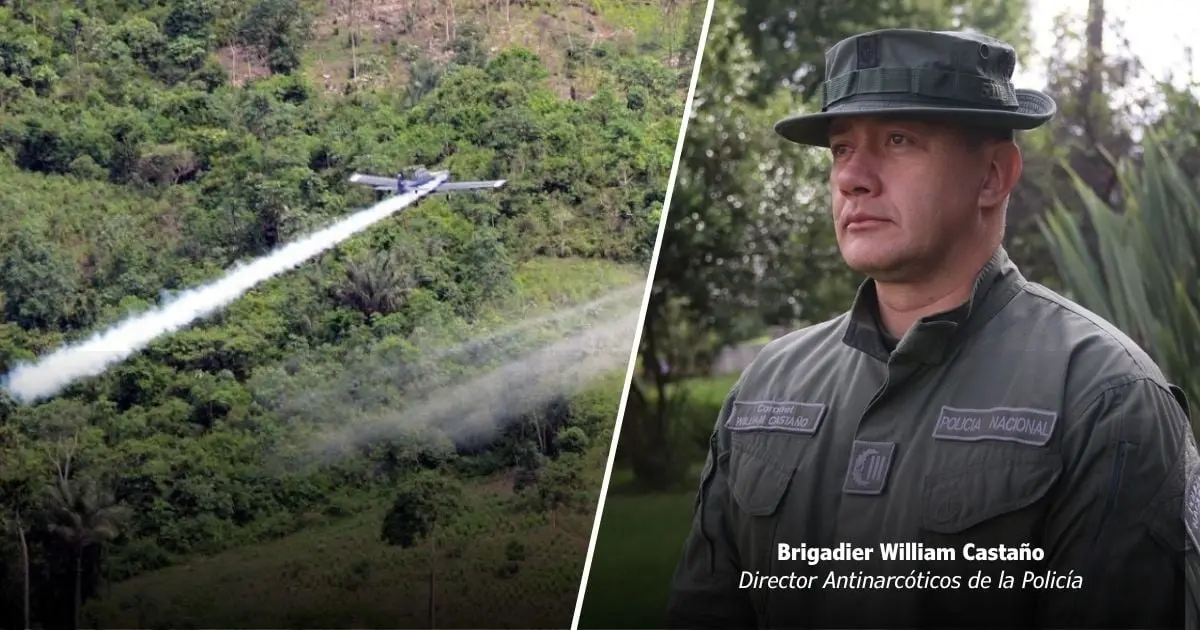
Fifteen years after the suspension of aerial fumigation in Colombia, the government is preparing to revive the controversial practice under a radically redesigned framework. Spearheading this high-stakes security shift is Brigadier General William Castaño Ramos, the newly confirmed Director of Antinarcotics. In a striking institutional paradox, the man chosen to lead the renewed aerial eradication campaign is an accomplished environmentalist with deep academic and operational roots in ecological preservation.
Under the administration of President De La Espriella, the national police are gearing up to execute a carefully controlled experimental phase of the government’s updated drug-fighting offensive. Moving away from the heavily criticized glyphosate of past decades, the strategy will introduce the experimental and controlled use of ammonium glufosinate as a substitute herbicide.
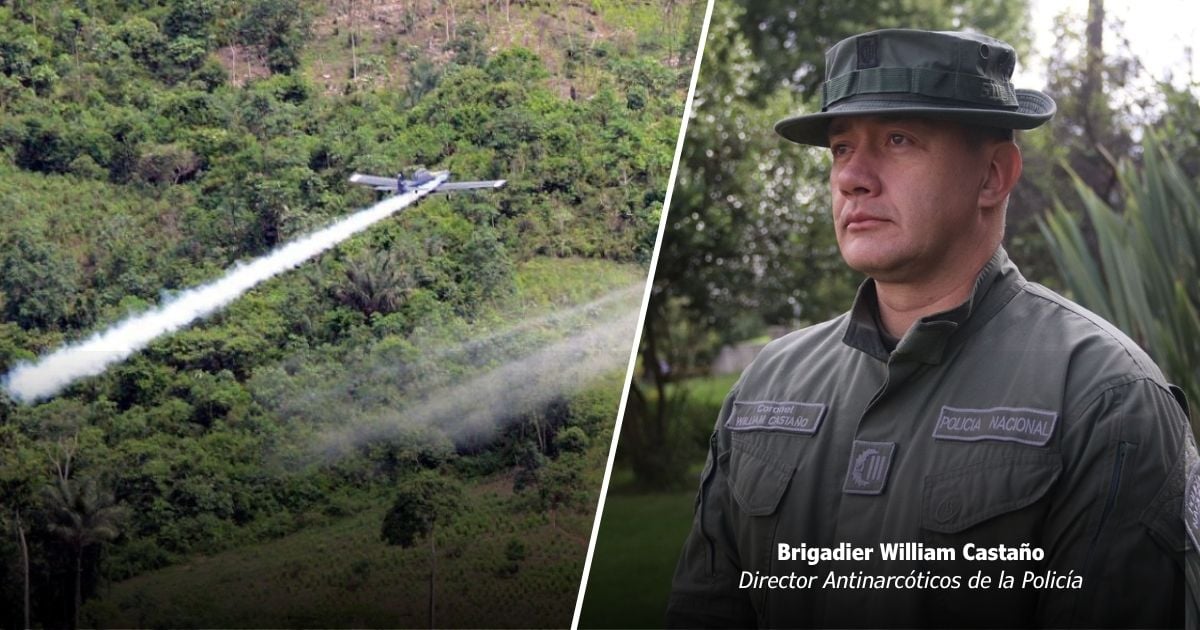
However, before the first drop is sprayed from specialized aircraft, the operation faces a maze of legal hurdles. The judiciary holds the ultimate veto, and a recent provisional suspension by a local judge in Puerto Asís has temporarily halted the pilot project. Nevertheless, the Antinarcotics Directorate remains on high alert, equipped with specialized aircraft, robust international intelligence networks, and a commanding officer whose unique background bridges the gap between hardline law enforcement and environmental stewardship.
Chronology of the Policy and Operational Readiness
To understand how Colombia reached this critical juncture, it is necessary to examine the timeline of legal restrictions, judicial interventions, and operational preparations that have shaped the modern drug war.
1. The Judicial Roadblocks (2015–2021)
- 2015: Aerial eradication using glyphosate was suspended amid mounting concerns over environmental degradation and public health risks.
- 2017: The Constitutional Court issued the landmark Sentence T-236, ordering the National Narcotics Council (Consejo Nacional de Estupefacientes) to halt all aerial spraying until independent scientific risk assessments on health and the environment could be guaranteed. The court mandated prior public consultations with local and indigenous communities, as well as the formulation of a strict Environmental Management Plan (PMA) governed by the precautionary principle.
- 2021: Reinforcing previous guidelines, Sentence T-413 outlined non-negotiable prerequisites for any future return of fumigation, including mandatory prior consultations under ILO Convention 169 and absolute exclusion zones encompassing national parks, water sources, and indigenous territories.
2. The Policy Pivot and Legal Battle (August–September 2026)
- August 28, 2026: The government officially repealed the long-standing resolution that banned the use of glyphosate and piloted the transition toward ammonium glufosinate. President De La Espriella announced that operations would strictly adhere to the Constitutional Court’s directives via a new framework (Resolution 6 of 2026), which also lifted the 2015 ban on piloted aircraft.
- September 2026: Brigadier General Castaño’s team finalized preparations, positioning two specialized AT-802 aircraft—each capped at a 1,000-hectare operational limit—with initial missions planned for the volatile Putumayo department.
- Mid-September 2026: The Third Promiscuous Court of Puerto Asís provisionally suspended the pilot project following a legal injunction (tutela) filed by the Tiempo de Cambios Foundation, which cited threats to health and a healthy environment. The administration announced immediate plans to appeal and filed a separate suit before the Council of State to challenge the decree that allowed lower-court judges to hear such actions.
Supporting Data
The operational weight of the Antinarcotics Directorate under General Castaño is reflected in a formidable array of statistical metrics, international co-productions, and strategic assets deployed during the first quarter of 2026.

Operational Metrics (Q1 2026)
- Cocaine Seizures: 124 tons of cocaine hydrochloride.
- Marijuana Seizures: 99 tons.
- Chemical Precursors: Over 450,000 gallons of liquid precursors and 396,000 kilos of solid precursors.
- Infrastructure: 981 illegal processing laboratories and drug-producing infrastructures destroyed.
- Manual Eradication: 2,035 hectares eradicated manually.
- Apprehensions: 17,266 arrests linked to drug trafficking, including 40 individuals targeted for extradition.
- Emerging Threats: Quantities of synthetic opioids, including fentanyl, successfully intercepted.
Transnational Interdiction Milestones
- Operation Renacer: Conducted across Medellín and Guatemala, this mission targeted high-value cartel operatives requested for extradition by U.S. courts for trafficking cocaine, fentanyl, and methamphetamine. The drugs had been systematically concealed inside export cargo containers moving through Urabá, Cartagena, and Barranquilla, with direct links to the Clan del Golfo in Bajo Cauca.
- Global Multilateral Operation: A simultaneous, multi-nation sweep across Belgium, Costa Rica, Ecuador, El Salvador, Spain, the United States, France, the Netherlands, Panama, and the Dominican Republic. Backed by the DEA, HSI, SEACOP, and Spanish police, the operation resulted in the seizure of 28 tons of cocaine, 3 tons of marijuana, and 1.8 million milliliters of ketamine, alongside 38 targeted arrests.
- Buenaventura and Nariño Strikes: In September 2026, Castaño commanded a precision raid destroying a clandestine airstrip in Buenaventura used by dissident factions of alias "Mordisco," utilizing three Black Hawk helicopters, Air Force support, and Jungla commandos. This followed the seizure of 859 kilograms of narcotics in La Tola, Nariño, executed in coordination with the Colombian Navy.
Official Responses and Leadership Profile
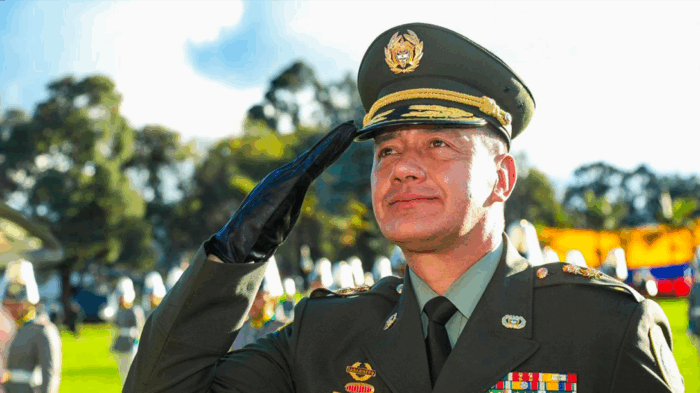
The Profile of General William Castaño Ramos
Born in Ibagué 49 years ago, Brigadier General William Castaño Ramos presents an academic profile rarely seen at the helm of military and police offensives. Holding degrees as both a police administrator and a business administrator, he has specialized in Internal Control, Environmental Management, Human Rights, and International Humanitarian Law (IHL), alongside a master’s degree in Environmental and Energy Management within Organizations.
Before his confirmation as Director of Antinarcotics, Castaño commanded the National Unit against Illegal Mining and Antiterrorism under the Directorate of Carabineros and Rural Security. His performance earned him a promotion to Director of Carabineros and Environmental Protection, where he spearheaded initiatives to reclaim forested areas devastated by illegal logging and illicit crop cultivation.
Administration defenders argue that Castaño’s profound environmental credentials make him uniquely qualified to balance aggressive drug suppression with rigorous ecological safeguards.
Government Defense of the Strategy
The De La Espriella administration has staunchly defended the transition from glyphosate to ammonium glufosinate, framing it as a modernized, scientifically monitored approach rather than a return to the indiscriminate chemical dumping of the past. Officials emphasize that the strategy complies with the strict stipulations laid down by the Constitutional Court, including the creation of a comprehensive Environmental Management Plan (PMA) evaluated by the National Environmental Licensing Authority (ANLA).
Furthermore, the administration stresses that no aerial operations will take place within sensitive ecological zones or populated areas. Mandatory epidemiological tracking and health monitoring led by the Ministry of Health and the National Institute of Health have been integrated into the core doctrine of the new strategy.
Implications
The impending rollout of the renewed aerial eradication campaign carries profound national and international implications for Colombia:

- Legal and Institutional Precedent: The clash between the executive branch and local courts over the suspension of the Putumayo pilot project represents a crucial test of judicial checks and balances. The outcome of the government’s appeal before the Council of State will define the boundaries of executive authority in matters of national security versus environmental and constitutional rights.
- Environmental and Public Health Balance: By placing an environmental specialist at the head of the Antinarcotics Directorate, the state is attempting to neutralize traditional criticisms regarding ecological damage. However, the use of ammonium glufosinate remains under intense scrutiny by civil society organizations and local communities demanding ironclad scientific guarantees that human health will not be compromised.
- Geopolitical and Cross-Border Narcotics Control: As transnational cartels increasingly diversify their portfolios—incorporating synthetic drugs like fentanyl and methamphetamine alongside traditional cocaine—the leadership of General Castaño will be tested on its ability to maintain high-level international intelligence sharing. Success in dismantling complex global supply chains will depend heavily on the continued synchronization of Colombian forces with agencies such as the DEA and European law enforcement networks.
Ultimately, Colombia stands at a crossroads. Whether the nation can effectively curb soaring coca cultivation without repeating the environmental and social conflicts of the past will depend on the delicate equilibrium between operational force and judicial restraint managed by General Castaño and the De La Espriella administration.




Leave a Reply