

By Willian Fredy Palta Velasco
Published in independent analysis via Las2Orillas
Main Facts: The Clash Between Academic Freedom and Moral Orthodoxy
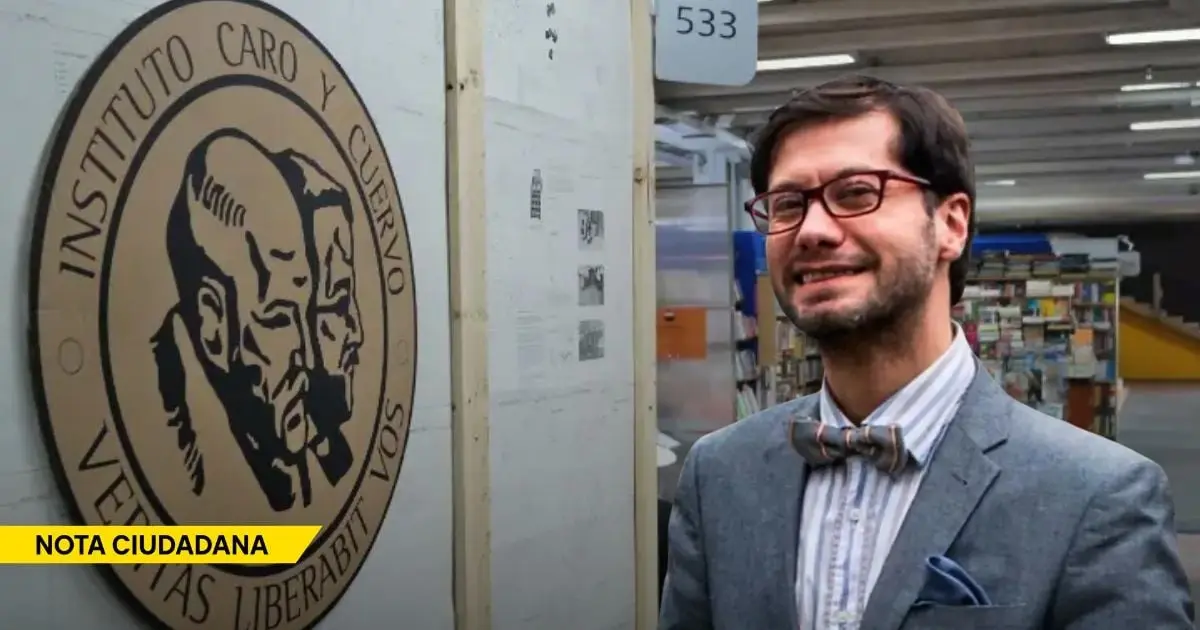
The intersection of literature, institutional governance, and ideological conflict has ignited a fierce public debate in Colombia. At the center of the controversy are recent statements made by Dr. Sergio Esteban Vélez, director of the prestigious Instituto Caro y Cuervo, regarding two of the nation’s most disruptive and celebrated literary figures: Gonzalo Arango, founder of the Nadaist movement, and Andrés Caicedo, the iconic author of ¡Qué viva la música!.
Rather than engaging in rigorous literary criticism or philological analysis—the foundational missions of the Institute since its inception—Dr. Vélez’s remarks adopted the tone of moralistic condemnation. Observers, academics, and cultural critics argue that these pronouncements signal the arrival of an official "Cultural War" within the halls of a premier research institution.
Founded in 1942 to honor the legacy of Rufino José Cuervo and Miguel Antonio Caro, the Institute has historically functioned as a sanctuary for linguistic preservation, philological research, and literary promotion. However, critics assert that utilizing the platform of the directorship to launch subjective, morality-based attacks on canonical authors transforms a scholarly bastion into an arbiter of social orthodoxies. This editorial explores the deep implications of this ideological shift, examining the dangers of substituting aesthetic evaluation with religious or political puritanism, and the urgent necessity of defending intellectual and creative freedom in contemporary Colombia.
Chronology: A Historical Overview of the Instituto Caro y Cuervo and the Rise of the "Cultural Battle"
To understand the weight of the current controversy, it is essential to trace the institutional trajectory of the Caro y Cuervo Institute alongside the evolution of Colombian counter-cultural literature.
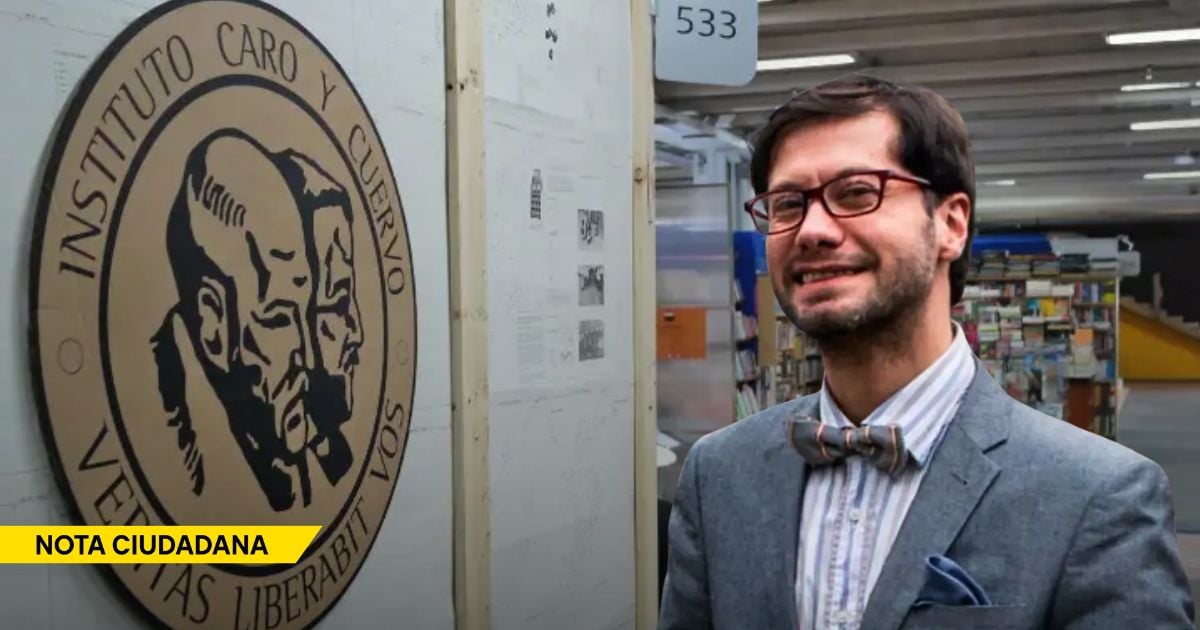
- 1942: The Instituto Caro y Cuervo is established in Bogotá by legislative decree, designed primarily as a high-level research center for philology, linguistics, and lexicography, eventually expanding its purview to encompass Colombian and Latin American literature and the safeguarding of native languages.
- 1958–1970s: Gonzalo Arango launches Nadaísmo, an avant-garde literary movement heavily influenced by existentialism, nihilism, and Dadaism. Operating as a direct challenge to the conservative sociopolitical and religious structures of mid-century Colombia, Arango and his followers publish incendiary manifestos, subverting traditional literary forms.
- 1970–1977: Andrés Caicedo emerges from Cali as a cinematic and literary force, creating works like ¡Qué viva la música! and Ojo al cine. Caicedo’s visceral prose captures the urban alienation, drug culture, and existential angst of Colombian youth before his tragic suicide at the age of 25.
- Decades of Academic Prestige: Throughout the late 20th century, the Caro y Cuervo Institute maintains an international reputation for academic rigor, publishing monumental works such as the Diccionario de Construcción y Régimen de la Lengua Castellana.
- Recent Events: Dr. Sergio Esteban Vélez assumes the directorship of the Institute. In subsequent public statements, Dr. Vélez issues severe moral critiques targeting the lives, philosophies, and works of Gonzalo Arango and Andrés Caicedo, sparking widespread concern within academic and literary circles regarding an encroachment of ideological censorship and dogmatic governance.
Supporting Data and Context: The Philosophy of Literature vs. Reductive Moralism
Literature has historically functioned as the ultimate medium for human existential expression. By its very nature, it is diverse, provocative, and boundlessly complex. It serves as an archive for human suffering, indignation, melancholy, eroticism, and mortality. From classical tragedies to avant-garde manifestos, literature acts as an immutable vehicle for transcendence—a finite mysticism capturing eternity.
When an individual soul experiences profound anguish, it rarely finds solace in sterile dogmas; instead, it turns to prose and poetry as a vital cry of resistance. The paradoxes inherent in great literature—where life and death are rendered as a singular, multifaceted reality—deliberately challenge established moral frameworks. Poetry, novels, and essays demand the freedom to explore the darkest recesses of the human condition without being subjugated by the shifting political, religious, or social prejudices of a given administration’s cultural agenda.
Within the framework of higher education and literary research, texts are studied through various methodologies. While ethical inquiry is a valid line of academic research—examining the philosophical underpinnings of an author’s work or the complex relationship between an artist’s life and their artistic output—it must be executed with intellectual rigor. Even when scholars fundamentally disagree with a thinker’s worldview, academic integrity prohibits dismissing the intrinsic value, depth, and historical significance of their oeuvre.
Epistemic Error and the Fallacy of Moral Reductionism
It represents a fundamental epistemic error to judge a literary work based exclusively on the subjective moral or religious standards of the critic. Aesthetic judgment must transcend personal moral biases. To devalue a work or its creator simply because their philosophy challenges conventional orthodoxies is to commit a gross reductionist fallacy.
For an academic of Dr. Vélez’s background—who presumably has extensive experience serving as a peer evaluator for research initiatives—to succumb to this argumentative trap is deeply troubling. Conflating literary criticism with religious or moral proclamation reduces scholarly discourse to partisan rhetoric. If the governing philosophy of the current administration’s cultural strategy relies on the negation, disdain, and suppression of literary richness that fails to align with orthodox religious logic, society risks sliding backward into intellectual stagnation.

Official Responses and Perspectives
The public outcry following Dr. Vélez’s remarks has drawn sharp divisions among intellectuals, cultural managers, and academic observers across Colombia.
- The Critical Consensus (Academics and Independent Writers): Independent cultural commentators and literary scholars argue that the directorship of the Caro y Cuervo Institute has overstepped its institutional boundaries. Critics maintain that the Institute’s mandate is the fostering of linguistic and literary research, not the policing of public morality. Prominent voices have characterized the director’s statements as a reversion to an inquisitorial logic—reminiscent of historical eras defined by book burning and censorship—where institutional power is weaponized against free thought.
- The Institutional Leadership Stance: While proponents of the administration’s broader cultural framework—often framed as a "Cultural Battle" against perceived moral relativism—defend the right of public officials to articulate traditional values, this perspective has struggled to find validation within traditional philological and academic standards. Critics point out that attempting to impose a singular moral lens upon historical avant-gardes alienates the Institute from the broader academic community and compromises its historical neutrality.
Implications: The Need for a Counter-Reformation in Thought
The implications of this controversy extend far beyond a war of words over two deceased authors. They touch upon the core identity of Colombian cultural institutions and the future of intellectual freedom in the country.
If state-funded academic bodies are permitted to transform from centers of open inquiry into ideological prefectures, the chilling effect on contemporary writers, poets, and researchers could be devastating. History demonstrates that cultural violence and dogmatic censorship have never successfully extinguished the human spirit’s drive for authentic expression. The suppression of unconventional thought invariably breeds new forms of resistance.
In the face of institutionalized literary orthodoxy, a cultural counter-reformation is not merely desirable; it is essential. Society requires a resurgence of intellectual rebels—new "poets of the damned," heirs to Nadaism and existentialism, and cultural critics capable of articulating utopian visions through uncompromising literature.
The legacy of Gonzalo Arango and Andrés Caicedo reminds us that literature thrives on disruption, discomfort, and absolute freedom. The Caro y Cuervo Institute must choose whether it will remain a globally respected beacon of philological research and literary celebration, or succumb to the transient dogmas of a moralistic crusade. Ultimately, society must remain vigilant to ensure that state-sponsored narratives do not erase the critical consciousness forged by generations of Colombia’s most daring writers.



Leave a Reply